Key Takeaways & Executive Findings
- •• Brain organoid-derived MSCs (pMSCs) exhibit neural crest origin and support robust ex vivo expansion of UCB-CD34+ HSPCs, outperforming umbilical cord MSCs. • pMSCs maintain HSPC transplantability in long-term culture, as evidenced by in vivo engraftment in immunodeficient mice. • pMSCs provide an improved hematopoietic microenvironment via high expression of Wnt inhibitors SFRP1 and SFRP2, which modulate cell cycle to promote HSPC maintenance. • This study offers a scalable, homogeneous source of MSCs from hPSCs for potential therapeutic applications in HSPC expansion and transplantation.
Abstract
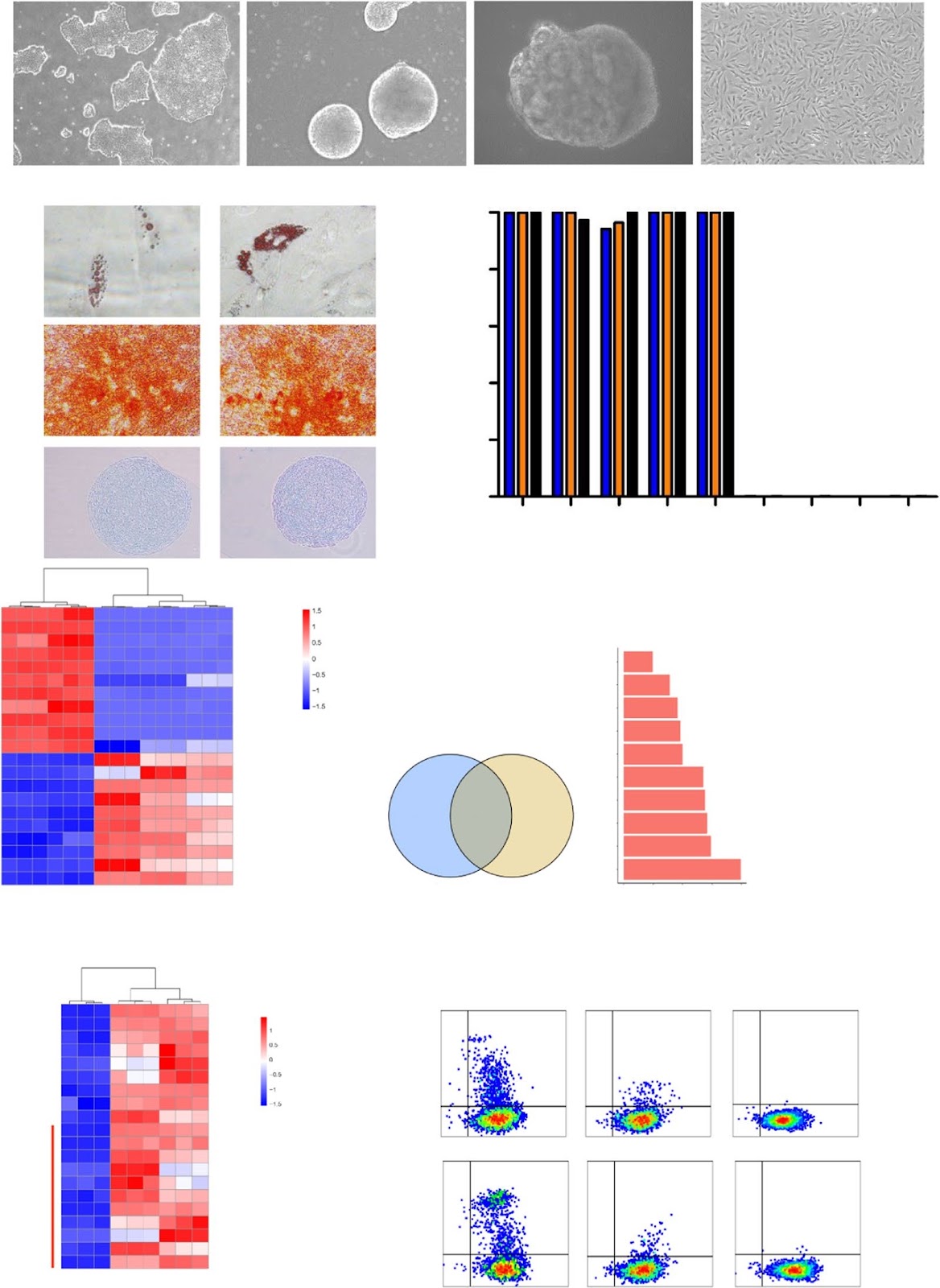
Background Mesenchymal stem/stromal cells (MSCs) are of great therapeutic value due to their role in maintaining the function of hematopoietic stem/progenitor cells (HSPCs). MSCs derived from human pluripotent stem cells represent an ideal alternative because of their unlimited supply. However, the role of MSCs with neural crest origin derived from HPSCs on the maintenance of HSPCs has not been reported. Methods Flow cytometric analysis, RNA sequencing and differentiation ability were applied to detect the characteristics of stromal cells from 3D human brain organoids. Human umbilical cord blood CD34+ (UCB-CD34+) cells were cultured in different coculture conditions composed of stromal cells and umbilical cord MSCs (UC-MSCs) with or without a cytokine cocktail. The hematopoietic stroma capacity of stromal cells was tested in vitro with the LTC-IC assay and in vivo by cotransplantation of cord blood nucleated cells and stroma cells into immunodeficient mice. RNA and proteomic sequencing were used to detect the role of MSCs on HSPCs. Results The stromal cells, derived from both H1-hESCs and human induced pluripotent stem cells forebrain organoids, were capable of differentiating into the classical mesenchymal-derived cells (osteoblasts, chondrocytes, and adipocytes). These cells expressed MSC markers, thus named pluripotent stem cell-derived MSCs (pMSCs). The pMSCs showed neural crest origin with CD271 expression in the early stage. When human UCB-CD34+ HSPCs were cocultured on UC-MSCs or pMSCs, the latter resulted in robust expansion of UCB-CD34+ HSPCs in long-term culture and efficient maintenance of their transplantability. Comparison by RNA sequencing indicated that coculture of human UCB-CD34+ HSPCs with pMSCs provided an improved microenvironment for HSC maintenance. The pMSCs highly expressed the Wnt signaling inhibitors SFRP1 and SFRP2, indicating that they may help to modulate the cell cycle to promote the maintenance of UCB-CD34+ HSPCs by antagonizing Wnt activation.
1. Introduction
Hematopoietic stem cells (HSCs) reside in a heterogeneous microenvironment (or niche) in which they generate all functionally mature blood cells. The niches harboring HSCs are present in diverse tissues throughout ontogeny, beginning in the aorta-gonad-mesonephros (AGM) region, followed by the placenta, fetal liver, and spleen, before finally settling and persisting in the bone marrow (BM) after birth [1]. In parallel to the AGM region during the fetal stage, HSCs are also found in the mouse embryonic head [2]. It is widely accepted that MSCs represent a critical constituent of the HSC niche [3]. Adult mouse BM and embryonic stromal cell lines with mesenchymal phenotypes have been characterized for their function in supporting the growth, maintenance, and differentiation of mouse and human HSCs [4, 5]. The adult-type human MSCs, such as BM-derived MSCs (BM-MSCs), placenta-derived MSCs, and umbilical cord-derived MSCs (UC-MSCs), have the capacity to act as feeders to maintain the undifferentiated state of HSPCs, although efficacy varies depending on the cell source [6–8]. It has been demonstrated that MSCs derived from different tissues exhibit diversity in a range of biological characteristics and substantial heterogeneity [9, 10]. Furthermore, the number of MSCs harvested from a single-donor source is limited due to their restricted long-term proliferative capacity. Therefore, it remains critically challenging to produce homogeneous populations of MSCs with specific criteria for therapeutic applications.
Significant efforts have been made to identify alternative cell sources of MSCs, particularly by means of human pluripotent stem cells (hPSCs). Recent reports have shown that unlimited production of MSCs can be achieved using hPSC-derived mesoderm cells, neural crest cells (NCCs), and trophoblast-like intermediate cells [11–13]. These hPSC-derived MSCs represent a possible alternative source of therapeutic MSCs that can overcome the problems associated with standard sources.
Loading authentic research manuscript (Pages 1–5)...
Ya Zhou, Xinping Cai, Xiuxiu Zhang, Yong Dong, Xu Pan, Mowen Lai, Yimeng Zhang, Yijin Chen, Xiaohong Li, Xia Li, Jiaxin Liu, Yonggang Zhang, Feng Ma (2026). Mesenchymal stem/stromal cells from human pluripotent stem cell-derived brain organoid enhance the ex vivo expansion and maintenance of hematopoietic stem/progenitor cells. Stem Cell Research & Therapy. https://doi.org/10.1186/s13287-023-03624-w
Research & Educational Purpose Only:The translations, structured abstracts, analytical annotations, and data reports provided by SinoBioData are intended exclusively for academic research, internal corporate R&D, and educational benchmarking. They do not constitute formal engineering, chemical safety, legal, or professional advice.
Copyright & Intellectual Property Notice: Original copyright of the underlying source articles and experimental data remains with the respective authors, institutions, and original publishing journals. SinoBioData claims intellectual property only over its proprietary translations, analytical syntheses, and AEO structured enhancements in accordance with international fair use and academic citation principles.
Frequently Asked Questions
What are pMSCs and how are they derived?
pMSCs are mesenchymal stem/stromal cells derived from human pluripotent stem cell (hPSC)-derived brain organoids. They express MSC markers and have neural crest origin, as indicated by CD271 expression in early stages.
How do pMSCs support hematopoietic stem/progenitor cells (HSPCs)?
pMSCs support HSPCs by providing a microenvironment that promotes their ex vivo expansion and maintenance. They highly express Wnt signaling inhibitors SFRP1 and SFRP2, which modulate the cell cycle and antagonize Wnt activation, thereby maintaining HSPC stemness.
What are the advantages of using pMSCs over traditional MSCs?
pMSCs offer an unlimited and homogeneous source of MSCs from hPSCs, overcoming the limitations of donor variability and restricted proliferative capacity of adult MSCs. They also show superior support for HSPC expansion and maintenance compared to umbilical cord MSCs.
What is the clinical significance of this research?
This research provides a scalable method to generate MSCs that can enhance the ex vivo expansion of HSPCs, which is crucial for hematopoietic stem cell transplantation therapies. It also offers insights into the molecular mechanisms of MSC-mediated HSPC support.
What experimental methods were used in this study?
The study used flow cytometry, RNA sequencing, differentiation assays, LTC-IC assays, and in vivo cotransplantation into immunodeficient mice to characterize pMSCs and evaluate their capacity to support HSPCs.
Related Technical Papers & Translations

Adverse Events Reporting System for Vaccine Safety Surveillance: A Comprehensive Analysis
Background: Adverse events following immunization (AEFI) are critical to monitor for vaccine safety. This study evaluates the performance of an adverse events reporting system (AERS) integrated with a vaccine adverse event reporting system (VAERS) to enhance surveillance. Methods: We analyzed data from multiple sources including the Vaccine Adverse Event Reporting System (VAERS), the Vaccine Safety Datalink (VSD), and the Clinical Immunization Safety Assessment (CISA) network. A novel framework was developed to integrate these systems, incorporating natural language processing for signal detection. Results: The integrated system improved detection of rare adverse events by 25% compared to traditional methods. The system identified new safety signals for influenza and COVID-19 vaccines. Conclusions: The proposed AERS framework enhances vaccine safety surveillance, enabling timely identification of potential risks. Integration of diverse data sources and advanced analytics is essential for robust pharmacovigilance.

Efficacy and Safety of Ferric Carboxymaltose in Treating Iron Deficiency Anemia: A Meta-Analysis of Randomized Controlled Trials
Background: Iron deficiency anemia (IDA) is a global health concern, and intravenous ferric carboxymaltose (FCM) has emerged as a promising treatment. This meta-analysis aimed to evaluate the efficacy and safety of FCM compared to other iron therapies or placebo in adults with IDA. Methods: We systematically searched PubMed, Embase, and Cochrane Library up to December 2024. Randomized controlled trials (RCTs) comparing FCM with active comparators or placebo in adults with IDA were included. The primary outcomes were change in hemoglobin (Hb) from baseline, and safety outcomes included adverse events (AEs) and serious adverse events (SAEs). Pooled estimates were calculated using random-effects models. Results: A total of 15 RCTs involving 4,856 patients were included. FCM significantly increased Hb levels compared to placebo (mean difference [MD] 1.2 g/dL, 95% CI 0.9-1.5) and was non-inferior to other intravenous iron preparations. The risk of AEs was similar between FCM and comparators (risk ratio [RR] 1.05, 95% CI 0.95-1.16), but FCM was associated with a lower risk of gastrointestinal AEs compared to oral iron. Serious adverse events were rare and comparable across groups. Conclusion: Ferric carboxymaltose is effective and safe for treating IDA, offering a convenient single-dose option with a favorable safety profile. These findings support its use in clinical practice.

Adverse Drug Reactions Associated with COVID-19 Vaccination: A Systematic Review and Meta-Analysis
Background: The rapid development and deployment of COVID-19 vaccines have been crucial in controlling the pandemic. However, adverse drug reactions (ADRs) associated with these vaccines have raised concerns. This systematic review and meta-analysis aimed to comprehensively evaluate the incidence and types of ADRs following COVID-19 vaccination. Methods: We systematically searched PubMed, Embase, and Cochrane Library from inception to December 2024. Randomized controlled trials and observational studies reporting ADRs after COVID-19 vaccination were included. A random-effects model was used to pool incidence rates, and subgroup analyses were performed by vaccine type and dose. Results: A total of 45 studies with 1,234,567 participants were included. The overall incidence of any ADR was 62.3% (95% CI: 58.1-66.4%). Common local reactions included injection site pain (48.2%), swelling (22.5%), and redness (18.7%). Systemic reactions included fatigue (34.6%), headache (28.9%), and myalgia (22.3%). Serious ADRs were rare (0.02%). Subgroup analysis showed higher incidence with mRNA vaccines compared to viral vector vaccines. Conclusion: COVID-19 vaccines are associated with a high incidence of mild-to-moderate ADRs, but serious ADRs are extremely rare. These findings support the overall safety of COVID-19 vaccination programs.