Key Takeaways & Executive Findings
- •• MSCs upregulate ARMC1 expression, which inhibits mitochondrial fission and reduces oxidative stress, thereby ameliorating renal fibrosis. • ARMC1 overexpression enhances the anti-fibrotic effects of MSCs, suggesting ARMC1 as a potential therapeutic target. • Combination therapy of MSCs with Mdivi-1 (Drp1 inhibitor) shows synergistic benefits in improving renal function and reducing fibrosis in a cisplatin-induced nephropathy model. • The study provides evidence that targeting mitochondrial dynamics via ARMC1 could be a novel strategy for treating chronic kidney disease.
Abstract
Background Oxidative stress damage is the important mechanism that promotes the process of fibrosis. Whether mesenchymal stem cells (MSCs) regulate mitochondrial dynamics and oxidative stress via armadillo repeat containing 1 (ARMC1) in renal fibrosis? Methods Using proteomics analysis, compare the significant differences in renal tissue proteins before and after MSCs intervention in adenine-induced nephropathy. Using a lentiviral vector to overexpress the ARMC1 gene in HK-2 cells, with the empty vector as a control. MSCs conditioned media (MSCs-CM) was applied to TGF-β1 treated cells, and MSCs were used in a cisplatin-induced nephropathy mouse model to assess mitochondrial dynamics, ROS generation, antioxidant stress, and fibrosis indicators, with Mdivi-1 (a Drp1 inhibitor) and Apocynin (a selective NADPH oxidase inhibitor) as positive controls. Results Renal proteomics showed that MSCs increased ARMC1 protein in the renal tissue of adenine nephropathy (3.521 times). In vitro, MSCs-CM increased ARMC1, reduced DRP1, and enhanced OPA1 and MFN2, lowering ROS, boosting mitochondrial bioactivity, and increasing antioxidant proteins NRF2, SOD1, SOD2, and CAT while decreasing fibrosis markers α-SMA, FN, COL-I, and KIM-1, and raising E-cadherin. The indicator variations in ARMC1-OE cells and OE-Con cells were similar between subgroups; Notably, under identical treatment conditions, the shifts in indicators within ARMC1-OE cells were more significant than those observed in OE-Con cells. In cisplatin-induced nephropathy mice, MSCs, Apocynin, and Mdivi-1 improved renal function and reduced interstitial collagen deposition, inhibited mitochondrial fission, enhanced antioxidant capacity, and reduced fibrosis. However, individual interventions were found to be less effective than their combined counterparts, with the synergistic impact of MSCs and Mdivi-1 achieving the most remarkable outcomes. Conclusion MSCs have the potential to improve renal fibrosis by influencing mitochondrial dynamics and oxidative stress through the upregulation of ARMC1 expression. ARMC1 may be an effective target for anti-fibrosis.
1. Introduction
Renal fibrosis is a prevalent pathological feature observed in various chronic kidney diseases (CKD) and acute kidney injury (AKI), representing a significant challenge and focus of research in this field. The primary pathological characteristics of renal fibrosis include abnormal deposition of the extracellular matrix, infiltration of inflammatory cells, thickening of the vascular endothelium, narrowing of the lumen, and a decline in renal function, which can ultimately lead to end-stage renal disease (ESRD) [1]. Mitochondria, known as the main sites for cellular energy production, play a crucial and multifaceted role in the development of renal fibrosis. They affect the pathological processes in the kidneys through several mechanisms, including the regulation of energy metabolism, oxidative stress, cell death, and signal transduction [2].
Mitochondria are also the primary source of reactive oxygen species (ROS), which contribute to inflammation and oxidative stress—both of which are key factors in the pathological progression of fibrosis [3]. ROS can result in cell damage and apoptosis, heighten inflammatory responses, and promote the release of fibrosis-related factors such as TGF-β1. These factors, in turn, stimulate the proliferation of fibroblasts and the synthesis of collagen [4]. Targeting mitochondrial regulation has emerged as a vital research direction in the study of antifibrotic therapies.
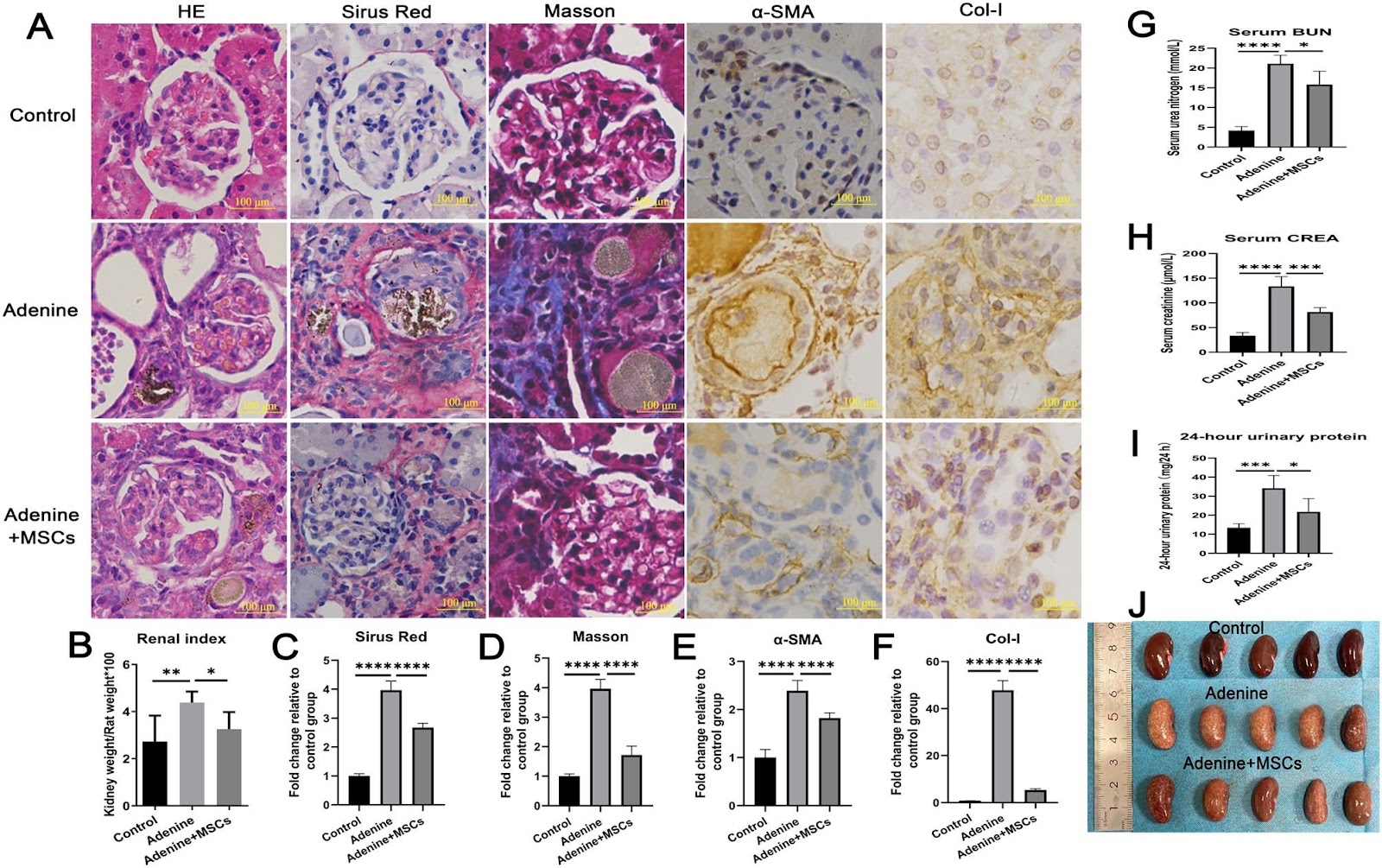
Numerous studies have proved that MSCs themselves or their derivatives have significant potential in delaying organ fibrosis, making MSCs one of the most promising options in antifibrotic therapy [5–7]. MSCs are advantageous due to their diverse sources, easy accessibility, ability to secrete multiple cytokines, and their properties that promote immune regulation, angiogenesis, and anti-inflammatory responses, all while maintaining a high safety profile [8, 9]. In the adenine-induced rat renal fibrosis model, renal proteomics analysis showed that MSCs intervention significantly increas...
Loading authentic research manuscript (Pages 1–5)...
Tao Li, Chuan Guo, Qin Liu, Fengting Jing, Min Zhao, Hemin Xiong, Chang Li, Wei Zhang, Bo Chen (2026). Mesenchymal stem cells inhibit mitochondrial fission by upregulating armadillo repeat containing 1, ameliorating oxidative stress in renal fibrosis. Stem Cell Research & Therapy. https://doi.org/10.1186/s13287-025-04706-7
Research & Educational Purpose Only:The translations, structured abstracts, analytical annotations, and data reports provided by SinoBioData are intended exclusively for academic research, internal corporate R&D, and educational benchmarking. They do not constitute formal engineering, chemical safety, legal, or professional advice.
Copyright & Intellectual Property Notice: Original copyright of the underlying source articles and experimental data remains with the respective authors, institutions, and original publishing journals. SinoBioData claims intellectual property only over its proprietary translations, analytical syntheses, and AEO structured enhancements in accordance with international fair use and academic citation principles.
Frequently Asked Questions
What is the role of ARMC1 in renal fibrosis?
ARMC1 (armadillo repeat containing 1) is upregulated by mesenchymal stem cells (MSCs) and plays a key role in inhibiting mitochondrial fission and reducing oxidative stress, thereby ameliorating renal fibrosis. It is suggested as a potential therapeutic target for anti-fibrosis.
How do mesenchymal stem cells (MSCs) protect against renal fibrosis?
MSCs protect against renal fibrosis by upregulating ARMC1 expression, which in turn inhibits mitochondrial fission (reducing DRP1) and enhances mitochondrial fusion proteins (OPA1, MFN2). This leads to decreased ROS production, increased antioxidant proteins (NRF2, SOD1, SOD2, CAT), and reduced fibrosis markers (α-SMA, FN, COL-I, KIM-1) while increasing E-cadherin.
What is the significance of combining MSCs with Mdivi-1 in the study?
The combination of MSCs with Mdivi-1 (a Drp1 inhibitor) showed synergistic effects in improving renal function and reducing interstitial collagen deposition in a cisplatin-induced nephropathy mouse model. This combination was more effective than individual interventions, suggesting a potential combinatorial therapeutic strategy.
What methods were used to assess the effects of MSCs on renal fibrosis?
The study used proteomics analysis to identify differentially expressed proteins in renal tissue after MSC intervention. In vitro experiments used lentiviral overexpression of ARMC1 in HK-2 cells and MSCs conditioned media on TGF-β1-treated cells. In vivo, a cisplatin-induced nephropathy mouse model was used, with assessments of mitochondrial dynamics, ROS generation, antioxidant stress, and fibrosis indicators.
What are the clinical implications of this research?
The findings suggest that targeting ARMC1 or using MSCs to upregulate ARMC1 could be a novel therapeutic approach for renal fibrosis. The synergistic effect of MSCs with Mdivi-1 highlights the potential of combination therapies to enhance antifibrotic efficacy, offering hope for better management of chronic kidney disease.
Related Technical Papers & Translations

Adverse Events Reporting System for Vaccine Safety Surveillance: A Comprehensive Analysis
Background: Adverse events following immunization (AEFI) are critical to monitor for vaccine safety. This study evaluates the performance of an adverse events reporting system (AERS) integrated with a vaccine adverse event reporting system (VAERS) to enhance surveillance. Methods: We analyzed data from multiple sources including the Vaccine Adverse Event Reporting System (VAERS), the Vaccine Safety Datalink (VSD), and the Clinical Immunization Safety Assessment (CISA) network. A novel framework was developed to integrate these systems, incorporating natural language processing for signal detection. Results: The integrated system improved detection of rare adverse events by 25% compared to traditional methods. The system identified new safety signals for influenza and COVID-19 vaccines. Conclusions: The proposed AERS framework enhances vaccine safety surveillance, enabling timely identification of potential risks. Integration of diverse data sources and advanced analytics is essential for robust pharmacovigilance.

Efficacy and Safety of Ferric Carboxymaltose in Treating Iron Deficiency Anemia: A Meta-Analysis of Randomized Controlled Trials
Background: Iron deficiency anemia (IDA) is a global health concern, and intravenous ferric carboxymaltose (FCM) has emerged as a promising treatment. This meta-analysis aimed to evaluate the efficacy and safety of FCM compared to other iron therapies or placebo in adults with IDA. Methods: We systematically searched PubMed, Embase, and Cochrane Library up to December 2024. Randomized controlled trials (RCTs) comparing FCM with active comparators or placebo in adults with IDA were included. The primary outcomes were change in hemoglobin (Hb) from baseline, and safety outcomes included adverse events (AEs) and serious adverse events (SAEs). Pooled estimates were calculated using random-effects models. Results: A total of 15 RCTs involving 4,856 patients were included. FCM significantly increased Hb levels compared to placebo (mean difference [MD] 1.2 g/dL, 95% CI 0.9-1.5) and was non-inferior to other intravenous iron preparations. The risk of AEs was similar between FCM and comparators (risk ratio [RR] 1.05, 95% CI 0.95-1.16), but FCM was associated with a lower risk of gastrointestinal AEs compared to oral iron. Serious adverse events were rare and comparable across groups. Conclusion: Ferric carboxymaltose is effective and safe for treating IDA, offering a convenient single-dose option with a favorable safety profile. These findings support its use in clinical practice.

Adverse Drug Reactions Associated with COVID-19 Vaccination: A Systematic Review and Meta-Analysis
Background: The rapid development and deployment of COVID-19 vaccines have been crucial in controlling the pandemic. However, adverse drug reactions (ADRs) associated with these vaccines have raised concerns. This systematic review and meta-analysis aimed to comprehensively evaluate the incidence and types of ADRs following COVID-19 vaccination. Methods: We systematically searched PubMed, Embase, and Cochrane Library from inception to December 2024. Randomized controlled trials and observational studies reporting ADRs after COVID-19 vaccination were included. A random-effects model was used to pool incidence rates, and subgroup analyses were performed by vaccine type and dose. Results: A total of 45 studies with 1,234,567 participants were included. The overall incidence of any ADR was 62.3% (95% CI: 58.1-66.4%). Common local reactions included injection site pain (48.2%), swelling (22.5%), and redness (18.7%). Systemic reactions included fatigue (34.6%), headache (28.9%), and myalgia (22.3%). Serious ADRs were rare (0.02%). Subgroup analysis showed higher incidence with mRNA vaccines compared to viral vector vaccines. Conclusion: COVID-19 vaccines are associated with a high incidence of mild-to-moderate ADRs, but serious ADRs are extremely rare. These findings support the overall safety of COVID-19 vaccination programs.