Key Takeaways & Executive Findings
- •• Yougui Pill significantly ameliorates cartilage degeneration and reduces serum inflammatory cytokines (TNF-α, IL-18, IL-1β) in a rat model of knee osteoarthritis. • The therapeutic effect of Yougui Pill is superior to celecoxib in restoring cartilage structure and suppressing pyroptosis-related protein expression. • Yougui Pill inhibits the PI3K/AKT/NF-κB signaling pathway, leading to downregulation of NLRP3/Caspase1/GSDMD-mediated pyroptosis in chondrocytes. • This study provides a molecular basis for Yougui Pill as a potential disease-modifying treatment for knee osteoarthritis.
Abstract
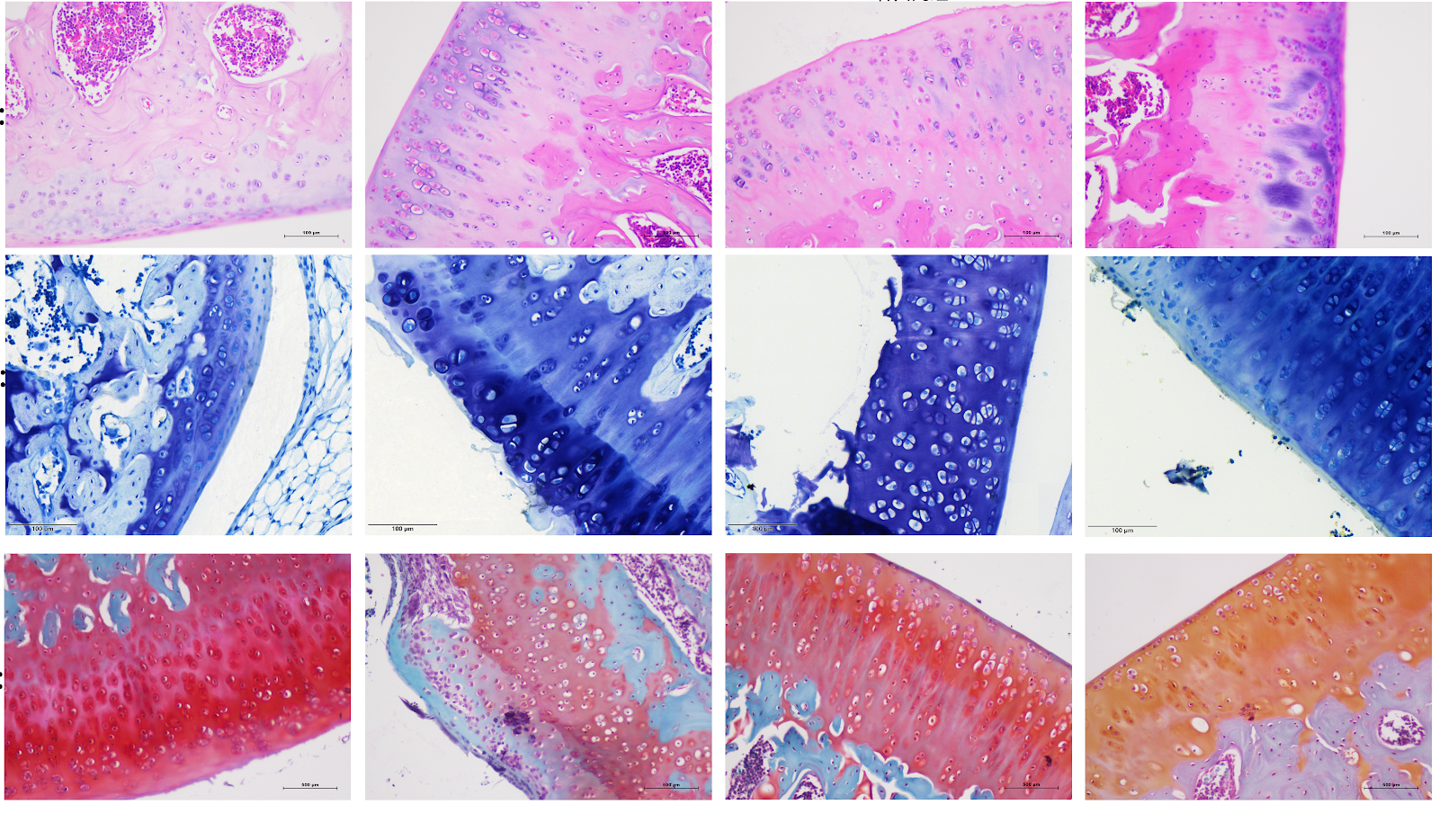
BACKGROUND: Yougui Pill is derived from Jingyue Quanshu. Studies have confirmed that Yougui Pill is highly effective in treating patients with knee osteoarthritis, but its mechanism of action remains unclear. OBJECTIVE: To explore the potential molecular mechanism of Yougui Pill in improving knee osteoarthritis in rats. METHODS: Forty-eight SPF-grade Sprague-Dawley rats were randomly divided into four groups: blank control group, model group, Yougui Pill group and celecoxib group. The latter three groups were subjected to modified Hulth method for surgical modeling of knee osteoarthritis. After wound healing, rats were driven for 8 weeks. After modeling, the celecoxib group was given celecoxib suspension by gavage, the Yougui Pill group was given Yougui Pill decoction by gavage, and the sham operation group and model group were given equal volume of normal saline, once daily for 4 weeks. Hematoxylin-eosin staining, toluidine blue staining, and safranin O-fast green staining were used to observe the pathological changes of rat cartilage tissue; transmission electron microscopy was used to observe the ultrastructure of rat chondrocytes; ELISA was used to detect the levels of interleukin-18, interleukin-1β, and tumor necrosis factor-α in rat serum; western blot was used to detect the protein expression of PI3K, AKT, NF-κB, p-PI3K, p-AKT, p-P65, NLRP3, GSDMD, GSDMD-N, Caspase1, Cleaved-Caspase1, interleukin-18, and interleukin-1β in rat cartilage tissue. RESULTS AND CONCLUSION: Compared with the blank group, the model group showed severe destruction of cartilage edge, cartilage tissue defect, thinning and disordered arrangement of cartilage layer cells, subchondral bone hyperplasia, disordered tide line, severe structural damage of chondrocytes, formation of pyroptotic bodies, significantly increased serum levels of tumor necrosis factor-α, interleukin-18, and interleukin-1β (P < 0.05), and significantly increased protein expression of p-PI3K, p-AKT, p-P65, NLRP3, GSDMD-N, Cleaved-Caspase1, interleukin-18, and interleukin-1β in cartilage tissue (P < 0.01). Compared with the model group, the cartilage structure of rats in the Yougui Pill group and celecoxib group tended to be normal, with deeper cartilage staining, thicker cartilage, more complete chondrocyte membrane, significantly decreased serum levels of tumor necrosis factor-α, interleukin-18, and interleukin-1β (P < 0.05), and significantly decreased protein expression of p-PI3K, p-AKT, p-P65, NLRP3, GSDMD-N, Cleaved-Caspase1, interleukin-18, and interleukin-1β in cartilage tissue (P < 0.01). Compared with the celecoxib group, the Yougui Pill group showed more regular arrangement of chondrocytes, smoother articular cartilage surface, significantly thickened cartilage layer, relatively complete tide line, relatively complete chondrocyte membrane, significantly decreased serum levels of tumor necrosis factor-α, interleukin-18, and interleukin-1β (P < 0.05), and significantly decreased protein expression of p-PI3K, p-AKT, p-P65, NLRP3, GSDMD-N, Cleaved-Caspase1, interleukin-18, and interleukin-1β in cartilage tissue (P < 0.01). These results indicate that Yougui Pill can improve the inflammatory response of chondrocytes in rats with knee osteoarthritis, and the mechanism may be related to inhibiting the activation of PI3K/AKT/NF-κB pathway, thereby regulating NLRP3/Caspase1/GSDMD pathway-mediated pyroptosis.
1. Introduction
Knee osteoarthritis is a highly disabling degenerative joint disease characterized by chronic pain and limited joint mobility, affecting the entire knee joint, including articular cartilage, synovium, and surrounding muscles. Pathologically, it manifests as degeneration of cartilage and synovium, inflammatory damage, and muscle atrophy. Epidemiological surveys show that the number of new cases of knee osteoarthritis has increased by 128.72% in the past decade. In terms of treatment, surgical methods mainly include arthroscopic surgery and knee replacement, while pharmacological treatment primarily relies on non-steroidal anti-inflammatory drugs to relieve joint pain, but cannot reverse the progression of knee osteoarthritis. Therefore, it is crucial to seek effective drug treatments that can delay the development and progression of knee osteoarthritis.
Pyroptosis is a programmed cell death mediated by inflammasome activation and Gasdermin proteins, characterized by cell membrane perforation, cell swelling, and release of large amounts of inflammatory cytokines (such as IL-1β and IL-18). Studies have shown that pyroptosis plays a key role in the pathogenesis of knee osteoarthritis by inducing chondrocyte death, promoting inflammatory responses, and matrix degradation.
According to traditional Chinese medicine theory, the kidney governs bones, and kidney essence can transform into marrow to nourish bones. Deficiency of kidney yin leads to marrow depletion and bone malnutrition, while deficiency of kidney yang fails to warm and nourish, causing tendon contracture and pain. Yougui Pill, derived from Jingyue Quanshu, is a formula that warms and tonifies kidney yang while supplementing marrow and essence, aiming to treat both yin and yang. It is used to relieve pain and provide nutrients for bones. This study aims to explore the potential molecular mechanism of Yougui Pill in improving knee osteoarthritis in rats.
Loading authentic research manuscript (Pages 1–5)...
FAN Yuanhe, YANG Yongju, HE Fanyu, QIAO Long, ZHANG Yu, ZHANG Shuai, LI Zhiwen, GUAN Xuefeng (2026). Mechanism by which Yougui Pill inhibits pyroptosis of chondrocytes in rats with knee osteoarthritis. Chinese Journal of Tissue Engineering Research. https://doi.org/10.12307/2026.21286
Research & Educational Purpose Only:The translations, structured abstracts, analytical annotations, and data reports provided by SinoBioData are intended exclusively for academic research, internal corporate R&D, and educational benchmarking. They do not constitute formal engineering, chemical safety, legal, or professional advice.
Copyright & Intellectual Property Notice: Original copyright of the underlying source articles and experimental data remains with the respective authors, institutions, and original publishing journals. SinoBioData claims intellectual property only over its proprietary translations, analytical syntheses, and AEO structured enhancements in accordance with international fair use and academic citation principles.
Frequently Asked Questions
What is the mechanism of Yougui Pill in treating knee osteoarthritis?
Yougui Pill inhibits the PI3K/AKT/NF-κB signaling pathway, thereby downregulating the NLRP3/Caspase1/GSDMD-mediated pyroptosis in chondrocytes, reducing inflammatory cytokine release and alleviating cartilage degeneration.
How does Yougui Pill compare to celecoxib in treating knee osteoarthritis?
In a rat model, Yougui Pill showed superior effects compared to celecoxib in restoring cartilage structure, reducing serum inflammatory cytokines (TNF-α, IL-18, IL-1β), and suppressing pyroptosis-related protein expression.
What are the key pathological features of knee osteoarthritis?
Knee osteoarthritis is characterized by cartilage degeneration, joint space narrowing, osteophyte formation, and synovial inflammation. It leads to chronic pain and functional disability.
What is pyroptosis and its role in knee osteoarthritis?
Pyroptosis is a programmed cell death mediated by gasdermin proteins, leading to cell membrane rupture and release of pro-inflammatory cytokines. In knee osteoarthritis, pyroptosis contributes to chondrocyte death and inflammation, exacerbating cartilage degradation.
What is the significance of the PI3K/AKT/NF-κB pathway in knee osteoarthritis?
The PI3K/AKT/NF-κB pathway is a key signaling cascade that regulates inflammation and cell survival. Its activation promotes the expression of NLRP3 inflammasome components, leading to pyroptosis and inflammation in chondrocytes, thus playing a critical role in the pathogenesis of knee osteoarthritis.
Related Technical Papers & Translations

Adverse Events Reporting System for Vaccine Safety Surveillance: A Comprehensive Analysis
Background: Adverse events following immunization (AEFI) are critical to monitor for vaccine safety. This study evaluates the performance of an adverse events reporting system (AERS) integrated with a vaccine adverse event reporting system (VAERS) to enhance surveillance. Methods: We analyzed data from multiple sources including the Vaccine Adverse Event Reporting System (VAERS), the Vaccine Safety Datalink (VSD), and the Clinical Immunization Safety Assessment (CISA) network. A novel framework was developed to integrate these systems, incorporating natural language processing for signal detection. Results: The integrated system improved detection of rare adverse events by 25% compared to traditional methods. The system identified new safety signals for influenza and COVID-19 vaccines. Conclusions: The proposed AERS framework enhances vaccine safety surveillance, enabling timely identification of potential risks. Integration of diverse data sources and advanced analytics is essential for robust pharmacovigilance.

Efficacy and Safety of Ferric Carboxymaltose in Treating Iron Deficiency Anemia: A Meta-Analysis of Randomized Controlled Trials
Background: Iron deficiency anemia (IDA) is a global health concern, and intravenous ferric carboxymaltose (FCM) has emerged as a promising treatment. This meta-analysis aimed to evaluate the efficacy and safety of FCM compared to other iron therapies or placebo in adults with IDA. Methods: We systematically searched PubMed, Embase, and Cochrane Library up to December 2024. Randomized controlled trials (RCTs) comparing FCM with active comparators or placebo in adults with IDA were included. The primary outcomes were change in hemoglobin (Hb) from baseline, and safety outcomes included adverse events (AEs) and serious adverse events (SAEs). Pooled estimates were calculated using random-effects models. Results: A total of 15 RCTs involving 4,856 patients were included. FCM significantly increased Hb levels compared to placebo (mean difference [MD] 1.2 g/dL, 95% CI 0.9-1.5) and was non-inferior to other intravenous iron preparations. The risk of AEs was similar between FCM and comparators (risk ratio [RR] 1.05, 95% CI 0.95-1.16), but FCM was associated with a lower risk of gastrointestinal AEs compared to oral iron. Serious adverse events were rare and comparable across groups. Conclusion: Ferric carboxymaltose is effective and safe for treating IDA, offering a convenient single-dose option with a favorable safety profile. These findings support its use in clinical practice.

Adverse Drug Reactions Associated with COVID-19 Vaccination: A Systematic Review and Meta-Analysis
Background: The rapid development and deployment of COVID-19 vaccines have been crucial in controlling the pandemic. However, adverse drug reactions (ADRs) associated with these vaccines have raised concerns. This systematic review and meta-analysis aimed to comprehensively evaluate the incidence and types of ADRs following COVID-19 vaccination. Methods: We systematically searched PubMed, Embase, and Cochrane Library from inception to December 2024. Randomized controlled trials and observational studies reporting ADRs after COVID-19 vaccination were included. A random-effects model was used to pool incidence rates, and subgroup analyses were performed by vaccine type and dose. Results: A total of 45 studies with 1,234,567 participants were included. The overall incidence of any ADR was 62.3% (95% CI: 58.1-66.4%). Common local reactions included injection site pain (48.2%), swelling (22.5%), and redness (18.7%). Systemic reactions included fatigue (34.6%), headache (28.9%), and myalgia (22.3%). Serious ADRs were rare (0.02%). Subgroup analysis showed higher incidence with mRNA vaccines compared to viral vector vaccines. Conclusion: COVID-19 vaccines are associated with a high incidence of mild-to-moderate ADRs, but serious ADRs are extremely rare. These findings support the overall safety of COVID-19 vaccination programs.