Key Takeaways & Executive Findings
- •• Intracarotid arterial transfusion of autologous CD34+ cells is safe with 100% procedural success and no long-term tumorigenesis in acute ischemic stroke patients. • The treatment significantly enhances angiogenesis capacity of circulating endothelial progenitor cells and increases stromal cell-derived factor 1α levels in the internal jugular vein. • Cell-treated patients showed greater improvement in NIHSS scores by days 30 and 90, and significantly higher brain perfusion at 180 days compared to controls. • Although the combined long-term endpoint (death/recurrent stroke/severe disability) was lower in the control group (14.3% vs 50.0%), the difference was not statistically significant (p=0.103), suggesting potential benefit but requiring further validation.
Abstract
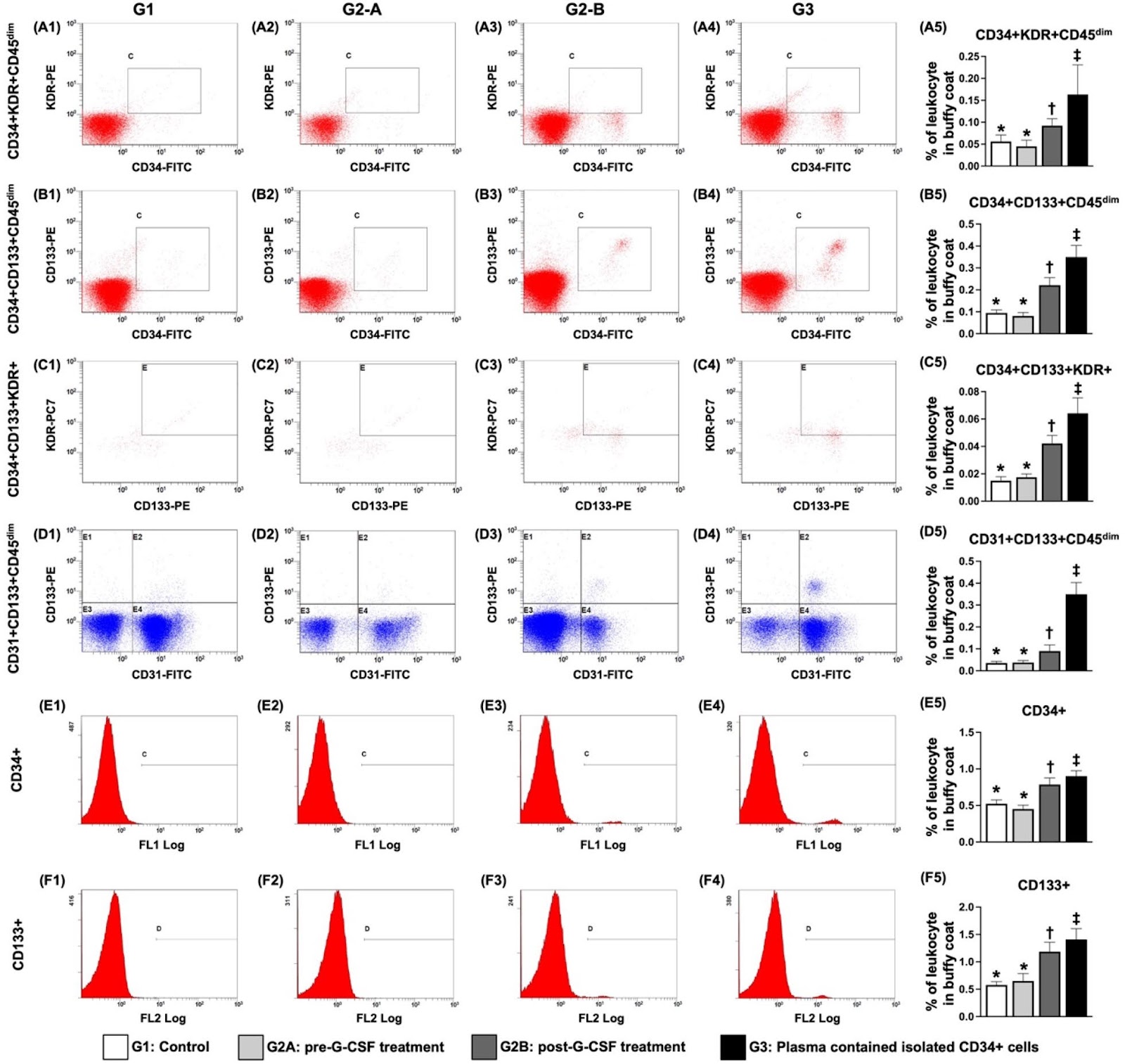
Background This phase II randomized controlled trial tested whether the intracarotid arterial administration (ICAA) of autologous CD34+ cells to patients within 14±7 days after acute ischemic stroke (IS) could be safe and further improve short- and long-term outcomes. Methods Between January 2018 and March 2022, 28 consecutive patients were equally randomly allocated to the cell-treated group (CD34+ cells/3.0×107/patient) or the control group (receiving optimal medical therapy). CD34+ cells were transfused into the ipsilateral brain infarct zone of cell-treated patients via the ICAA in the catheterization room. Results The results demonstrated 100% safety and success rates for the procedure, and no long-term tumorigenesis was observed in cell-treated patients. In cell-treated patients, the angiogenesis capacity of circulating endothelial progenitor cells (EPCs)/Matrigel was significantly greater after treatment than before treatment with granulocyte colony-stimulating factor (all p<0.001). Blood samples from the right internal jugular vein of the cell-treated patients presented significantly greater levels of the stromal cell-derived factor 1α/EPC at 5, 10 and 30 min compared with 0 min (all p<0.005). The National Institute of Health Stroke Scale scores were similar upon presentation, but a greater response was observed by Days 30 and 90 in the cell-treated group than in the control group. Tc-99 m brain perfusion was significantly greater at 180 days in the cell-treated group than in the control group (p=0.046). The combined long-term end points (defined as death/recurrent stroke/or severe disability) were notably lower in the control group compared with the cell-treated group (14.3% vs. 50.0%, p=0.103). Conclusion Intracarotid transfusion of autologous CD34+ cells is safe and might improve long-term outcomes in patients with acute IS. Trial registration ISRCTN, ISRCTN15677760. Registered 23 April 2018- Retrospectively registered, https://doi.org/10.1186/ISRCTN15677760
1. Introduction
Stroke, a growing epidemic, remains the 2nd leading cause of death and the 3rd leading cause of combined death and disability worldwide [1–4]. Although various etiologies are implicated in stroke, atheroembolic stroke remains the most common cause of ischemic stroke (IS) worldwide [5–9]. After the first IS occurs, there is clearly an increased risk for recurrent IS [10–12].
Additionally, previous clinical studies have shown that patients with a recent transient ischemic attack (TIA) or IS with severe stenosis (defined as 70–90% stenosis of the diameter of a major intracranial artery) are at particularly high risk of recurrent stroke in the territory of the stenotic arterial supplied area (estimated to be approximately 23% at 1 year) despite treatment with aspirin and standard management of vascular risk factors according to current American Heart Association (AHA) guideline recommendations [8, 13, 14]. Surprisingly, although the epidemiology, etiologies, mechanisms, classification, and prognostic outcomes of IS have been investigated for several decades [15–18], safe and efficacious management practices for all patients with IS, especially when recurrent IS is seriously considered, have not been fully developed. Previously, stenting for intracranial arterial stenosis (SAMMPRIS Trial), an alternative therapy to conventional medication, was conducted [19]. Regrettably, the results have been disappointing [19]. The majority of these patients, therefore, are left without any effective treatment. Accordingly, the identification of a safe and effective therapeutic option for patients with IS is fundamentally important for neurologists and physicians.
Interestingly, our previous studies [20, 21] revealed that acute IS stimulates the mobilization of endothelial progenitor cells (EPCs) into the circulation. Additionally, our other previous studies [20, 21] revealed that an increase in the number of circulating EPCs was strongly associated with favorable clinical outcomes after IS. Furthermore, our phase I and II clinical trials previously demonstrated that intracoronary tran
Loading authentic research manuscript (Pages 1–5)...
Hung-Sheng Lin, Pei-Hsun Sung, Shu-Hua Huang, Wei-Che Lin, John Y. Chiang, Ming-Chun Ma, Yi-Ling Chen, Kuan-Hung Chen, Fan-Yen Lee, Sheung-Fat Ko, Hon-Kan Yip (2026). Long term outcomes of intracarotid arterial transfusion of circulatory-derived autologous CD34+ cells for acute ischemic stroke patients—A randomized, open-label, controlled phase II clinical trial. Stem Cell Research & Therapy. https://doi.org/10.1186/s13287-024-04021-7
Research & Educational Purpose Only:The translations, structured abstracts, analytical annotations, and data reports provided by SinoBioData are intended exclusively for academic research, internal corporate R&D, and educational benchmarking. They do not constitute formal engineering, chemical safety, legal, or professional advice.
Copyright & Intellectual Property Notice: Original copyright of the underlying source articles and experimental data remains with the respective authors, institutions, and original publishing journals. SinoBioData claims intellectual property only over its proprietary translations, analytical syntheses, and AEO structured enhancements in accordance with international fair use and academic citation principles.
Frequently Asked Questions
What is the main purpose of this clinical trial?
The trial aimed to evaluate the safety and efficacy of intracarotid arterial administration of autologous CD34+ cells in patients with acute ischemic stroke, specifically assessing short- and long-term outcomes.
How were patients allocated in the study?
Between January 2018 and March 2022, 28 consecutive patients were equally and randomly allocated to either the cell-treated group (receiving CD34+ cells at a dose of 3.0×10^7 per patient) or the control group (receiving optimal medical therapy alone).
What were the key safety findings?
The procedure demonstrated 100% safety and success rates, with no long-term tumorigenesis observed in cell-treated patients.
Did the cell-treated group show better neurological outcomes?
Yes, the cell-treated group showed greater improvement in NIHSS scores by days 30 and 90, and significantly higher brain perfusion at 180 days compared to the control group.
What is the significance of the combined long-term endpoint?
The combined long-term endpoint (death, recurrent stroke, or severe disability) was lower in the control group (14.3% vs 50.0%), but the difference was not statistically significant (p=0.103), suggesting a potential benefit that requires further investigation.
Related Technical Papers & Translations

Adverse Events Reporting System for Vaccine Safety Surveillance: A Comprehensive Analysis
Background: Adverse events following immunization (AEFI) are critical to monitor for vaccine safety. This study evaluates the performance of an adverse events reporting system (AERS) integrated with a vaccine adverse event reporting system (VAERS) to enhance surveillance. Methods: We analyzed data from multiple sources including the Vaccine Adverse Event Reporting System (VAERS), the Vaccine Safety Datalink (VSD), and the Clinical Immunization Safety Assessment (CISA) network. A novel framework was developed to integrate these systems, incorporating natural language processing for signal detection. Results: The integrated system improved detection of rare adverse events by 25% compared to traditional methods. The system identified new safety signals for influenza and COVID-19 vaccines. Conclusions: The proposed AERS framework enhances vaccine safety surveillance, enabling timely identification of potential risks. Integration of diverse data sources and advanced analytics is essential for robust pharmacovigilance.

Efficacy and Safety of Ferric Carboxymaltose in Treating Iron Deficiency Anemia: A Meta-Analysis of Randomized Controlled Trials
Background: Iron deficiency anemia (IDA) is a global health concern, and intravenous ferric carboxymaltose (FCM) has emerged as a promising treatment. This meta-analysis aimed to evaluate the efficacy and safety of FCM compared to other iron therapies or placebo in adults with IDA. Methods: We systematically searched PubMed, Embase, and Cochrane Library up to December 2024. Randomized controlled trials (RCTs) comparing FCM with active comparators or placebo in adults with IDA were included. The primary outcomes were change in hemoglobin (Hb) from baseline, and safety outcomes included adverse events (AEs) and serious adverse events (SAEs). Pooled estimates were calculated using random-effects models. Results: A total of 15 RCTs involving 4,856 patients were included. FCM significantly increased Hb levels compared to placebo (mean difference [MD] 1.2 g/dL, 95% CI 0.9-1.5) and was non-inferior to other intravenous iron preparations. The risk of AEs was similar between FCM and comparators (risk ratio [RR] 1.05, 95% CI 0.95-1.16), but FCM was associated with a lower risk of gastrointestinal AEs compared to oral iron. Serious adverse events were rare and comparable across groups. Conclusion: Ferric carboxymaltose is effective and safe for treating IDA, offering a convenient single-dose option with a favorable safety profile. These findings support its use in clinical practice.

Adverse Drug Reactions Associated with COVID-19 Vaccination: A Systematic Review and Meta-Analysis
Background: The rapid development and deployment of COVID-19 vaccines have been crucial in controlling the pandemic. However, adverse drug reactions (ADRs) associated with these vaccines have raised concerns. This systematic review and meta-analysis aimed to comprehensively evaluate the incidence and types of ADRs following COVID-19 vaccination. Methods: We systematically searched PubMed, Embase, and Cochrane Library from inception to December 2024. Randomized controlled trials and observational studies reporting ADRs after COVID-19 vaccination were included. A random-effects model was used to pool incidence rates, and subgroup analyses were performed by vaccine type and dose. Results: A total of 45 studies with 1,234,567 participants were included. The overall incidence of any ADR was 62.3% (95% CI: 58.1-66.4%). Common local reactions included injection site pain (48.2%), swelling (22.5%), and redness (18.7%). Systemic reactions included fatigue (34.6%), headache (28.9%), and myalgia (22.3%). Serious ADRs were rare (0.02%). Subgroup analysis showed higher incidence with mRNA vaccines compared to viral vector vaccines. Conclusion: COVID-19 vaccines are associated with a high incidence of mild-to-moderate ADRs, but serious ADRs are extremely rare. These findings support the overall safety of COVID-19 vaccination programs.