Key Takeaways & Executive Findings
- •• CYTOR is significantly upregulated in LUAD and serves as an independent poor prognostic biomarker. • CYTOR promotes gemcitabine resistance and epithelial-mesenchymal transition (EMT) in LUAD cells. • Mechanistically, CYTOR acts as a ceRNA by sponging miR-125a-5p, leading to upregulation of ANLN and RRM2. • This study provides a novel therapeutic target and theoretical basis for overcoming chemoresistance in LUAD.
Abstract
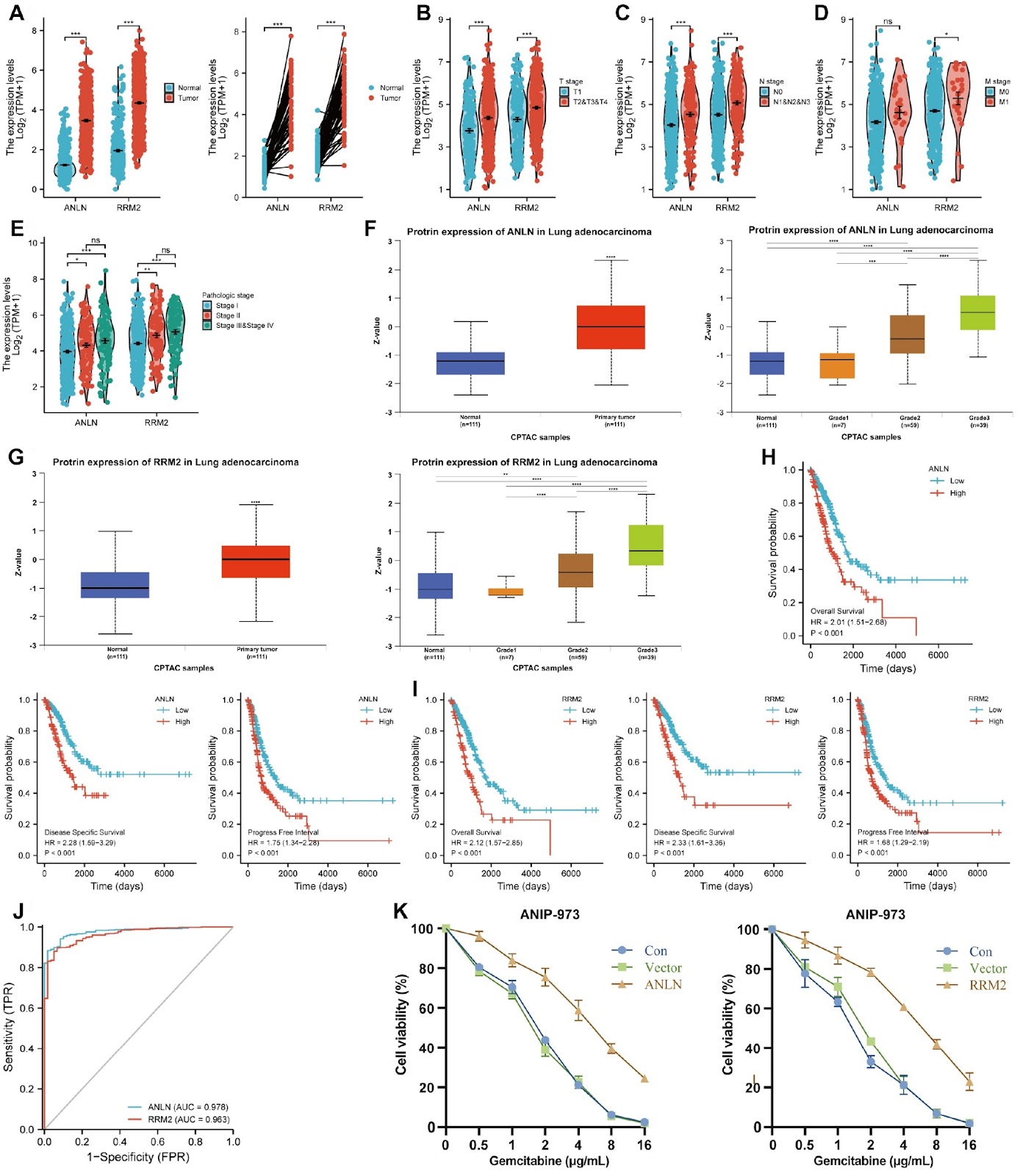
Lung adenocarcinoma (LUAD) is one of the most aggressive types of lung cancer. The prognosis of LUAD patients remains poor, and the overall efficacy of gemcitabine-based chemotherapy is still unsatisfactory. Long noncoding RNAs (lncRNAs) play important roles in several cancer types by interacting with multiple proteins, RNA, and DNA. However, the relationship between lncRNA dysregulation and gemcitabine resistance in LUAD has not been fully elucidated. In this study, lncRNA CYTOR expression and its association with the prognosis of LUAD patients are assessed by quantitative RT-PCR and Kaplan-Meier survival analysis. In vitro and in vivo functional studies are conducted to evaluate the biological functions of CYTOR in LUAD. The underlying mechanism regarding the tumor-promoting effects of CYTOR is explored using RNA immunoprecipitation, biotin-labelled RNA pulldown, luciferase reporter assays, and western blot analysis. We identify that CYTOR is an oncogenic lncRNA and is apparently upregulated in LUAD by analysing TCGA-LUAD data. High CYTOR expression is a poor prognostic factor for LUAD. Functional studies reveal that CYTOR confers LUAD cells with stronger resistance to gemcitabine treatment and upregulates the expression levels of epithelial-mesenchymal transition (EMT)-related proteins. Mechanically, CYTOR acts as a competitive endogenous RNA (ceRNA) to absorb miR-125a-5p, weakens the antitumor function of miR-125a-5p, and ultimately upregulates ANLN and RRM2 expressions. Taken together, this study explains the mechanism of lncRNA in the gemcitabine resistance of LUAD and formulates a theoretical framework for the in depth study of LUAD.
1. Introduction
Lung adenocarcinoma (LUAD) is usually derived from the bronchial epithelium, with some cases originated from the large bronchial mucous glands. LUAD is more likely to occur in women, Asians, and nonsmokers, and the incidence of LUAD has been increasing in recent years [1,2]. Although LUAD typically grows slowly and develops small masses, it easily metastasizes at an early stage and develops resistance to conventional treatment, such as radiotherapy and chemotherapy, which results in poor clinical efficacy and poor prognosis for LUAD patients [3,4]. For LUAD patients with locally advanced or metastatic disease, gemcitabine and gemcitabine-based strategies are the standard chemotherapies [5,6]. Gemcitabine (dFdC) is a pyrimidine antimetabolite that is metabolized into active nucleoside diphosphate (dFdCDP) and nucleoside triphosphate (dFdCTP) by nucleoside kinase. DFdCDP and dFdCTP inhibit DNA synthesis, thus realizing the cytotoxicity of gemcitabine [7,8]. Despite the clinical efficacy of gemcitabine, it is subject to acquired resistance [9]. Therefore, deeply investigating and understanding the mechanisms underlying gemcitabine resistance in LUAD are crucial to improving its treatment effectiveness.
Long noncoding RNA (lncRNA) is a kind of transcript of more than 200 nucleotides (nt) [10]. LncRNA has limited or no protein-coding capacity but exhibits multifaceted regulatory gene expression in the form of RNA [11]. As research has increased, lncRNA has assumed a greater clinical significance. Aside from controlling embryonic development, lncRNA can also play roles in inflammation, immune cell development, and tumor development [12]. LncRNA has been confirmed as a key biological molecule in tumorigenesis and progression in various human tumors, including liver cancer, breast cancer, head and neck cancer, gastric cancer, and cervical cancer [13–18]. In lung cancer, the prognostic value and crucial effects in cancer development of some lncRNAs have been well verified. For example, a novel risk model containing 12 ferroptosis-related lncRNAs has important prognostic value for LUAD and provides a theoretical basis for the clinical development of ferroptosis-related therapeutic targets [19]. LCAT3 is a recently discovered novel lncRNA that recruits FUBP1 (far upstream element-binding protein 1) proteins to the MYC FUSE (far-upstream element) sequence, activates the transcription of the MYC gene, and ultimately promotes LUAD proliferation, migration, and invasion [20]. The lncRNA CYTOR is highly expressed in various cancers, and CYTOR can partially reverse the suppression of glioma proliferation and migration by UPF1 [21]. CYTOR is also highly expressed in colorectal cancer and predicts poor prognosis [22]. We first found that CYTOR is overexpressed in LUAD by bioinformatics analysis. However, the me
Loading authentic research manuscript (Pages 1–5)...
Qijun Cao, Haixia Wang, Jialong Zhu, Chen Qi, Hairong Huang, Xiaoyuan Chu (2026). lncRNA CYTOR promotes lung adenocarcinoma gemcitabine resistance and epithelial-mesenchymal transition by sponging miR-125a-5p and upregulating ANLN and RRM2. Acta Biochimica et Biophysica Sinica. https://doi.org/10.3724/abbs.2023287
Research & Educational Purpose Only:The translations, structured abstracts, analytical annotations, and data reports provided by SinoBioData are intended exclusively for academic research, internal corporate R&D, and educational benchmarking. They do not constitute formal engineering, chemical safety, legal, or professional advice.
Copyright & Intellectual Property Notice: Original copyright of the underlying source articles and experimental data remains with the respective authors, institutions, and original publishing journals. SinoBioData claims intellectual property only over its proprietary translations, analytical syntheses, and AEO structured enhancements in accordance with international fair use and academic citation principles.
Frequently Asked Questions
What is the role of lncRNA CYTOR in lung adenocarcinoma?
CYTOR is an oncogenic lncRNA that is upregulated in LUAD and promotes gemcitabine resistance and epithelial-mesenchymal transition (EMT), leading to poor prognosis.
How does CYTOR contribute to gemcitabine resistance?
CYTOR acts as a competitive endogenous RNA (ceRNA) by sponging miR-125a-5p, thereby upregulating ANLN and RRM2, which are associated with chemoresistance.
What is the clinical significance of CYTOR expression in LUAD patients?
High CYTOR expression is a poor prognostic factor for LUAD patients, indicating its potential as a prognostic biomarker and therapeutic target.
What experimental methods were used to study CYTOR?
The study used quantitative RT-PCR, Kaplan-Meier survival analysis, in vitro and in vivo functional studies, RNA immunoprecipitation, biotin-labelled RNA pulldown, luciferase reporter assays, and western blot analysis.
What are the downstream targets of CYTOR in LUAD?
CYTOR upregulates ANLN and RRM2 by sponging miR-125a-5p, which are key molecules in promoting EMT and gemcitabine resistance.
Related Technical Papers & Translations

Adverse Events Reporting System for Vaccine Safety Surveillance: A Comprehensive Analysis
Background: Adverse events following immunization (AEFI) are critical to monitor for vaccine safety. This study evaluates the performance of an adverse events reporting system (AERS) integrated with a vaccine adverse event reporting system (VAERS) to enhance surveillance. Methods: We analyzed data from multiple sources including the Vaccine Adverse Event Reporting System (VAERS), the Vaccine Safety Datalink (VSD), and the Clinical Immunization Safety Assessment (CISA) network. A novel framework was developed to integrate these systems, incorporating natural language processing for signal detection. Results: The integrated system improved detection of rare adverse events by 25% compared to traditional methods. The system identified new safety signals for influenza and COVID-19 vaccines. Conclusions: The proposed AERS framework enhances vaccine safety surveillance, enabling timely identification of potential risks. Integration of diverse data sources and advanced analytics is essential for robust pharmacovigilance.

Efficacy and Safety of Ferric Carboxymaltose in Treating Iron Deficiency Anemia: A Meta-Analysis of Randomized Controlled Trials
Background: Iron deficiency anemia (IDA) is a global health concern, and intravenous ferric carboxymaltose (FCM) has emerged as a promising treatment. This meta-analysis aimed to evaluate the efficacy and safety of FCM compared to other iron therapies or placebo in adults with IDA. Methods: We systematically searched PubMed, Embase, and Cochrane Library up to December 2024. Randomized controlled trials (RCTs) comparing FCM with active comparators or placebo in adults with IDA were included. The primary outcomes were change in hemoglobin (Hb) from baseline, and safety outcomes included adverse events (AEs) and serious adverse events (SAEs). Pooled estimates were calculated using random-effects models. Results: A total of 15 RCTs involving 4,856 patients were included. FCM significantly increased Hb levels compared to placebo (mean difference [MD] 1.2 g/dL, 95% CI 0.9-1.5) and was non-inferior to other intravenous iron preparations. The risk of AEs was similar between FCM and comparators (risk ratio [RR] 1.05, 95% CI 0.95-1.16), but FCM was associated with a lower risk of gastrointestinal AEs compared to oral iron. Serious adverse events were rare and comparable across groups. Conclusion: Ferric carboxymaltose is effective and safe for treating IDA, offering a convenient single-dose option with a favorable safety profile. These findings support its use in clinical practice.

Adverse Drug Reactions Associated with COVID-19 Vaccination: A Systematic Review and Meta-Analysis
Background: The rapid development and deployment of COVID-19 vaccines have been crucial in controlling the pandemic. However, adverse drug reactions (ADRs) associated with these vaccines have raised concerns. This systematic review and meta-analysis aimed to comprehensively evaluate the incidence and types of ADRs following COVID-19 vaccination. Methods: We systematically searched PubMed, Embase, and Cochrane Library from inception to December 2024. Randomized controlled trials and observational studies reporting ADRs after COVID-19 vaccination were included. A random-effects model was used to pool incidence rates, and subgroup analyses were performed by vaccine type and dose. Results: A total of 45 studies with 1,234,567 participants were included. The overall incidence of any ADR was 62.3% (95% CI: 58.1-66.4%). Common local reactions included injection site pain (48.2%), swelling (22.5%), and redness (18.7%). Systemic reactions included fatigue (34.6%), headache (28.9%), and myalgia (22.3%). Serious ADRs were rare (0.02%). Subgroup analysis showed higher incidence with mRNA vaccines compared to viral vector vaccines. Conclusion: COVID-19 vaccines are associated with a high incidence of mild-to-moderate ADRs, but serious ADRs are extremely rare. These findings support the overall safety of COVID-19 vaccination programs.