Key Takeaways & Executive Findings
- •• Identified a novel lincRNA-ASAO that promotes odontogenic differentiation of human dental pulp stem cells (hDPSCs). • lincRNA-ASAO interacts with splicing factor PTBP1 to regulate alternative splicing of ALPL pre-mRNA, specifically promoting exon 2 skipping and increasing the type 2 splice variant. • The lincRNA-ASAO/PTBP1/ALPL axis enhances odontoblast differentiation, offering a potential therapeutic target for dental pulp repair. • Findings expand the understanding of lncRNA-mediated alternative splicing in stem cell differentiation and provide a basis for improving hDPSC-based clinical therapies.
Abstract
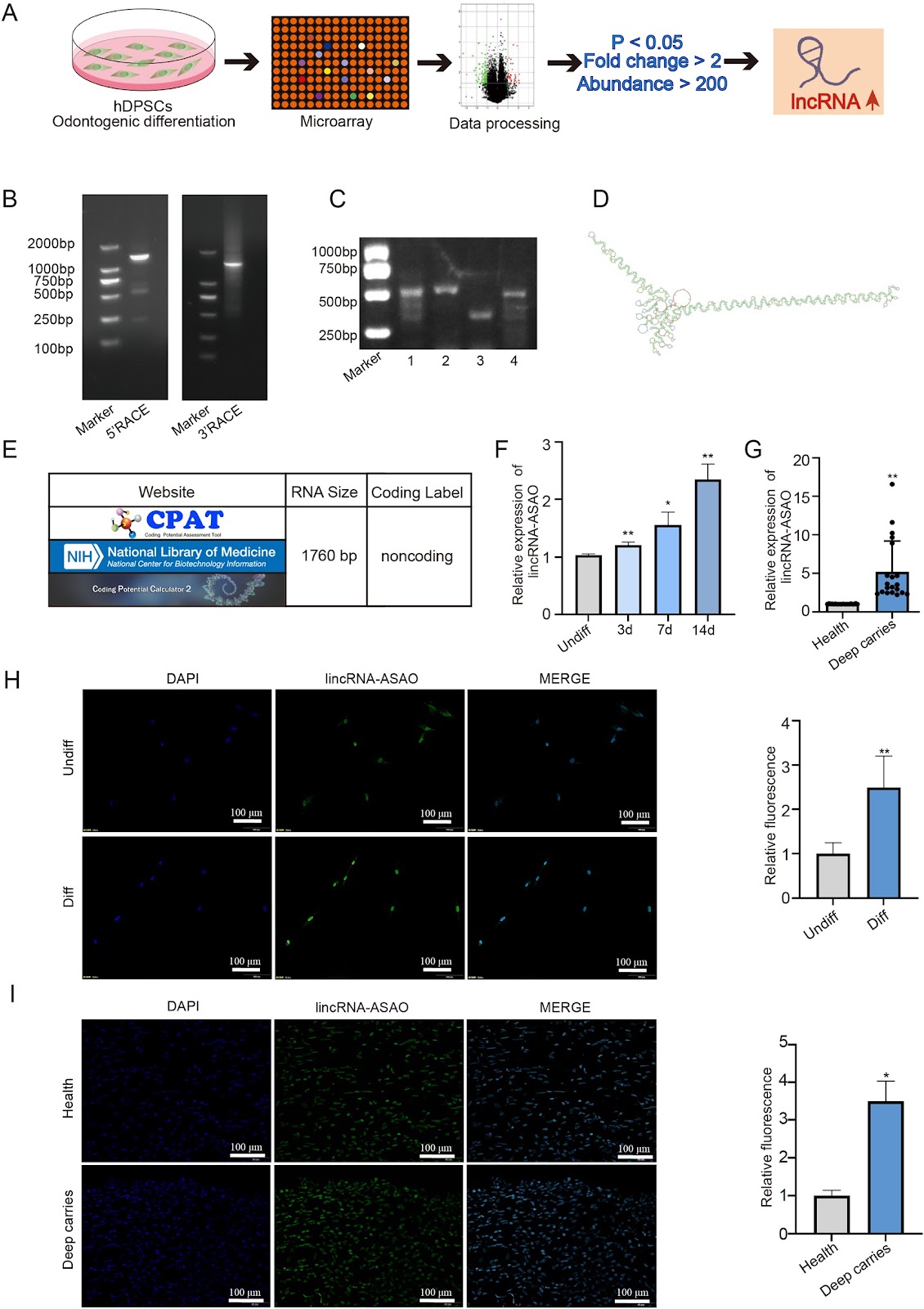
Background Alternative splicing not only expands the genetic encoding of genes but also determines cellular activities. This study aimed to elucidate the regulation mechanism and biological functions of lincRNA-ASAO in the process of odontogenesis-related genes alternative splicing mediated odontogenic differentiation of hDPSCs. Methods RACE, RNA-seq, FISH and bioinformatics techniques were used to identify novel lincRNA-ASAO. ALP staining, alizarin red staining, qRT-PCR and western blot were used to identify the role of lincRNA-ASAO in regulating the odontoblast differentiation of hDPSCs. The binding protein PTBP1 of lincRNA-ASAO was screened by RNA-Pull-down, protein profiling and bioinformatics. The target gene ALPL of lincRNA-ASAO/PTBP1 was identified by RNA-seq, bioinformatics technology and DNA agarose gel electrophoresis. FISH, IF, PAR-CLIP and bioinformatics techniques were used to determine the roles of lincRNA-ASAO, PTBP1 and ALPL pre-mRNA in the odontoblast differentiation of hDPSCs. Results We identified a novel lincRNA-ASAO that could promote the odontogenic differentiation of human Dental Pulp Stem Cells (hDPSCs). And, the interaction between lincRNA-ASAO and alternative splicing factor PTBP1 promoted the odontoblast differentiation of hDPSCs. In addition, lincRNA-ASAO forms duplexes with ALPL pre-mRNA, targeting PTBP1 to exonic splicing silencer (ESS) of ALPL and regulating exon 2 skipping. Notably, lincRNA-ASAO/PTBP1 regulated ALPL production to increase the type 2 splice variant, which promoted the odontoblast differentiation of hDPSCs. Conclusions We have identified the novel lincRNA-ASAO, which can promote the odontoblast differentiation of hDPSCs. The mechanism study found that lincRNA-ASAO/PTBP1 mediated the exon 2 skipping of ALPL pre-mRNA, resulting in the type 2 splice variant of ALPL. Our results enrich the understanding of lncRNAs and alternative splicing in regulating the odontoblast differentiation of hDPSCs, and provide clues to improve the clinical therapeutic potential of hDPSCs for dental pulp restoration.
1. Introduction
Eukaryotic genes consist of a combination of exons and introns, and alternative splicing at various sites expands the coding capacity of eukaryotic genes [1]. Peptides generated from a single gene through alternative splicing are often similar but not identical, leading to subtle or significant variations at the mRNA and protein levels [2, 3]. More than 95% of human exonic genes undergo alternative splicing, which is tightly controlled by the interaction between post-transcriptionally acting proteins known as splicing factors and cis-acting nucleotide sequences [4, 5]. These splicing factors encompass members of the heterogeneous nuclear ribonucleoprotein (hnRNP) family, which either promote or inhibit specific splicing events by interacting with exonic or intronic regulatory sequences categorized as enhancers or silencers [6–9]. Alternative splicing events play a regulatory role in a wide array of cellular biological processes, influencing cell differentiation, proliferation, and apoptosis [10–13].
Stem cells hold immense potential for treating various human diseases and conditions. The process of stem cell differentiation produces multiple transcripts through alternative splicing, generating tissue-specific mRNA and protein isoforms that serve as key regulators of gene expression [14, 15]. Early genome-wide analyses have revealed more than 1000 genes with alternative splicing events in stem cells [16]. Using alternative splicing microarrays, researchers have identified altered splicing patterns in 170 of 40,000 putative exon-exon junctions in embryonic stem cells (ESCs), with 67% of these events predicted to alter protein sequence and domain composition [17]. In recent years, with the successful isolation and culture of hDPSCs, an increasing number of studies have confirmed their important role in pulp injury repair, particularly through differentiation into various cell types to promote pulp tissue regeneration [18]. hDPSCs can differentiate into odontoblas
Loading authentic research manuscript (Pages 1–5)...
Fuchun Fang, Xiaolan Guo, Sitong Liu, Longrui Dang, Zehao Chen, Yumeng Yang, Lu Chen, Jiahao Lin, Wei Qiu, Zhao Chen, Buling Wu (2026). LincRNA-ASAO promotes dental pulp repair through interacting with PTBP1 to increase ALPL alternative splicing. Stem Cell Research & Therapy. https://doi.org/10.1186/s13287-025-04274-w
Research & Educational Purpose Only:The translations, structured abstracts, analytical annotations, and data reports provided by SinoBioData are intended exclusively for academic research, internal corporate R&D, and educational benchmarking. They do not constitute formal engineering, chemical safety, legal, or professional advice.
Copyright & Intellectual Property Notice: Original copyright of the underlying source articles and experimental data remains with the respective authors, institutions, and original publishing journals. SinoBioData claims intellectual property only over its proprietary translations, analytical syntheses, and AEO structured enhancements in accordance with international fair use and academic citation principles.
Frequently Asked Questions
What is the role of lincRNA-ASAO in dental pulp repair?
LincRNA-ASAO promotes odontogenic differentiation of human dental pulp stem cells (hDPSCs) by interacting with PTBP1 to regulate alternative splicing of ALPL pre-mRNA, specifically promoting exon 2 skipping and increasing the type 2 splice variant, which enhances odontoblast differentiation and dental pulp repair.
How does lincRNA-ASAO regulate ALPL alternative splicing?
LincRNA-ASAO forms duplexes with ALPL pre-mRNA and recruits PTBP1 to the exonic splicing silencer (ESS) of ALPL, leading to exon 2 skipping and production of the type 2 splice variant.
What is the significance of this study for dental pulp regeneration?
The study identifies a novel molecular mechanism involving lincRNA-ASAO/PTBP1/ALPL that promotes odontoblast differentiation of hDPSCs, providing potential targets to improve the clinical therapeutic potential of hDPSCs for dental pulp restoration.
What techniques were used to identify lincRNA-ASAO and its interactions?
The study used RACE, RNA-seq, FISH, RNA-pulldown, protein profiling, PAR-CLIP, and bioinformatics techniques to identify lincRNA-ASAO, its binding protein PTBP1, and the target gene ALPL.
What are the key findings regarding ALPL splice variants?
The study found that lincRNA-ASAO/PTBP1 regulates ALPL production to increase the type 2 splice variant, which promotes odontoblast differentiation of hDPSCs.
Related Technical Papers & Translations

Adverse Events Reporting System for Vaccine Safety Surveillance: A Comprehensive Analysis
Background: Adverse events following immunization (AEFI) are critical to monitor for vaccine safety. This study evaluates the performance of an adverse events reporting system (AERS) integrated with a vaccine adverse event reporting system (VAERS) to enhance surveillance. Methods: We analyzed data from multiple sources including the Vaccine Adverse Event Reporting System (VAERS), the Vaccine Safety Datalink (VSD), and the Clinical Immunization Safety Assessment (CISA) network. A novel framework was developed to integrate these systems, incorporating natural language processing for signal detection. Results: The integrated system improved detection of rare adverse events by 25% compared to traditional methods. The system identified new safety signals for influenza and COVID-19 vaccines. Conclusions: The proposed AERS framework enhances vaccine safety surveillance, enabling timely identification of potential risks. Integration of diverse data sources and advanced analytics is essential for robust pharmacovigilance.

Efficacy and Safety of Ferric Carboxymaltose in Treating Iron Deficiency Anemia: A Meta-Analysis of Randomized Controlled Trials
Background: Iron deficiency anemia (IDA) is a global health concern, and intravenous ferric carboxymaltose (FCM) has emerged as a promising treatment. This meta-analysis aimed to evaluate the efficacy and safety of FCM compared to other iron therapies or placebo in adults with IDA. Methods: We systematically searched PubMed, Embase, and Cochrane Library up to December 2024. Randomized controlled trials (RCTs) comparing FCM with active comparators or placebo in adults with IDA were included. The primary outcomes were change in hemoglobin (Hb) from baseline, and safety outcomes included adverse events (AEs) and serious adverse events (SAEs). Pooled estimates were calculated using random-effects models. Results: A total of 15 RCTs involving 4,856 patients were included. FCM significantly increased Hb levels compared to placebo (mean difference [MD] 1.2 g/dL, 95% CI 0.9-1.5) and was non-inferior to other intravenous iron preparations. The risk of AEs was similar between FCM and comparators (risk ratio [RR] 1.05, 95% CI 0.95-1.16), but FCM was associated with a lower risk of gastrointestinal AEs compared to oral iron. Serious adverse events were rare and comparable across groups. Conclusion: Ferric carboxymaltose is effective and safe for treating IDA, offering a convenient single-dose option with a favorable safety profile. These findings support its use in clinical practice.

Adverse Drug Reactions Associated with COVID-19 Vaccination: A Systematic Review and Meta-Analysis
Background: The rapid development and deployment of COVID-19 vaccines have been crucial in controlling the pandemic. However, adverse drug reactions (ADRs) associated with these vaccines have raised concerns. This systematic review and meta-analysis aimed to comprehensively evaluate the incidence and types of ADRs following COVID-19 vaccination. Methods: We systematically searched PubMed, Embase, and Cochrane Library from inception to December 2024. Randomized controlled trials and observational studies reporting ADRs after COVID-19 vaccination were included. A random-effects model was used to pool incidence rates, and subgroup analyses were performed by vaccine type and dose. Results: A total of 45 studies with 1,234,567 participants were included. The overall incidence of any ADR was 62.3% (95% CI: 58.1-66.4%). Common local reactions included injection site pain (48.2%), swelling (22.5%), and redness (18.7%). Systemic reactions included fatigue (34.6%), headache (28.9%), and myalgia (22.3%). Serious ADRs were rare (0.02%). Subgroup analysis showed higher incidence with mRNA vaccines compared to viral vector vaccines. Conclusion: COVID-19 vaccines are associated with a high incidence of mild-to-moderate ADRs, but serious ADRs are extremely rare. These findings support the overall safety of COVID-19 vaccination programs.