Key Takeaways & Executive Findings
- •• Intranasal delivery of sEV-encased phloroglucinol (sEV-Phl) significantly reduces oxidative stress and lipid peroxidation in a chronic MPTP rat model of Parkinson’s disease. • sEV-Phl treatment markedly improves both motor and non-motor behavioral deficits in PD rats, suggesting potential for comprehensive symptomatic relief. • The therapy promotes neurogenesis, as evidenced by increased markers (Ki67, BrdU, FOXA2), indicating regenerative potential in the diseased brain. • DPSC-derived sEVs serve as effective nanocarriers for targeted drug delivery across the blood-brain barrier via intranasal administration, enhancing the clinical applicability of phloroglucinol.
Abstract
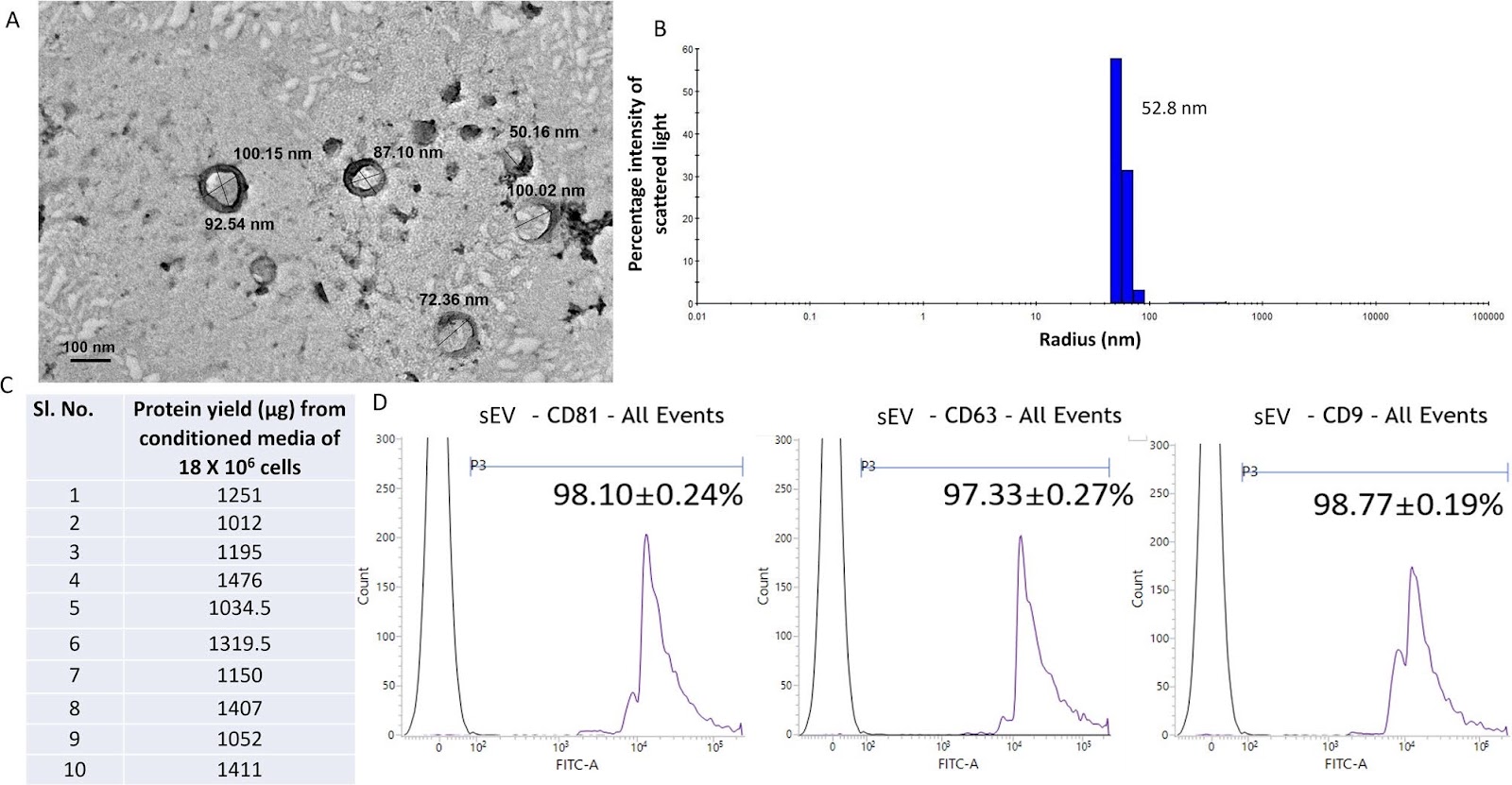
Background Parkinson’s disease (PD) is characterized by dopaminergic (DA) neuron degeneration in the substantia nigra pars compacta (SNpc) driven by oxidative stress, inflammation, and impaired neurogenesis. Phloroglucinol, a polyphenolic antioxidant, has demonstrated neuroprotective effects in PD models but suffers from limited clinical applicability due to poor blood-brain barrier (BBB) permeability. Small extracellular vesicles (sEV) derived from dental pulp stem cells (DPSCs) exhibit neuroprotective and immunomodulatory properties and serve as promising vehicles for targeted drug delivery across the BBB. This study aimed to evaluate the therapeutic efficacy of intranasally administered sEV-encased phloroglucinol (sEV-Phl) in a chronic MPTP rat model of PD. Methods DPSC-derived sEV were isolated via density gradient ultracentrifugation and characterized using Transmission Electron Microscopy (TEM), Dynamic-Light-Scattering (DLS), and CD marker expression. Phloroglucinol was encased in sEV (sEV-Phl) using sonication. Antioxidant properties were tested in vitro using an H2DCF.DA assay in SH-SY5Y cells exposed to 6-OHDA. Chronic MPTP-treated male Wistar rats received intranasal sEV-Phl, with motor and non-motor behaviours evaluated up to 4-weeks post-MPTP treatment. TH-positive neurons, neurogenesis (Ki67, BrdU and FOXA2), lipid-peroxidation, and neurotransmitter-levels were analyzed. sEV biodistribution was tracked via near-infrared imaging and localization in neuronal and glial cells was confirmed with PKH-26 labelling, with confocal-imaging further verifying localization in neuronal and glial cells. TNF-α expression was assessed as a marker of neuroinflammation. Results sEV displayed high purity and homogeneity. sEV-Phl significantly reduced oxidative stress both in vitro and in vivo, as indicated by decreased ROS and lipid peroxidation levels. sEV-Phl treated MPTP rats demonstrated marked improvement in motor and non-motor behaviours compared to MPTP rats. Immunohistochemical analysis revealed
1. Introduction
Parkinson’s disease (PD) is a complex neurodegenerative disorder marked by the selective loss of dopaminergic (DA) neurons in the substantia nigra pars compacta (SNpc) of the midbrain, resulting in striatal dopamine depletion and disruption of basal ganglia circuitry [1, 2]. By the time motor symptoms of PD manifest, an estimated 60–70% of midbrain DA neurons have already been lost [3, 4]. Despite significant advances in recent years, current pharmacological and other therapeutic interventions are yet not able to halt PD progression or support the survival of existing DA neurons. Dopamine and its analogues are the mainstay in PD therapy, but their long-term use is associated with progressively severe side-effects and the production of reactive oxygen species (ROS) due to autoxidation, DA neurons being particularly susceptible to oxidative damage due to the presence of both dopamine and high levels of iron.
While ROS (which contribute to oxidative stress) cannot be directly estimated in living patients or post-mortem tissues due to their short half-life, several indirect indicators of ROS activity in the post-mortem Parkinsonian brain support the significant role of oxidative stress in the disease. These include increased membrane peroxidation, as indicated by elevated levels of TBA (thiobarbituric acid)-reactive substances; increased cysteinyl adducts of dopamine; and ROS-mediated DNA damage, evidenced by higher levels of 8-hydroxy-2-deoxyguanosine in the substantia nigra pars compacta (SNpc) [5–7]. In addition to oxidative stress, inflammation and the lack of compensation for damaged/lost DA neurons are two other key factors that significantly contribute to the progression and worsening of neurodegeneration in PD. Unfortunately, dopamine analogues do not address these factors, and thus effective treatment in PD should incorporate supportive therapies that can provide antioxidative, anti-inflammatory and regenerative relief, ideally delivered through a non-invasive route.
Loading authentic research manuscript (Pages 1–5)...
Kallolika Mondal, Rituparna Ghanty, Anita Mahadevan, Girish Waghmare, Rashmi Santhoshkumar, Nandeesh BN, Indrani Datta (2026). Intranasal delivery of DPSC-derived small extracellular vesicles-encased phloroglucinol attenuates non-motor and motor deficits and promotes neurogenesis in an in vivo rat model of Parkinson’s disease. Stem Cell Research & Therapy. https://doi.org/10.1186/s13287-025-04573-2
Research & Educational Purpose Only:The translations, structured abstracts, analytical annotations, and data reports provided by SinoBioData are intended exclusively for academic research, internal corporate R&D, and educational benchmarking. They do not constitute formal engineering, chemical safety, legal, or professional advice.
Copyright & Intellectual Property Notice: Original copyright of the underlying source articles and experimental data remains with the respective authors, institutions, and original publishing journals. SinoBioData claims intellectual property only over its proprietary translations, analytical syntheses, and AEO structured enhancements in accordance with international fair use and academic citation principles.
Frequently Asked Questions
What is the main objective of this study?
The study aims to evaluate the therapeutic efficacy of intranasally administered small extracellular vesicles (sEV) derived from dental pulp stem cells (DPSCs) that encapsulate phloroglucinol (sEV-Phl) in a chronic MPTP rat model of Parkinson’s disease, focusing on motor and non-motor deficits, oxidative stress, and neurogenesis.
How was phloroglucinol delivered to the brain?
Phloroglucinol was encapsulated in DPSC-derived small extracellular vesicles (sEV-Phl) and administered intranasally, which allows for non-invasive delivery across the blood-brain barrier, enhancing its bioavailability and therapeutic potential.
What were the key findings of the study?
The study found that sEV-Phl significantly reduced oxidative stress and lipid peroxidation, improved motor and non-motor behaviors, and promoted neurogenesis in MPTP-treated rats, suggesting a multi-faceted neuroprotective effect.
Why is intranasal delivery advantageous for PD treatment?
Intranasal delivery is non-invasive, bypasses the blood-brain barrier to some extent, and allows for direct transport to the brain via olfactory and trigeminal pathways, potentially reducing systemic side effects and improving patient compliance.
What is the significance of using dental pulp stem cell-derived sEVs?
Dental pulp stem cells are easily accessible and their sEVs possess inherent neuroprotective and immunomodulatory properties, making them ideal natural nanocarriers for targeted drug delivery in neurodegenerative diseases like Parkinson's.
Related Technical Papers & Translations

Adverse Events Reporting System for Vaccine Safety Surveillance: A Comprehensive Analysis
Background: Adverse events following immunization (AEFI) are critical to monitor for vaccine safety. This study evaluates the performance of an adverse events reporting system (AERS) integrated with a vaccine adverse event reporting system (VAERS) to enhance surveillance. Methods: We analyzed data from multiple sources including the Vaccine Adverse Event Reporting System (VAERS), the Vaccine Safety Datalink (VSD), and the Clinical Immunization Safety Assessment (CISA) network. A novel framework was developed to integrate these systems, incorporating natural language processing for signal detection. Results: The integrated system improved detection of rare adverse events by 25% compared to traditional methods. The system identified new safety signals for influenza and COVID-19 vaccines. Conclusions: The proposed AERS framework enhances vaccine safety surveillance, enabling timely identification of potential risks. Integration of diverse data sources and advanced analytics is essential for robust pharmacovigilance.

Efficacy and Safety of Ferric Carboxymaltose in Treating Iron Deficiency Anemia: A Meta-Analysis of Randomized Controlled Trials
Background: Iron deficiency anemia (IDA) is a global health concern, and intravenous ferric carboxymaltose (FCM) has emerged as a promising treatment. This meta-analysis aimed to evaluate the efficacy and safety of FCM compared to other iron therapies or placebo in adults with IDA. Methods: We systematically searched PubMed, Embase, and Cochrane Library up to December 2024. Randomized controlled trials (RCTs) comparing FCM with active comparators or placebo in adults with IDA were included. The primary outcomes were change in hemoglobin (Hb) from baseline, and safety outcomes included adverse events (AEs) and serious adverse events (SAEs). Pooled estimates were calculated using random-effects models. Results: A total of 15 RCTs involving 4,856 patients were included. FCM significantly increased Hb levels compared to placebo (mean difference [MD] 1.2 g/dL, 95% CI 0.9-1.5) and was non-inferior to other intravenous iron preparations. The risk of AEs was similar between FCM and comparators (risk ratio [RR] 1.05, 95% CI 0.95-1.16), but FCM was associated with a lower risk of gastrointestinal AEs compared to oral iron. Serious adverse events were rare and comparable across groups. Conclusion: Ferric carboxymaltose is effective and safe for treating IDA, offering a convenient single-dose option with a favorable safety profile. These findings support its use in clinical practice.

Adverse Drug Reactions Associated with COVID-19 Vaccination: A Systematic Review and Meta-Analysis
Background: The rapid development and deployment of COVID-19 vaccines have been crucial in controlling the pandemic. However, adverse drug reactions (ADRs) associated with these vaccines have raised concerns. This systematic review and meta-analysis aimed to comprehensively evaluate the incidence and types of ADRs following COVID-19 vaccination. Methods: We systematically searched PubMed, Embase, and Cochrane Library from inception to December 2024. Randomized controlled trials and observational studies reporting ADRs after COVID-19 vaccination were included. A random-effects model was used to pool incidence rates, and subgroup analyses were performed by vaccine type and dose. Results: A total of 45 studies with 1,234,567 participants were included. The overall incidence of any ADR was 62.3% (95% CI: 58.1-66.4%). Common local reactions included injection site pain (48.2%), swelling (22.5%), and redness (18.7%). Systemic reactions included fatigue (34.6%), headache (28.9%), and myalgia (22.3%). Serious ADRs were rare (0.02%). Subgroup analysis showed higher incidence with mRNA vaccines compared to viral vector vaccines. Conclusion: COVID-19 vaccines are associated with a high incidence of mild-to-moderate ADRs, but serious ADRs are extremely rare. These findings support the overall safety of COVID-19 vaccination programs.