Key Takeaways & Executive Findings
- •• IL-10-engineered MSCs (MSC-IL-10) maintain mesenchymal phenotype and multipotency while secreting robust IL-10, enhancing their immunomodulatory capacity. • MSC-IL-10 significantly reduces pro-inflammatory cytokines (TNF-α, IL-1β, IL-6, IL-12) and Nos2 expression in vitro, outperforming wild-type MSCs. • In LPS-induced endotoxemia, MSC-IL-10 treatment lowers systemic inflammation, restores leukocyte counts, and attenuates CD11b⁺ inflammatory cell recruitment, surpassing MSC-WT. • MSC-IL-10 mitigates lung tissue damage and biodistributes to liver, lungs, and spleen, supporting its potential as a cell-based therapy for sepsis and inflammatory disorders.
Abstract
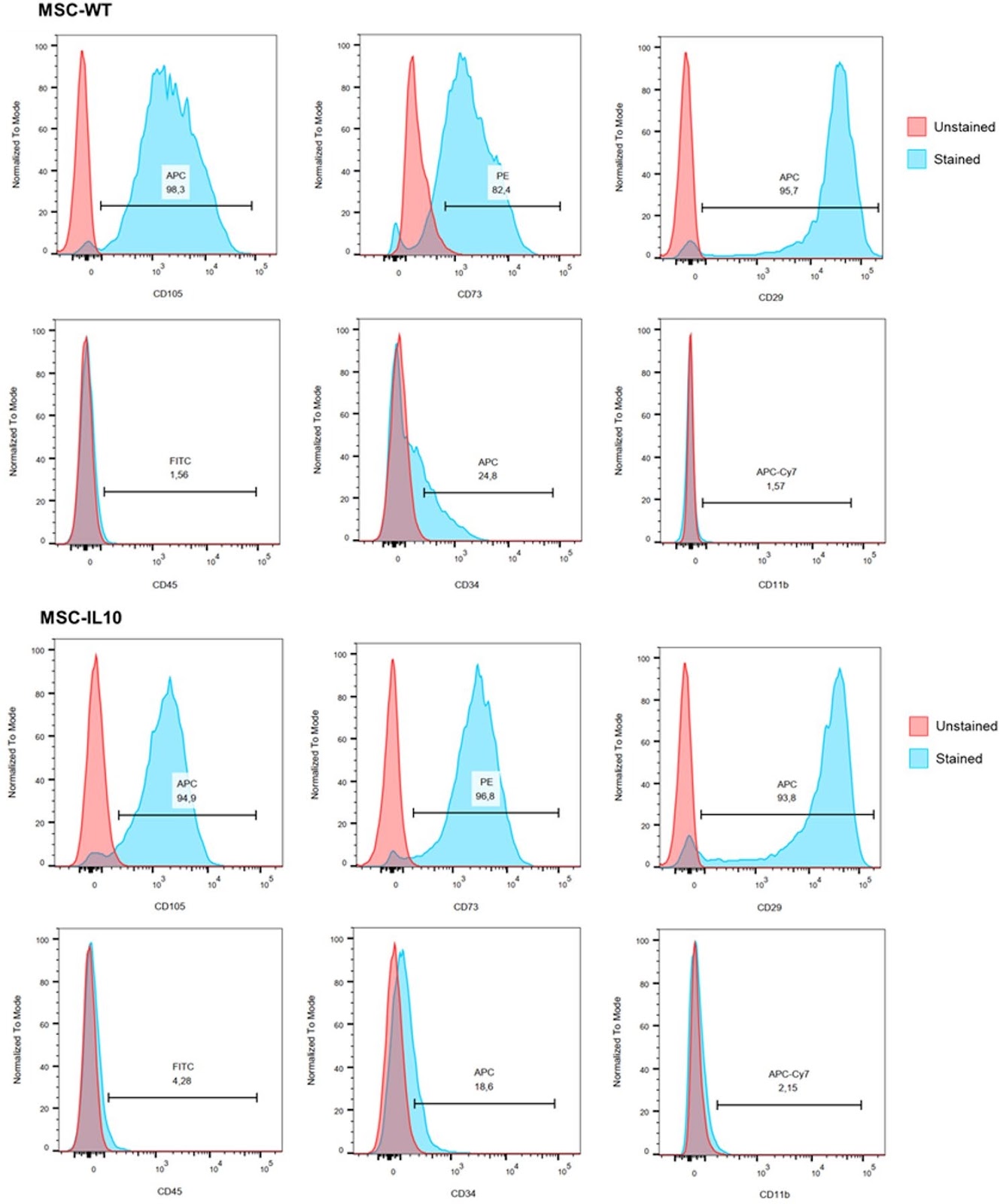
Introduction A dysregulated inflammatory response to infection can lead to sepsis, a leading cause of mortality worldwide, and effective anti-inflammatory therapies remain limited. Mesenchymal stem/stromal cells (MSCs) are attractive candidates as immunomodulatory agents. This study evaluated whether genetic modification of MSCs to express interleukin-10 (IL-10), a key anti-inflammatory cytokine, enhances their immunomodulatory effects. Methods Bone marrow-derived MSCs from C57Bl/6 mice were genetically engineered by lentiviral transduction to express mouse IL-10 (MSC-IL-10). The immunomodulatory activity in vitro was assessed by co-cultures with macrophages stimulated with LPS and IFN-γ, as well as in Con A–stimulated splenocytes. BALB/c mice subjected to lipopolysaccharide (LPS)-induced endotoxemia were treated with vehicle, dexamethasone, wild-type MSCs (MSC-WT), or MSC-IL-10. Survival, plasma cytokines, leukocyte profiles, CD11b⁺ inflammatory cells, and organ histopathology and biodistribution were evaluated in vivo. Results MSC-IL-10 maintained the mesenchymal phenotype and multipotent characteristics while exhibiting robust IL-10 expression. In in vitro assays, MSC-IL-10 significantly decreased the production of the cytokines TNF-α, IL-1β, IL-6, IL-12 or Nos2 expression by stimulated macrophages or splenocytes, demonstrating superior immunomodulatory effects compared to MSC-WT. In in vivo mice models, MSC-IL-10 significantly reduced systemic pro-inflammatory cytokines, restored circulating leukocyte counts, and attenuated CD11b⁺ (Mac-1 integrin) inflammatory cell recruitment, surpassing MSC-WT-treated groups. Importantly, MSC-IL-10 mitigated tissue damage mainly to lungs and exhibited biodistribution to liver, lungs and spleen in LPS-challenged mice. Conclusions These results support an enhanced immunomodulatory effect of IL-10-expressing MSCs as a promising cell-based therapeutic approach for sepsis and other inflammatory and immune mediated disorders.
1. Introduction
Inflammation plays a key role in the protection against infections, but also in restoring the body’s homeostasis, as well as repairing, reshaping, and renewing tissues in a range of challenging medical conditions. Infections from Gram-negative bacteria can trigger inflammation by lipopolysaccharides (LPS) activation of toll like receptor 4 (TLR4), which initiates a central inflammatory response mediated by MyD88-dependent and TRIF-dependent intracellular signaling, leading to the activation of the transcription factors NF-κB and IRF3 [1, 20]. Activation of TLR4 results in the production of pro-inflammatory cytokines, chemokines, and vasoactive mediators that promote vasodilation, increased vascular permeability, and the recruitment of leukocytes to the site of infection [5].
When the inflammatory response becomes excessive or poorly regulated, it can culminate in sepsis, which is a complex clinical syndrome characterized by a dysregulated systemic inflammatory response to infection, resulting in potentially fatal organ dysfunction. When sepsis progresses to persistent hypotension and tissue hypoperfusion despite adequate fluid resuscitation, it is defined as septic shock. Endotoxic shock refers specifically to sepsis caused by Gram-negative bacteria, whose cell walls contain LPS, also known as endotoxins [9, 30].
The immune response in sepsis triggers intracellular signaling pathways and production of pro-inflammatory cytokines, especially tumor necrosis factor alpha (TNF-α), interleukin-1 beta (IL-1β), and interleukin-6 (IL-6) [1]. Massive cytokine release causes systemic inflammation, vasodilation, endothelial activation, increased vascular permeability, and leukocyte recruitment, leading to hypotension, tissue injury, and microthrombosis [11, 16]. Microvascular dysfunction and hypotension impair oxygen delivery, resulting in cellular hypoxia, mitochondrial dysfunction, and multi-organ failure, particularly affecting the lungs, liver, and kidneys.
Loading authentic research manuscript (Pages 1–5)...
Diego de Carvalho Carneiro, Cássio Santana Meira, Rosane Borges Dias, Vinícius Pinto Costa Rocha, Patrícia Kauanna Fonseca Damasceno, Josiane Dantas Viana Barbosa, Milena Botelho Pereira Soares (2026). Interleukin-10-engineered mesenchymal stem/stromal cells exhibit robust immunomodulatory effects in vitro and in vivo. Stem Cell Research & Therapy. https://doi.org/10.1186/s13287-026-05093-3
Research & Educational Purpose Only:The translations, structured abstracts, analytical annotations, and data reports provided by SinoBioData are intended exclusively for academic research, internal corporate R&D, and educational benchmarking. They do not constitute formal engineering, chemical safety, legal, or professional advice.
Copyright & Intellectual Property Notice: Original copyright of the underlying source articles and experimental data remains with the respective authors, institutions, and original publishing journals. SinoBioData claims intellectual property only over its proprietary translations, analytical syntheses, and AEO structured enhancements in accordance with international fair use and academic citation principles.
Frequently Asked Questions
What is the main finding of this study?
The study demonstrates that mesenchymal stem/stromal cells engineered to express IL-10 (MSC-IL-10) exhibit enhanced immunomodulatory effects both in vitro and in vivo, significantly reducing pro-inflammatory cytokines and tissue damage in a mouse model of endotoxemia, suggesting a promising cell-based therapy for sepsis.
How were MSCs engineered to express IL-10?
Bone marrow-derived MSCs from C57Bl/6 mice were genetically modified using lentiviral transduction to express mouse IL-10, resulting in MSC-IL-10 that maintained their mesenchymal phenotype and multipotent characteristics.
What in vitro assays were used to assess immunomodulation?
The immunomodulatory activity of MSC-IL-10 was assessed by co-culturing with macrophages stimulated with LPS and IFN-γ, and with Con A-stimulated splenocytes, measuring the production of pro-inflammatory cytokines and Nos2 expression.
What were the in vivo outcomes in the endotoxemia model?
In LPS-induced endotoxemia in BALB/c mice, MSC-IL-10 treatment significantly reduced systemic pro-inflammatory cytokines, restored circulating leukocyte counts, attenuated CD11b⁺ inflammatory cell recruitment, and mitigated tissue damage, particularly in the lungs, compared to wild-type MSCs.
What is the potential clinical significance of this research?
The enhanced immunomodulatory effects of IL-10-expressing MSCs suggest they could be a promising cell-based therapeutic approach for sepsis and other inflammatory and immune-mediated disorders, potentially offering a more effective anti-inflammatory strategy than unmodified MSCs.
Related Technical Papers & Translations

Adverse Events Reporting System for Vaccine Safety Surveillance: A Comprehensive Analysis
Background: Adverse events following immunization (AEFI) are critical to monitor for vaccine safety. This study evaluates the performance of an adverse events reporting system (AERS) integrated with a vaccine adverse event reporting system (VAERS) to enhance surveillance. Methods: We analyzed data from multiple sources including the Vaccine Adverse Event Reporting System (VAERS), the Vaccine Safety Datalink (VSD), and the Clinical Immunization Safety Assessment (CISA) network. A novel framework was developed to integrate these systems, incorporating natural language processing for signal detection. Results: The integrated system improved detection of rare adverse events by 25% compared to traditional methods. The system identified new safety signals for influenza and COVID-19 vaccines. Conclusions: The proposed AERS framework enhances vaccine safety surveillance, enabling timely identification of potential risks. Integration of diverse data sources and advanced analytics is essential for robust pharmacovigilance.

Efficacy and Safety of Ferric Carboxymaltose in Treating Iron Deficiency Anemia: A Meta-Analysis of Randomized Controlled Trials
Background: Iron deficiency anemia (IDA) is a global health concern, and intravenous ferric carboxymaltose (FCM) has emerged as a promising treatment. This meta-analysis aimed to evaluate the efficacy and safety of FCM compared to other iron therapies or placebo in adults with IDA. Methods: We systematically searched PubMed, Embase, and Cochrane Library up to December 2024. Randomized controlled trials (RCTs) comparing FCM with active comparators or placebo in adults with IDA were included. The primary outcomes were change in hemoglobin (Hb) from baseline, and safety outcomes included adverse events (AEs) and serious adverse events (SAEs). Pooled estimates were calculated using random-effects models. Results: A total of 15 RCTs involving 4,856 patients were included. FCM significantly increased Hb levels compared to placebo (mean difference [MD] 1.2 g/dL, 95% CI 0.9-1.5) and was non-inferior to other intravenous iron preparations. The risk of AEs was similar between FCM and comparators (risk ratio [RR] 1.05, 95% CI 0.95-1.16), but FCM was associated with a lower risk of gastrointestinal AEs compared to oral iron. Serious adverse events were rare and comparable across groups. Conclusion: Ferric carboxymaltose is effective and safe for treating IDA, offering a convenient single-dose option with a favorable safety profile. These findings support its use in clinical practice.

Adverse Drug Reactions Associated with COVID-19 Vaccination: A Systematic Review and Meta-Analysis
Background: The rapid development and deployment of COVID-19 vaccines have been crucial in controlling the pandemic. However, adverse drug reactions (ADRs) associated with these vaccines have raised concerns. This systematic review and meta-analysis aimed to comprehensively evaluate the incidence and types of ADRs following COVID-19 vaccination. Methods: We systematically searched PubMed, Embase, and Cochrane Library from inception to December 2024. Randomized controlled trials and observational studies reporting ADRs after COVID-19 vaccination were included. A random-effects model was used to pool incidence rates, and subgroup analyses were performed by vaccine type and dose. Results: A total of 45 studies with 1,234,567 participants were included. The overall incidence of any ADR was 62.3% (95% CI: 58.1-66.4%). Common local reactions included injection site pain (48.2%), swelling (22.5%), and redness (18.7%). Systemic reactions included fatigue (34.6%), headache (28.9%), and myalgia (22.3%). Serious ADRs were rare (0.02%). Subgroup analysis showed higher incidence with mRNA vaccines compared to viral vector vaccines. Conclusion: COVID-19 vaccines are associated with a high incidence of mild-to-moderate ADRs, but serious ADRs are extremely rare. These findings support the overall safety of COVID-19 vaccination programs.