Key Takeaways & Executive Findings
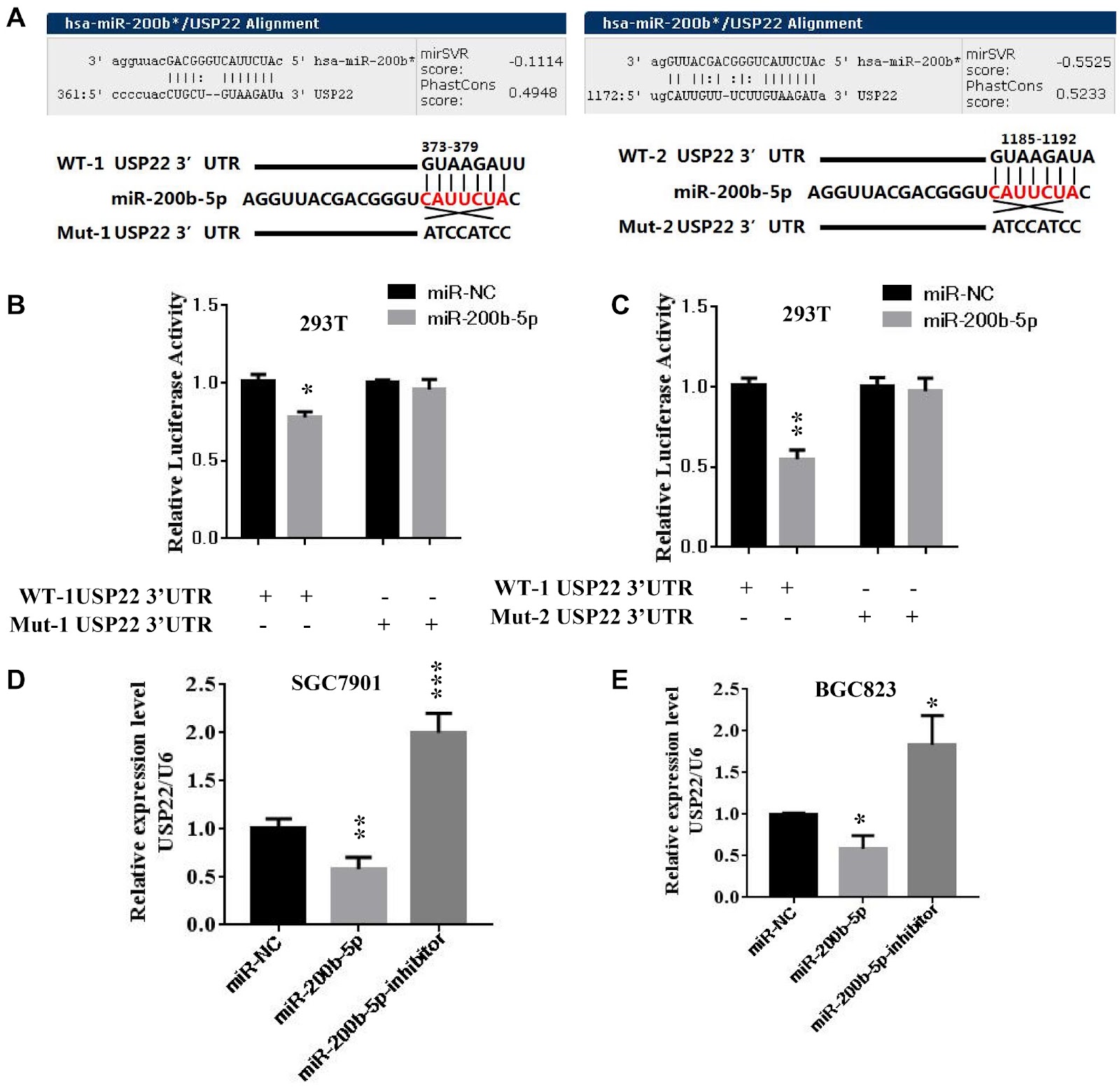
- •• miR-200b-5p directly targets USP22 by binding to its 3'UTR, leading to reduced USP22 expression in gastric cancer cells. • Overexpression of miR-200b-5p significantly inhibits gastric cancer cell proliferation and migration in vitro and suppresses tumor growth in vivo. • The tumor-suppressive effects of miR-200b-5p are mediated through downregulation of USP22, which in turn inhibits the NF-κB signaling pathway. • The inverse correlation between miR-200b-5p and USP22 expression in gastric cancer tissues suggests their potential as diagnostic biomarkers and therapeutic targets.
Abstract
Gastric cancer (GC) is an aggressive tumor type with an intricate pathogenesis and limited therapeutic options. Ubiquitin-specific protease 22 (USP22) is a protein implicated in cell proliferation, metastasis, and tumorigenesis. However, the regulatory mechanisms governing USP22 in GC are still not fully understood. In this study, we perform bioinformatics analysis to identify conserved miRNA recognition sites for miR-200b-5p within the 3′UTR of USP22. Validation via luciferase reporter assay confirms the transcriptional regulation of USP22 by miR-200b-5p. Overexpression of miR-200b-5p markedly inhibits the proliferation and migration of GC cells in vitro and suppresses tumor growth in vivo. Conversely, ectopic expression of USP22 reversed this effect by modulating the NF-κB signaling pathway. Additionally, qPCR analysis reveals an inverse correlation between the miR-200b-5p level and USP22 expression in GC. Collectively, our findings indicate that miR-200b-5p-mediated inhibition of USP22 attenuates cell proliferation by targeting the NF-κB signaling pathway in GC, suggesting that miR-200b-5p and USP22 could serve as potential diagnostic or therapeutic targets for gastric cancer and other related human diseases.
1. Introduction
Gastric cancer is one of the most aggressive malignant tumors. It is the second leading cause of cancer-related death worldwide and the fourth most commonly diagnosed cancer [1]. Treatment for GC is still limited due to a lack of effective targets. Surgical resection remains the most effective treatment approach, although recurrence rates postsurgery in many patients remain high, and the five-year survival rate is less than 20% [1–3]. Owing to the complex pathogenesis and numerous pathogenic factors of GC, the potential molecular pathways involved in its development are not fully understood.
USP22 is a member of the ubiquitin-specific processing enzymes on human chromosome 17 that encodes an approximately 66 kDa protein product. USP22 is a subunit of the hSAGA complex that regulates a series of biochemical reactions in cells, mainly through deubiquitination modification, including cell growth, metabolism, tumor formation, the cell cycle, transcriptional activation, and signal transduction. Recent studies have shown that USP22 is involved mainly in tumorigenesis by regulating factors such as Bmi-1, MYC, FBP1, and TRF1 [4–9]; however, how USP22 regulates and participates in tumorigenesis is still unclear.
MicroRNAs (miRNAs) are a type of endogenous, single-stranded, noncoding chromosomal RNA that exerts crucial regulatory functions in cells by explicitly targeting the messenger RNA (mRNA) 3′ untranslated region (UTR), causing mRNA degradation and affecting translation. miRNAs regulate pathways that affect development, virus defense, hematological processes, organ formation, cell proliferation and death, fat metabolism, etc., and may act as oncogenes or tumor suppressors [10–13]. Previous research has demonstrated that USP22 is a target of microRNA-362-3p, which inhibits retinoblastoma growth by reducing the deubiquitination of LSD1 [14]. Moreover, another study suggested that the A1BG-AS1/miR-148a-3p/USP22 axis controls osteosarcoma cell growth and metastasis by stabilizing SIRT1 expression [15]. Additionally, microRNA-30e-5p inhibits the tumorigenesis of non-small cell lung cancer by regulating USP22-mediated Sirt1 [16]. All these data suggest a robust regulatory connection between microRNAs and USP22.
Loading authentic research manuscript (Pages 1–5)...
Yingying Guo, Panpan Zhang, Zhixing Gao, Xiaotian Liu, Chen Su, Su Chen, Tao An, Jingjing Hou (2026). Inhibition of USP22 by miR-200b-5p represses gastric cancer cell proliferation and migration by targeting the NF-κB signaling pathway. Acta Biochimica et Biophysica Sinica. https://doi.org/10.3724/abbs.2024231
Research & Educational Purpose Only:The translations, structured abstracts, analytical annotations, and data reports provided by SinoBioData are intended exclusively for academic research, internal corporate R&D, and educational benchmarking. They do not constitute formal engineering, chemical safety, legal, or professional advice.
Copyright & Intellectual Property Notice: Original copyright of the underlying source articles and experimental data remains with the respective authors, institutions, and original publishing journals. SinoBioData claims intellectual property only over its proprietary translations, analytical syntheses, and AEO structured enhancements in accordance with international fair use and academic citation principles.
Frequently Asked Questions
What is the role of miR-200b-5p in gastric cancer?
miR-200b-5p acts as a tumor suppressor in gastric cancer by directly targeting USP22, leading to reduced cell proliferation and migration, and inhibition of tumor growth.
How does miR-200b-5p regulate USP22 expression?
miR-200b-5p binds to the 3'UTR of USP22 mRNA, causing its degradation or translational repression, thereby decreasing USP22 protein levels.
What signaling pathway is involved in the effects of miR-200b-5p on gastric cancer?
The effects are mediated through the NF-κB signaling pathway, which is inhibited when USP22 is downregulated by miR-200b-5p.
Could miR-200b-5p and USP22 serve as therapeutic targets for gastric cancer?
Yes, the study suggests that miR-200b-5p and USP22 could be potential diagnostic or therapeutic targets for gastric cancer and other related diseases.
What methods were used to validate the interaction between miR-200b-5p and USP22?
The interaction was validated using luciferase reporter assays, which confirmed that miR-200b-5p directly targets the 3'UTR of USP22.
Related Technical Papers & Translations

Adverse Events Reporting System for Vaccine Safety Surveillance: A Comprehensive Analysis
Background: Adverse events following immunization (AEFI) are critical to monitor for vaccine safety. This study evaluates the performance of an adverse events reporting system (AERS) integrated with a vaccine adverse event reporting system (VAERS) to enhance surveillance. Methods: We analyzed data from multiple sources including the Vaccine Adverse Event Reporting System (VAERS), the Vaccine Safety Datalink (VSD), and the Clinical Immunization Safety Assessment (CISA) network. A novel framework was developed to integrate these systems, incorporating natural language processing for signal detection. Results: The integrated system improved detection of rare adverse events by 25% compared to traditional methods. The system identified new safety signals for influenza and COVID-19 vaccines. Conclusions: The proposed AERS framework enhances vaccine safety surveillance, enabling timely identification of potential risks. Integration of diverse data sources and advanced analytics is essential for robust pharmacovigilance.

Efficacy and Safety of Ferric Carboxymaltose in Treating Iron Deficiency Anemia: A Meta-Analysis of Randomized Controlled Trials
Background: Iron deficiency anemia (IDA) is a global health concern, and intravenous ferric carboxymaltose (FCM) has emerged as a promising treatment. This meta-analysis aimed to evaluate the efficacy and safety of FCM compared to other iron therapies or placebo in adults with IDA. Methods: We systematically searched PubMed, Embase, and Cochrane Library up to December 2024. Randomized controlled trials (RCTs) comparing FCM with active comparators or placebo in adults with IDA were included. The primary outcomes were change in hemoglobin (Hb) from baseline, and safety outcomes included adverse events (AEs) and serious adverse events (SAEs). Pooled estimates were calculated using random-effects models. Results: A total of 15 RCTs involving 4,856 patients were included. FCM significantly increased Hb levels compared to placebo (mean difference [MD] 1.2 g/dL, 95% CI 0.9-1.5) and was non-inferior to other intravenous iron preparations. The risk of AEs was similar between FCM and comparators (risk ratio [RR] 1.05, 95% CI 0.95-1.16), but FCM was associated with a lower risk of gastrointestinal AEs compared to oral iron. Serious adverse events were rare and comparable across groups. Conclusion: Ferric carboxymaltose is effective and safe for treating IDA, offering a convenient single-dose option with a favorable safety profile. These findings support its use in clinical practice.

Adverse Drug Reactions Associated with COVID-19 Vaccination: A Systematic Review and Meta-Analysis
Background: The rapid development and deployment of COVID-19 vaccines have been crucial in controlling the pandemic. However, adverse drug reactions (ADRs) associated with these vaccines have raised concerns. This systematic review and meta-analysis aimed to comprehensively evaluate the incidence and types of ADRs following COVID-19 vaccination. Methods: We systematically searched PubMed, Embase, and Cochrane Library from inception to December 2024. Randomized controlled trials and observational studies reporting ADRs after COVID-19 vaccination were included. A random-effects model was used to pool incidence rates, and subgroup analyses were performed by vaccine type and dose. Results: A total of 45 studies with 1,234,567 participants were included. The overall incidence of any ADR was 62.3% (95% CI: 58.1-66.4%). Common local reactions included injection site pain (48.2%), swelling (22.5%), and redness (18.7%). Systemic reactions included fatigue (34.6%), headache (28.9%), and myalgia (22.3%). Serious ADRs were rare (0.02%). Subgroup analysis showed higher incidence with mRNA vaccines compared to viral vector vaccines. Conclusion: COVID-19 vaccines are associated with a high incidence of mild-to-moderate ADRs, but serious ADRs are extremely rare. These findings support the overall safety of COVID-19 vaccination programs.