Key Takeaways & Executive Findings
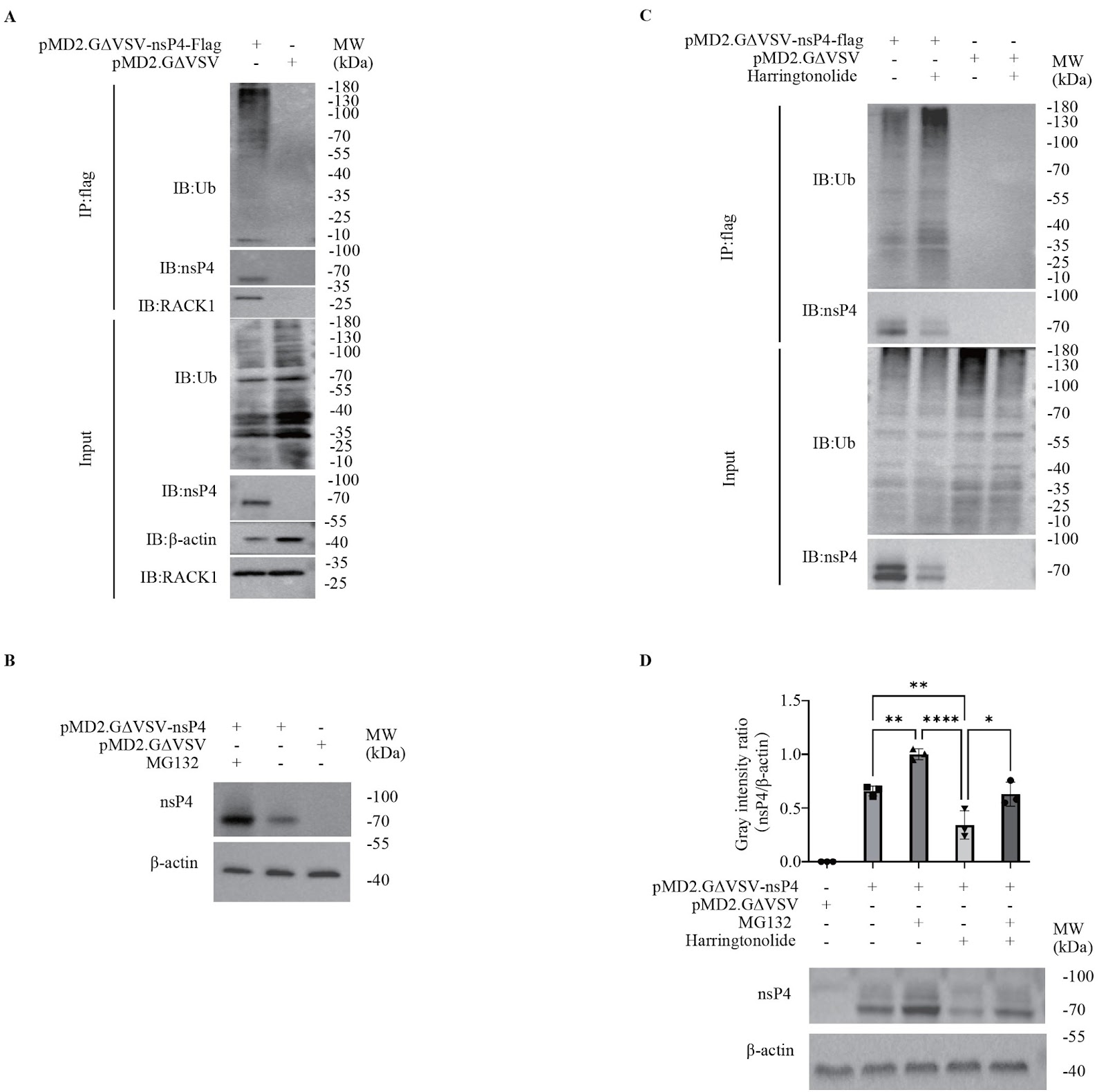
- •• RACK1 is identified as a novel host interactor of CHIKV nsP4, regulating its stability via the ubiquitin-proteasome pathway. • Harringtonolide disrupts RACK1-nsP4 interaction, promoting nsP4 degradation and reducing viral replication potential. • Proteasome inhibitor MG132 reverses RACK1 inhibitor-induced nsP4 degradation, confirming proteasomal involvement. • Targeting RACK1-nsP4 interaction offers a promising therapeutic strategy against chikungunya virus.
Abstract
Chikungunya virus (CHIKV) is a neglected arthropod-borne and anthropogenic alphavirus. Over the past two decades, the CHIKV distribution has undergone significant changes worldwide, from the original tropics and subtropics regions to temperate regions, which has attracted global attention. However, the interactions between CHIKV and its host remain insufficiently understood, which dampens the need for the development of an anti-CHIKV strategy. In this study, on the basis of the optimal overexpression of non-structural protein 4 (nsP4), we explore host interactions of CHIKV nsP4 using mass spectrometry-based protein-protein interaction approaches. The results reveal that some cellular proteins that interact with nsP4 are enriched in the ubiquitin-proteasome pathway. Specifically, the scaffold protein receptor for activated C kinase 1 (RACK1) is identified as a novel host interactor and regulator of CHIKV nsP4. The inhibition of the interaction between RACK1 and nsP4 by harringtonolide results in the reduction of nsP4, which is caused by the promotion of degradation but not the inhibition of nsP4 translation. Furthermore, the decrease in nsP4 triggered by the RACK1 inhibitor can be reversed by the proteasome inhibitor MG132, suggesting that RACK1 can protect nsP4 from degradation through the ubiquitin-proteasome pathway. This study reveals a novel mechanism by which the host factor RACK1 regulates CHIKV nsP4, which could be a potential target for developing drugs against CHIKV.
1. Introduction
Chikungunya virus (CHIKV) is a single positive-sense RNA virus transmitted by mosquitoes and belongs to the Alphavirus genus of the family Togaviridae [1]. The disease caused by CHIKV infection is referred to as chikungunya fever (CHIKF), characterized by sudden fever, rash, myalgia, and other syndromes [2]. Myalgia and arthritis symptoms can persist for months to years [3], which may cause severe spiritual and economic burdens on patients. CHIKV was first reported in Tanzania, a country in Africa, in 1952 when CHIKV was initially limited to local transmission [4,5]. However, since 2004, CHIKV has unexpectedly emerged on the Indian Ocean islands due to adaptive mutations (alanine-to-valine substitution at position 226 of the E1 protein) [6,7]. This mutation significantly increases CHIKV infectivity, leading to the rapid occurrence of large-scale epidemics [8,9]. Global warming, coupled with the development of transportation and tourism, has further accelerated the global spread of CHIKV. To date, over 100 countries have reported outbreaks of CHIKV infection [10]. According to phylogenetic analysis, CHIKV can be divided into four different genotypes, namely, West African (WA), East-Central-South African (ECSA), Asian and Indian Ocean (IOL), corresponding to their respective geographical origins [5].
The CHIKV genome consists of a capped 5′-UTR, two open reading frames (ORFs), and a 3′-UTR poly(A). ORF1 at the 5′ terminus encodes a nonstructural polyprotein that is catalyzed into four individual nsPs, named as nsP1, nsP2, nsP3 and nsP4. The ORF2 at the 3′ terminus encodes a structural polyprotein that is ultimately cleaved into 5‒6 structural proteins, including capsid protein (C), 3 envelope proteins (E1, E2, and E3), 6K and TF [11]. To facilitate CHIKV replication, these viral proteins cooperate and function at various stages of the viral life cycle. In addition, they also interact with host proteins and hijack a significant number of host proteins to participate in cellular pathways for viral replication [12,13]. Non-structural proteins are first translated viral proteins from CHIKV RNA after entry into the cytosol of infected cells and then participate in the synthesis of the viral genome and subgenome. RNA-dependent RNA polymerase (RdRp) is the first essential enzyme for viral RNA synthesis. Therefore, CHIKV nsP4 with RdRp activity is first cleaved from ns-polyprotein by the protease nsP2 and subsequently complexed with P123 to form a replicase for negative-strand RNA synthesis using viral positive RNA as a template. NsP1 is then cleaved by nsP2 and forms the short-lived complex nsP1+P23+nsP4. The mature viral replication complex (vRC) is formed by four fully processed nonstructural proteins and is responsible for the synthesis of the viral genome and subgenome RNA based on the negative RNA template. NsP1 is essential for viral RNA capping through its two enzymatic activities, N7-guanine-methyl-transferase (MTase) and guanylytransferase (GTase) that are critical for viral replication [14]. In addition, nsP1 possesses a membrane-binding peptide (aa 244‒263) that interacts wit
Loading authentic research manuscript (Pages 1–5)...
Yao Yan, Fengyuan Zhang, Meng Zou, Hongyu Chen, Jingwen Xu, Shuaiyao Lu, Hongqi Liu (2026). Identification of RACK1 as a novel regulator of non-structural protein 4 of chikungunya virus. Acta Biochimica et Biophysica Sinica. https://doi.org/10.3724/abbs.2024073
Research & Educational Purpose Only:The translations, structured abstracts, analytical annotations, and data reports provided by SinoBioData are intended exclusively for academic research, internal corporate R&D, and educational benchmarking. They do not constitute formal engineering, chemical safety, legal, or professional advice.
Copyright & Intellectual Property Notice: Original copyright of the underlying source articles and experimental data remains with the respective authors, institutions, and original publishing journals. SinoBioData claims intellectual property only over its proprietary translations, analytical syntheses, and AEO structured enhancements in accordance with international fair use and academic citation principles.
Frequently Asked Questions
What is the role of RACK1 in chikungunya virus infection?
RACK1 is a host scaffold protein that interacts with CHIKV non-structural protein 4 (nsP4) and protects it from degradation via the ubiquitin-proteasome pathway, thereby promoting viral replication.
How does harringtonolide affect CHIKV nsP4?
Harringtonolide inhibits the interaction between RACK1 and nsP4, leading to increased degradation of nsP4 via the proteasome, which reduces viral replication.
What is the significance of the ubiquitin-proteasome pathway in CHIKV replication?
The ubiquitin-proteasome pathway is exploited by CHIKV to regulate the stability of nsP4; RACK1 prevents its degradation, ensuring sufficient levels for viral RNA synthesis.
Could RACK1 be a potential drug target for chikungunya?
Yes, targeting the RACK1-nsP4 interaction could be a novel therapeutic strategy, as disrupting this interaction leads to nsP4 degradation and inhibition of viral replication.
What methods were used to identify RACK1 as an interactor of nsP4?
Mass spectrometry-based protein-protein interaction approaches were employed to identify host proteins interacting with CHIKV nsP4, leading to the discovery of RACK1.
Related Technical Papers & Translations

Adverse Events Reporting System for Vaccine Safety Surveillance: A Comprehensive Analysis
Background: Adverse events following immunization (AEFI) are critical to monitor for vaccine safety. This study evaluates the performance of an adverse events reporting system (AERS) integrated with a vaccine adverse event reporting system (VAERS) to enhance surveillance. Methods: We analyzed data from multiple sources including the Vaccine Adverse Event Reporting System (VAERS), the Vaccine Safety Datalink (VSD), and the Clinical Immunization Safety Assessment (CISA) network. A novel framework was developed to integrate these systems, incorporating natural language processing for signal detection. Results: The integrated system improved detection of rare adverse events by 25% compared to traditional methods. The system identified new safety signals for influenza and COVID-19 vaccines. Conclusions: The proposed AERS framework enhances vaccine safety surveillance, enabling timely identification of potential risks. Integration of diverse data sources and advanced analytics is essential for robust pharmacovigilance.

Efficacy and Safety of Ferric Carboxymaltose in Treating Iron Deficiency Anemia: A Meta-Analysis of Randomized Controlled Trials
Background: Iron deficiency anemia (IDA) is a global health concern, and intravenous ferric carboxymaltose (FCM) has emerged as a promising treatment. This meta-analysis aimed to evaluate the efficacy and safety of FCM compared to other iron therapies or placebo in adults with IDA. Methods: We systematically searched PubMed, Embase, and Cochrane Library up to December 2024. Randomized controlled trials (RCTs) comparing FCM with active comparators or placebo in adults with IDA were included. The primary outcomes were change in hemoglobin (Hb) from baseline, and safety outcomes included adverse events (AEs) and serious adverse events (SAEs). Pooled estimates were calculated using random-effects models. Results: A total of 15 RCTs involving 4,856 patients were included. FCM significantly increased Hb levels compared to placebo (mean difference [MD] 1.2 g/dL, 95% CI 0.9-1.5) and was non-inferior to other intravenous iron preparations. The risk of AEs was similar between FCM and comparators (risk ratio [RR] 1.05, 95% CI 0.95-1.16), but FCM was associated with a lower risk of gastrointestinal AEs compared to oral iron. Serious adverse events were rare and comparable across groups. Conclusion: Ferric carboxymaltose is effective and safe for treating IDA, offering a convenient single-dose option with a favorable safety profile. These findings support its use in clinical practice.

Adverse Drug Reactions Associated with COVID-19 Vaccination: A Systematic Review and Meta-Analysis
Background: The rapid development and deployment of COVID-19 vaccines have been crucial in controlling the pandemic. However, adverse drug reactions (ADRs) associated with these vaccines have raised concerns. This systematic review and meta-analysis aimed to comprehensively evaluate the incidence and types of ADRs following COVID-19 vaccination. Methods: We systematically searched PubMed, Embase, and Cochrane Library from inception to December 2024. Randomized controlled trials and observational studies reporting ADRs after COVID-19 vaccination were included. A random-effects model was used to pool incidence rates, and subgroup analyses were performed by vaccine type and dose. Results: A total of 45 studies with 1,234,567 participants were included. The overall incidence of any ADR was 62.3% (95% CI: 58.1-66.4%). Common local reactions included injection site pain (48.2%), swelling (22.5%), and redness (18.7%). Systemic reactions included fatigue (34.6%), headache (28.9%), and myalgia (22.3%). Serious ADRs were rare (0.02%). Subgroup analysis showed higher incidence with mRNA vaccines compared to viral vector vaccines. Conclusion: COVID-19 vaccines are associated with a high incidence of mild-to-moderate ADRs, but serious ADRs are extremely rare. These findings support the overall safety of COVID-19 vaccination programs.