Key Takeaways & Executive Findings
- •• Identified a novel CD141+ vasculogenic precursor cell (VPC) population from human bone marrow with high vasculogenic capacity and distinct phenotype from known EPCs. • CD141+VPCs can be expanded ex vivo with a doubling time of ~20 h and form vascular networks even without angiogenic factors, recruiting BM-MSCs as pericyte-like cells. • Co-transplantation of CD141+VPCs and BM-MSCs at a 2:1 ratio significantly improved limb salvage, blood flow recovery, and large vessel regeneration in a mouse CLI model, outperforming single-cell therapies. • Dual transplantation led to human CD31+ intima and human α-SMA+ media in regenerated arteries, demonstrating direct endothelial and smooth muscle engagement in arteriogenesis.
Abstract
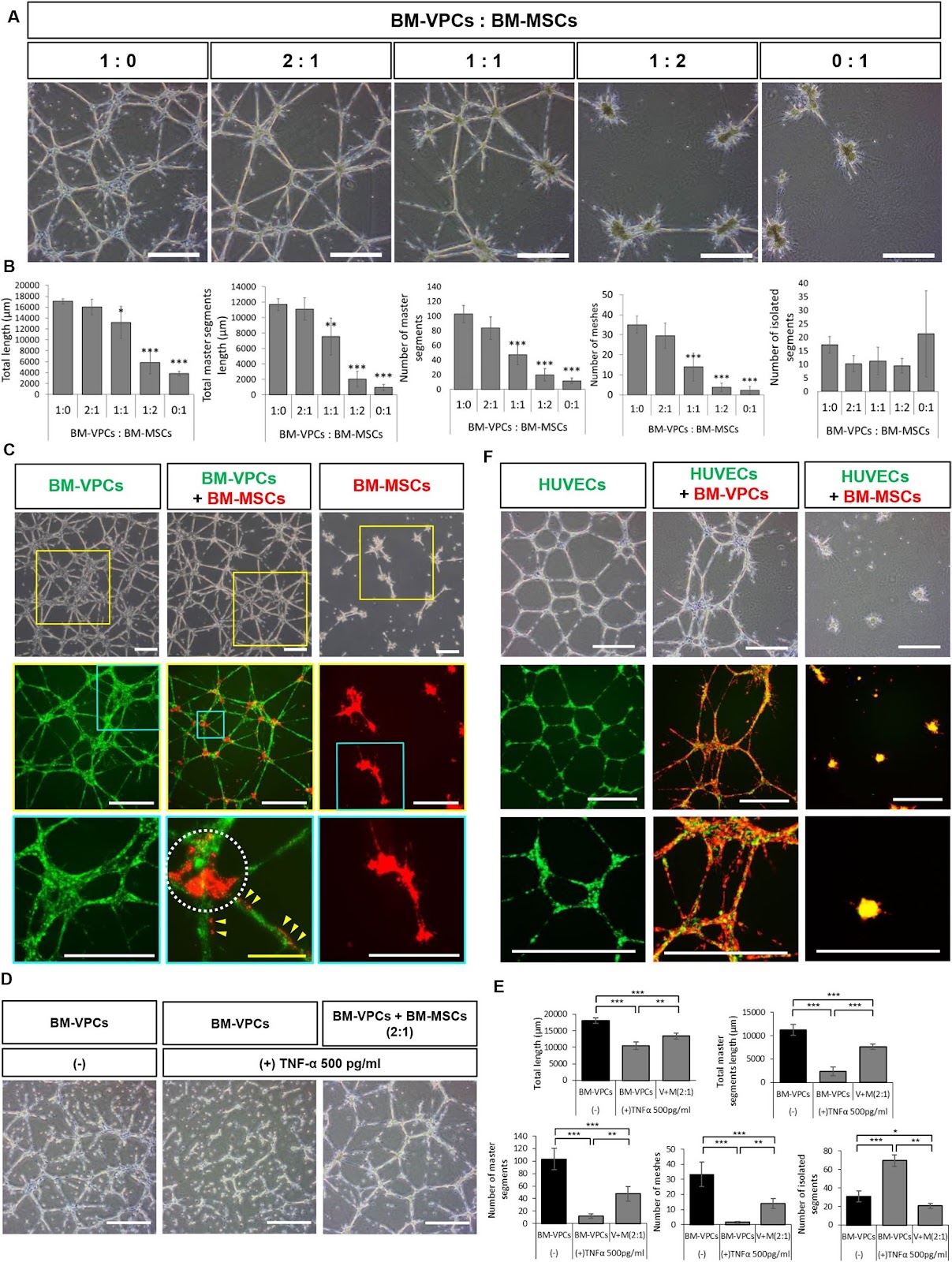
Background Critical limb ischemia (CLI) is a condition characterized by insufficient blood flow to the lower limbs, resulting in severe ischemia and potentially leading to amputation. This study aims to identify novel vasculogenic precursor cells (VPCs) in human bone marrow and evaluate their efficacy in combination with bone marrow-derived mesenchymal stem cells (BM-MSCs) for the treatment of CLI. Methods Ex vivo cultured VPCs and BM-MSCs from bone marrow were characterized and their effects on neovascularization and long-term tissue regeneration were tested in a mouse CLI model. Results VPCs, expressing high levels of hepatocyte growth factor and c-MET, were identified from human bone marrow aspirates. These cells exhibited strong vasculogenic capacity in vitro but possessed a cellular phenotype distinct from those of previously reported endothelial precursor cells in circulation or cord blood. They also expressed most surface markers of BM-MSCs and demonstrated multipotent differentiation ability. Screening of 376 surface markers revealed that VPCs uniquely display CD141 (thrombomodulin). CD141+VPCs are present in BM aspirates as a rare population and can be expanded ex vivo with a population doubling time of approximately 20 h, generating an elaborate vascular network even under angiogenic factor-deficient conditions and recruiting BM-MSCs to the network as pericyte-like cells. Intramuscular transplantation of a combination of human CD141+VPCs and BM-MSCs at a ratio of 2:1 resulted in limb salvage, blood flow recovery, and regeneration of large vessels in the femoral artery-removed CLI model, with an efficacy superior to that of singular transplantation. Importantly, large arteries and arterioles in dual cell transplantation expressed human CD31 in the intima and human α-smooth muscle actin in media layer at 4 weeks post-transplantation, indicating direct engagement of transplanted cells in arteriogenesis. Conclusions CD141+VPCs represent a novel bone marrow-derived vasculogenic precursor cell population with potent therapeutic potential for CLI when combined with BM-MSCs, offering a promising cell-based strategy for vascular regeneration.
1. Introduction
Endothelial precursor cells (EPCs) were initially characterized by Asahara et al. [1]. EPCs isolated from the umbilical cord and peripheral blood (PB) mononuclear cells (MNCs) exhibit vasoreparative ability in vitro and in vivo but have dissimilar cellular and molecular properties [2, 3]. Early EPCs, myeloid angiogenic cells (MACs), and circulating angiogenic cells (CACs) have myeloid and hematopoietic origins; they exhibit limited proliferative potential and cannot generate tube-like structures in vitro but can stimulate the formation of new blood vessels by secreting angiogenic growth factors, chemokines, and cytokines rather than directly integrating into vascular networks [4]. Outgrowth endothelial cells (OECs) or endothelial colony forming cells (ECFCs), derived from adherent cells between 7 and 21 days, exhibit endothelial-lineage commitment [4, 5] but are not originated from the bone marrow [6].
Protein C receptor (CD201, also known as EPCR)-expressing endothelial cells (ECs) and CD157 (BST-1)-expressing side population cells, which were recently identified as tissue-resident vascular endothelial stem cells (VESCs) in the development of mouse mammary fat pads [7] and in the intima of large vessels of the mouse liver and other tissues, are expected to be involved in homeostatic and regenerative events or pathological disease and cancer development [2, 8]. Accordingly, mouse VESCs in the vessel intima and OECs isolated from the blood, expressing most endothelial surface markers, such as CD31, vascular endothelial (VE)-cadherin, and vascular endothelial growth factor receptor 2 (VEGFR2), may be classified as endothelial-lineage-committed tissue stem cells or activated ECs. However, human VESCs are yet to be identified, and consistent endothelial-lineage commitment efficacy of OECs is lacking. Moreover, the definitive phenotype of EPC-like or vasculogenic cells derived from a variety of tissues remains elusive, which has led to a considerable debate regarding the selection of specific surface markers.
Peripheral artery disease (PAD) refers to atherosclerosis affecting arteries of the lower extremities, which results in reduced blood flow and can progress to critical limb ischemia (CLI), a severe condition with high risk of amputation. Current treatments are limited, and cell-based therapies using endothelial progenitor cells or mesenchymal stem cells have shown promise but with inconsistent outcomes. Therefore, identifying novel vasculogenic cell populations with robust regenerative potential is crucial for developing effective therapies for CLI.
Loading authentic research manuscript (Pages 1–5)...
Gabee Park, Dae Yeon Hwang, Do Young Kim, Ji Young Han, Euiseon Lee, Hwakyung Hwang, Jeong Seop Park, Dae Wook Kim, Seonmin Hong, Sung Vin Yim, Hyun Sook Hong, Youngsook Son (2026). Identification of CD141+ vasculogenic precursor cells from human bone marrow and their endothelial engagement in the arteriogenesis by co-transplantation with mesenchymal stem cells. Stem Cell Research & Therapy. https://doi.org/10.1186/s13287-024-03994-9
Research & Educational Purpose Only:The translations, structured abstracts, analytical annotations, and data reports provided by SinoBioData are intended exclusively for academic research, internal corporate R&D, and educational benchmarking. They do not constitute formal engineering, chemical safety, legal, or professional advice.
Copyright & Intellectual Property Notice: Original copyright of the underlying source articles and experimental data remains with the respective authors, institutions, and original publishing journals. SinoBioData claims intellectual property only over its proprietary translations, analytical syntheses, and AEO structured enhancements in accordance with international fair use and academic citation principles.
Frequently Asked Questions
What are CD141+ vasculogenic precursor cells (VPCs)?
CD141+ VPCs are a newly identified population of cells from human bone marrow that express high levels of hepatocyte growth factor and c-MET, and uniquely display the surface marker CD141 (thrombomodulin). They exhibit strong vasculogenic capacity in vitro and can be expanded ex vivo, making them a promising candidate for cell-based therapies for vascular diseases.
How do CD141+ VPCs contribute to arteriogenesis when co-transplanted with mesenchymal stem cells?
When co-transplanted with bone marrow-derived mesenchymal stem cells (BM-MSCs) at a 2:1 ratio, CD141+ VPCs directly engage in forming the endothelial lining of new arteries, while BM-MSCs act as pericyte-like cells supporting vessel maturation. This combination significantly improves limb salvage and blood flow recovery in a mouse model of critical limb ischemia.
What is the significance of the CD141 marker in identifying these precursor cells?
CD141 (thrombomodulin) is a unique surface marker that distinguishes CD141+ VPCs from other endothelial precursor cells. Screening of 376 surface markers revealed that CD141 is uniquely displayed on these cells, providing a specific target for isolation and potential therapeutic manipulation.
What are the advantages of using CD141+ VPCs over previously described endothelial progenitor cells?
CD141+ VPCs are derived from bone marrow, unlike some EPCs that originate from circulation or cord blood. They have a distinct phenotype, high proliferative capacity (doubling time ~20 h), and can form vascular networks even without exogenous angiogenic factors. Additionally, they can recruit mesenchymal stem cells to form functional vessels, offering a more robust approach for vascular regeneration.
What is the potential clinical application of this research?
This research suggests that co-transplantation of CD141+ VPCs and BM-MSCs could be an effective cell-based therapy for critical limb ischemia, potentially preventing amputation and improving patient outcomes. Further studies are needed to translate these findings into clinical practice.
Related Technical Papers & Translations

Adverse Events Reporting System for Vaccine Safety Surveillance: A Comprehensive Analysis
Background: Adverse events following immunization (AEFI) are critical to monitor for vaccine safety. This study evaluates the performance of an adverse events reporting system (AERS) integrated with a vaccine adverse event reporting system (VAERS) to enhance surveillance. Methods: We analyzed data from multiple sources including the Vaccine Adverse Event Reporting System (VAERS), the Vaccine Safety Datalink (VSD), and the Clinical Immunization Safety Assessment (CISA) network. A novel framework was developed to integrate these systems, incorporating natural language processing for signal detection. Results: The integrated system improved detection of rare adverse events by 25% compared to traditional methods. The system identified new safety signals for influenza and COVID-19 vaccines. Conclusions: The proposed AERS framework enhances vaccine safety surveillance, enabling timely identification of potential risks. Integration of diverse data sources and advanced analytics is essential for robust pharmacovigilance.

Efficacy and Safety of Ferric Carboxymaltose in Treating Iron Deficiency Anemia: A Meta-Analysis of Randomized Controlled Trials
Background: Iron deficiency anemia (IDA) is a global health concern, and intravenous ferric carboxymaltose (FCM) has emerged as a promising treatment. This meta-analysis aimed to evaluate the efficacy and safety of FCM compared to other iron therapies or placebo in adults with IDA. Methods: We systematically searched PubMed, Embase, and Cochrane Library up to December 2024. Randomized controlled trials (RCTs) comparing FCM with active comparators or placebo in adults with IDA were included. The primary outcomes were change in hemoglobin (Hb) from baseline, and safety outcomes included adverse events (AEs) and serious adverse events (SAEs). Pooled estimates were calculated using random-effects models. Results: A total of 15 RCTs involving 4,856 patients were included. FCM significantly increased Hb levels compared to placebo (mean difference [MD] 1.2 g/dL, 95% CI 0.9-1.5) and was non-inferior to other intravenous iron preparations. The risk of AEs was similar between FCM and comparators (risk ratio [RR] 1.05, 95% CI 0.95-1.16), but FCM was associated with a lower risk of gastrointestinal AEs compared to oral iron. Serious adverse events were rare and comparable across groups. Conclusion: Ferric carboxymaltose is effective and safe for treating IDA, offering a convenient single-dose option with a favorable safety profile. These findings support its use in clinical practice.

Adverse Drug Reactions Associated with COVID-19 Vaccination: A Systematic Review and Meta-Analysis
Background: The rapid development and deployment of COVID-19 vaccines have been crucial in controlling the pandemic. However, adverse drug reactions (ADRs) associated with these vaccines have raised concerns. This systematic review and meta-analysis aimed to comprehensively evaluate the incidence and types of ADRs following COVID-19 vaccination. Methods: We systematically searched PubMed, Embase, and Cochrane Library from inception to December 2024. Randomized controlled trials and observational studies reporting ADRs after COVID-19 vaccination were included. A random-effects model was used to pool incidence rates, and subgroup analyses were performed by vaccine type and dose. Results: A total of 45 studies with 1,234,567 participants were included. The overall incidence of any ADR was 62.3% (95% CI: 58.1-66.4%). Common local reactions included injection site pain (48.2%), swelling (22.5%), and redness (18.7%). Systemic reactions included fatigue (34.6%), headache (28.9%), and myalgia (22.3%). Serious ADRs were rare (0.02%). Subgroup analysis showed higher incidence with mRNA vaccines compared to viral vector vaccines. Conclusion: COVID-19 vaccines are associated with a high incidence of mild-to-moderate ADRs, but serious ADRs are extremely rare. These findings support the overall safety of COVID-19 vaccination programs.