Key Takeaways & Executive Findings
- •• IOSE80 cells exhibit stem cell characteristics including expression of stem cell markers and multilineage differentiation potential into adipocytes, osteoblasts, chondroblasts, and three germ layers. • Transcriptome analysis reveals enrichment of stem cell proliferation and epithelial cell proliferation pathways, supporting the stemness of IOSE80 cells. • IOSE80 cells can form oocyte-like cells in vitro and in vivo, suggesting potential for reproductive biology applications. • In vivo transplantation of IOSE80 cells promotes ovarian repair, highlighting their therapeutic potential in regenerative medicine.
Abstract
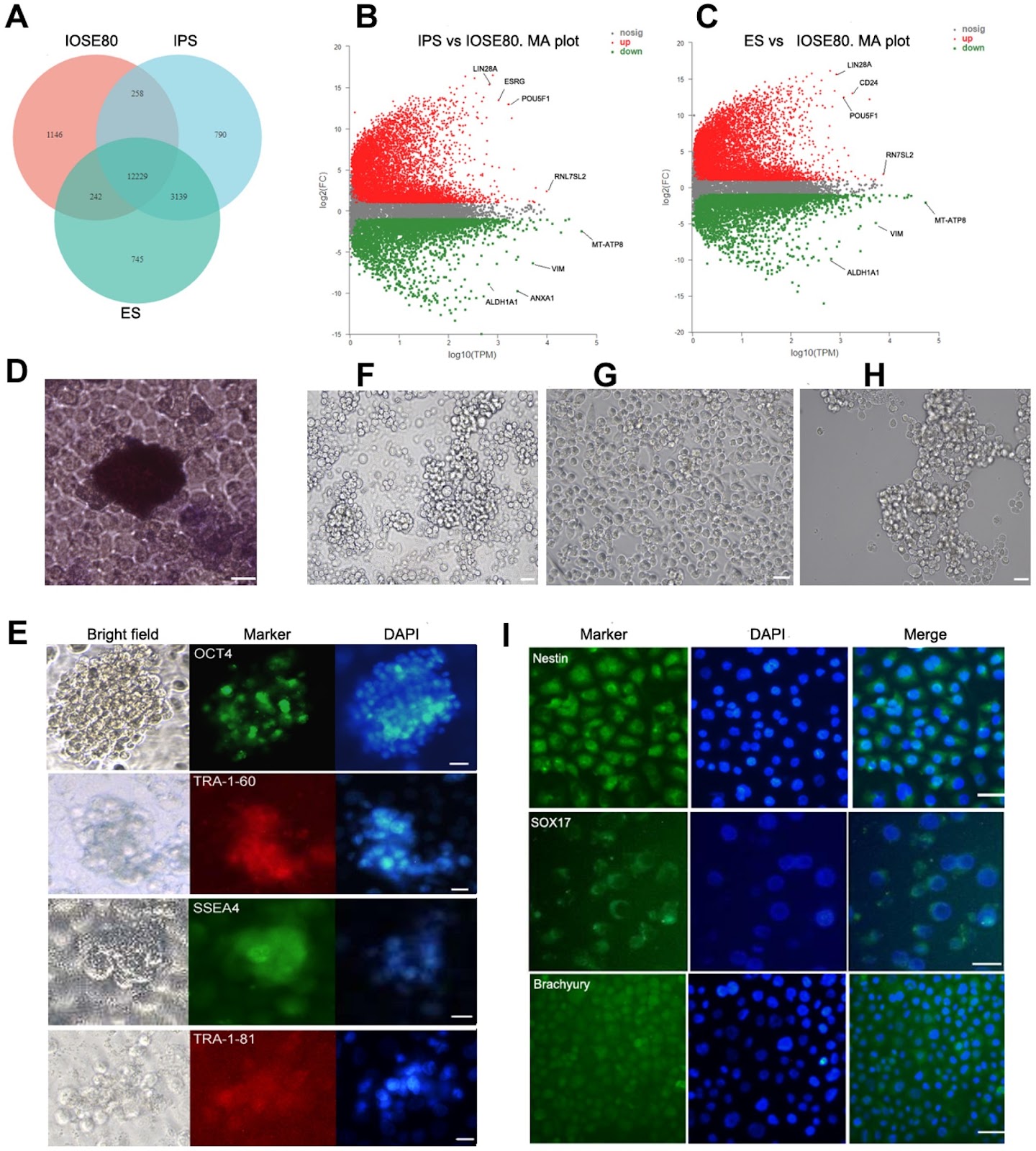
The ovarian surface epithelium (OSE) is a single layer of squamous-to-cuboidal epithelial cells that experience repetitive ovulatory rupture and subsequent repair. However, the characteristics of human immortalized ovarian surface epithelial cells (IOSE80) remain elusive. This study aims to determine whether IOSE80 cells have the characteristics of stem cell proliferation and multilineage differentiation and their application in regenerative medicine. IOSE80 cells are sequenced by high-throughput transcriptome analysis, and 5 sets of public data are used to compare the differences between IOSE80 cells and bone marrow mesenchymal stem cells, pluripotent stem cells, and oocytes in transcriptome profiling. The IOSE80 cells present a cobblestone-like monolayer and express the epithelial cell marker KRT18; the stem cell markers IFITM3, ALDH1A1, and VIM; lowly express stem cell marker LGR5 and germ cell markers DDX4 and DAZL. In addition, the GO terms “regulation of stem cell proliferation”, “epithelial cell proliferation”, etc., are significantly enriched (P<0.05). IOSE80 cells have the potential to act as mesenchymal stem cells to differentiate into adipocytes with lipid droplets, osteoblasts, and chondroblasts in vitro. IOSE80 cells express pluripotent stem cell markers, including OCT4, SSEA4, TRA-1-60, and TRA-1-81, and they can be induced into three germ layers in vitro. IOSE80 cells also form oocyte-like cells in vitro and in vivo. In addition, IOSE80 cells exhibit robust proliferation, migration, and ovarian repair functions after in vivo transplantation. This study demonstrates that IOSE80 cells have the characteristics of pluripotent/multipotent stem cells, indicating their important role in tissue engineering and regenerative medicine.
1. Introduction
The ovary is covered by a single layer of squamous, cuboidal, or columnar ovarian surface epithelium (OSE), and it plays an important role in normal ovarian physiology [1‒4]. During the lifespan, these epithelial cells can encounter a series of cell cycle events, including quiescence, mitosis, epithelial rupture, repair, apoptosis, and degeneration [5,6]. As follicles are selected to develop during the follicular phase of the cycle, they are juxtaposed with the ovarian surface, and OSE cells in this region undergo mitosis to accommodate the rapid increase in follicle size. A key mechanism involved in wound repair is epithelial-mesenchymal transition (EMT) [7,8]. EMT is necessary for wound repair, enabling cells to migrate and secrete ECM proteins into the injured area [9]. The OSE for morphological EMT during wound repair in rhesus monkeys and rats has been studied, in which the OSE layer is flat on the developing corpus luteum [10,11]. After ovulation, cells left in the postovulatory follicle and epithelial cells undergo luteinization and form the corpus luteum (CL), a transient endocrine structure that produces progesterone or degenerates without pregnancy [12]. The recovery of OSE is very fast and effective, and the wound is completely closed within 12 h to 3 days after rupture in mice [13]. The remarkable circulation and regeneration abilities of OSE indicate the existence of resident stem cells.
In recent years, the stemness characteristics of ovarian epithelial cells have been reported [14,15]. The gene expression profile supports the hypothesis that human ovarian epithelial cells are pluripotent [16]. Bowen et al. [16] conducted comparative gene expression profiling analysis on normal human ovarian surface and ovarian cancer epithelial cells isolated from human serous papillary ovarian adenocarcinoma. The genes related to the maintenance and pluripotency of adult stem cells are highly expressed in healthy ovarian surface epithelial cells, while they are not expressed or are expressed at low levels in serous papillary ovarian adenocarcinoma [16]. OSE was found to express several well-established markers of stem cells, including NANOG, CD44, ALDH1A1, ALDH1A2, SFRP1, and LIM homeobox proteins LHX2 and LHX9 [16‒18]. In addition, they express stem cell markers, such as LY6A (also known as SCA1), Lgr5, Procr (protein C receptor), and c-KIT (KIT ligand) [19‒22]. Moreover, OSE has the potential to differentiate into multiple cell lineages. Many previous studies demonstrated that small round-shaped cells in the upper cortex of the ovarian surface derived from women are positive for markers of pluripotent embryonic stem cells, and they could differentiate into oocyte-like cells or parthenogenetic blastocyst-like structures in vitro [23‒28]. In addition, our research team reported for the first time that ovarian epithelial cells could be obtained from human follicular fluid. In the in vitro culture system, these epithelial cells spontaneously form oocyte-like cells and express specific germ cell markers (DAZL, STELLA, etc.). Furthermore, these ovarian epithelial cells e
Loading authentic research manuscript (Pages 1–5)...
Lin Hou, Hanqing Hong, Wenjiao Cao, Liutong Wei, Lichun Weng, Shuang Yuan, Chengqi Xiao, Qiuwan Zhang, Qian Wang, Dongmei Lai (2026). Identification and characterization of multipotential stem cells in immortalized normal ovarian surface epithelial cells. Acta Biochimica et Biophysica Sinica. https://doi.org/10.3724/abbs.2023253
Research & Educational Purpose Only:The translations, structured abstracts, analytical annotations, and data reports provided by SinoBioData are intended exclusively for academic research, internal corporate R&D, and educational benchmarking. They do not constitute formal engineering, chemical safety, legal, or professional advice.
Copyright & Intellectual Property Notice: Original copyright of the underlying source articles and experimental data remains with the respective authors, institutions, and original publishing journals. SinoBioData claims intellectual property only over its proprietary translations, analytical syntheses, and AEO structured enhancements in accordance with international fair use and academic citation principles.
Frequently Asked Questions
What are IOSE80 cells?
IOSE80 cells are immortalized normal ovarian surface epithelial cells that exhibit stem cell characteristics, including proliferation and multilineage differentiation potential.
What stem cell markers do IOSE80 cells express?
IOSE80 cells express stem cell markers such as IFITM3, ALDH1A1, VIM, OCT4, SSEA4, TRA-1-60, and TRA-1-81, while lowly expressing LGR5 and germ cell markers DDX4 and DAZL.
Can IOSE80 cells differentiate into multiple cell types?
Yes, IOSE80 cells can differentiate into adipocytes, osteoblasts, chondroblasts, and cells of three germ layers in vitro, and can also form oocyte-like cells.
What is the significance of IOSE80 cells in regenerative medicine?
IOSE80 cells show robust proliferation, migration, and ovarian repair functions after transplantation, indicating their potential for tissue engineering and regenerative therapies.
How were IOSE80 cells characterized in this study?
The study used high-throughput transcriptome analysis and compared IOSE80 cells with bone marrow mesenchymal stem cells, pluripotent stem cells, and oocytes to identify stemness-related gene expression and differentiation capabilities.
Related Technical Papers & Translations

Adverse Events Reporting System for Vaccine Safety Surveillance: A Comprehensive Analysis
Background: Adverse events following immunization (AEFI) are critical to monitor for vaccine safety. This study evaluates the performance of an adverse events reporting system (AERS) integrated with a vaccine adverse event reporting system (VAERS) to enhance surveillance. Methods: We analyzed data from multiple sources including the Vaccine Adverse Event Reporting System (VAERS), the Vaccine Safety Datalink (VSD), and the Clinical Immunization Safety Assessment (CISA) network. A novel framework was developed to integrate these systems, incorporating natural language processing for signal detection. Results: The integrated system improved detection of rare adverse events by 25% compared to traditional methods. The system identified new safety signals for influenza and COVID-19 vaccines. Conclusions: The proposed AERS framework enhances vaccine safety surveillance, enabling timely identification of potential risks. Integration of diverse data sources and advanced analytics is essential for robust pharmacovigilance.

Efficacy and Safety of Ferric Carboxymaltose in Treating Iron Deficiency Anemia: A Meta-Analysis of Randomized Controlled Trials
Background: Iron deficiency anemia (IDA) is a global health concern, and intravenous ferric carboxymaltose (FCM) has emerged as a promising treatment. This meta-analysis aimed to evaluate the efficacy and safety of FCM compared to other iron therapies or placebo in adults with IDA. Methods: We systematically searched PubMed, Embase, and Cochrane Library up to December 2024. Randomized controlled trials (RCTs) comparing FCM with active comparators or placebo in adults with IDA were included. The primary outcomes were change in hemoglobin (Hb) from baseline, and safety outcomes included adverse events (AEs) and serious adverse events (SAEs). Pooled estimates were calculated using random-effects models. Results: A total of 15 RCTs involving 4,856 patients were included. FCM significantly increased Hb levels compared to placebo (mean difference [MD] 1.2 g/dL, 95% CI 0.9-1.5) and was non-inferior to other intravenous iron preparations. The risk of AEs was similar between FCM and comparators (risk ratio [RR] 1.05, 95% CI 0.95-1.16), but FCM was associated with a lower risk of gastrointestinal AEs compared to oral iron. Serious adverse events were rare and comparable across groups. Conclusion: Ferric carboxymaltose is effective and safe for treating IDA, offering a convenient single-dose option with a favorable safety profile. These findings support its use in clinical practice.

Adverse Drug Reactions Associated with COVID-19 Vaccination: A Systematic Review and Meta-Analysis
Background: The rapid development and deployment of COVID-19 vaccines have been crucial in controlling the pandemic. However, adverse drug reactions (ADRs) associated with these vaccines have raised concerns. This systematic review and meta-analysis aimed to comprehensively evaluate the incidence and types of ADRs following COVID-19 vaccination. Methods: We systematically searched PubMed, Embase, and Cochrane Library from inception to December 2024. Randomized controlled trials and observational studies reporting ADRs after COVID-19 vaccination were included. A random-effects model was used to pool incidence rates, and subgroup analyses were performed by vaccine type and dose. Results: A total of 45 studies with 1,234,567 participants were included. The overall incidence of any ADR was 62.3% (95% CI: 58.1-66.4%). Common local reactions included injection site pain (48.2%), swelling (22.5%), and redness (18.7%). Systemic reactions included fatigue (34.6%), headache (28.9%), and myalgia (22.3%). Serious ADRs were rare (0.02%). Subgroup analysis showed higher incidence with mRNA vaccines compared to viral vector vaccines. Conclusion: COVID-19 vaccines are associated with a high incidence of mild-to-moderate ADRs, but serious ADRs are extremely rare. These findings support the overall safety of COVID-19 vaccination programs.