Key Takeaways & Executive Findings
- •• Hypoxic preconditioning enriches miR-615-3p in BMSC-derived exosomes, enhancing their neuroprotective potential. • miR-615-3p directly targets PDE4C, activating the cAMP/PKA pathway and modulating calcium signaling to reduce ER stress and mitochondrial dysfunction. • In a mouse SCI model, hypoxic exosome treatment improves functional recovery within 14 days, reducing lesion volume and inflammation. • The miR-615-3p/PDE4C axis represents a novel neuron-specific therapeutic target for SCI, distinct from broad anti-inflammatory approaches.
Abstract
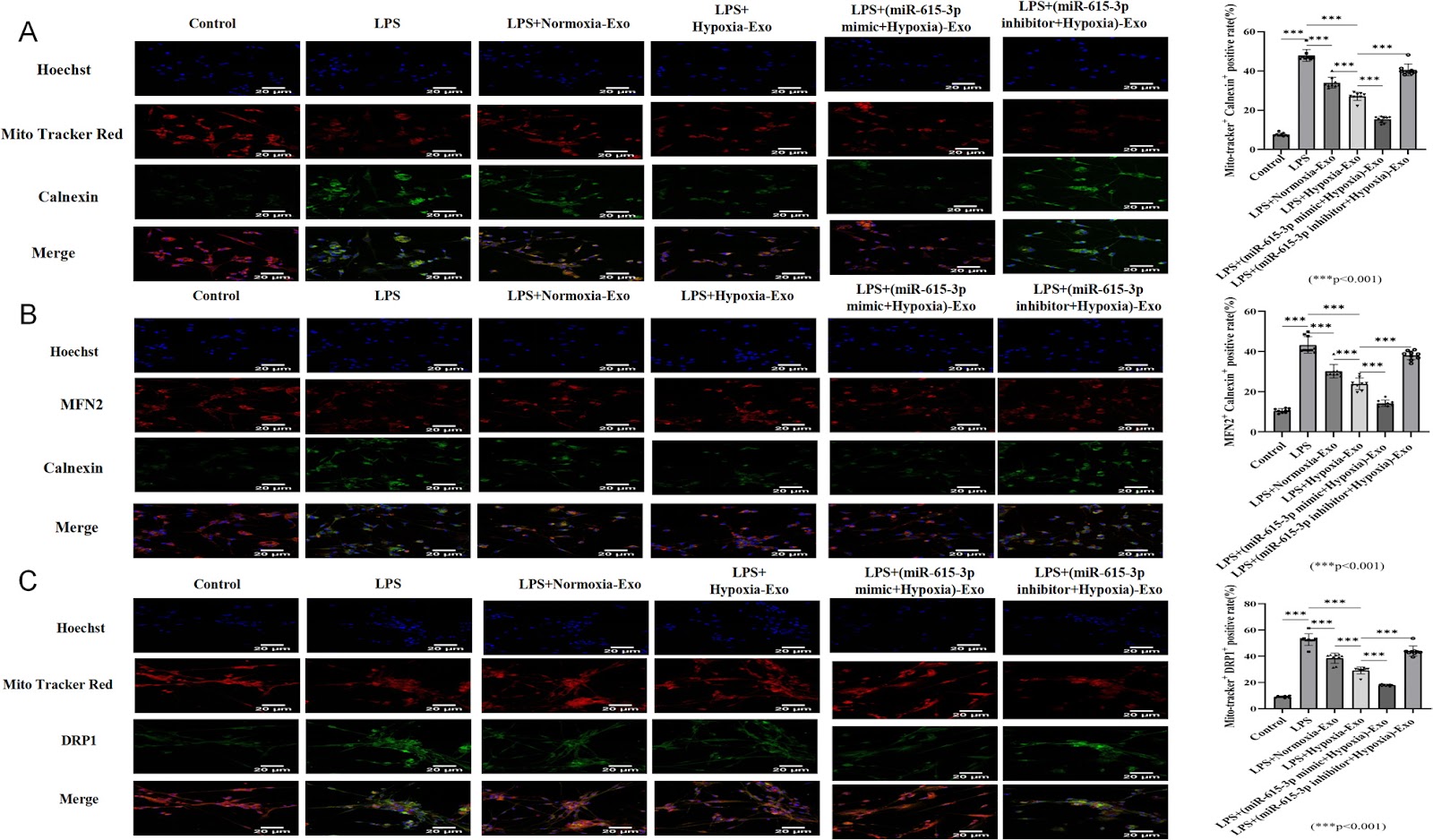
Spinal cord injury (SCI) remains a significant global health challenge with limited effective therapeutic options. Exosomes derived from mesenchymal stem cells (MSCs) have emerged as promising neuroprotective agents due to their biocompatibility and immunomodulatory properties. This study investigated the therapeutic potential of hypoxia-conditioned bone marrow MSC (BMSC)-derived exosomes in both in vitro and in vivo SCI models. Hypoxic preconditioning significantly enriched miR-615-3p in BMSC-derived exosomes. In spinal neuron injury models, hypoxic exosomes enhanced cell viability, reduced apoptosis, and ameliorated dysfunction of the mitochondria-associated endoplasmic reticulum membranes (MAMs). Mechanistically, miR-615-3p directly targeted and suppressed phosphodiesterase 4C (PDE4C), activating the cyclic adenosine monophosphate (cAMP)/protein kinase A (PKA) pathway. This in turn modulated calcium signaling, attenuated mitochondrial calcium overload, and reduced endoplasmic reticulum stress (ERS). In a mouse model of SCI, short-term treatment with hypoxic exosomes promoted functional recovery within a 14-day post-injury period, as evidenced by improved locomotor performance, reduced lesion volume, attenuated tissue edema, and decreased inflammatory cell infiltration. Furthermore, in vivo administration of hypoxic exosomes upregulated miR-615-3p and downregulated PDE4C expression in injured spinal cord tissues. These results demonstrate that hypoxia-conditioned BMSC-derived exosomes exert neuroprotective effects via the miR-615-3p/PDE4C axis, highlighting their potential as a novel therapeutic strategy for SCI by targeting calcium homeostasis and mitochondrial-ER dysfunction. These findings demonstrate the short-term therapeutic potential of hypoxia-conditioned exosomes in SCI. However, further preclinical studies, including long-term follow-up to assess the durability of recovery and potential late-onset effects, alongside clinical validation, are warranted before clinical translation.
1. Introduction
Spinal cord injury (SCI) is a devastating neurological condition with an annual global incidence of approximately 900,000 cases, leading to severe motor, sensory, and autonomic deficits that impose a profound burden on individuals and society [1–3]. The pathophysiology of SCI encompasses both primary mechanical damage and a complex secondary injury cascade. This secondary phase is characterized by a self-perpetuating cycle of neuroinflammation, oxidative stress, and apoptotic signaling, which collectively exacerbate tissue destruction and impede axonal regeneration [4, 5]. Key cellular events include microglial and astrocytic activation, driven partly by immunogenic myelin debris from white matter injury, which amplifies the inflammatory response [6, 7]. Recent evidence further underscores the critical role of mitochondrial-associated endoplasmic reticulum membranes (MAMs), which serve as hubs for calcium signaling and redox homeostasis. Dysfunctional mitochondria-associated endoplasmic reticulum membranes (MAMs) contribute to endoplasmic reticulum stress (ERS), NLRP3 inflammasome activation, and neuronal apoptosis [8–10]. Microglial NLRP3 signaling has been identified as a key mediator of remote neuronal damage post-SCI [11], while non-coding RNAs fine-tune glial activity, adding layers of regulatory complexity [12, 13].
Current therapeutic strategies, including pharmacotherapy, surgery, and rehabilitation, offer limited neurological recovery, particularly in elderly populations, and are often associated with significant adverse effects [14, 15]. This underscores the urgent need for innovative and more effective treatments. In recent years, extracellular vesicles (EVs), especially exosomes derived from mesenchymal stem cells (MSCs), have emerged as promising therapeutic agents due to their biocompatibility, low immunogenicity, and ability to shuttle bioactive molecules, including proteins and nucleic acids, to recipient cells [16]. MSC-derived exosomes can modulate neuroregeneration, suppress inflammation, and promote angiogenesis, demonstrating significant neuroprotective potential [17, 18]. However, challenges related to sourcing, purity, and therapeutic consistency hinder their clinical translation.
Loading authentic research manuscript (Pages 1–5)...
Wei Bian, Xiangyu Zeng, Ziwen Liu, Mingyan Guan, Tegeleqi Bu, Haoze Li, Zewei Gao, Jianyu Liu (2026). Hypoxia-conditioned BMSC exosomes improve short-term spinal cord injury outcomes via the miR-615-3p/PDE4C-mediated cAMP/PKA pathway. Stem Cell Research & Therapy. https://doi.org/10.1186/s13287-026-04895-9
Research & Educational Purpose Only:The translations, structured abstracts, analytical annotations, and data reports provided by SinoBioData are intended exclusively for academic research, internal corporate R&D, and educational benchmarking. They do not constitute formal engineering, chemical safety, legal, or professional advice.
Copyright & Intellectual Property Notice: Original copyright of the underlying source articles and experimental data remains with the respective authors, institutions, and original publishing journals. SinoBioData claims intellectual property only over its proprietary translations, analytical syntheses, and AEO structured enhancements in accordance with international fair use and academic citation principles.
Frequently Asked Questions
What is the role of hypoxia-conditioned BMSC-derived exosomes in spinal cord injury?
Hypoxia-conditioned BMSC-derived exosomes are enriched with miR-615-3p, which targets PDE4C to activate the cAMP/PKA pathway, thereby modulating calcium signaling and reducing ER stress and mitochondrial dysfunction. This leads to enhanced neuronal survival and functional recovery in a mouse model of SCI.
How does miR-615-3p exert its neuroprotective effects?
miR-615-3p directly suppresses PDE4C expression, leading to activation of the cAMP/PKA pathway. This modulates calcium homeostasis, attenuates mitochondrial calcium overload, and reduces endoplasmic reticulum stress, ultimately protecting spinal neurons from apoptosis.
What are the key findings of the in vivo study?
In a mouse model of SCI, short-term treatment with hypoxia-conditioned exosomes improved locomotor recovery within 14 days, reduced lesion volume, attenuated tissue edema, and decreased inflammatory cell infiltration. The treatment also upregulated miR-615-3p and downregulated PDE4C in injured spinal cord tissues.
What is the significance of targeting PDE4C in SCI?
PDE4C is predominantly expressed in neurons, making it a neuron-specific target. Unlike broader anti-inflammatory approaches, targeting PDE4C via miR-615-3p offers a more precise therapeutic strategy to address calcium dysregulation and mitochondrial-ER dysfunction in SCI.
What are the limitations and future directions of this study?
The study demonstrates short-term therapeutic benefits, but long-term efficacy and potential late-onset effects remain unknown. Further preclinical studies with extended follow-up and clinical validation are required before translation to human patients.
Related Technical Papers & Translations

Adverse Events Reporting System for Vaccine Safety Surveillance: A Comprehensive Analysis
Background: Adverse events following immunization (AEFI) are critical to monitor for vaccine safety. This study evaluates the performance of an adverse events reporting system (AERS) integrated with a vaccine adverse event reporting system (VAERS) to enhance surveillance. Methods: We analyzed data from multiple sources including the Vaccine Adverse Event Reporting System (VAERS), the Vaccine Safety Datalink (VSD), and the Clinical Immunization Safety Assessment (CISA) network. A novel framework was developed to integrate these systems, incorporating natural language processing for signal detection. Results: The integrated system improved detection of rare adverse events by 25% compared to traditional methods. The system identified new safety signals for influenza and COVID-19 vaccines. Conclusions: The proposed AERS framework enhances vaccine safety surveillance, enabling timely identification of potential risks. Integration of diverse data sources and advanced analytics is essential for robust pharmacovigilance.

Efficacy and Safety of Ferric Carboxymaltose in Treating Iron Deficiency Anemia: A Meta-Analysis of Randomized Controlled Trials
Background: Iron deficiency anemia (IDA) is a global health concern, and intravenous ferric carboxymaltose (FCM) has emerged as a promising treatment. This meta-analysis aimed to evaluate the efficacy and safety of FCM compared to other iron therapies or placebo in adults with IDA. Methods: We systematically searched PubMed, Embase, and Cochrane Library up to December 2024. Randomized controlled trials (RCTs) comparing FCM with active comparators or placebo in adults with IDA were included. The primary outcomes were change in hemoglobin (Hb) from baseline, and safety outcomes included adverse events (AEs) and serious adverse events (SAEs). Pooled estimates were calculated using random-effects models. Results: A total of 15 RCTs involving 4,856 patients were included. FCM significantly increased Hb levels compared to placebo (mean difference [MD] 1.2 g/dL, 95% CI 0.9-1.5) and was non-inferior to other intravenous iron preparations. The risk of AEs was similar between FCM and comparators (risk ratio [RR] 1.05, 95% CI 0.95-1.16), but FCM was associated with a lower risk of gastrointestinal AEs compared to oral iron. Serious adverse events were rare and comparable across groups. Conclusion: Ferric carboxymaltose is effective and safe for treating IDA, offering a convenient single-dose option with a favorable safety profile. These findings support its use in clinical practice.

Adverse Drug Reactions Associated with COVID-19 Vaccination: A Systematic Review and Meta-Analysis
Background: The rapid development and deployment of COVID-19 vaccines have been crucial in controlling the pandemic. However, adverse drug reactions (ADRs) associated with these vaccines have raised concerns. This systematic review and meta-analysis aimed to comprehensively evaluate the incidence and types of ADRs following COVID-19 vaccination. Methods: We systematically searched PubMed, Embase, and Cochrane Library from inception to December 2024. Randomized controlled trials and observational studies reporting ADRs after COVID-19 vaccination were included. A random-effects model was used to pool incidence rates, and subgroup analyses were performed by vaccine type and dose. Results: A total of 45 studies with 1,234,567 participants were included. The overall incidence of any ADR was 62.3% (95% CI: 58.1-66.4%). Common local reactions included injection site pain (48.2%), swelling (22.5%), and redness (18.7%). Systemic reactions included fatigue (34.6%), headache (28.9%), and myalgia (22.3%). Serious ADRs were rare (0.02%). Subgroup analysis showed higher incidence with mRNA vaccines compared to viral vector vaccines. Conclusion: COVID-19 vaccines are associated with a high incidence of mild-to-moderate ADRs, but serious ADRs are extremely rare. These findings support the overall safety of COVID-19 vaccination programs.