Key Takeaways & Executive Findings
- •• Hydrogels with three-dimensional network structures enable precise drug delivery to the lesion and prolonged retention in the joint cavity, making them ideal carriers for rheumatoid arthritis therapy. • Stimulus-responsive hydrogels (e.g., pH, reactive oxygen species, matrix metalloproteinase responsive) significantly enhance targeted and controlled drug release, reducing systemic toxicity and enabling on-demand drug delivery in the inflammatory microenvironment. • Microneedle transdermal delivery systems combined with hydrogel matrices overcome skin barrier limitations, achieving efficient local delivery of macromolecular drugs and biologics, offering a non-invasive treatment approach. • Stem cell-hydrogel composite systems simultaneously exert anti-inflammatory and tissue repair effects, showing synergistic efficacy in improving immune imbalance and promoting cartilage regeneration.
Abstract
BACKGROUND: In recent years, hydrogels have become an important research direction in the treatment of rheumatoid arthritis due to their excellent biocompatibility, controllable drug release performance, and advantages in multiple drug delivery routes. OBJECTIVE: To systematically review the application of hydrogel-based materials as drug delivery carriers in the treatment of rheumatoid arthritis, and explore the impact of different administration routes on the therapeutic effect. METHODS: Using “hydrogel, rheumatoid arthritis, smart hydrogel system, injectable hydrogel, intra-articular injection, transdermal drug delivery” as Chinese and English search terms, we searched PubMed, Web of Science, CNKI, WanFang Data, and VIP. Based on the inclusion criteria, 62 articles were finally included for review. RESULTS AND CONCLUSION: Hydrogels, leveraging their three-dimensional network structures and tunable physicochemical properties, not only allows drugs to accurately reach the lesion area but also significantly prolongs the retention time of drugs in the joint cavity, making them an ideal carrier in the field of drug delivery. The drug release mechanisms of hydrogels mainly include diffusion, chemical regulation, and swelling-mediated release; in addition, stimulus-responsive hydrogels can dynamically regulate drug release behavior based on environmental conditions (such as pH, temperature, enzyme concentration, etc.). In the treatment of rheumatoid arthritis, common administration routes for hydrogel drug delivery systems include parenteral administration, oral administration, transdermal administration, and intra-articular injection, which significantly reduce systemic adverse reactions, improve drug absorption efficiency, and enhance patient compliance. Although hydrogels as drug delivery carriers have shown significant application potential in the treatment of rheumatoid arthritis, long-term safety, biodegradability, and large-scale production still need breakthroughs to promote the clinical translation of hydrogel drug delivery carriers.
1. Introduction
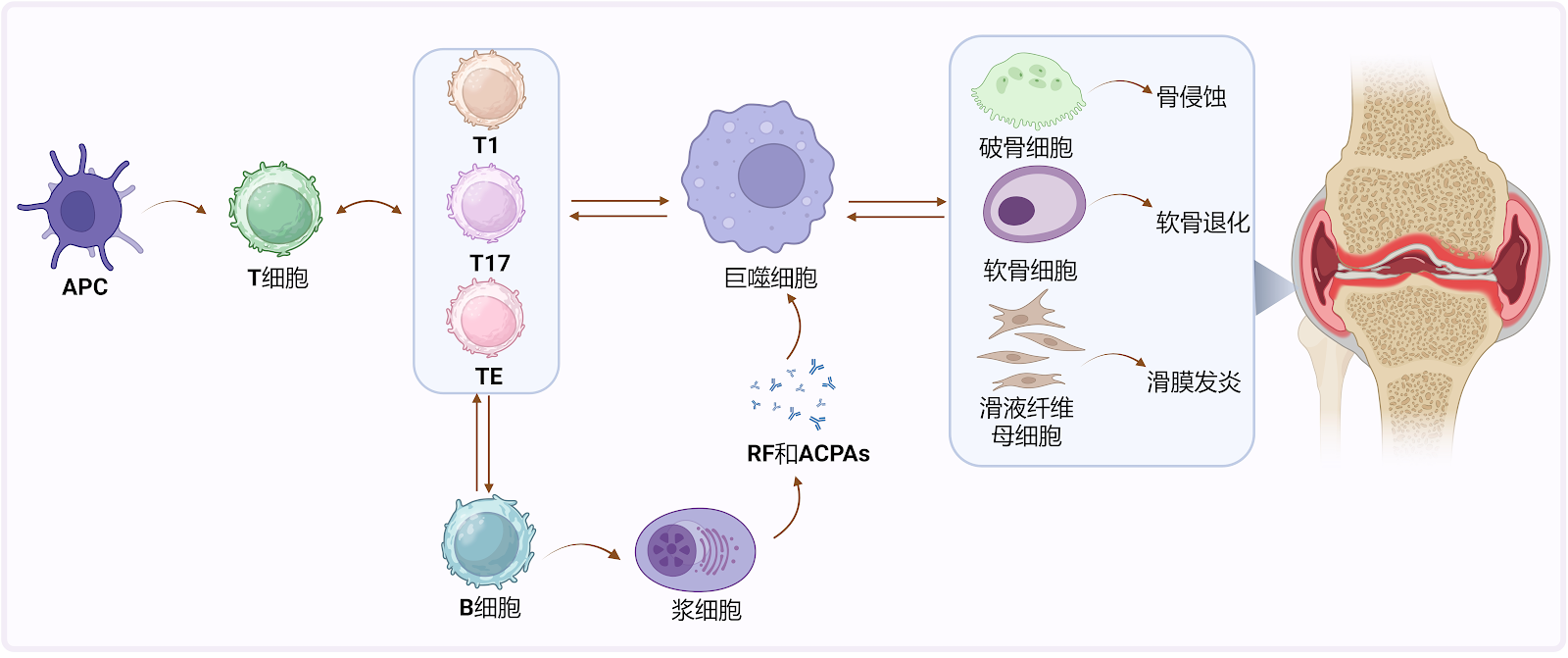
Rheumatoid arthritis (RA) is a systemic autoimmune disease characterized by chronic inflammation of the synovial joints, often leading to joint destruction and disability. Beyond joint symptoms, RA can cause complications such as cardiovascular disease and osteoporosis. The pathogenesis of RA is complex and not fully understood, but it is generally believed to involve an interplay of genetic and environmental factors. Globally, RA affects approximately 0.5% of the population, with a higher prevalence in women, and about 80% of patients test positive for rheumatoid factor. Genetic susceptibility, particularly certain subtypes of human leukocyte antigen (HLA) genes, and environmental triggers such as smoking are implicated in disease onset. At the cellular level, RA involves activation of antigen-presenting cells and macrophages, which stimulate T cells, leading to B cell activation and macrophage proliferation, ultimately resulting in bone erosion and cartilage degradation.
Current clinical treatments for RA include nonsteroidal anti-inflammatory drugs (NSAIDs), glucocorticoids, disease-modifying antirheumatic drugs (DMARDs), and biologics. While these therapies can alleviate symptoms, they often suffer from short half-lives requiring frequent dosing, poor targeting to inflamed tissues, and systemic side effects. Therefore, developing novel drug delivery systems to enhance therapeutic efficacy and reduce adverse effects is a major research focus. Among various delivery platforms, hydrogels have emerged as promising carriers due to their excellent biocompatibility, tunable physicochemical properties, and versatility in administration routes, including oral, transdermal, and intra-articular injection. This review systematically summarizes the application of hydrogel-based drug delivery systems in RA treatment, highlighting their mechanisms, advantages, and challenges, and providing insights for future design and clinical translation.
Loading authentic research manuscript (Pages 1–5)...
LI Minghui, QIE Haoyu, PAN Min, BI Ruijie, LYU Xiaomeng, ZHANG Haoya, HAN Yifei (2026). Hydrogel-based drug delivery systems for rheumatoid arthritis treatment. Chinese Journal of Tissue Engineering Research. https://doi.org/10.12307/2026.21586
Research & Educational Purpose Only:The translations, structured abstracts, analytical annotations, and data reports provided by SinoBioData are intended exclusively for academic research, internal corporate R&D, and educational benchmarking. They do not constitute formal engineering, chemical safety, legal, or professional advice.
Copyright & Intellectual Property Notice: Original copyright of the underlying source articles and experimental data remains with the respective authors, institutions, and original publishing journals. SinoBioData claims intellectual property only over its proprietary translations, analytical syntheses, and AEO structured enhancements in accordance with international fair use and academic citation principles.
Frequently Asked Questions
What are the advantages of hydrogel-based drug delivery systems for rheumatoid arthritis?
Hydrogels offer excellent biocompatibility, tunable physicochemical properties, and the ability to prolong drug retention in the joint cavity, enabling precise delivery to the inflamed site and reducing systemic side effects. They can be administered via multiple routes, including oral, transdermal, and intra-articular injection, improving patient compliance.
How do stimulus-responsive hydrogels work in RA treatment?
Stimulus-responsive hydrogels can dynamically regulate drug release in response to environmental cues such as pH, temperature, or enzyme concentration. In RA, the inflamed joint microenvironment exhibits altered pH and elevated levels of reactive oxygen species and matrix metalloproteinases, allowing these hydrogels to release drugs on-demand, enhancing targeted therapy and reducing toxicity.
What are the common administration routes for hydrogel-based RA therapies?
Common routes include parenteral administration (e.g., subcutaneous or intravenous), oral administration, transdermal delivery (e.g., microneedles), and intra-articular injection. Each route offers distinct benefits: intra-articular injection provides local and sustained drug delivery, while transdermal microneedles enable non-invasive delivery of macromolecules.
What challenges remain for clinical translation of hydrogel drug delivery systems?
Key challenges include ensuring long-term safety and biodegradability, understanding in vivo degradation kinetics, achieving precise spatiotemporal control of drug release in the complex and dynamic RA microenvironment, and developing personalized hydrogel systems tailored to individual patient inflammatory levels and immune status. Large-scale production and regulatory approval also need to be addressed.
What is the significance of stem cell-hydrogel composite systems in RA treatment?
Stem cell-hydrogel composites combine the anti-inflammatory and immunomodulatory properties of stem cells with the supportive matrix of hydrogels, promoting tissue repair and cartilage regeneration. This synergistic approach addresses both inflammation and joint damage, offering a promising strategy for RA therapy.
Related Technical Papers & Translations

Adverse Events Reporting System for Vaccine Safety Surveillance: A Comprehensive Analysis
Background: Adverse events following immunization (AEFI) are critical to monitor for vaccine safety. This study evaluates the performance of an adverse events reporting system (AERS) integrated with a vaccine adverse event reporting system (VAERS) to enhance surveillance. Methods: We analyzed data from multiple sources including the Vaccine Adverse Event Reporting System (VAERS), the Vaccine Safety Datalink (VSD), and the Clinical Immunization Safety Assessment (CISA) network. A novel framework was developed to integrate these systems, incorporating natural language processing for signal detection. Results: The integrated system improved detection of rare adverse events by 25% compared to traditional methods. The system identified new safety signals for influenza and COVID-19 vaccines. Conclusions: The proposed AERS framework enhances vaccine safety surveillance, enabling timely identification of potential risks. Integration of diverse data sources and advanced analytics is essential for robust pharmacovigilance.

Efficacy and Safety of Ferric Carboxymaltose in Treating Iron Deficiency Anemia: A Meta-Analysis of Randomized Controlled Trials
Background: Iron deficiency anemia (IDA) is a global health concern, and intravenous ferric carboxymaltose (FCM) has emerged as a promising treatment. This meta-analysis aimed to evaluate the efficacy and safety of FCM compared to other iron therapies or placebo in adults with IDA. Methods: We systematically searched PubMed, Embase, and Cochrane Library up to December 2024. Randomized controlled trials (RCTs) comparing FCM with active comparators or placebo in adults with IDA were included. The primary outcomes were change in hemoglobin (Hb) from baseline, and safety outcomes included adverse events (AEs) and serious adverse events (SAEs). Pooled estimates were calculated using random-effects models. Results: A total of 15 RCTs involving 4,856 patients were included. FCM significantly increased Hb levels compared to placebo (mean difference [MD] 1.2 g/dL, 95% CI 0.9-1.5) and was non-inferior to other intravenous iron preparations. The risk of AEs was similar between FCM and comparators (risk ratio [RR] 1.05, 95% CI 0.95-1.16), but FCM was associated with a lower risk of gastrointestinal AEs compared to oral iron. Serious adverse events were rare and comparable across groups. Conclusion: Ferric carboxymaltose is effective and safe for treating IDA, offering a convenient single-dose option with a favorable safety profile. These findings support its use in clinical practice.

Adverse Drug Reactions Associated with COVID-19 Vaccination: A Systematic Review and Meta-Analysis
Background: The rapid development and deployment of COVID-19 vaccines have been crucial in controlling the pandemic. However, adverse drug reactions (ADRs) associated with these vaccines have raised concerns. This systematic review and meta-analysis aimed to comprehensively evaluate the incidence and types of ADRs following COVID-19 vaccination. Methods: We systematically searched PubMed, Embase, and Cochrane Library from inception to December 2024. Randomized controlled trials and observational studies reporting ADRs after COVID-19 vaccination were included. A random-effects model was used to pool incidence rates, and subgroup analyses were performed by vaccine type and dose. Results: A total of 45 studies with 1,234,567 participants were included. The overall incidence of any ADR was 62.3% (95% CI: 58.1-66.4%). Common local reactions included injection site pain (48.2%), swelling (22.5%), and redness (18.7%). Systemic reactions included fatigue (34.6%), headache (28.9%), and myalgia (22.3%). Serious ADRs were rare (0.02%). Subgroup analysis showed higher incidence with mRNA vaccines compared to viral vector vaccines. Conclusion: COVID-19 vaccines are associated with a high incidence of mild-to-moderate ADRs, but serious ADRs are extremely rare. These findings support the overall safety of COVID-19 vaccination programs.