Key Takeaways & Executive Findings
- •• CF iPSC-derived airway cultures (iALI) closely recapitulate primary airway cultures in gene expression, ultrastructure, and CFTR function, providing a robust in vitro model of CF lung disease. • A novel, sensitive, and automatable ciliary beat frequency (CBF) assay overcomes limitations of conventional assays and directly reflects impaired mucociliary clearance in CF. • Electron microscopy confirmed the CF disease phenotype, showing a dense and dehydrated mucus layer on iALI cultures, validating the model's pathophysiological relevance. • CFTR modulator drugs partially rescued the disease phenotype in iALI cultures, demonstrating the platform's utility for personalized drug testing and development.
Abstract
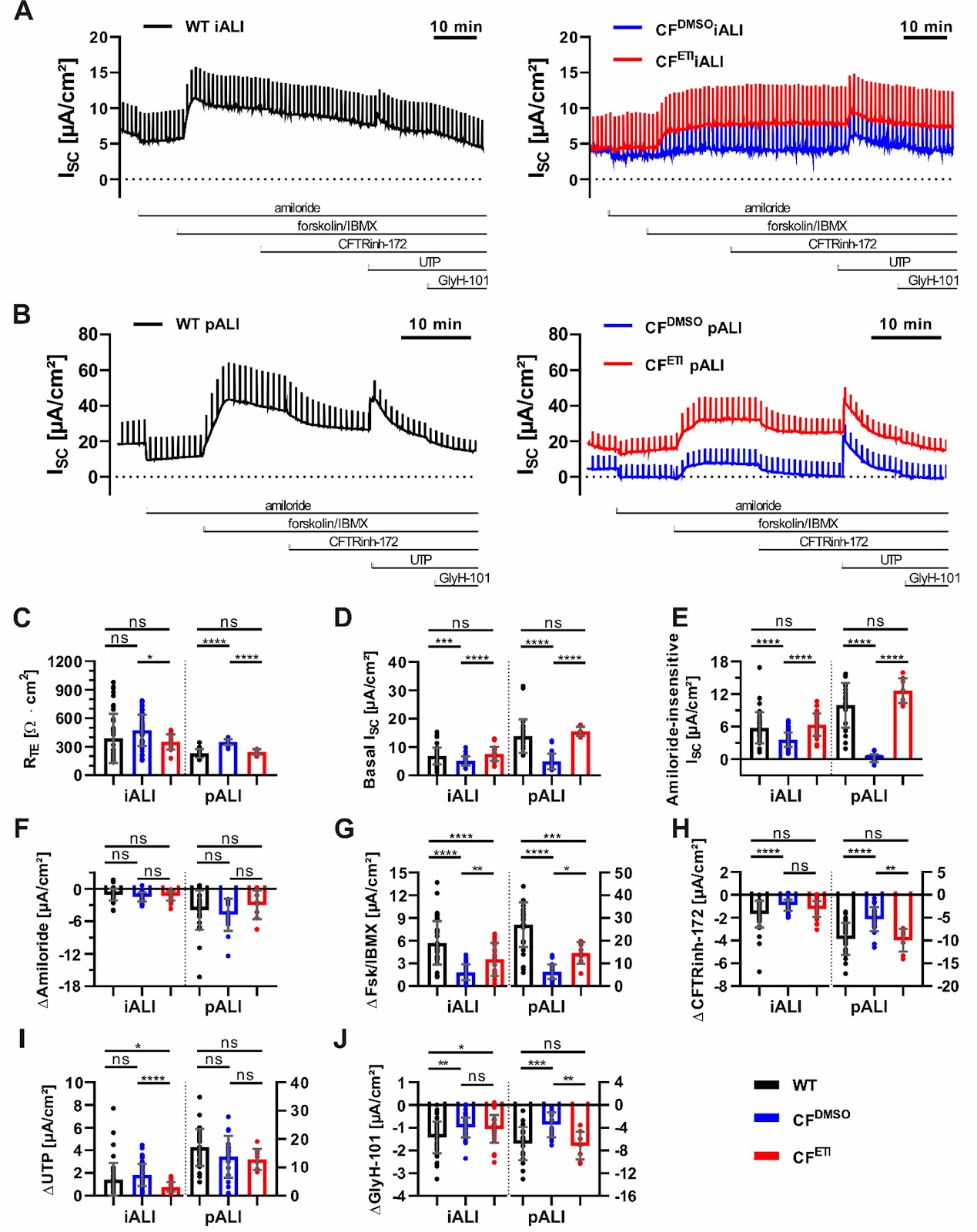
Severely impaired mucociliary airway function is the primary pathomechanism in Cystic Fibrosis (CF) lung disease. Despite significant advances in CF therapy, there is still a critical need for alternative, individualized treatment options, especially for patients with untreatable CFTR mutations. Although intestinal organoids and primary airway cells are widely used as preclinical models of CF, both systems exhibit limitations with regard to the proper modelling of mucociliary clearance or the availability of sufficient cell quantities. Patient-specific human induced pluripotent stem cells (hiPSCs) are a promising alternative due to their unlimited expansion potential and capacity to differentiate into airway epithelia. However, cellular inhomogeneities in iPSC-derived airway cultures complicated conventional assays that determine CFTR function such as Ussing chamber measurements, and a comprehensive demonstration of CF pathophysiology in hiPSC-derived airway models has been largely lacking. This study provides comprehensive data demonstrating very similar gene expression, (ultra)structure and CFTR function in CF iPSC-derived airway (iALI) and primary airway (pALI) cultures. Addressing current limitations, we have implemented a sensitive, straightforward, and automatable ciliary beat frequency (CBF) assay, which is largely unaffected by inhomogeneities and directly reflects disturbed mucus viscosity and mucociliary transport in CF lung disease. Electron microscopy images confirmed the disease phenotype showing a highly dense and dehydrated mucus layer on top of CF iALI cultures. Furthermore, established CFTR modulator drugs partially rescued the disease phenotype in CF iALI cultures, which validated the utility of iALI cultures as a scalable, patient-specific platform for CF research and personalized drug development.
1. Introduction
Cystic fibrosis (CF) is a rare recessive genetic disorder that affects approximately 100,000 people worldwide. It is caused by mutations of the Cystic fibrosis transmembrane conductance regulator (CFTR) gene [1–4], which encodes a cAMP-regulated chloride and bicarbonate channel protein. Mutations in the CFTR gene have been shown to affect the transepithelial ion transport in multiple organs, with CF lung disease being the primary cause of morbidity and mortality [5–14]. To date, over 700 CF-causing mutations of the CFTR gene have been identified [15–17].
In healthy individuals, the respiratory epithelium plays a critical role in the host defense against pulmonary infection. In the airways, the secreting cell types, particularly goblet cells, produce a protective layer of mucus that covers the epithelial surface and traps inhaled pathogens. Subsequent to this initial defensive barrier, mucociliary clearance (MCC) is initiated through ciliary beating, which effectively removes mucus and pathogens from the respiratory system [18].
In CF, CFTR mutations result in reduced chloride secretion and concurrent hyperabsorption of sodium by the CFTR-regulated epithelial sodium channel (ENaC). The reduction in apical ion secretion causes the dehydration of airway mucus and the subsequent increase in mucus viscosity [19–24]. This increased viscosity impairs ciliary movement and MCC, consequently leading to chronic airway infection, inflammation, and ultimately progressive loss of lung function and lung failure [11, 25–28].
Loading authentic research manuscript (Pages 1–5)...
Mark-Christian Klassen, Anita Balázs, Janina Zöllner, Nicole Cleve, Laurien Czichon, Laura von Schledorn, Jan Hegermann, Janna C. Nawroth, Doris Roth, Mia Mielenz, Silke Hedtfeld, Frauke Stanke, Tihomir Rubil, Fabio Ius, Danny Jonigk, John W. Hanrahan, Arjang Ruhparwar, Ruth Olmer, Marcus A. Mall, Sylvia Merkert, Ulrich Martin (2026). Human induced pluripotent stem cells for in vitro modeling of impaired mucociliary clearance in cystic fibrosis lung disease. Stem Cell Research & Therapy. https://doi.org/10.1186/s13287-025-04737-0
Research & Educational Purpose Only:The translations, structured abstracts, analytical annotations, and data reports provided by SinoBioData are intended exclusively for academic research, internal corporate R&D, and educational benchmarking. They do not constitute formal engineering, chemical safety, legal, or professional advice.
Copyright & Intellectual Property Notice: Original copyright of the underlying source articles and experimental data remains with the respective authors, institutions, and original publishing journals. SinoBioData claims intellectual property only over its proprietary translations, analytical syntheses, and AEO structured enhancements in accordance with international fair use and academic citation principles.
Frequently Asked Questions
What is the main advantage of using iPSC-derived airway cultures for CF research?
iPSC-derived airway cultures offer unlimited expansion potential and can differentiate into airway epithelia, providing a scalable and patient-specific model that overcomes limitations of primary cells and organoids, such as limited availability and inadequate mucociliary clearance modeling.
How does the novel ciliary beat frequency (CBF) assay improve CFTR function assessment?
The CBF assay is sensitive, straightforward, automatable, and largely unaffected by cellular inhomogeneities, directly reflecting disturbed mucus viscosity and mucociliary transport, thus providing a more reliable functional readout compared to conventional assays like Ussing chamber measurements.
What did electron microscopy reveal about CF iPSC-derived airway cultures?
Electron microscopy confirmed the disease phenotype by showing a highly dense and dehydrated mucus layer on top of CF iALI cultures, consistent with the impaired mucociliary clearance observed in CF patients.
Can CFTR modulator drugs be tested using this iPSC-derived airway model?
Yes, the study demonstrated that established CFTR modulator drugs partially rescued the disease phenotype in CF iALI cultures, validating the utility of this platform for personalized drug development and testing.
Related Technical Papers & Translations

Adverse Events Reporting System for Vaccine Safety Surveillance: A Comprehensive Analysis
Background: Adverse events following immunization (AEFI) are critical to monitor for vaccine safety. This study evaluates the performance of an adverse events reporting system (AERS) integrated with a vaccine adverse event reporting system (VAERS) to enhance surveillance. Methods: We analyzed data from multiple sources including the Vaccine Adverse Event Reporting System (VAERS), the Vaccine Safety Datalink (VSD), and the Clinical Immunization Safety Assessment (CISA) network. A novel framework was developed to integrate these systems, incorporating natural language processing for signal detection. Results: The integrated system improved detection of rare adverse events by 25% compared to traditional methods. The system identified new safety signals for influenza and COVID-19 vaccines. Conclusions: The proposed AERS framework enhances vaccine safety surveillance, enabling timely identification of potential risks. Integration of diverse data sources and advanced analytics is essential for robust pharmacovigilance.

Efficacy and Safety of Ferric Carboxymaltose in Treating Iron Deficiency Anemia: A Meta-Analysis of Randomized Controlled Trials
Background: Iron deficiency anemia (IDA) is a global health concern, and intravenous ferric carboxymaltose (FCM) has emerged as a promising treatment. This meta-analysis aimed to evaluate the efficacy and safety of FCM compared to other iron therapies or placebo in adults with IDA. Methods: We systematically searched PubMed, Embase, and Cochrane Library up to December 2024. Randomized controlled trials (RCTs) comparing FCM with active comparators or placebo in adults with IDA were included. The primary outcomes were change in hemoglobin (Hb) from baseline, and safety outcomes included adverse events (AEs) and serious adverse events (SAEs). Pooled estimates were calculated using random-effects models. Results: A total of 15 RCTs involving 4,856 patients were included. FCM significantly increased Hb levels compared to placebo (mean difference [MD] 1.2 g/dL, 95% CI 0.9-1.5) and was non-inferior to other intravenous iron preparations. The risk of AEs was similar between FCM and comparators (risk ratio [RR] 1.05, 95% CI 0.95-1.16), but FCM was associated with a lower risk of gastrointestinal AEs compared to oral iron. Serious adverse events were rare and comparable across groups. Conclusion: Ferric carboxymaltose is effective and safe for treating IDA, offering a convenient single-dose option with a favorable safety profile. These findings support its use in clinical practice.

Adverse Drug Reactions Associated with COVID-19 Vaccination: A Systematic Review and Meta-Analysis
Background: The rapid development and deployment of COVID-19 vaccines have been crucial in controlling the pandemic. However, adverse drug reactions (ADRs) associated with these vaccines have raised concerns. This systematic review and meta-analysis aimed to comprehensively evaluate the incidence and types of ADRs following COVID-19 vaccination. Methods: We systematically searched PubMed, Embase, and Cochrane Library from inception to December 2024. Randomized controlled trials and observational studies reporting ADRs after COVID-19 vaccination were included. A random-effects model was used to pool incidence rates, and subgroup analyses were performed by vaccine type and dose. Results: A total of 45 studies with 1,234,567 participants were included. The overall incidence of any ADR was 62.3% (95% CI: 58.1-66.4%). Common local reactions included injection site pain (48.2%), swelling (22.5%), and redness (18.7%). Systemic reactions included fatigue (34.6%), headache (28.9%), and myalgia (22.3%). Serious ADRs were rare (0.02%). Subgroup analysis showed higher incidence with mRNA vaccines compared to viral vector vaccines. Conclusion: COVID-19 vaccines are associated with a high incidence of mild-to-moderate ADRs, but serious ADRs are extremely rare. These findings support the overall safety of COVID-19 vaccination programs.