Key Takeaways & Executive Findings
- •• Established a stepwise differentiation protocol for mass production of Sertoli cells from human embryonic stem cells (hESC-SCs), overcoming the low proliferation of mature SCs. • hESC-SCs express key Sertoli cell markers (GATA4, SOX9, CLDN11, AR) and exhibit immune-modulatory activity comparable to human bone marrow-mesenchymal stem cells. • Co-transplantation of hESC-SCs with insulin-secreting EndoC-βH1 cells in diabetic mice maintained lower blood glucose levels for 6 months, indicating enhanced graft survival and function. • hESC-SCs represent a promising cell source for immune modulation in cell transplantation therapy, potentially reducing the need for systemic immunosuppression.
Abstract
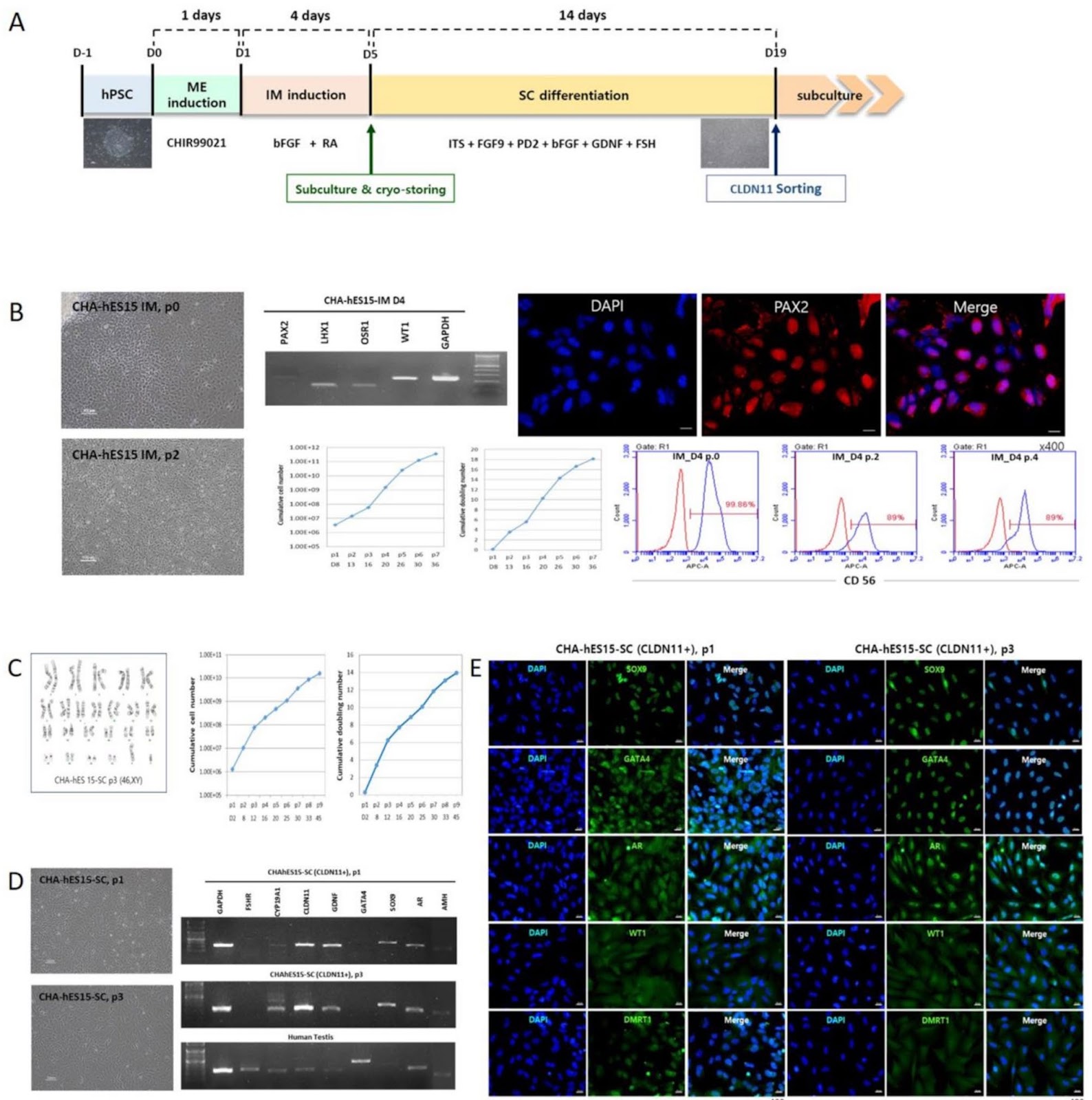
Objective Sertoli cells (SCs) are somatic cells that are a part of the seminiferous tubules in the testes and support germ cell development and maturation. Additionally, SCs play another role in protecting male germ cells from immune destruction via the formation of the blood-testis barrier and the secretion of several immunoregulatory factors. Based on these characteristics, SCs have been suggested to create a tolerogenic environment to protect co-transplanted cells as immune modulators. Because mature SCs are quiescent somatic cells and show lower proliferation activity in vitro, it is difficult to obtain the number of human cells needed for clinical applications. Materials and methods We established a protocol for mass production of SCs from human ESCs (hESC-SCs) and their functional properties were analyzed in vitro and in diabetic-induced mice after their co-transplantation with human insulin-secreting cells. Results hESC-SCs were successfully produced via a stepwise differentiation protocol. In addition, a mass culture method was established to secure the number of hESC-SCs available for cell therapy. hESC-SCs obtained from in vitro derivation highly express marker genes of SCs, such as GATA4, SOX9, CLDN11, and AR, and have shown immune-modulation activity similar to that of human bone marrow-mesenchymal stem cells. In diabetic-induced mice subcutaneously co-transplanted with EndoC-βH1 cells (insulin-secreting cells) and hESC-SCs, lower blood glucose levels were maintained for 6 months than in those transplanted with EndoC-βH1 cells alone. Conclusions We believe that hESC-SCs could be useful tool for securing cell therapy to treat human diseases in the future.
1. Introduction
Transplantation of donated pancreatic islets or insulin-producing cells from pluripotent human embryonic stem cells (hESCs) is an effective cell therapy for patients with insulin dependent (type I) diabetes (T1DM) [1–3]. Although the supply of pancreatic cells from hESCs meets some clinical demands, another main obstacle caused by immune-rejection must be addressed before its broad application as a cell therapy for T1DM [4, 5]. In fact, to reduce the need for continuous immunosuppressive treatment to prevent graft rejection, encapsulation and immune isolation barriers to protect engrafted cells from the host immune system have been explored and shown to have increased efficacy. However, the recently introduced encapsulation systems still requires improvements in structural and cellular components to increase the survival of donor hESC-derived pancreatic cells, maintain their long-term function, and decrease the area of fibrosis after transplantation [6, 7].
Sertoli cells (SCs) lining the seminiferous tubules of the testis not only provide appropriate support for the development and maturation of male germ cells but also protect them from the autoimmune response. Meiotic and post-meiotic germ cells are auto-antigenic and targeted for immune destruction [8–10]. In fact, SCs protect the germ cells from immune destruction through a combination of a physical and immunological barriers [11]. In addition to the blood-testis barrier (BTB), which consists of tight junctions, SCs express several immunoregulatory factors, such as complement inhibitors, which inhibit B-cell proliferation, decrease the activity of natural killer (NK) cells, inhibit or modulate the adaptive immune response, inhibit FAS-FAS ligand-induced cell death, and induce tolerogenic dendritic cells and regulatory T-cells (Tregs) [11]. Therefore, researchers have suggested that SCs can be useful sources of immunological barriers and immunosuppressants when allogeneic- and xenogeneic islets are transplanted [12]. In many studies, co-encapsulation of SCs with xenogeneic islets prolonged graft survival.
Loading authentic research manuscript (Pages 1–5)...
Jeoung Eun Lee, Chang Woo Lee, A-Reum Han, Jina Kim, Dong Ryul Lee (2026). Human embryonic stem cell-derived Sertoli cells as an immune modulator of cell transplantation therapy in a diabetic mice model. Stem Cell Research & Therapy. https://doi.org/10.1186/s13287-025-04532-x
Research & Educational Purpose Only:The translations, structured abstracts, analytical annotations, and data reports provided by SinoBioData are intended exclusively for academic research, internal corporate R&D, and educational benchmarking. They do not constitute formal engineering, chemical safety, legal, or professional advice.
Copyright & Intellectual Property Notice: Original copyright of the underlying source articles and experimental data remains with the respective authors, institutions, and original publishing journals. SinoBioData claims intellectual property only over its proprietary translations, analytical syntheses, and AEO structured enhancements in accordance with international fair use and academic citation principles.
Frequently Asked Questions
What are Sertoli cells and why are they important for cell transplantation?
Sertoli cells are somatic cells in the testes that support germ cell development and protect them from immune attack. They create a tolerogenic environment through the blood-testis barrier and secretion of immunoregulatory factors, making them potential immune modulators for co-transplanted cells.
How were human embryonic stem cell-derived Sertoli cells (hESC-SCs) generated?
The researchers established a stepwise differentiation protocol to derive Sertoli cells from human embryonic stem cells. They also developed a mass culture method to obtain sufficient numbers for clinical applications.
What were the key findings of the study?
hESC-SCs expressed Sertoli cell markers and showed immune-modulatory activity similar to human bone marrow-mesenchymal stem cells. Co-transplantation with insulin-secreting cells in diabetic mice maintained lower blood glucose levels for 6 months, suggesting improved graft function.
What is the potential clinical significance of this research?
hESC-SCs could serve as a valuable tool for cell therapy, particularly for diabetes, by providing immune modulation and reducing the need for systemic immunosuppression, thereby improving the efficacy and safety of cell transplantation.
What are the limitations of using mature Sertoli cells?
Mature Sertoli cells are quiescent and have low proliferation activity in vitro, making it difficult to obtain sufficient numbers for clinical use. This study overcomes this by deriving them from hESCs.
Related Technical Papers & Translations

Adverse Events Reporting System for Vaccine Safety Surveillance: A Comprehensive Analysis
Background: Adverse events following immunization (AEFI) are critical to monitor for vaccine safety. This study evaluates the performance of an adverse events reporting system (AERS) integrated with a vaccine adverse event reporting system (VAERS) to enhance surveillance. Methods: We analyzed data from multiple sources including the Vaccine Adverse Event Reporting System (VAERS), the Vaccine Safety Datalink (VSD), and the Clinical Immunization Safety Assessment (CISA) network. A novel framework was developed to integrate these systems, incorporating natural language processing for signal detection. Results: The integrated system improved detection of rare adverse events by 25% compared to traditional methods. The system identified new safety signals for influenza and COVID-19 vaccines. Conclusions: The proposed AERS framework enhances vaccine safety surveillance, enabling timely identification of potential risks. Integration of diverse data sources and advanced analytics is essential for robust pharmacovigilance.

Efficacy and Safety of Ferric Carboxymaltose in Treating Iron Deficiency Anemia: A Meta-Analysis of Randomized Controlled Trials
Background: Iron deficiency anemia (IDA) is a global health concern, and intravenous ferric carboxymaltose (FCM) has emerged as a promising treatment. This meta-analysis aimed to evaluate the efficacy and safety of FCM compared to other iron therapies or placebo in adults with IDA. Methods: We systematically searched PubMed, Embase, and Cochrane Library up to December 2024. Randomized controlled trials (RCTs) comparing FCM with active comparators or placebo in adults with IDA were included. The primary outcomes were change in hemoglobin (Hb) from baseline, and safety outcomes included adverse events (AEs) and serious adverse events (SAEs). Pooled estimates were calculated using random-effects models. Results: A total of 15 RCTs involving 4,856 patients were included. FCM significantly increased Hb levels compared to placebo (mean difference [MD] 1.2 g/dL, 95% CI 0.9-1.5) and was non-inferior to other intravenous iron preparations. The risk of AEs was similar between FCM and comparators (risk ratio [RR] 1.05, 95% CI 0.95-1.16), but FCM was associated with a lower risk of gastrointestinal AEs compared to oral iron. Serious adverse events were rare and comparable across groups. Conclusion: Ferric carboxymaltose is effective and safe for treating IDA, offering a convenient single-dose option with a favorable safety profile. These findings support its use in clinical practice.

Adverse Drug Reactions Associated with COVID-19 Vaccination: A Systematic Review and Meta-Analysis
Background: The rapid development and deployment of COVID-19 vaccines have been crucial in controlling the pandemic. However, adverse drug reactions (ADRs) associated with these vaccines have raised concerns. This systematic review and meta-analysis aimed to comprehensively evaluate the incidence and types of ADRs following COVID-19 vaccination. Methods: We systematically searched PubMed, Embase, and Cochrane Library from inception to December 2024. Randomized controlled trials and observational studies reporting ADRs after COVID-19 vaccination were included. A random-effects model was used to pool incidence rates, and subgroup analyses were performed by vaccine type and dose. Results: A total of 45 studies with 1,234,567 participants were included. The overall incidence of any ADR was 62.3% (95% CI: 58.1-66.4%). Common local reactions included injection site pain (48.2%), swelling (22.5%), and redness (18.7%). Systemic reactions included fatigue (34.6%), headache (28.9%), and myalgia (22.3%). Serious ADRs were rare (0.02%). Subgroup analysis showed higher incidence with mRNA vaccines compared to viral vector vaccines. Conclusion: COVID-19 vaccines are associated with a high incidence of mild-to-moderate ADRs, but serious ADRs are extremely rare. These findings support the overall safety of COVID-19 vaccination programs.