Key Takeaways & Executive Findings
- •• Established a complete GMP-compliant protocol for isolation, expansion, and cryopreservation of human corneal stromal stem cells (CSSCs), addressing a critical step toward clinical-grade cell manufacturing. • Developed a novel in vitro quality control metric, the Scarring Index (SI), based on stemness markers (ABCG2, nestin) and anti-inflammatory activity, which accurately predicts in vivo anti-scarring potency. • Demonstrated that CSSC batches with SI < 10 achieve at least 50% scar reduction in a mouse corneal injury model, whereas SI > 10 indicates ineffectiveness, providing a reliable potency assay. • The GMP-compliant production and QC strategy is broadly applicable to other cell-based therapies and pharmacological treatments for corneal scarring and beyond.
Abstract
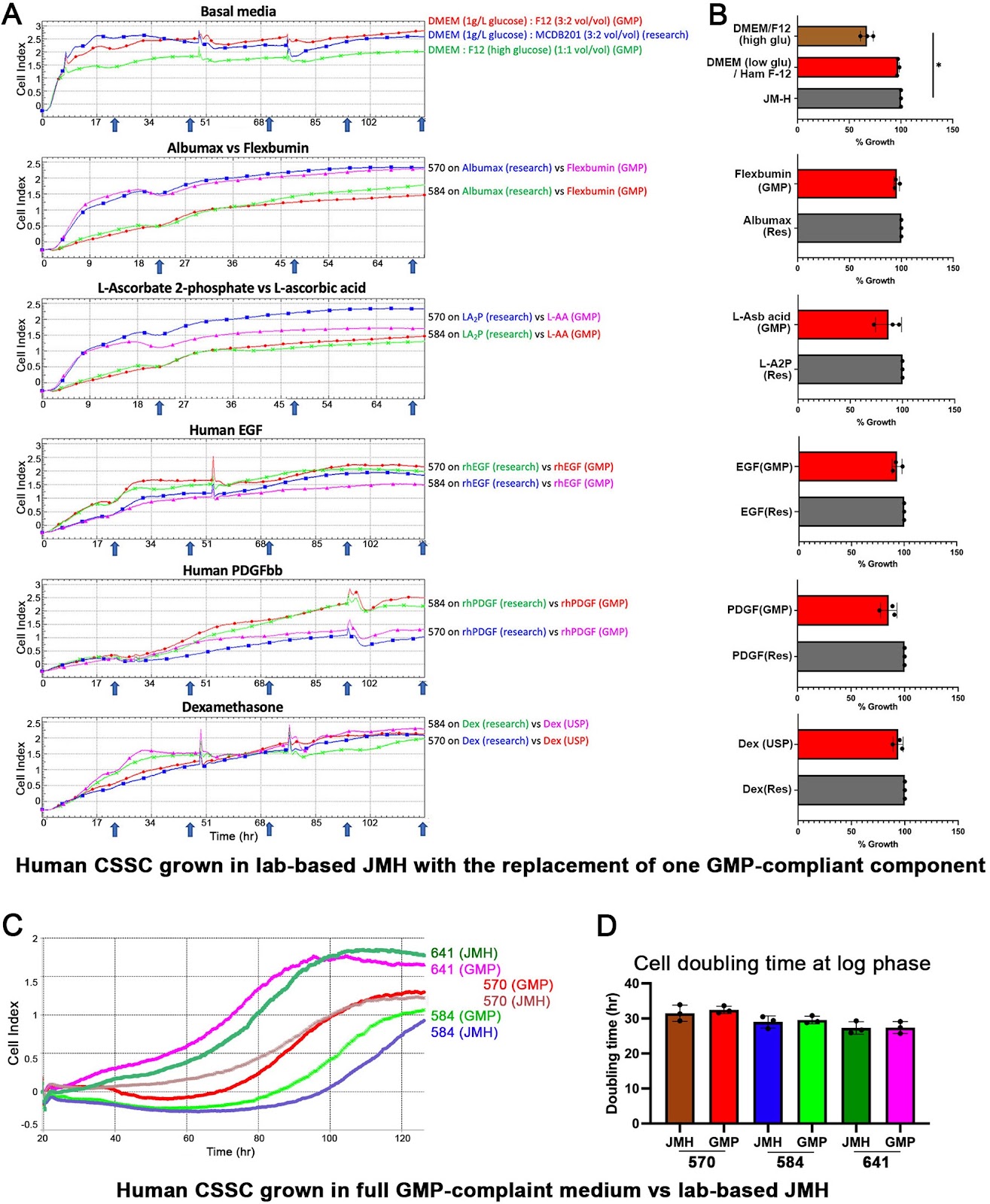
Background Mesenchymal stem cells in the adult corneal stroma (named corneal stromal stem cells, CSSCs) inhibit corneal inflammation and scarring and restore corneal clarity in pre-clinical corneal injury models. This cell therapy could alleviate the heavy reliance on donor materials for corneal transplantation to treat corneal opacities. Herein, we established Good Manufacturing Practice (GMP) protocols for CSSC isolation, propagation, and cryostorage, and developed in vitro quality control (QC) metric for in vivo anti-scarring potency of CSSCs in treating corneal opacities. Methods A total of 24 donor corneal rims with informed consent were used—18 were processed for the GMP optimization of CSSC culture and QC assay development, while CSSCs from the remaining 6 were raised under GMP-optimized conditions and used for QC validation. The cell viability, growth, substrate adhesion, stem cell phenotypes, and differentiation into stromal keratocytes were assayed by monitoring the electric impedance changes using xCELLigence real-time cell analyzer, quantitative PCR, and immunofluorescence. CSSC’s conditioned media were tested for the anti-inflammatory activity using an osteoclastogenesis assay with mouse macrophage RAW264.7 cells. In vivo scar inhibitory outcomes were verified using a mouse model of anterior stromal injury caused by mechanical ablation using an Algerbrush burring. Results By comparatively assessing various GMP-compliant reagents with the corresponding non-GMP research-grade chemicals used in the laboratory-based protocols, we finalized GMP protocols covering donor limbal stromal tissue processing, enzymatic digestion, primary CSSC culture, and cryopreservation. In establishing the in vitro QC metric, two parameters—stemness stability of ABCG2 and nestin and anti-inflammatory ability (rate of inflammation)—were factored into a novel formula to calculate a Scarring Index (SI) for each CSSC batch. Correlating with the in vivo scar inhibitory outcomes, the CSSC batches with SI < 10 had a predicted 50% scar reduction potency, whereas cells with SI > 10 were ineffective to inhibit scarring. Conclusions We established a full GMP-compliant protocol for donor CSSC cultivation, which is essential toward clinical-grade cell manufacturing. A novel in vitro QC–in vivo potency correlation was developed to predict the anti-scarring efficacy of donor CSSCs in treating corneal opacities. This method is applicable to other cell-based therapies and pharmacological treatments.
1. Introduction
Corneal blindness is a leading cause of vision loss worldwide. Using the definition of blindness by World Health Organization, over 240 million people worldwide suffer from moderate-to-severe vision impairment due to corneal opacities, and about 10 million individuals have corneal blindness (https://www.who.int/news-room/fact-sheets/detail/blindness-and-visual-impairment). In some locations of Africa, nearly 90% of total blindness cases are related to corneal pathology [1]. Corneal opacification or scarring occurs after trauma, corneal ulcers, infections, surgeries or secondary to other corneal diseases or disorders, including congenital corneal dystrophies and degenerations (e.g., keratoconus and ectasia).
At present, safe and reliable treatments are limited. Topical corticosteroids and agents, such as mitomycin C, are used to treat or prevent corneal haze; however, there are variable efficacy and known adverse effects of these treatments. In addition, the safety, dosing and duration of these treatments are subjects of debate among clinicians. Corneal transplantation (penetrating and deep anterior lamellar keratoplasties) using donor corneas remains the most popular choice for replacement of scarred corneas in order to restore corneal functions and vision. About 185,000 corneal transplants are performed annually in 116 countries [2]. The limited global supply of transplantable donor corneas, immune response, risks of long-term graft failure, and the need for lifelong immunosuppression highlight the urgent need for alternative therapies.
Loading authentic research manuscript (Pages 1–5)...
Mithun Santra, Moira L. Geary, Elizabeth Rubin, Michael Y. S. Hsu, Martha L. Funderburgh, Christine Chandran, Yiqin Du, Deepinder K. Dhaliwal, Vishal Jhanji, Gary Hin-Fai Yam (2026). Good manufacturing practice production of human corneal limbus-derived stromal stem cells and in vitro quality screening for therapeutic inhibition of corneal scarring. Stem Cell Research & Therapy. https://doi.org/10.1186/s13287-023-03626-8
Research & Educational Purpose Only:The translations, structured abstracts, analytical annotations, and data reports provided by SinoBioData are intended exclusively for academic research, internal corporate R&D, and educational benchmarking. They do not constitute formal engineering, chemical safety, legal, or professional advice.
Copyright & Intellectual Property Notice: Original copyright of the underlying source articles and experimental data remains with the respective authors, institutions, and original publishing journals. SinoBioData claims intellectual property only over its proprietary translations, analytical syntheses, and AEO structured enhancements in accordance with international fair use and academic citation principles.
Frequently Asked Questions
What are corneal stromal stem cells (CSSCs) and how do they help in treating corneal scarring?
Corneal stromal stem cells (CSSCs) are mesenchymal stem cells found in the adult corneal stroma. They inhibit corneal inflammation and scarring, and restore corneal clarity in preclinical injury models. This makes them a promising cell therapy for corneal opacities, potentially reducing reliance on donor corneal transplants.
What is the significance of the Good Manufacturing Practice (GMP) protocol established in this study?
The GMP protocol ensures that CSSCs are produced under standardized, reproducible, and safe conditions suitable for clinical use. It covers tissue processing, enzymatic digestion, primary culture, and cryopreservation, which is essential for translating this cell therapy from bench to bedside.
How does the Scarring Index (SI) predict the anti-scarring efficacy of CSSCs?
The Scarring Index (SI) is a novel in vitro quality control metric calculated from two parameters: stemness stability (expression of ABCG2 and nestin) and anti-inflammatory ability (rate of inflammation). CSSC batches with SI < 10 predicted a 50% scar reduction potency in vivo, whereas SI > 10 indicated ineffectiveness, providing a reliable potency assay.
What are the potential applications of this research beyond corneal scarring?
The GMP-compliant production and QC methodology, including the SI-based potency prediction, can be adapted to other cell-based therapies and pharmacological treatments. This could improve quality control and efficacy prediction in regenerative medicine for various diseases.
What was the experimental approach used to validate the GMP protocol and QC metric?
The study used 24 donor corneal rims: 18 for GMP optimization and QC assay development, and 6 for validation. They assessed cell viability, growth, adhesion, stem cell phenotypes, and differentiation using xCELLigence, qPCR, and immunofluorescence. Anti-inflammatory activity was tested via osteoclastogenesis assay, and in vivo scar inhibition was verified in a mouse model of anterior stromal injury.
Related Technical Papers & Translations

Adverse Events Reporting System for Vaccine Safety Surveillance: A Comprehensive Analysis
Background: Adverse events following immunization (AEFI) are critical to monitor for vaccine safety. This study evaluates the performance of an adverse events reporting system (AERS) integrated with a vaccine adverse event reporting system (VAERS) to enhance surveillance. Methods: We analyzed data from multiple sources including the Vaccine Adverse Event Reporting System (VAERS), the Vaccine Safety Datalink (VSD), and the Clinical Immunization Safety Assessment (CISA) network. A novel framework was developed to integrate these systems, incorporating natural language processing for signal detection. Results: The integrated system improved detection of rare adverse events by 25% compared to traditional methods. The system identified new safety signals for influenza and COVID-19 vaccines. Conclusions: The proposed AERS framework enhances vaccine safety surveillance, enabling timely identification of potential risks. Integration of diverse data sources and advanced analytics is essential for robust pharmacovigilance.

Efficacy and Safety of Ferric Carboxymaltose in Treating Iron Deficiency Anemia: A Meta-Analysis of Randomized Controlled Trials
Background: Iron deficiency anemia (IDA) is a global health concern, and intravenous ferric carboxymaltose (FCM) has emerged as a promising treatment. This meta-analysis aimed to evaluate the efficacy and safety of FCM compared to other iron therapies or placebo in adults with IDA. Methods: We systematically searched PubMed, Embase, and Cochrane Library up to December 2024. Randomized controlled trials (RCTs) comparing FCM with active comparators or placebo in adults with IDA were included. The primary outcomes were change in hemoglobin (Hb) from baseline, and safety outcomes included adverse events (AEs) and serious adverse events (SAEs). Pooled estimates were calculated using random-effects models. Results: A total of 15 RCTs involving 4,856 patients were included. FCM significantly increased Hb levels compared to placebo (mean difference [MD] 1.2 g/dL, 95% CI 0.9-1.5) and was non-inferior to other intravenous iron preparations. The risk of AEs was similar between FCM and comparators (risk ratio [RR] 1.05, 95% CI 0.95-1.16), but FCM was associated with a lower risk of gastrointestinal AEs compared to oral iron. Serious adverse events were rare and comparable across groups. Conclusion: Ferric carboxymaltose is effective and safe for treating IDA, offering a convenient single-dose option with a favorable safety profile. These findings support its use in clinical practice.

Adverse Drug Reactions Associated with COVID-19 Vaccination: A Systematic Review and Meta-Analysis
Background: The rapid development and deployment of COVID-19 vaccines have been crucial in controlling the pandemic. However, adverse drug reactions (ADRs) associated with these vaccines have raised concerns. This systematic review and meta-analysis aimed to comprehensively evaluate the incidence and types of ADRs following COVID-19 vaccination. Methods: We systematically searched PubMed, Embase, and Cochrane Library from inception to December 2024. Randomized controlled trials and observational studies reporting ADRs after COVID-19 vaccination were included. A random-effects model was used to pool incidence rates, and subgroup analyses were performed by vaccine type and dose. Results: A total of 45 studies with 1,234,567 participants were included. The overall incidence of any ADR was 62.3% (95% CI: 58.1-66.4%). Common local reactions included injection site pain (48.2%), swelling (22.5%), and redness (18.7%). Systemic reactions included fatigue (34.6%), headache (28.9%), and myalgia (22.3%). Serious ADRs were rare (0.02%). Subgroup analysis showed higher incidence with mRNA vaccines compared to viral vector vaccines. Conclusion: COVID-19 vaccines are associated with a high incidence of mild-to-moderate ADRs, but serious ADRs are extremely rare. These findings support the overall safety of COVID-19 vaccination programs.