Key Takeaways & Executive Findings
- •• Ginsenoside Rh2 attenuates oxidative stress-induced osteoblast dysfunction by reducing ROS levels, enhancing antioxidant enzyme activity, and improving mitochondrial function. • Rh2 promotes osteogenic differentiation and mineralization through the nuclear translocation and functional interaction of FoxO1 and β-catenin. • In an LPS-induced bone loss mouse model, Rh2 administration improves trabecular microstructure, increases osteoblast numbers, and upregulates bone formation serum metabolites. • The study highlights the FoxO1/β-catenin pathway as a promising therapeutic target for osteoporosis, with Rh2 as a potential clinical or adjuvant therapy.
Abstract
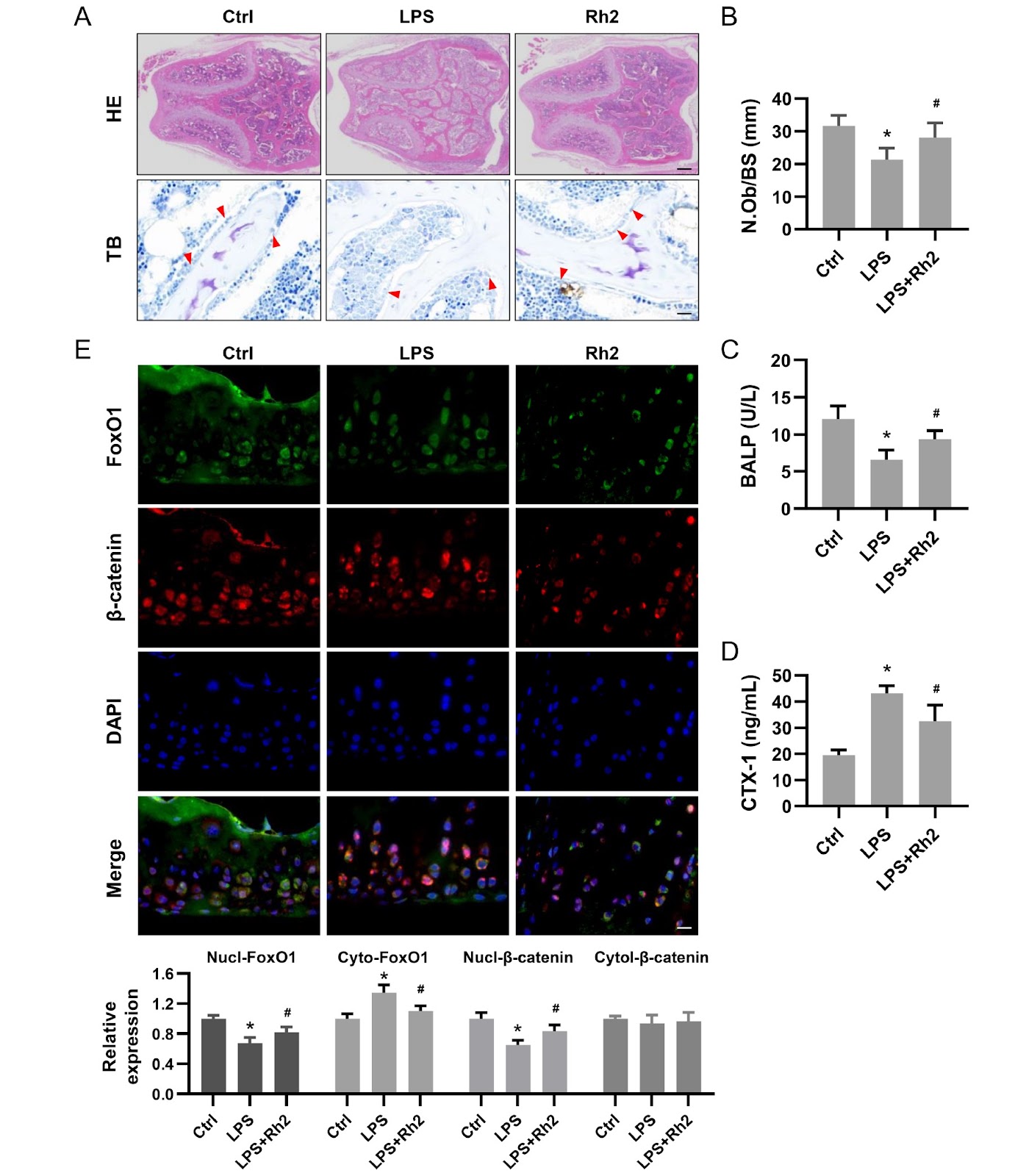
The degree of oxidative stress decreases osteoblast function with age, which leads to a decline in bone compressive capacity. Ginsenoside Rh2 is a known clinical or adjuvant therapy for various tissues. In this study, we investigate the pharmacological effects of Rh2 against oxidative stress-induced osteoblasts. Osteoblasts are pretreated with Rh2 for 48 h and then exposed to hydrogen peroxide (H2O2), which results in significantly decreased ROS levels, increased antioxidant enzyme activity, and enhanced mitochondrial function. Functionally, Rh2 increases alkaline phosphatase (ALP) expression, together with enhanced mineralization and expression of osteogenesis-associated genes. Rh2 also promotes the nuclear translocation of FoxO1 and β-catenin, whereas it does not reverse reduced mineralization caused by decreased FoxO1 or β-catenin activity, indicating that its effect is mediated through the functional interaction between FoxO1 and β-catenin. In a mouse model of lipopolysaccharide (LPS)-induced bone loss, Rh2 administration improves trabecular microstructure, increases osteoblast numbers, and upregulates serum metabolites associated with bone formation. Immunofluorescence analysis further reveals that Rh2 promotes the nuclear co-localization of FoxO1 and β-catenin in femurs, indicating their coordinated action within this signaling axis. These findings indicate that Rh2 mitigates oxidative stress-induced osteoblast dysfunction via the FoxO1/β-catenin pathway, highlighting the pivotal role of redox balance in bone remodeling and suggesting a promising therapeutic strategy for osteoporosis.
1. Introduction
Osteoporosis is a degenerative disease characterized by progressive deterioration of bone microstructure, leading to reduced bone mass and an increased fracture risk [1]. It tends to be associated with age and thus represents a major problem as populations age and life expectancies increase. Bone remodeling involves two interconnected processes: osteoclast-mediated resorption or destruction of the mineralized bone matrix and osteoblast-mediated formation of new bone [2]. Imbalances in the differentiation of osteoblasts and osteoclasts, characterized by reduced osteoblast activity and increased osteoclast activity, result in osteoporosis. Accumulating evidence suggests an association between elevated oxidative stress and reduced osteoblast differentiation, demonstrating that higher levels of oxidative stress result in the dysfunction and apoptosis of bone cells, ultimately causing bone loss [3,4] Therefore, minimizing ROS production, scavenging free radicals, and enhancing antioxidant activity are important for preventing or delaying bone loss.
Excessive accumulation of ROS leads to oxidative stress, which damages cellular macromolecules and ultimately results in cell death [5]. Forkhead box O (FoxO) proteins are highly conserved transcription factors that regulate biological processes, including proliferation, differentiation, oxidative stress resistance, apoptosis, and inflammation, in response to various endogenous and exogenous stimuli [6,7]. FoxOs are primarily phosphorylated by PI3K/Akt signaling, resulting in their translocation from the nucleus to the cytoplasm, inhibiting FoxO-dependent transcription of target genes [8]. Oxidative stress induces FoxO1 expression, which upregulates antioxidant enzymes to counteract ROS [9,10]. Therefore, FoxO1 acts as a crucial cellular sensor pivotal for mitigating oxidative damage. FoxOs have been shown to modify the pathogenesis of skeletal diseases by their ability to influence both bone mass and strength [11]. Specifically, FoxO1 is a master regulator of osteoblast function and redox balance according to cell-specific knockout and molecular analysis [12,13]. The interaction of FoxO1 with Runx2 or its promoter stimulates osteoblast differentiation and mineralization nodule formation [14]. β-Catenin functions as an essential cofactor for FoxO1, and their interaction is central to transducing ROS-induced downstream signaling [15]. This leads to altered transcription of target genes and the antagonization of Wnt/TCF pathways in osteoblast precursors under stress conditions [16]. Consequently, pharmacological modulation of FoxO1/β-catenin signaling may represent a promising therapeutic strategy for osteoporosis by preserving osteoblast function in an adverse redox environment.
Ginseng (Panax ginseng C.A. Meyer) is a traditional Chinese medicinal herb that contains ginsenosides as its principal bioactive constituents, which are widely utilized in clinical and adjuvant treatments for various diseases. Ginsenosides have beneficial effects on bone metabolism, including promoting osteoblast differentiation and inhibiting osteoclast activity. Among them, ginsenoside Rh2 has been reported to possess anti-inflammatory, anti-oxidative, and anti-apoptotic properties. However, its specific role in oxidative stress-induced osteoblast dysfunction and the underlying molecular mechanisms remain unclear. This study aims to investigate the pharmacological effects of Rh2 on oxidative stress-induced osteoblasts and to elucidate the involvement of the FoxO1/β-catenin pathway.
Loading authentic research manuscript (Pages 1–5)...
Wenqi Jin, Yujing Tan, Xuenan Chen, Zehan Guo, Jixiang Ren, Liwei Sun (2026). Ginsenoside Rh2 alleviates osteoporosis by attenuating oxidative stress-induced osteoblast dysfunction via the FoxO1/β-catenin pathway. Acta Biochimica et Biophysica Sinica. https://doi.org/10.3724/abbs.2026065
Research & Educational Purpose Only:The translations, structured abstracts, analytical annotations, and data reports provided by SinoBioData are intended exclusively for academic research, internal corporate R&D, and educational benchmarking. They do not constitute formal engineering, chemical safety, legal, or professional advice.
Copyright & Intellectual Property Notice: Original copyright of the underlying source articles and experimental data remains with the respective authors, institutions, and original publishing journals. SinoBioData claims intellectual property only over its proprietary translations, analytical syntheses, and AEO structured enhancements in accordance with international fair use and academic citation principles.
Frequently Asked Questions
What is the role of ginsenoside Rh2 in osteoporosis?
Ginsenoside Rh2 alleviates osteoporosis by attenuating oxidative stress-induced osteoblast dysfunction via the FoxO1/β-catenin pathway, thereby improving bone formation and microstructure.
How does ginsenoside Rh2 protect osteoblasts from oxidative stress?
Rh2 reduces reactive oxygen species (ROS) levels, increases antioxidant enzyme activity, and enhances mitochondrial function in osteoblasts, thus protecting them from oxidative damage.
What is the molecular mechanism of Rh2 action?
Rh2 promotes the nuclear translocation and functional interaction of FoxO1 and β-catenin, which is essential for its protective effects on osteoblast function and mineralization.
What are the clinical implications of this study?
The findings suggest that Rh2 could be a promising therapeutic strategy for osteoporosis, particularly in conditions associated with oxidative stress and bone loss.
What experimental models were used?
The study used in vitro osteoblast cultures exposed to hydrogen peroxide and an in vivo mouse model of lipopolysaccharide (LPS)-induced bone loss.
Related Technical Papers & Translations

Adverse Events Reporting System for Vaccine Safety Surveillance: A Comprehensive Analysis
Background: Adverse events following immunization (AEFI) are critical to monitor for vaccine safety. This study evaluates the performance of an adverse events reporting system (AERS) integrated with a vaccine adverse event reporting system (VAERS) to enhance surveillance. Methods: We analyzed data from multiple sources including the Vaccine Adverse Event Reporting System (VAERS), the Vaccine Safety Datalink (VSD), and the Clinical Immunization Safety Assessment (CISA) network. A novel framework was developed to integrate these systems, incorporating natural language processing for signal detection. Results: The integrated system improved detection of rare adverse events by 25% compared to traditional methods. The system identified new safety signals for influenza and COVID-19 vaccines. Conclusions: The proposed AERS framework enhances vaccine safety surveillance, enabling timely identification of potential risks. Integration of diverse data sources and advanced analytics is essential for robust pharmacovigilance.

Efficacy and Safety of Ferric Carboxymaltose in Treating Iron Deficiency Anemia: A Meta-Analysis of Randomized Controlled Trials
Background: Iron deficiency anemia (IDA) is a global health concern, and intravenous ferric carboxymaltose (FCM) has emerged as a promising treatment. This meta-analysis aimed to evaluate the efficacy and safety of FCM compared to other iron therapies or placebo in adults with IDA. Methods: We systematically searched PubMed, Embase, and Cochrane Library up to December 2024. Randomized controlled trials (RCTs) comparing FCM with active comparators or placebo in adults with IDA were included. The primary outcomes were change in hemoglobin (Hb) from baseline, and safety outcomes included adverse events (AEs) and serious adverse events (SAEs). Pooled estimates were calculated using random-effects models. Results: A total of 15 RCTs involving 4,856 patients were included. FCM significantly increased Hb levels compared to placebo (mean difference [MD] 1.2 g/dL, 95% CI 0.9-1.5) and was non-inferior to other intravenous iron preparations. The risk of AEs was similar between FCM and comparators (risk ratio [RR] 1.05, 95% CI 0.95-1.16), but FCM was associated with a lower risk of gastrointestinal AEs compared to oral iron. Serious adverse events were rare and comparable across groups. Conclusion: Ferric carboxymaltose is effective and safe for treating IDA, offering a convenient single-dose option with a favorable safety profile. These findings support its use in clinical practice.

Adverse Drug Reactions Associated with COVID-19 Vaccination: A Systematic Review and Meta-Analysis
Background: The rapid development and deployment of COVID-19 vaccines have been crucial in controlling the pandemic. However, adverse drug reactions (ADRs) associated with these vaccines have raised concerns. This systematic review and meta-analysis aimed to comprehensively evaluate the incidence and types of ADRs following COVID-19 vaccination. Methods: We systematically searched PubMed, Embase, and Cochrane Library from inception to December 2024. Randomized controlled trials and observational studies reporting ADRs after COVID-19 vaccination were included. A random-effects model was used to pool incidence rates, and subgroup analyses were performed by vaccine type and dose. Results: A total of 45 studies with 1,234,567 participants were included. The overall incidence of any ADR was 62.3% (95% CI: 58.1-66.4%). Common local reactions included injection site pain (48.2%), swelling (22.5%), and redness (18.7%). Systemic reactions included fatigue (34.6%), headache (28.9%), and myalgia (22.3%). Serious ADRs were rare (0.02%). Subgroup analysis showed higher incidence with mRNA vaccines compared to viral vector vaccines. Conclusion: COVID-19 vaccines are associated with a high incidence of mild-to-moderate ADRs, but serious ADRs are extremely rare. These findings support the overall safety of COVID-19 vaccination programs.