Key Takeaways & Executive Findings
- •• TRPV1 is highly expressed in triple-negative breast cancer (TNBC) and plays a role in cancer growth, metastasis, apoptosis, and pain. • Both TRPV1 agonists and antagonists exhibit anti-cancer effects, suggesting a complex regulatory mechanism. • TRPV1 may influence immunotherapy outcomes in TNBC, offering potential as a therapeutic target. • This review highlights the need for further research to develop TRPV1-based treatment strategies for TNBC.
Abstract
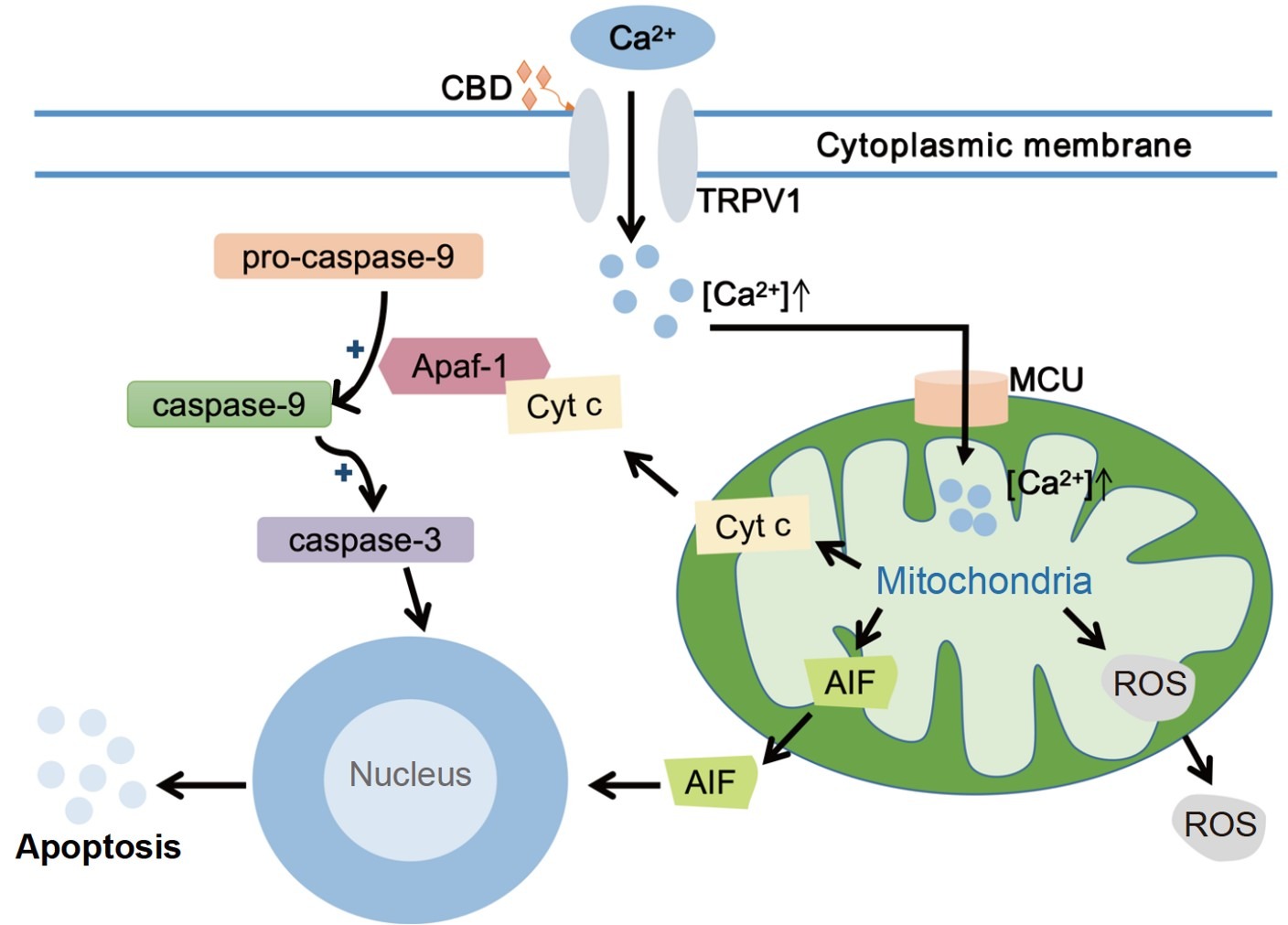
Transient receptor potential channel subfamily vanilloid 1 (TRPV1) is a member of the transient receptor potential family of nonselective cationic transmembrane channel proteins that are involved in the regulation of calcium homeostasis. It is expressed in various tumor types and has been implicated in the regulation of cancer growth, metastasis, apoptosis, and cancer-related pain. TRPV1 is highly expressed in triple-negative breast cancer (TNBC), and both its agonists and antagonists may exert anti-cancer effects. In this review, we provide an overview of the effect of TRPV1 on TNBC development and its influence on immunotherapy in an attempt to facilitate the development of future treatment strategies.
1. Introduction
In 2020, for the first time, the incidence and mortality rates of breast cancer in women increased significantly compared to those of women with lung cancer [1]. The latest statistics on the incidence and mortality of new cancers in China show that breast cancer is the most common tumor among females, and its mortality rate is on a continuous rise [2]. Breast cancer is classified into six subtypes based on molecular phenotype and gene expression, namely, luminal-A, luminal-B, HER-2 positive, basal-like (BLBC), normal-like [3] and claudin low [4]. Nearly 70%–80% of BLBC cases are triple-negative breast cancer (TNBC) [5]. Breast cancer is a highly heterogeneous disease with wide variations in its clinical management and prognosis. Existing treatment strategies for breast cancer include surgical resection, chemotherapy, radiotherapy, endocrine therapy, and targeted therapy; however, none of these therapies have adequately addressed the problems of recurrence and metastasis, particularly in TNBC patients. Although PARP inhibitors are indicated for patients with breast cancer carrying BRCA mutations, they do not prolong the overall survival of these patients [6]. In recent years, the immune checkpoint inhibitor (ICI) atezolizumab (which targets PD-L1) in combination with albumin-paclitaxel has shown considerable efficacy against PD-L1-positive infiltrating lymphocytes in TNBC, thereby extending overall patient survival. However, the proportion of the population benefiting from this regimen is small [7], and this regimen was voluntarily withdrawn by Roche in 2021. The anti-PD-1 pembrolizumab combination chemotherapy regimen significantly improves survival to disease progression in patients with locally advanced breast cancer [8] and increases the rate of complete remission in patients receiving neoadjuvant treatment for early-stage TNBC [9]. Due to the lack of effective treatment options, the development of comprehensive therapies and specific therapeutic targets is urgently needed.
Transient receptor potential (TRP) channels are a family of cationic proteins. TRPV5 and TRPV6 are specific calcium channels, while the other members are nonselective [10]. Based on amino acid sequence homology, the mammalian TRP superfamily is divided into six subfamilies: the ankyrin (TRPA), canonical (TRPC), melastatin (TRPM), vanilloid (TRPV), mucolipin (TRPML), and polycytin (TRPP) subfamilies [11]. TRP channel activation is stimulated by various physical or chemical factors both inside and outside the cell, including diglycerides (DAG), inositol trisphosphate (IP3), pH, temperature changes, capsaicin, menthol, and mechanical stimuli [12]. TRP channels are widely distributed in various tissues and play important roles in the regulation of various cellular physiological and pathological functions [13]. Numerous studies have shown that TRP channel expression is important for tumor cell proliferation, migration, and angiogenesis [14–17]. For example, TRPV4, a mechanosensitive ion channel, decreases malignant progression by selectively inhibiting tumor endothelial cell proliferation to reduce tumor angiogenesis [16]. TRPV6 expression increases strongly in high-grade prostate cancer and promotes prostate cancer cell proliferation through a Ca2+/NFAT-dependent pathway [18,19]. Direct targeting or indirect blockade of TRPC5 can effectively overcome resistance to chemotherapy in colorectal cancer (CRC) cells [20]. TRPV6 and TRPM7 are associated with poor survival in patients with breast cancer [21,22]. The TRPC6 channel, which is essential for cell proliferation and cell cycle, is highly expressed in esophageal squamous cell carcinoma (ESCC) and renal cell carcinoma (RCC). TRPC6 channel inhibition induces G2/M phase arrest and suppresses cell proliferation. Therefore, TRPC6 may serve as a novel target for therapeutic intervention in ESCC and RCC [23–25]. Therefore, the TRP channel is considered a diagnostic and therapeutic target for cancer therapy and prognostic prediction.
Loading authentic research manuscript (Pages 1–5)...
Ziling Yan, Haihui Huang, Qianqian Wang, Yanjie Kong, Xia Liu (2026). Function and mechanism of action of the TRPV1 channel in the development of triple-negative breast cancer. Acta Biochimica et Biophysica Sinica. https://doi.org/10.3724/abbs.2024068
Research & Educational Purpose Only:The translations, structured abstracts, analytical annotations, and data reports provided by SinoBioData are intended exclusively for academic research, internal corporate R&D, and educational benchmarking. They do not constitute formal engineering, chemical safety, legal, or professional advice.
Copyright & Intellectual Property Notice: Original copyright of the underlying source articles and experimental data remains with the respective authors, institutions, and original publishing journals. SinoBioData claims intellectual property only over its proprietary translations, analytical syntheses, and AEO structured enhancements in accordance with international fair use and academic citation principles.
Frequently Asked Questions
What is TRPV1 and how is it related to triple-negative breast cancer?
TRPV1 is a nonselective cationic channel involved in calcium homeostasis. It is highly expressed in triple-negative breast cancer (TNBC) and plays a role in cancer growth, metastasis, apoptosis, and pain. Both agonists and antagonists of TRPV1 have shown anti-cancer effects, making it a potential therapeutic target.
What are the main findings of this review on TRPV1 in TNBC?
The review highlights that TRPV1 is highly expressed in TNBC and its modulation can influence cancer progression. Both agonists and antagonists may exert anti-cancer effects, and TRPV1 may also impact immunotherapy outcomes. This suggests TRPV1 as a promising target for developing new treatment strategies.
Why is there a need for new therapeutic targets in TNBC?
TNBC is an aggressive subtype of breast cancer with limited treatment options. Existing therapies like surgery, chemotherapy, and targeted therapy often fail to prevent recurrence and metastasis. Immunotherapies have shown benefit only in a small subset of patients, highlighting the urgent need for novel therapeutic targets like TRPV1.
How does TRPV1 influence cancer cell behavior?
TRPV1 regulates calcium homeostasis, which is crucial for various cellular processes. In cancer, TRPV1 expression has been linked to proliferation, migration, apoptosis, and pain. Its activation or inhibition can modulate these processes, potentially suppressing tumor growth and metastasis.
What is the potential clinical significance of targeting TRPV1 in TNBC?
Targeting TRPV1 could provide a new therapeutic approach for TNBC. Since both agonists and antagonists show anti-cancer effects, drugs modulating TRPV1 activity might be developed. Additionally, TRPV1's influence on immunotherapy suggests it could be used to enhance the efficacy of immune checkpoint inhibitors.
Related Technical Papers & Translations

Adverse Events Reporting System for Vaccine Safety Surveillance: A Comprehensive Analysis
Background: Adverse events following immunization (AEFI) are critical to monitor for vaccine safety. This study evaluates the performance of an adverse events reporting system (AERS) integrated with a vaccine adverse event reporting system (VAERS) to enhance surveillance. Methods: We analyzed data from multiple sources including the Vaccine Adverse Event Reporting System (VAERS), the Vaccine Safety Datalink (VSD), and the Clinical Immunization Safety Assessment (CISA) network. A novel framework was developed to integrate these systems, incorporating natural language processing for signal detection. Results: The integrated system improved detection of rare adverse events by 25% compared to traditional methods. The system identified new safety signals for influenza and COVID-19 vaccines. Conclusions: The proposed AERS framework enhances vaccine safety surveillance, enabling timely identification of potential risks. Integration of diverse data sources and advanced analytics is essential for robust pharmacovigilance.

Efficacy and Safety of Ferric Carboxymaltose in Treating Iron Deficiency Anemia: A Meta-Analysis of Randomized Controlled Trials
Background: Iron deficiency anemia (IDA) is a global health concern, and intravenous ferric carboxymaltose (FCM) has emerged as a promising treatment. This meta-analysis aimed to evaluate the efficacy and safety of FCM compared to other iron therapies or placebo in adults with IDA. Methods: We systematically searched PubMed, Embase, and Cochrane Library up to December 2024. Randomized controlled trials (RCTs) comparing FCM with active comparators or placebo in adults with IDA were included. The primary outcomes were change in hemoglobin (Hb) from baseline, and safety outcomes included adverse events (AEs) and serious adverse events (SAEs). Pooled estimates were calculated using random-effects models. Results: A total of 15 RCTs involving 4,856 patients were included. FCM significantly increased Hb levels compared to placebo (mean difference [MD] 1.2 g/dL, 95% CI 0.9-1.5) and was non-inferior to other intravenous iron preparations. The risk of AEs was similar between FCM and comparators (risk ratio [RR] 1.05, 95% CI 0.95-1.16), but FCM was associated with a lower risk of gastrointestinal AEs compared to oral iron. Serious adverse events were rare and comparable across groups. Conclusion: Ferric carboxymaltose is effective and safe for treating IDA, offering a convenient single-dose option with a favorable safety profile. These findings support its use in clinical practice.

Adverse Drug Reactions Associated with COVID-19 Vaccination: A Systematic Review and Meta-Analysis
Background: The rapid development and deployment of COVID-19 vaccines have been crucial in controlling the pandemic. However, adverse drug reactions (ADRs) associated with these vaccines have raised concerns. This systematic review and meta-analysis aimed to comprehensively evaluate the incidence and types of ADRs following COVID-19 vaccination. Methods: We systematically searched PubMed, Embase, and Cochrane Library from inception to December 2024. Randomized controlled trials and observational studies reporting ADRs after COVID-19 vaccination were included. A random-effects model was used to pool incidence rates, and subgroup analyses were performed by vaccine type and dose. Results: A total of 45 studies with 1,234,567 participants were included. The overall incidence of any ADR was 62.3% (95% CI: 58.1-66.4%). Common local reactions included injection site pain (48.2%), swelling (22.5%), and redness (18.7%). Systemic reactions included fatigue (34.6%), headache (28.9%), and myalgia (22.3%). Serious ADRs were rare (0.02%). Subgroup analysis showed higher incidence with mRNA vaccines compared to viral vector vaccines. Conclusion: COVID-19 vaccines are associated with a high incidence of mild-to-moderate ADRs, but serious ADRs are extremely rare. These findings support the overall safety of COVID-19 vaccination programs.