Key Takeaways & Executive Findings
- •• Fndc5 overexpression enhances MSC retention in injured lungs and augments their proliferation and migration in vitro. • MSCs-Fndc5 treatment attenuates lung inflammation, reduces pulmonary edema and fibrosis, and preserves vascular integrity in sepsis-induced ALI/ARDS. • The protective effects of MSCs-Fndc5 are mediated via activation of the PI3K/AKT signaling pathway in endothelial cells. • Fndc5-modified MSCs represent a promising therapeutic strategy for sepsis-induced ALI/ARDS.
Abstract
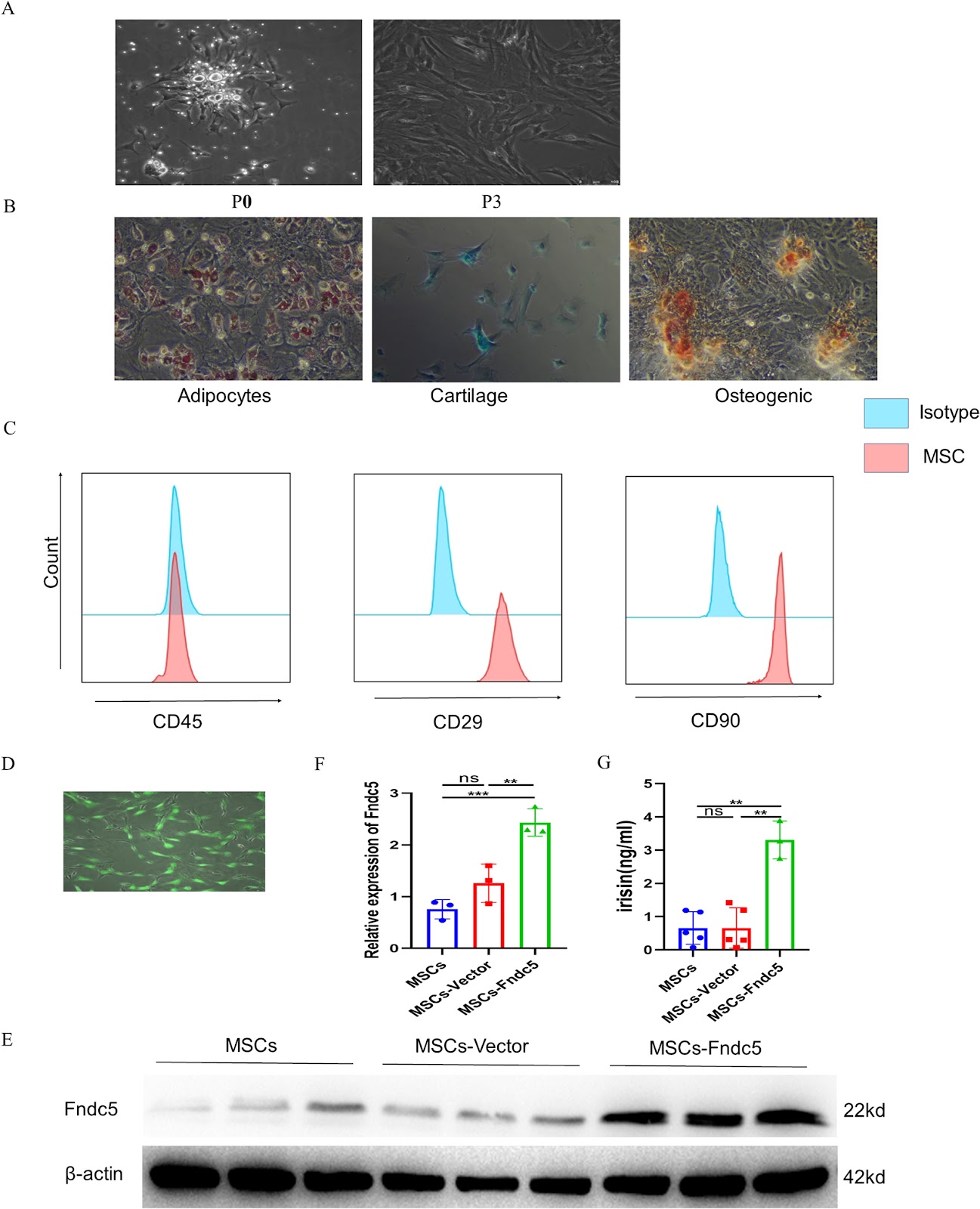
Background: Acute lung injury/Acute respiratory distress syndrome (ALI/ARDS) is a life-threatening inflammatory lung disorder characterized by high mortality rates and a lack of effective treatment options. Although mesenchymal stem cell (MSC)-based therapies have emerged as a promising approach for ARDS management, optimizing their therapeutic efficacy remains a significant challenge. Recent advances in gene modification techniques have opened new avenues for enhancing MSC functionality. Among these, Fibronectin type III domain-containing protein 5 (Fndc5)/irisin has attracted considerable attention due to its ability to improve endothelial function. This study aims to evaluate the therapeutic potential of Fndc5-modified MSCs in sepsis-induced ALI/ARDS and to elucidate the underlying molecular mechanisms driving their protective effects. Methods: To comprehensively evaluate the therapeutic potential of Fndc5-modified MSCs (MSCs-Fndc5) in ARDS, we employed both in vivo and in vitro experimental models. In vivo, a mouse model of sepsis-induced ALI was established through intraperitoneal injection of lipopolysaccharide (LPS), and the protective effects of MSCs-Fndc5 were systematically assessed by analyzing lung histopathology, inflammatory cytokine levels, vascular endothelial integrity, lung wet-to-dry weight ratio, and MSC retention in lung tissue. In parallel, in vitro studies were conducted to investigate the role of MSCs-Fndc5 in mitigating LPS-induced endothelial cell (EC) injury, with a focus on EC proliferation, angiogenesis, barrier permeability, apoptosis, and the regulation of key signaling pathways. Results: Fndc5 modification significantly increased the retention rate of MSCs in sepsis-induced ALI murine model while augmenting their in vitro proliferation and migration potential. In vivo, treatment with Fndc5-modified MSCs markedly attenuated lung inflammation, as evidenced by reduced levels of pro-inflammatory cytokines, decreased neutrophil infiltration, and improved lung histopathology. Additionally, MSCs-Fndc5 alleviated pulmonary edema, reduced fibrosis, lowered the lung wet-to-dry weight ratio, and preserved vascular endothelial integrity. In vitro, MSCs-Fndc5 significantly enhanced cell proliferation, migration, angiogenesis, endothelial barrier function, apoptosis inhibition, likely via PI3K/AKT pathway activation. Conclusions: Fndc5 overexpression in MSCs augments their therapeutic efficacy in sepsis-induced ALI/ARDS, which may be achieved by activating the endothelial PI3K/AKT pathway and improving MSCs retention in vivo. These findings propose MSCs-Fndc5 as a promising therapeutic strategy for sepsis-induced ALI/ARDS by enhancing endothelial repair, curbing inflammation, and modulating pivotal signaling pathways.
1. Introduction
Acute Respiratory Distress Syndrome (ARDS) is a critical condition characterized by rapid, widespread lung inflammation, leading to severe respiratory failure [1], whereas acute lung injury (ALI) was previously used to describe a milder form of this condition prior to the 2012 Berlin definition reclassification [2]. ARDS, a heterogeneous syndrome with various underlying pathologies, is most commonly a complication of pneumonia or sepsis [3]. This syndrome poses a significant challenge to healthcare systems due to its high mortality rates and the limited therapeutic options beyond supportive care [4]. Despite significant advancements in supportive care, effective therapeutic options for ARDS remain scarce, highlighting the urgent need for innovative treatments [5]. Mesenchymal stromal cells (MSCs) have emerged as a promising therapeutic option for ARDS, owing to their immunomodulatory, anti-inflammatory, and tissue regenerative properties [6–9].
MSC therapy has shown potential in preclinical models and early-phase clinical trials for ARDS, but challenges such as inconsistent outcomes and suboptimal efficacy limit its widespread application [10, 11]. This variability is believed to stem from the complex interplay of factors, including the severity of lung injury, the timing of MSC administration, and the patient’s immunological state [12]. Certain published studies indicate that the documented survival rates of transplanted cells are exceedingly minimal, thereby rendering the entire endeavor of cellular therapy ineffective [13]. Therefore, enhancing the in vivo survival of MSCs represents a pivotal challenge in advancing cellular therapy. Recent studies suggest that enhancing the therapeutic capabilities of MSCs through genetic modification may improve their effectiveness.
Loading authentic research manuscript (Pages 1–5)...
Yuling Luo, Minhua Li, Shan Lin, Zheng Gong, Sumei Wang, Ziqing Zhou, Shiyue Li (2026). Fndc5 modification optimizes the therapeutic effect of rat MSCs on sepsis-induced ALI/ARDS via activating the PI3K/AKT signaling pathway. Stem Cell Research & Therapy. https://doi.org/10.1186/s13287-026-04903-y
Research & Educational Purpose Only:The translations, structured abstracts, analytical annotations, and data reports provided by SinoBioData are intended exclusively for academic research, internal corporate R&D, and educational benchmarking. They do not constitute formal engineering, chemical safety, legal, or professional advice.
Copyright & Intellectual Property Notice: Original copyright of the underlying source articles and experimental data remains with the respective authors, institutions, and original publishing journals. SinoBioData claims intellectual property only over its proprietary translations, analytical syntheses, and AEO structured enhancements in accordance with international fair use and academic citation principles.
Frequently Asked Questions
What is the role of Fndc5 in mesenchymal stem cell therapy for ARDS?
Fndc5 overexpression in MSCs enhances their survival, retention, and therapeutic efficacy in sepsis-induced ALI/ARDS by activating the PI3K/AKT pathway, improving endothelial repair and reducing inflammation.
How does Fndc5 modification improve MSC retention in the lung?
Fndc5 modification increases MSC resistance to apoptosis and enhances their proliferation and migration, leading to improved retention in the injured lung tissue.
What are the key signaling pathways involved in the protective effects of MSCs-Fndc5?
The protective effects are mediated through activation of the PI3K/AKT signaling pathway in endothelial cells, which promotes cell survival, angiogenesis, and barrier integrity.
What are the main findings of this study?
The study demonstrates that Fndc5-modified MSCs significantly attenuate lung inflammation, edema, and fibrosis in a mouse model of sepsis-induced ALI, while preserving vascular integrity, suggesting a promising therapeutic strategy for ARDS.
What is the significance of this research for future ARDS treatments?
This research provides a novel approach to enhance MSC-based therapy for ARDS by genetic modification with Fndc5, potentially improving clinical outcomes and offering a new treatment avenue for this life-threatening condition.
Related Technical Papers & Translations

Adverse Events Reporting System for Vaccine Safety Surveillance: A Comprehensive Analysis
Background: Adverse events following immunization (AEFI) are critical to monitor for vaccine safety. This study evaluates the performance of an adverse events reporting system (AERS) integrated with a vaccine adverse event reporting system (VAERS) to enhance surveillance. Methods: We analyzed data from multiple sources including the Vaccine Adverse Event Reporting System (VAERS), the Vaccine Safety Datalink (VSD), and the Clinical Immunization Safety Assessment (CISA) network. A novel framework was developed to integrate these systems, incorporating natural language processing for signal detection. Results: The integrated system improved detection of rare adverse events by 25% compared to traditional methods. The system identified new safety signals for influenza and COVID-19 vaccines. Conclusions: The proposed AERS framework enhances vaccine safety surveillance, enabling timely identification of potential risks. Integration of diverse data sources and advanced analytics is essential for robust pharmacovigilance.

Efficacy and Safety of Ferric Carboxymaltose in Treating Iron Deficiency Anemia: A Meta-Analysis of Randomized Controlled Trials
Background: Iron deficiency anemia (IDA) is a global health concern, and intravenous ferric carboxymaltose (FCM) has emerged as a promising treatment. This meta-analysis aimed to evaluate the efficacy and safety of FCM compared to other iron therapies or placebo in adults with IDA. Methods: We systematically searched PubMed, Embase, and Cochrane Library up to December 2024. Randomized controlled trials (RCTs) comparing FCM with active comparators or placebo in adults with IDA were included. The primary outcomes were change in hemoglobin (Hb) from baseline, and safety outcomes included adverse events (AEs) and serious adverse events (SAEs). Pooled estimates were calculated using random-effects models. Results: A total of 15 RCTs involving 4,856 patients were included. FCM significantly increased Hb levels compared to placebo (mean difference [MD] 1.2 g/dL, 95% CI 0.9-1.5) and was non-inferior to other intravenous iron preparations. The risk of AEs was similar between FCM and comparators (risk ratio [RR] 1.05, 95% CI 0.95-1.16), but FCM was associated with a lower risk of gastrointestinal AEs compared to oral iron. Serious adverse events were rare and comparable across groups. Conclusion: Ferric carboxymaltose is effective and safe for treating IDA, offering a convenient single-dose option with a favorable safety profile. These findings support its use in clinical practice.

Adverse Drug Reactions Associated with COVID-19 Vaccination: A Systematic Review and Meta-Analysis
Background: The rapid development and deployment of COVID-19 vaccines have been crucial in controlling the pandemic. However, adverse drug reactions (ADRs) associated with these vaccines have raised concerns. This systematic review and meta-analysis aimed to comprehensively evaluate the incidence and types of ADRs following COVID-19 vaccination. Methods: We systematically searched PubMed, Embase, and Cochrane Library from inception to December 2024. Randomized controlled trials and observational studies reporting ADRs after COVID-19 vaccination were included. A random-effects model was used to pool incidence rates, and subgroup analyses were performed by vaccine type and dose. Results: A total of 45 studies with 1,234,567 participants were included. The overall incidence of any ADR was 62.3% (95% CI: 58.1-66.4%). Common local reactions included injection site pain (48.2%), swelling (22.5%), and redness (18.7%). Systemic reactions included fatigue (34.6%), headache (28.9%), and myalgia (22.3%). Serious ADRs were rare (0.02%). Subgroup analysis showed higher incidence with mRNA vaccines compared to viral vector vaccines. Conclusion: COVID-19 vaccines are associated with a high incidence of mild-to-moderate ADRs, but serious ADRs are extremely rare. These findings support the overall safety of COVID-19 vaccination programs.