Key Takeaways & Executive Findings
- •• FHOD3 knockout in human stem cell-derived cardiomyocytes leads to severe sarcomere disorganization, impaired calcium handling, and mitochondrial dysfunction, culminating in reduced contractility. • Transcriptomic profiling reveals downregulation of sarcomere and calcium-handling genes, with enrichment in cardiomyopathy and calcium signaling pathways. • FHOD3 deficiency activates CaMKII signaling via phosphorylation at Thr286, a known driver of cardiac hypertrophy and heart failure progression. • The myosin activator Omecamtiv mecarbil partially restores contractility in FHOD3-deficient cardiomyocytes, suggesting a potential therapeutic approach for FHOD3-related cardiomyopathy.
Abstract
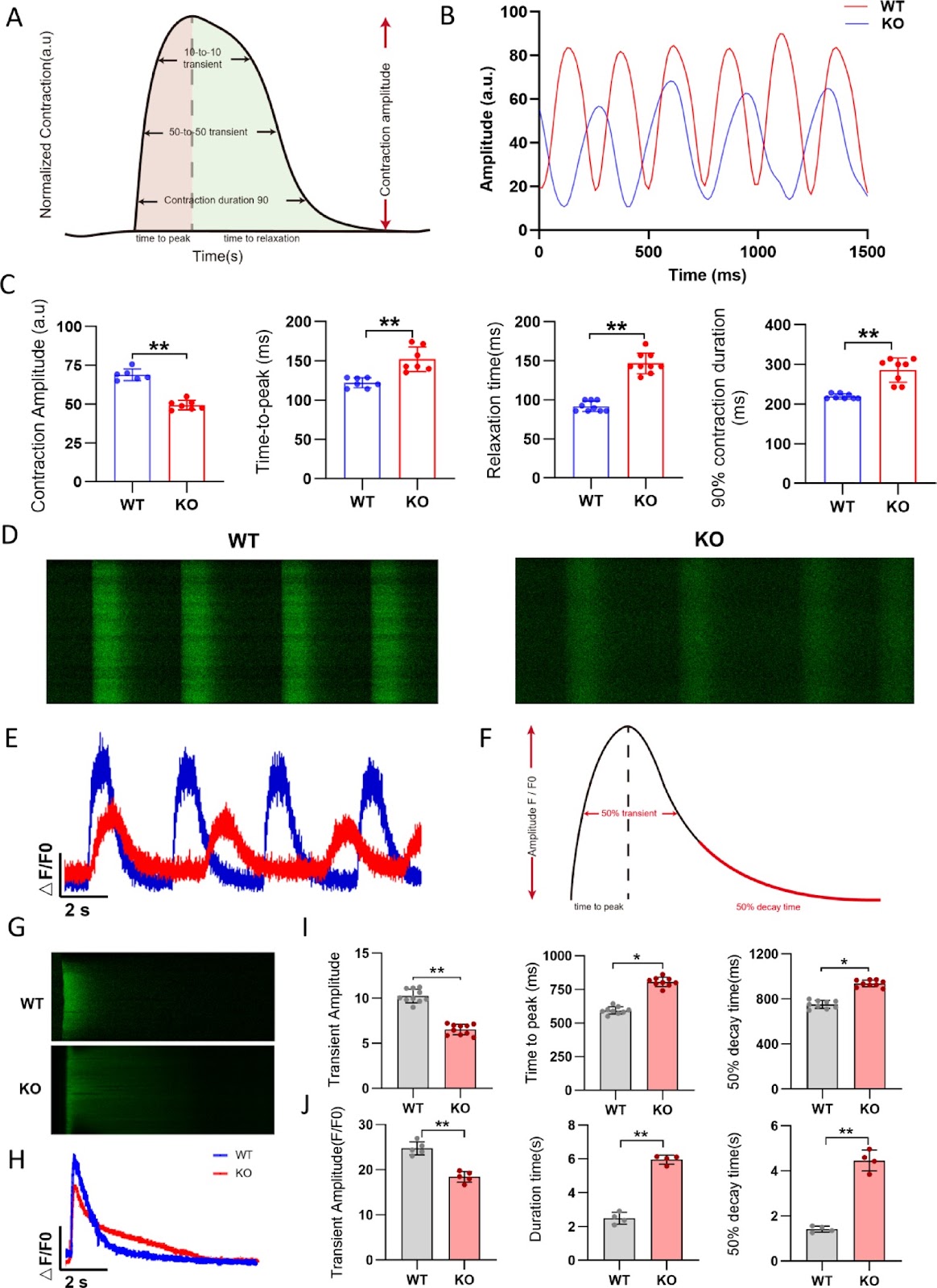
Background Inherited cardiomyopathy (ICM) is a genetic disorder characterized by abnormal myocardial structure and function, often progressing to heart failure. FHOD3, a member of the Formin gene family, plays a crucial role in cardiomyocyte cytoskeletal organization. Mutations in FHOD3 have been associated with various cardiomyopathies, including hypertrophic cardiomyopathy (HCM), dilated cardiomyopathy (DCM) and left ventricular noncompaction (LVNC). However, the molecular mechanisms underlying FHOD3 deficiency-induced cardiomyopathy remain elusive. Methods A FHOD3 knockout (FHOD3-/-) human embryonic stem cell (hESC) line was generated using the CRISPR/Cas9 system and subsequently differentiated into cardiomyocytes (hESC-CMs). Sarcomere structure, calcium handling, mitochondrial function, and contractility were evaluated via immunofluorescence, electron microscopy, Seahorse metabolic analysis, and high-definition video analysis, respectively. Transcriptomic sequencing was performed to identify differentially expressed genes and enriched pathways. Results FHOD3-deficient hESC-CMs exhibited marked sarcomere disorganization and degradation, impaired calcium handling and compromised mitochondrial function, ultimately leading to reduced contractility. Transcriptomic analysis revealed significant downregulation of sarcomere-related genes and calcium-handling genes, with enrichment in pathways associated with cardiomyopathy and calcium signaling. Furthermore, FHOD3 deficiency triggered the phosphorylation of CaMKII (Thr286), a key regulator of cardiac hypertrophy and remodeling, contributing to the progression of heart failure. Treatment with the myosin activator Omecamtiv mecarbil (OM) partially restored contractility without affecting calcium handling, highlighting its potential as a therapeutic strategy.
1. Introduction
Inherited cardiomyopathy (ICM) is a group of diseases caused by genetic mutations, characterized by abnormal myocardial structure and function, and often leads to heart failure as a severe complication. The incidence of inherited cardiomyopathy in the general population is approximately 0.2% -0.5%, posing a serious threat to human life [1, 2]. Therefore, investigating the function and pathogenic mechanisms of relevant mutated genes may facilitate the provision of personalized treatment, including drug and gene therapy, for patients with inherited cardiomyopathy [3, 4].
FHOD3 protein (Formin Homology 2 Domain Containing 3) is a member of the Formin gene family, which is characterized by its Formin homology domains (FH1 and FH2). It plays a major role in cell cytoskeletal organization, particularly in actin filament assembly and microtubule stabilization. FHOD3 is highly expressed in cardiomyocytes and mediates the nucleation and polymerization of actin filaments through the FH2 domain, thereby regulating actin assembly and sarcomere organization in cardiomyocytes, playing a key role in myofibrillogenesis [5, 6]. Previous studies have shown that mutations in FHOD3 are associated with hypertrophic cardiomyopathy (HCM), dilated cardiomyopathy (DCM) and left ventricular noncompaction (LVNC) in humans [7–10]. FHOD3 mutations are estimated to account for 1–2% of genetically explained hypertrophic cardiomyopathy (HCM) in unselected cohorts and up to 4% in familial cases [7, 8, 11, 12]. Clinically, most of FHOD3-related HCM presents in adulthood with asymmetric septal hypertrophy and carries a markedly elevated arrhythmic burden. Consequently, affected individuals face a significantly higher risk of sudden cardiac death [7, 11]. Notably, homozygosity for the p.Arg637Gln variant observed in several families is associated with a much earlier and more aggressive phenotype, with several patients developing severe disease and multiple complications between the ages of 2 and 4 years [13]. In contrast, FHOD3-related DCM is still sparsely reported and lacks a direct prevalence rate in the general population. The only fully characterized case is a family in Japan wi
Loading authentic research manuscript (Pages 1–5)...
Mingyu Wei, Xiaojie Hou, Siyao Zhang, Xianjing Hu, Xi Chen, Zhen Gao, Shuwan Xu, Zhan Shi, Min Zhu, Feng Lan, Ming Cui (2026). FHOD3 deficiency disrupts sarcomere organization and activates CaMKII signaling in human stem cell-derived cardiomyocytes. Stem Cell Research & Therapy. https://doi.org/10.1186/s13287-026-04902-z
Research & Educational Purpose Only:The translations, structured abstracts, analytical annotations, and data reports provided by SinoBioData are intended exclusively for academic research, internal corporate R&D, and educational benchmarking. They do not constitute formal engineering, chemical safety, legal, or professional advice.
Copyright & Intellectual Property Notice: Original copyright of the underlying source articles and experimental data remains with the respective authors, institutions, and original publishing journals. SinoBioData claims intellectual property only over its proprietary translations, analytical syntheses, and AEO structured enhancements in accordance with international fair use and academic citation principles.
Frequently Asked Questions
What is the role of FHOD3 in cardiomyocytes?
FHOD3 is a member of the Formin family that regulates actin filament assembly and sarcomere organization in cardiomyocytes, playing a key role in myofibrillogenesis.
How was FHOD3 deficiency modeled in this study?
A FHOD3 knockout human embryonic stem cell line was generated using CRISPR/Cas9 and differentiated into cardiomyocytes to study the effects of FHOD3 deficiency.
What are the main findings of the study?
FHOD3 deficiency leads to sarcomere disorganization, impaired calcium handling, mitochondrial dysfunction, reduced contractility, and activation of CaMKII signaling. Omecamtiv mecarbil partially restored contractility.
What is the clinical significance of this research?
The study provides insights into the molecular mechanisms of FHOD3-related cardiomyopathy and suggests that myosin activators like Omecamtiv mecarbil could be a potential therapeutic strategy.
What is the potential therapeutic implication?
Omecamtiv mecarbil, a myosin activator, partially restored contractility in FHOD3-deficient cardiomyocytes, indicating its potential as a treatment for FHOD3-related cardiomyopathy.
Related Technical Papers & Translations

Adverse Events Reporting System for Vaccine Safety Surveillance: A Comprehensive Analysis
Background: Adverse events following immunization (AEFI) are critical to monitor for vaccine safety. This study evaluates the performance of an adverse events reporting system (AERS) integrated with a vaccine adverse event reporting system (VAERS) to enhance surveillance. Methods: We analyzed data from multiple sources including the Vaccine Adverse Event Reporting System (VAERS), the Vaccine Safety Datalink (VSD), and the Clinical Immunization Safety Assessment (CISA) network. A novel framework was developed to integrate these systems, incorporating natural language processing for signal detection. Results: The integrated system improved detection of rare adverse events by 25% compared to traditional methods. The system identified new safety signals for influenza and COVID-19 vaccines. Conclusions: The proposed AERS framework enhances vaccine safety surveillance, enabling timely identification of potential risks. Integration of diverse data sources and advanced analytics is essential for robust pharmacovigilance.

Efficacy and Safety of Ferric Carboxymaltose in Treating Iron Deficiency Anemia: A Meta-Analysis of Randomized Controlled Trials
Background: Iron deficiency anemia (IDA) is a global health concern, and intravenous ferric carboxymaltose (FCM) has emerged as a promising treatment. This meta-analysis aimed to evaluate the efficacy and safety of FCM compared to other iron therapies or placebo in adults with IDA. Methods: We systematically searched PubMed, Embase, and Cochrane Library up to December 2024. Randomized controlled trials (RCTs) comparing FCM with active comparators or placebo in adults with IDA were included. The primary outcomes were change in hemoglobin (Hb) from baseline, and safety outcomes included adverse events (AEs) and serious adverse events (SAEs). Pooled estimates were calculated using random-effects models. Results: A total of 15 RCTs involving 4,856 patients were included. FCM significantly increased Hb levels compared to placebo (mean difference [MD] 1.2 g/dL, 95% CI 0.9-1.5) and was non-inferior to other intravenous iron preparations. The risk of AEs was similar between FCM and comparators (risk ratio [RR] 1.05, 95% CI 0.95-1.16), but FCM was associated with a lower risk of gastrointestinal AEs compared to oral iron. Serious adverse events were rare and comparable across groups. Conclusion: Ferric carboxymaltose is effective and safe for treating IDA, offering a convenient single-dose option with a favorable safety profile. These findings support its use in clinical practice.

Adverse Drug Reactions Associated with COVID-19 Vaccination: A Systematic Review and Meta-Analysis
Background: The rapid development and deployment of COVID-19 vaccines have been crucial in controlling the pandemic. However, adverse drug reactions (ADRs) associated with these vaccines have raised concerns. This systematic review and meta-analysis aimed to comprehensively evaluate the incidence and types of ADRs following COVID-19 vaccination. Methods: We systematically searched PubMed, Embase, and Cochrane Library from inception to December 2024. Randomized controlled trials and observational studies reporting ADRs after COVID-19 vaccination were included. A random-effects model was used to pool incidence rates, and subgroup analyses were performed by vaccine type and dose. Results: A total of 45 studies with 1,234,567 participants were included. The overall incidence of any ADR was 62.3% (95% CI: 58.1-66.4%). Common local reactions included injection site pain (48.2%), swelling (22.5%), and redness (18.7%). Systemic reactions included fatigue (34.6%), headache (28.9%), and myalgia (22.3%). Serious ADRs were rare (0.02%). Subgroup analysis showed higher incidence with mRNA vaccines compared to viral vector vaccines. Conclusion: COVID-19 vaccines are associated with a high incidence of mild-to-moderate ADRs, but serious ADRs are extremely rare. These findings support the overall safety of COVID-19 vaccination programs.