Key Takeaways & Executive Findings
- •• Stem cell therapy offers regenerative potential to address the rising burden of non-communicable diseases in Africa, including burns, osteoarthritis, diabetes, and cardiovascular conditions. • Despite infrastructural, ethical, and legal challenges, SCT presents a viable strategy to reduce the economic and health impact of NCDs, potentially saving trillions in GDP losses. • Research on SCT in Africa is scarce, but initiatives like the Basic School on Neural Stem Cells signal growing interest, with progress noted in South Africa and Nigeria. • Overcoming barriers such as brain drain, limited funding, and lack of regulatory frameworks is critical to translating SCT from clinical trials to widespread clinical application in Africa.
Abstract
Stem cell therapy (SCT) is a promising solution for addressing health challenges in Africa, particularly non-communicable diseases (NCDs). With their regenerative potential, stem cells have the inherent capacity to differentiate into numerous cell types for tissue repair. Despite infrastructural, ethical, and legal challenges, SCT holds immense promise for managing chronic illnesses and deep-seated tissue injuries. The rising prevalence of NCDs in Africa highlights the need for innovative strategies and treatment options. SCT offers hope in combating conditions like burns, osteoarthritis, diabetes, Alzheimer’s disease, stroke, heart failure and cancer, potentially reducing the burden of NCDs on the continent. Despite SCT’s opportunities in Africa, there are significant obstacles. However, published research on SCT in Africa is scarce, but recent initiatives such as the Basic School on Neural Stem Cells (NSC) express interest in developing NSC research in Africa. SCT research in African regions, notably on neurogenesis, demonstrates a concentration on studying neurological processes in indigenous settings. While progress has been made in South Africa and Nigeria, issues such as brain drain and impediments to innovation remain. Clinical trials have investigated the efficacy of stem cell treatments, emphasising both potential benefits and limitations in implementing these therapies efficiently. Financing research, developing regulatory frameworks, and resolving affordability concerns are critical steps toward realizing the potential of stem cell treatment in Africa.
1. Introduction
Stem cells, basic undifferentiated cells, hold great potential in regenerative medicine. There are promises for Africa’s tissue regeneration and engineering, which could be revolutionised by stem cell therapy (SCT) [1, 2]. SCT stimulates, regulates, and modulates the body’s endogenous stem cells while rejuvenating tissues and maintaining their original characteristics [1]. They are an essential component of medical research and therapy and are categorised based on their origin as embryonic stem cells (ESCs), induced pluripotent stem cells (iPSCs), or mesenchymal stem cells (MSCs) [2]. By harnessing the clinical potential of stem cells and their derivatives, SCT stimulates the body’s innate healing capabilities to repair damaged and malfunctioning tissues [3]. They replace damaged cells and tissues, perhaps eliminating the need for costly, lifelong treatment modalities [3, 4]. Africa’s health issues could be resolved by leveraging stem cells’ diagnostic and therapeutic capabilities to cure various chronic illnesses, wounds, and impairments [3, 5]. Stem cells can differentiate into cell types to repair damaged tissues, such as neurons, cardiac, and liver cells, based on the body’s needs [4, 5]. They are classified as totipotent, multipotent, unipotent, or pluripotent based on their differentiating capacity [2, 3, 5]. Additionally, they have anti-inflammatory qualities, promote epithelial cell growth, and stop wounds from scarring, while the neurological system and bone tissue regeneration are significantly aided [5]. However, despite its enormous potential advantages, infrastructural, ethical, and legal considerations must be addressed to guarantee its safe and efficient clinical application [4].
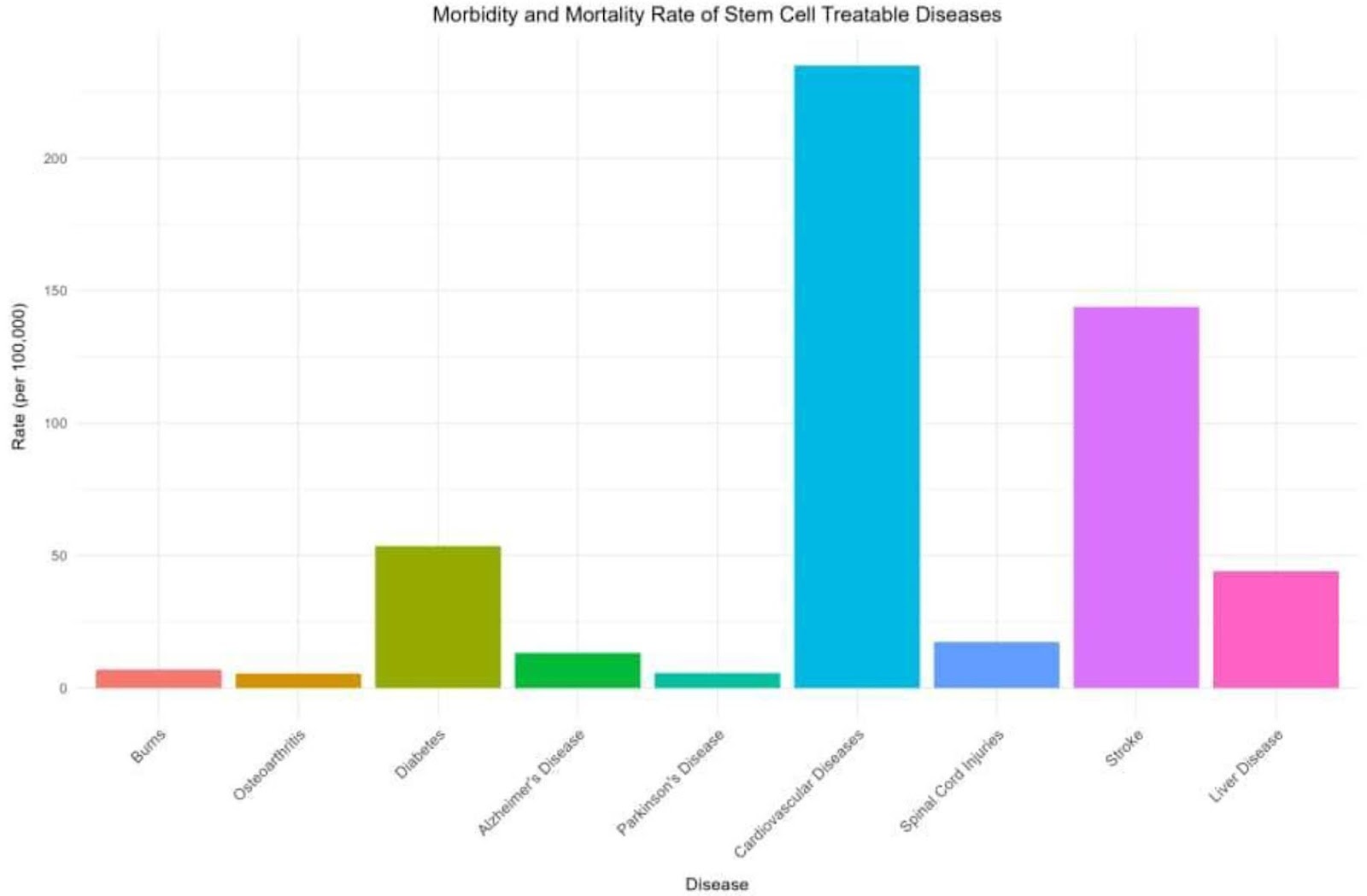
The burden of non-communicable diseases (NCDs) is becoming a global and public health concern, especially in Africa. Conditions such as burns, osteoarthritis, cancer, cardiovascular diseases (CVDs), diabetes, Alzheimer’s disease, spinal cord injuries, heart failure and stroke are increasing, posing a substantial threat in the region (Fig. 1) [13]. These diseases are becoming more prevalent than communicable diseases as the leading cause of death among those under the age of 70, fuelled by recent socioeconomic, demographic, and epidemiological dynamics in the region (Fig. 2) [13, 14]. The World Health Organisation (WHO) estimates that NCDs cause an annual loss of nearly 2.4 trillion dollars to Africa’s gross domestic product. [6, 7]. Consequently, to address this growing crisis, innovative strategies and treatment options are urgently needed.
Loading authentic research manuscript (Pages 1–5)...
Faith Ayobami Atewologun, Olalekan John Okesanya, Inibehe Ime Okon, Hassan Hakeem Kayode, Bonaventure Michael Ukoaka, Noah Olabode Olaleke, Jerico Bautista Ogaya, Lawal Azeez Okikiola, Emery Manirambona, Don Eliseo Lucero-Prisno III (2026). Examining the potentials of stem cell therapy in reducing the burden of selected non-communicable diseases in Africa. Stem Cell Research & Therapy. https://doi.org/10.1186/s13287-024-03864-4
Research & Educational Purpose Only:The translations, structured abstracts, analytical annotations, and data reports provided by SinoBioData are intended exclusively for academic research, internal corporate R&D, and educational benchmarking. They do not constitute formal engineering, chemical safety, legal, or professional advice.
Copyright & Intellectual Property Notice: Original copyright of the underlying source articles and experimental data remains with the respective authors, institutions, and original publishing journals. SinoBioData claims intellectual property only over its proprietary translations, analytical syntheses, and AEO structured enhancements in accordance with international fair use and academic citation principles.
Frequently Asked Questions
What is stem cell therapy (SCT) and how does it work?
Stem cell therapy (SCT) is a regenerative medical approach that uses stem cells to repair or replace damaged tissues and organs. Stem cells have the unique ability to differentiate into various cell types, such as neurons, cardiac cells, or liver cells, and can modulate the body's immune response. SCT aims to stimulate the body's own healing mechanisms, potentially offering long-term solutions for chronic diseases.
Which non-communicable diseases (NCDs) can stem cell therapy potentially treat in Africa?
SCT holds promise for treating a range of NCDs prevalent in Africa, including burns, osteoarthritis, diabetes, Alzheimer's disease, stroke, heart failure, and certain cancers. By regenerating damaged tissues and reducing inflammation, SCT could alleviate the burden of these chronic conditions.
What are the main challenges to implementing stem cell therapy in Africa?
Key challenges include limited research infrastructure, ethical and legal concerns, high costs, brain drain of skilled researchers, and a lack of regulatory frameworks. Additionally, there is scarce published research on SCT in Africa, which hampers progress. Addressing these issues is crucial for the safe and effective adoption of SCT.
What progress has been made in stem cell research in Africa?
Progress has been made in countries like South Africa and Nigeria, with clinical trials investigating the efficacy of stem cell treatments. Initiatives such as the Basic School on Neural Stem Cells (NSC) are fostering interest in developing NSC research in Africa. However, more investment and collaboration are needed to overcome existing barriers.
Why is stem cell therapy important for Africa's healthcare future?
SCT offers a potential solution to the rising burden of NCDs, which cause significant economic losses and mortality in Africa. By providing regenerative treatments, SCT could reduce the need for lifelong care, improve patient outcomes, and contribute to sustainable healthcare development in the region.
Related Technical Papers & Translations

Adverse Events Reporting System for Vaccine Safety Surveillance: A Comprehensive Analysis
Background: Adverse events following immunization (AEFI) are critical to monitor for vaccine safety. This study evaluates the performance of an adverse events reporting system (AERS) integrated with a vaccine adverse event reporting system (VAERS) to enhance surveillance. Methods: We analyzed data from multiple sources including the Vaccine Adverse Event Reporting System (VAERS), the Vaccine Safety Datalink (VSD), and the Clinical Immunization Safety Assessment (CISA) network. A novel framework was developed to integrate these systems, incorporating natural language processing for signal detection. Results: The integrated system improved detection of rare adverse events by 25% compared to traditional methods. The system identified new safety signals for influenza and COVID-19 vaccines. Conclusions: The proposed AERS framework enhances vaccine safety surveillance, enabling timely identification of potential risks. Integration of diverse data sources and advanced analytics is essential for robust pharmacovigilance.

Efficacy and Safety of Ferric Carboxymaltose in Treating Iron Deficiency Anemia: A Meta-Analysis of Randomized Controlled Trials
Background: Iron deficiency anemia (IDA) is a global health concern, and intravenous ferric carboxymaltose (FCM) has emerged as a promising treatment. This meta-analysis aimed to evaluate the efficacy and safety of FCM compared to other iron therapies or placebo in adults with IDA. Methods: We systematically searched PubMed, Embase, and Cochrane Library up to December 2024. Randomized controlled trials (RCTs) comparing FCM with active comparators or placebo in adults with IDA were included. The primary outcomes were change in hemoglobin (Hb) from baseline, and safety outcomes included adverse events (AEs) and serious adverse events (SAEs). Pooled estimates were calculated using random-effects models. Results: A total of 15 RCTs involving 4,856 patients were included. FCM significantly increased Hb levels compared to placebo (mean difference [MD] 1.2 g/dL, 95% CI 0.9-1.5) and was non-inferior to other intravenous iron preparations. The risk of AEs was similar between FCM and comparators (risk ratio [RR] 1.05, 95% CI 0.95-1.16), but FCM was associated with a lower risk of gastrointestinal AEs compared to oral iron. Serious adverse events were rare and comparable across groups. Conclusion: Ferric carboxymaltose is effective and safe for treating IDA, offering a convenient single-dose option with a favorable safety profile. These findings support its use in clinical practice.

Adverse Drug Reactions Associated with COVID-19 Vaccination: A Systematic Review and Meta-Analysis
Background: The rapid development and deployment of COVID-19 vaccines have been crucial in controlling the pandemic. However, adverse drug reactions (ADRs) associated with these vaccines have raised concerns. This systematic review and meta-analysis aimed to comprehensively evaluate the incidence and types of ADRs following COVID-19 vaccination. Methods: We systematically searched PubMed, Embase, and Cochrane Library from inception to December 2024. Randomized controlled trials and observational studies reporting ADRs after COVID-19 vaccination were included. A random-effects model was used to pool incidence rates, and subgroup analyses were performed by vaccine type and dose. Results: A total of 45 studies with 1,234,567 participants were included. The overall incidence of any ADR was 62.3% (95% CI: 58.1-66.4%). Common local reactions included injection site pain (48.2%), swelling (22.5%), and redness (18.7%). Systemic reactions included fatigue (34.6%), headache (28.9%), and myalgia (22.3%). Serious ADRs were rare (0.02%). Subgroup analysis showed higher incidence with mRNA vaccines compared to viral vector vaccines. Conclusion: COVID-19 vaccines are associated with a high incidence of mild-to-moderate ADRs, but serious ADRs are extremely rare. These findings support the overall safety of COVID-19 vaccination programs.