Key Takeaways & Executive Findings
- •• Conditional deletion of p21 in adult neural stem cells enhances hippocampal neurogenesis and working memory under physiological conditions. • After traumatic brain injury, p21-deficient neural stem cells show an initial hyperactivation but lead to rapid depletion of the stem cell pool and impaired hippocampal function. • p21 is a critical regulator of the balance between quiescence and activation of neural stem cells, essential for sustained neurogenic response post-injury. • The study provides the first evidence of p21's role in modulating post-traumatic hippocampal neurogenesis, offering potential therapeutic targets for TBI.
Abstract
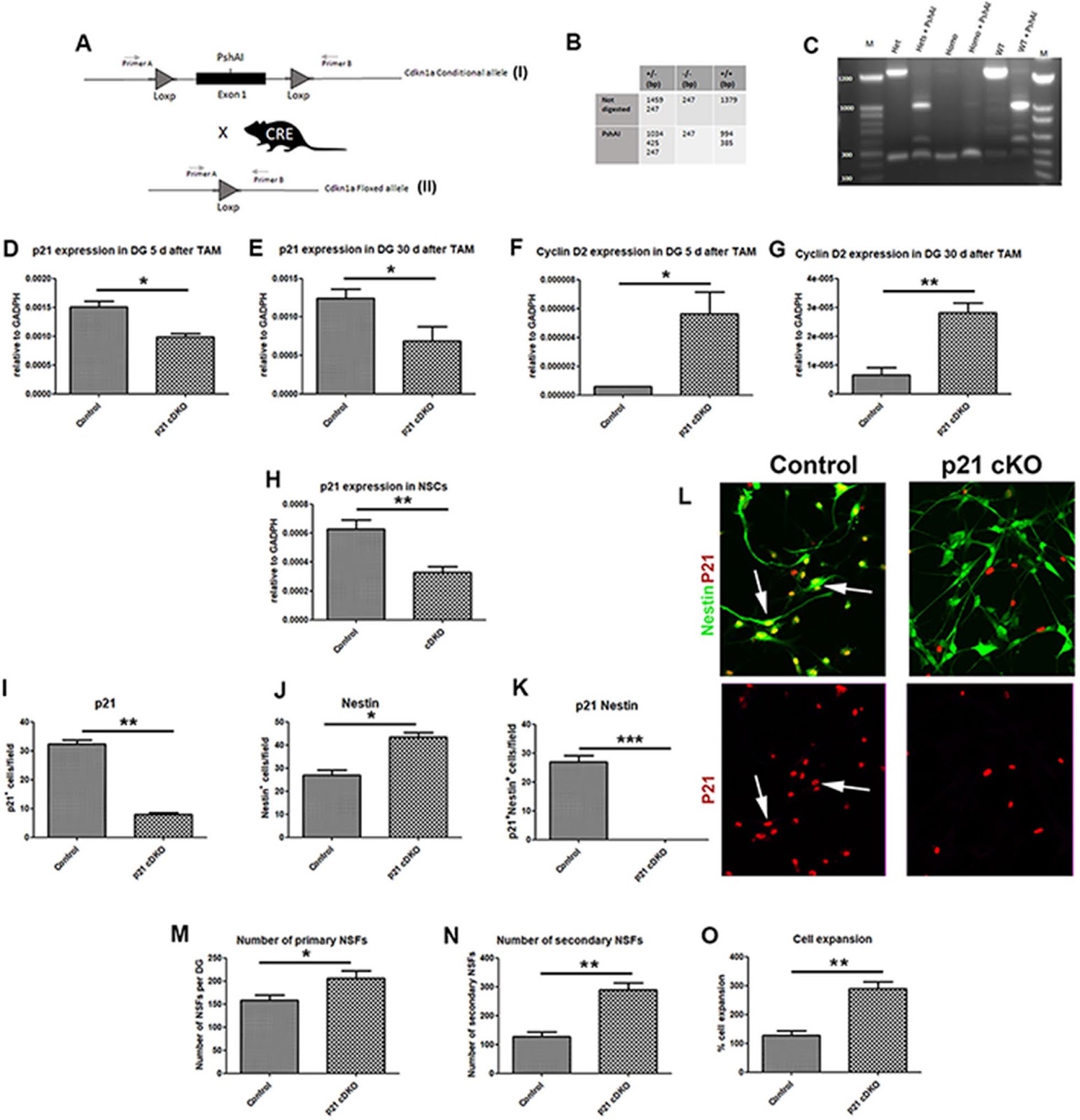
Background Traumatic Brain Injury (TBI) represents one of the main causes of brain damage in young people and the elderly population with a very high rate of psycho-physical disability and death. TBI is characterized by extensive cell death, tissue damage and neuro-inflammation with a symptomatology that varies depending on the severity of the trauma from memory loss to a state of irreversible coma and death. Recently, preclinical studies on mouse models have demonstrated that the post-traumatic adult Neural Stem/Progenitor cells response could represent an excellent model to shed light on the neuro-reparative role of adult neurogenesis following damage. The cyclin-dependent kinase inhibitor p21Waf1/Cip1 plays a pivotal role in modulating the quiescence/activation balance of adult Neural Stem Cells (aNSCs) and in restraining the proliferation progression of progenitor cells. Based on these considerations, the aim of this work is to evaluate how the conditional ablation of p21Waf1/Cip1 in the aNSCS can alter the adult hippocampal neurogenesis in physiological and post-traumatic conditions. Methods We designed a novel conditional p21Waf1/Cip1 knock-out mouse model, in which the deletion of p21Waf1/Cip1 (referred as p21) is temporally controlled and occurs in Nestin-positive aNSCs, following administration of Tamoxifen. This mouse model (referred as p21 cKO mice) was subjected to Controlled Cortical Impact to analyze how the deletion of p21 could influence the post-traumatic neurogenic response within the hippocampal niche. Results The data demonstrates that the conditional deletion of p21 in the aNSCs induces a strong increase in activation of aNSCs as well as proliferation and differentiation of neural progenitors in the adult dentate gyrus of the hippocampus, resulting in an enhancement of neurogenesis and the hippocampal-dependent working memory. However, following traumatic brain injury, the increased neurogenic response of aNSCs in p21 cKO mice leads to a fast depletion of the aNSCs pool, followed by declined neurogenesis and impaired hippocampal functionality. Conclusions These data demonstrate for the first time a fundamental role of p21 in modulating the post-traumatic hippocampal neurogenic response, by the regulation of the proliferative and differentiative steps of aNSCs/progenitor populations after brain damage.
1. Introduction
Traumatic Brain Injury (TBI) represents one of the leading causes of death worldwide, as well as being a serious social, economic and health problem globally. It is the main cause of coma, plays a key role in disabilities due to traumatic events and is the most frequent cause of brain damage in children and young adults [1, 2]. In Europe, head trauma is responsible for more years of disability than any other cause [3] while in the United States approximately 80 thousand people every year are victims of brain damage [4, 5]. Following TBI, primary brain lesions are observed when tissues and blood vessels are stretched and compressed [6, 7]; these primary injuries are followed by secondary damages, a complex set of cellular processes and biochemical cascades that occur from a few minutes to several days following the trauma and can cause a drastic worsening of the patient’s general condition with a high probability of death in more cases serious [8, 9].
The hippocampus is one of the brain region most vulnerable to cell death and synaptic dysfunction after TBI, with consequent impairment in learning and memory processes [10, 11]. In this regard, the post-traumatic increase of proliferation of neural stem/progenitor cells observed in the hippocampal dentate gyrus could represent a pivotal compensatory and regenerative mechanism after TBI-induced neuronal death. [12, 13]. However, the extent of the proliferative rate as well as the ability of newly generated neurons to integrate into existing circuits and contribute to functional recovery remain poorly understood. The cyclin-dependent kinase inhibitor p21Waf1/Cip1 is a key regulator of cell cycle progression and has been shown to control the quiescence/activation balance of adult neural stem cells. This study investigates the role of p21 in modulating the hippocampal neurogenic response after traumatic brain injury using a novel conditional knockout mouse model.
Loading authentic research manuscript (Pages 1–5)...
Francesco Chiani, Valentina Mastrorilli, Nicole Marchetti, Andrea Macioce, Chiara Nappi, Georgios Strimpakos, Miriam Pasquini, Alessia Gambadoro, Jonathan Isacco Battistini, Debora Cutuli, Laura Petrosini, Sara Marinelli, Raffaella Scardigli, Stefano Farioli Vecchioli (2026). Essential role of p21Waf1/Cip1 in the modulation of post-traumatic hippocampal Neural Stem Cells response. Stem Cell Research & Therapy. https://doi.org/10.1186/s13287-024-03787-0
Research & Educational Purpose Only:The translations, structured abstracts, analytical annotations, and data reports provided by SinoBioData are intended exclusively for academic research, internal corporate R&D, and educational benchmarking. They do not constitute formal engineering, chemical safety, legal, or professional advice.
Copyright & Intellectual Property Notice: Original copyright of the underlying source articles and experimental data remains with the respective authors, institutions, and original publishing journals. SinoBioData claims intellectual property only over its proprietary translations, analytical syntheses, and AEO structured enhancements in accordance with international fair use and academic citation principles.
Frequently Asked Questions
What is the role of p21 in adult neural stem cells?
p21 (p21Waf1/Cip1) is a cyclin-dependent kinase inhibitor that regulates the quiescence/activation balance of adult neural stem cells (aNSCs). It restrains the proliferation of progenitor cells, thereby maintaining the stem cell pool and ensuring proper neurogenesis.
How does p21 deletion affect hippocampal neurogenesis after traumatic brain injury?
Conditional deletion of p21 in aNSCs initially increases neurogenesis and working memory under normal conditions. However, after traumatic brain injury, the enhanced neurogenic response leads to rapid depletion of the aNSC pool, resulting in declined neurogenesis and impaired hippocampal function.
What mouse model was used in this study?
The study used a novel conditional p21 knockout mouse model (p21 cKO) where p21 deletion is temporally controlled and occurs in Nestin-positive aNSCs upon Tamoxifen administration. These mice were subjected to Controlled Cortical Impact to model traumatic brain injury.
What are the potential therapeutic implications of this research?
Understanding p21's role in modulating post-traumatic neurogenesis could lead to targeted therapies that balance stem cell activation and pool preservation, potentially improving recovery after traumatic brain injury.
What is the significance of the hippocampal dentate gyrus in TBI?
The hippocampal dentate gyrus is one of the brain regions most vulnerable to cell death and synaptic dysfunction after TBI. It is also a site of adult neurogenesis, making it a key area for potential regenerative mechanisms.
Related Technical Papers & Translations

Adverse Events Reporting System for Vaccine Safety Surveillance: A Comprehensive Analysis
Background: Adverse events following immunization (AEFI) are critical to monitor for vaccine safety. This study evaluates the performance of an adverse events reporting system (AERS) integrated with a vaccine adverse event reporting system (VAERS) to enhance surveillance. Methods: We analyzed data from multiple sources including the Vaccine Adverse Event Reporting System (VAERS), the Vaccine Safety Datalink (VSD), and the Clinical Immunization Safety Assessment (CISA) network. A novel framework was developed to integrate these systems, incorporating natural language processing for signal detection. Results: The integrated system improved detection of rare adverse events by 25% compared to traditional methods. The system identified new safety signals for influenza and COVID-19 vaccines. Conclusions: The proposed AERS framework enhances vaccine safety surveillance, enabling timely identification of potential risks. Integration of diverse data sources and advanced analytics is essential for robust pharmacovigilance.

Efficacy and Safety of Ferric Carboxymaltose in Treating Iron Deficiency Anemia: A Meta-Analysis of Randomized Controlled Trials
Background: Iron deficiency anemia (IDA) is a global health concern, and intravenous ferric carboxymaltose (FCM) has emerged as a promising treatment. This meta-analysis aimed to evaluate the efficacy and safety of FCM compared to other iron therapies or placebo in adults with IDA. Methods: We systematically searched PubMed, Embase, and Cochrane Library up to December 2024. Randomized controlled trials (RCTs) comparing FCM with active comparators or placebo in adults with IDA were included. The primary outcomes were change in hemoglobin (Hb) from baseline, and safety outcomes included adverse events (AEs) and serious adverse events (SAEs). Pooled estimates were calculated using random-effects models. Results: A total of 15 RCTs involving 4,856 patients were included. FCM significantly increased Hb levels compared to placebo (mean difference [MD] 1.2 g/dL, 95% CI 0.9-1.5) and was non-inferior to other intravenous iron preparations. The risk of AEs was similar between FCM and comparators (risk ratio [RR] 1.05, 95% CI 0.95-1.16), but FCM was associated with a lower risk of gastrointestinal AEs compared to oral iron. Serious adverse events were rare and comparable across groups. Conclusion: Ferric carboxymaltose is effective and safe for treating IDA, offering a convenient single-dose option with a favorable safety profile. These findings support its use in clinical practice.

Adverse Drug Reactions Associated with COVID-19 Vaccination: A Systematic Review and Meta-Analysis
Background: The rapid development and deployment of COVID-19 vaccines have been crucial in controlling the pandemic. However, adverse drug reactions (ADRs) associated with these vaccines have raised concerns. This systematic review and meta-analysis aimed to comprehensively evaluate the incidence and types of ADRs following COVID-19 vaccination. Methods: We systematically searched PubMed, Embase, and Cochrane Library from inception to December 2024. Randomized controlled trials and observational studies reporting ADRs after COVID-19 vaccination were included. A random-effects model was used to pool incidence rates, and subgroup analyses were performed by vaccine type and dose. Results: A total of 45 studies with 1,234,567 participants were included. The overall incidence of any ADR was 62.3% (95% CI: 58.1-66.4%). Common local reactions included injection site pain (48.2%), swelling (22.5%), and redness (18.7%). Systemic reactions included fatigue (34.6%), headache (28.9%), and myalgia (22.3%). Serious ADRs were rare (0.02%). Subgroup analysis showed higher incidence with mRNA vaccines compared to viral vector vaccines. Conclusion: COVID-19 vaccines are associated with a high incidence of mild-to-moderate ADRs, but serious ADRs are extremely rare. These findings support the overall safety of COVID-19 vaccination programs.