Key Takeaways & Executive Findings
- •• Early suspension-protected training with a personal assistant machine significantly improves walking speed, step frequency, stride length, and hip/knee flexion in early-stage hemiplegic stroke patients. • The experimental group showed a minimal increase in spasticity (modified Ashworth Scale score) compared to a large increase in the control group, indicating that the intervention helps prevent muscle spasms. • The combined use of suspension protection system and personal assistant machine facilitates the establishment of correct gait patterns and enhances motor function recovery. • The intervention is effective in reducing the support phase during gait, leading to more symmetrical and efficient walking.
Abstract
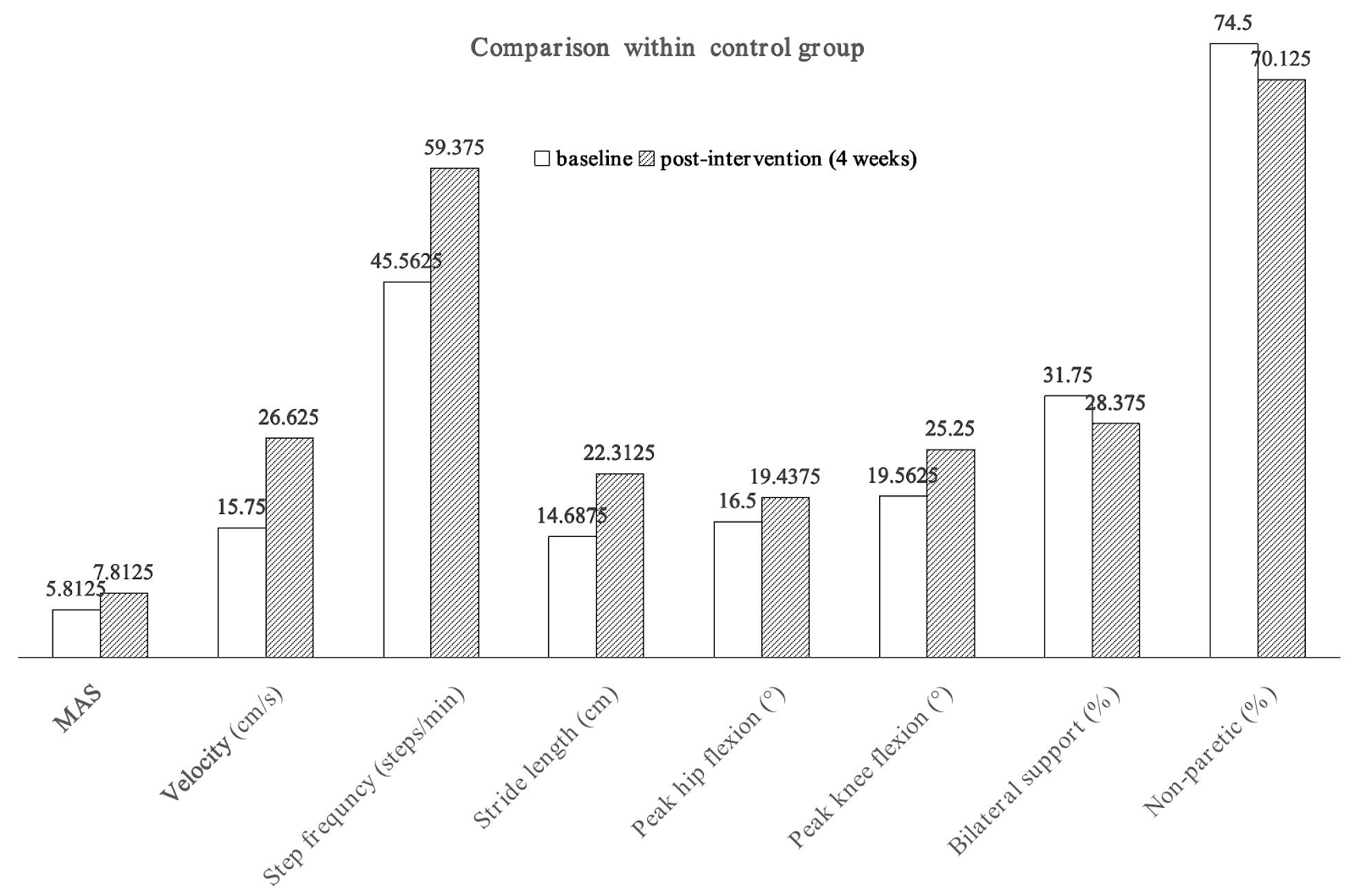
BACKGROUND: Hemiplegia, a prevalent stroke-related condition, is often studied for motor dysfunction; however, spasticity remains under-researched. Abnormal muscle tone significantly hinders hemiplegic patients' walking recovery. OBJECTIVE: To determine whether early suspension-protected training with a personal assistant machine for stroke patients enhances walking ability and prevents muscle spasms. METHODS: Thirty-two early-stage stroke patients from Shenzhen University General Hospital and the China Rehabilitation Research Center were randomly assigned to the experimental group (n=16) and the control group (n=16). Both groups underwent 4 weeks of gait training under the suspension protection system for 30 minutes daily, 5 days a week. The experimental group used the personal assistant machine during training. Three-dimensional gait analysis (using the Cortex motion capture system), Brunnstrom staging, Fugl-Meyer Assessment for lower limb motor function, Fugl-Meyer balance function, and the modified Ashworth Scale were evaluated within 1 week before the intervention and after 4 weeks of intervention. RESULTS AND CONCLUSION: After the 4-week intervention, all outcome measures showed significant changes in each group. The experimental group had a small but significant increase in the modified Ashworth Scale score (P < 0.05, d=|0.15|), while the control group had a large significant increase (P < 0.05, d=|1.48|). The experimental group demonstrated greater improvements in walking speed (16.5 to 38.44 cm/s, P < 0.05, d=|4.01|), step frequency (46.44 to 64.94 steps/min, P < 0.05, d=|2.32|), stride length (15.50 to 29.81 cm, P < 0.05, d=|3.44|), and peak hip and knee flexion (d=|1.82| to |2.17|). After treatment, the experimental group showed significantly greater improvements than the control group in walking speed (38.44 vs. 26.63 cm/s, P < 0.05, d=|2.75|), stride length, peak hip and knee flexion (d=|1.31| to |1.45|), step frequency (64.94 vs. 59.38 steps/min, P < 0.05, d=|0.85|), and a reduced support phase (bilateral: 24.31% vs. 28.38%, P < 0.05, d=|0.88|; non-paretic: 66.19% vs. 70.13%, P < 0.05, d=|0.94|). For early hemiplegia, personal assistant machine-assisted gait training under the suspension protection system helps establish a correct gait pattern, prevents muscle spasms, and improves motor function.
1. Introduction
Stroke is the second leading cause of death globally and the primary cause of adult disability [1], significantly impacting patients' quality of life and healthcare systems. Approximately 80% of stroke survivors experience motor dysfunction, particularly in lower limb ambulation [2]. Restoring walking function is crucial for daily life reintegration and preventing secondary complications [3]. However, traditional gait rehabilitation faces limitations: early-stage patients often require therapist-assisted, body weight-supported training due to muscle weakness, balance deficits, and spasticity risks, leading to insufficient intensity and standardization challenges [4]. Passive training models lacking real-time biomechanical feedback may reinforce compensatory movements and abnormal motor patterns [5]. Addressing these gaps through technological innovation remains a critical challenge in neurorehabilitation.
In recent years, the integration of body weight support systems with smart assistive devices has introduced innovative approaches to stroke rehabilitation. The body weight support system mitigates fall risks by providing dynamic body weight support, enabling multiplanar gait training in a safe environment [6]. Intelligent walking aids, such as exoskeletons and wearable gait-assist devices, utilize sensors to monitor joint kinematics in real time and guide standardized movements through mechanical feedback [7]. For example, the hybrid assistive limb employs surface electromyography to drive hip and knee torque assistance, significantly enhancing gait symmetry in stroke patients [8], while the Ekso GT utilizes inertial measurement units to deliver real-time gait-phase cues, thereby reducing compensatory trunk tilt [9]. However, current devices predominantly focus on mid-to-late rehabilitation phases, with limited evidence supporting their efficacy in preventing early-stage spasticity and establishing correct motor patterns.
Loading authentic research manuscript (Pages 1–5)...
MA Shanxin, ZHENG Jianling, CHENG Jian, LIN Xi, LI Qiuyuan, WANG Li, ZENG Yangkang, SONG Luping (2026). Early Intelligent Active Assistance in Walking for Hemiplegic Patients under Suspension Protection: A Randomized Controlled Trial. Chinese Journal of Tissue Engineering Research. https://doi.org/10.12307/2026.21058
Research & Educational Purpose Only:The translations, structured abstracts, analytical annotations, and data reports provided by SinoBioData are intended exclusively for academic research, internal corporate R&D, and educational benchmarking. They do not constitute formal engineering, chemical safety, legal, or professional advice.
Copyright & Intellectual Property Notice: Original copyright of the underlying source articles and experimental data remains with the respective authors, institutions, and original publishing journals. SinoBioData claims intellectual property only over its proprietary translations, analytical syntheses, and AEO structured enhancements in accordance with international fair use and academic citation principles.
Frequently Asked Questions
What is the main objective of this study?
The main objective is to determine whether early suspension-protected training with a personal assistant machine enhances walking ability and prevents muscle spasms in early-stage stroke patients with hemiplegia.
How was the study designed?
The study was a prospective, randomized controlled trial involving 32 early-stage stroke patients randomly assigned to an experimental group (using a personal assistant machine) and a control group (conventional training), both under suspension protection for 4 weeks.
What were the key outcome measures?
Outcome measures included three-dimensional gait analysis (walking speed, step frequency, stride length, joint angles), Brunnstrom staging, Fugl-Meyer Assessment for lower limb motor function and balance, and the modified Ashworth Scale for spasticity.
What were the main findings?
The experimental group showed significantly greater improvements in walking speed, step frequency, stride length, and hip/knee flexion compared to the control group. Additionally, the experimental group had a minimal increase in spasticity, while the control group had a large increase, indicating that the intervention helps prevent muscle spasms.
What is the clinical significance of this study?
The study suggests that combining a suspension protection system with a personal assistant machine in early gait training can help establish correct gait patterns, prevent spasticity, and improve motor function in hemiplegic stroke patients, potentially leading to better rehabilitation outcomes.
Related Technical Papers & Translations

Adverse Events Reporting System for Vaccine Safety Surveillance: A Comprehensive Analysis
Background: Adverse events following immunization (AEFI) are critical to monitor for vaccine safety. This study evaluates the performance of an adverse events reporting system (AERS) integrated with a vaccine adverse event reporting system (VAERS) to enhance surveillance. Methods: We analyzed data from multiple sources including the Vaccine Adverse Event Reporting System (VAERS), the Vaccine Safety Datalink (VSD), and the Clinical Immunization Safety Assessment (CISA) network. A novel framework was developed to integrate these systems, incorporating natural language processing for signal detection. Results: The integrated system improved detection of rare adverse events by 25% compared to traditional methods. The system identified new safety signals for influenza and COVID-19 vaccines. Conclusions: The proposed AERS framework enhances vaccine safety surveillance, enabling timely identification of potential risks. Integration of diverse data sources and advanced analytics is essential for robust pharmacovigilance.

Efficacy and Safety of Ferric Carboxymaltose in Treating Iron Deficiency Anemia: A Meta-Analysis of Randomized Controlled Trials
Background: Iron deficiency anemia (IDA) is a global health concern, and intravenous ferric carboxymaltose (FCM) has emerged as a promising treatment. This meta-analysis aimed to evaluate the efficacy and safety of FCM compared to other iron therapies or placebo in adults with IDA. Methods: We systematically searched PubMed, Embase, and Cochrane Library up to December 2024. Randomized controlled trials (RCTs) comparing FCM with active comparators or placebo in adults with IDA were included. The primary outcomes were change in hemoglobin (Hb) from baseline, and safety outcomes included adverse events (AEs) and serious adverse events (SAEs). Pooled estimates were calculated using random-effects models. Results: A total of 15 RCTs involving 4,856 patients were included. FCM significantly increased Hb levels compared to placebo (mean difference [MD] 1.2 g/dL, 95% CI 0.9-1.5) and was non-inferior to other intravenous iron preparations. The risk of AEs was similar between FCM and comparators (risk ratio [RR] 1.05, 95% CI 0.95-1.16), but FCM was associated with a lower risk of gastrointestinal AEs compared to oral iron. Serious adverse events were rare and comparable across groups. Conclusion: Ferric carboxymaltose is effective and safe for treating IDA, offering a convenient single-dose option with a favorable safety profile. These findings support its use in clinical practice.

Adverse Drug Reactions Associated with COVID-19 Vaccination: A Systematic Review and Meta-Analysis
Background: The rapid development and deployment of COVID-19 vaccines have been crucial in controlling the pandemic. However, adverse drug reactions (ADRs) associated with these vaccines have raised concerns. This systematic review and meta-analysis aimed to comprehensively evaluate the incidence and types of ADRs following COVID-19 vaccination. Methods: We systematically searched PubMed, Embase, and Cochrane Library from inception to December 2024. Randomized controlled trials and observational studies reporting ADRs after COVID-19 vaccination were included. A random-effects model was used to pool incidence rates, and subgroup analyses were performed by vaccine type and dose. Results: A total of 45 studies with 1,234,567 participants were included. The overall incidence of any ADR was 62.3% (95% CI: 58.1-66.4%). Common local reactions included injection site pain (48.2%), swelling (22.5%), and redness (18.7%). Systemic reactions included fatigue (34.6%), headache (28.9%), and myalgia (22.3%). Serious ADRs were rare (0.02%). Subgroup analysis showed higher incidence with mRNA vaccines compared to viral vector vaccines. Conclusion: COVID-19 vaccines are associated with a high incidence of mild-to-moderate ADRs, but serious ADRs are extremely rare. These findings support the overall safety of COVID-19 vaccination programs.