Key Takeaways & Executive Findings
- •• Transcutaneous electrical stimulation combined with conventional rehabilitation was most effective for improving VAS and WOMAC stiffness scores. • Ultrasound combined with conventional rehabilitation showed the best improvement in Lysholm knee score and WOMAC total score. • Pulsed electromagnetic field combined with conventional rehabilitation had the highest potential for improving overall quality of life (SF-36). • All physical factor therapies were safe, with only mild adverse events reported.
Abstract
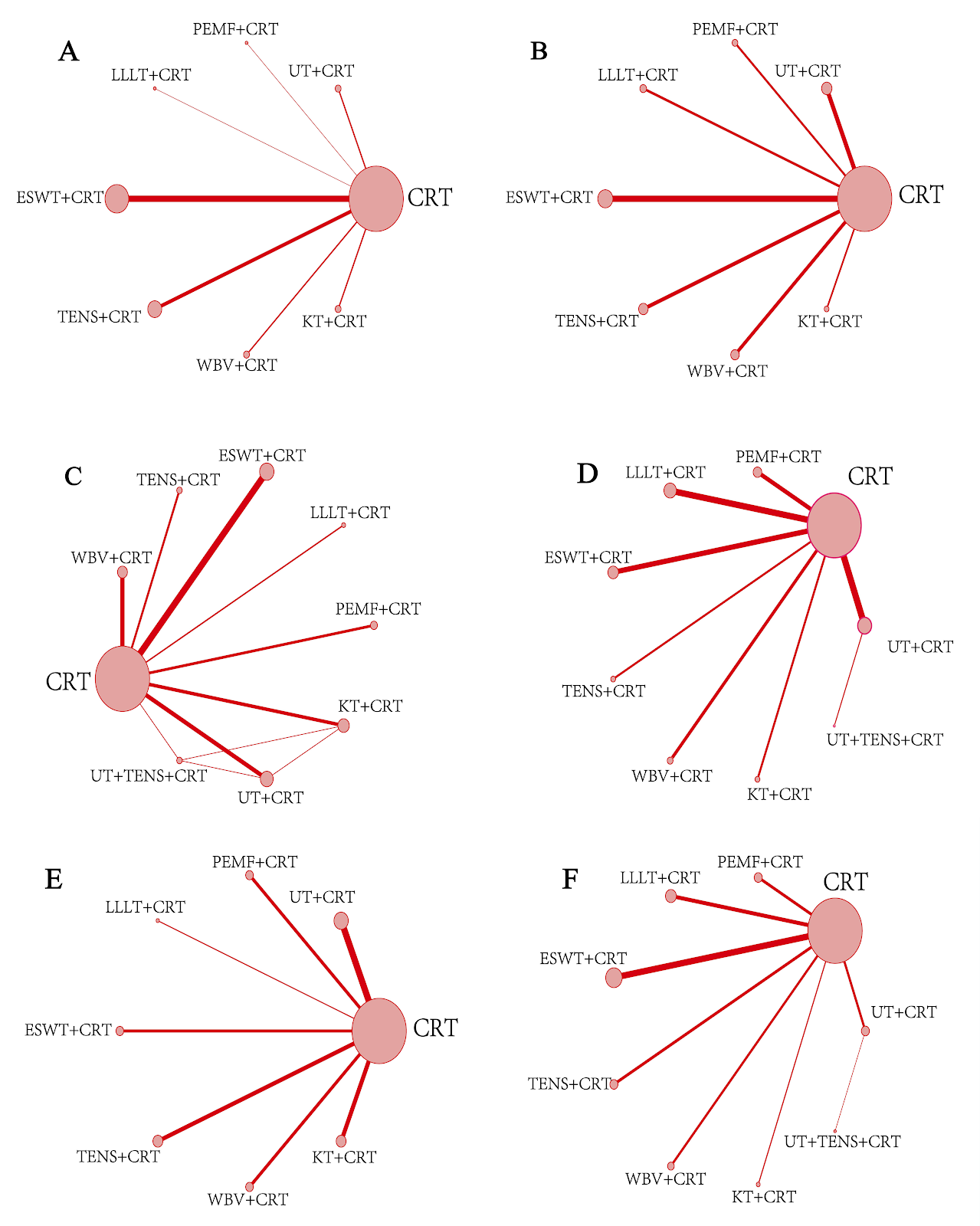
OBJECTIVE: The therapeutic modalities of physical factor interventions for knee osteoarthritis have been increasingly diversified; however, comprehensive comparative evaluations of their efficacy remain limited. This study aims to compare the efficacy and safety of various physical factor therapies for knee osteoarthritis through a network meta-analysis. METHODS: Randomized controlled trials on physical factor therapy for knee osteoarthritis were retrieved from PubMed, Web of Science, Cochrane Library, EMbase, CNKI, VIP, Wanfang, and CBM databases from inception to July 25, 2025. After literature screening and data extraction, the quality of included studies was assessed using the Cochrane risk-of-bias tool. Statistical analyses were performed using Stata 16.0 and RevMan 5.4.1. RESULTS: A total of 65 studies involving 3,418 patients (1,726 in treatment groups, 1,692 in control groups) were included, covering seven physical factor therapies. Network meta-analysis showed that for improving total effective rate, the top three interventions by surface under the cumulative ranking curve (SUCRA) were pulsed electromagnetic field + conventional rehabilitation, ultrasound + conventional rehabilitation, and transcutaneous electrical stimulation + conventional rehabilitation. For improving visual analogue scale (VAS) score, the top three were transcutaneous electrical stimulation + conventional rehabilitation, extracorporeal shock wave + conventional rehabilitation, and ultrasound + conventional rehabilitation. For improving WOMAC total score, the top three were ultrasound + conventional rehabilitation, pulsed electromagnetic field + conventional rehabilitation, and ultrasound + transcutaneous electrical stimulation + conventional rehabilitation. For reducing WOMAC stiffness score, the top three were transcutaneous electrical stimulation + conventional rehabilitation, ultrasound + conventional rehabilitation, and ultrasound + transcutaneous electrical stimulation + conventional rehabilitation. For improving SF-36 quality of life score, the top three were pulsed electromagnetic field + conventional rehabilitation, extracorporeal shock wave + conventional rehabilitation, and ultrasound + conventional rehabilitation. For improving Lysholm knee score, the top three were ultrasound + conventional rehabilitation, ultrasound + transcutaneous electrical stimulation + conventional rehabilitation, and extracorporeal shock wave + conventional rehabilitation. Regarding adverse events, no serious adverse events were reported; most studies reported only mild skin irritation or allergic reactions. CONCLUSION: Transcutaneous electrical stimulation combined with conventional rehabilitation showed superior advantages in improving VAS and WOMAC stiffness scores; ultrasound combined with conventional rehabilitation performed relatively better in improving Lysholm knee score and WOMAC total score; pulsed electromagnetic field combined with conventional rehabilitation had potential advantages in improving overall quality of life. Each physical factor has its unique advantages, but limited by the quality and quantity of included studies, these conclusions need to be verified by more high-quality, multi-center, large-sample randomized controlled trials.
1. Introduction
Knee osteoarthritis is a chronic degenerative joint disease characterized by intermittent weight-bearing pain, joint stiffness, and functional impairment, with pathological features including articular cartilage degeneration, osteophyte formation, and joint space narrowing [1-2]. Approximately 40% of patients with knee osteoarthritis report significant decline in quality of life due to chronic pain and dysfunction [3]. Epidemiological studies indicate that 13%-15% of individuals aged 40 years and above are affected by knee osteoarthritis, and the prevalence exceeds 30% in those aged 65 years and older, particularly among women [4]. With global population aging, the burden of knee osteoarthritis is expected to increase, and its high morbidity and disability impose substantial economic burdens on patients, families, and society, highlighting the urgent need for effective treatment strategies [5].
Currently, clinical management of knee osteoarthritis primarily focuses on pharmacological analgesia and surgical intervention, both of which have significant limitations. Nonsteroidal anti-inflammatory drugs, steroids, and analgesics remain the first-line pharmacological options for pain management; however, long-term use is associated with gastrointestinal bleeding, cardiovascular complications, and renal impairment, especially in elderly patients and those with chronic comorbidities.
Loading authentic research manuscript (Pages 1–5)...
WU Ruiqi, DONG Panfeng, ZHANG Hongrui, LYU Yongbin, PENG Qinglin, ZHUO Yinghong, CHEN Yueping (2026). Different physical factor therapies for knee osteoarthritis: a network meta-analysis of efficacy and safety. Chinese Journal of Tissue Engineering Research. https://doi.org/10.12307/2026.21502
Research & Educational Purpose Only:The translations, structured abstracts, analytical annotations, and data reports provided by SinoBioData are intended exclusively for academic research, internal corporate R&D, and educational benchmarking. They do not constitute formal engineering, chemical safety, legal, or professional advice.
Copyright & Intellectual Property Notice: Original copyright of the underlying source articles and experimental data remains with the respective authors, institutions, and original publishing journals. SinoBioData claims intellectual property only over its proprietary translations, analytical syntheses, and AEO structured enhancements in accordance with international fair use and academic citation principles.
Frequently Asked Questions
What is the most effective physical factor therapy for knee osteoarthritis?
According to the network meta-analysis, transcutaneous electrical stimulation combined with conventional rehabilitation was most effective for improving pain (VAS) and stiffness (WOMAC stiffness), while ultrasound combined with conventional rehabilitation showed the best improvement in overall knee function (Lysholm) and total WOMAC score. Pulsed electromagnetic field combined with conventional rehabilitation was most beneficial for overall quality of life (SF-36).
Are physical factor therapies safe for knee osteoarthritis?
Yes, the included studies reported no serious adverse events. Only mild skin irritation or allergic reactions were occasionally reported, indicating that physical factor therapies are generally safe.
How many studies and patients were included in this network meta-analysis?
A total of 65 randomized controlled trials involving 3,418 patients (1,726 in treatment groups and 1,692 in control groups) were included.
What are the limitations of this study?
The main limitations include the quality and quantity of included studies, which may affect the robustness of the conclusions. More high-quality, multi-center, large-sample randomized controlled trials are needed to verify the findings.
Related Technical Papers & Translations

Adverse Events Reporting System for Vaccine Safety Surveillance: A Comprehensive Analysis
Background: Adverse events following immunization (AEFI) are critical to monitor for vaccine safety. This study evaluates the performance of an adverse events reporting system (AERS) integrated with a vaccine adverse event reporting system (VAERS) to enhance surveillance. Methods: We analyzed data from multiple sources including the Vaccine Adverse Event Reporting System (VAERS), the Vaccine Safety Datalink (VSD), and the Clinical Immunization Safety Assessment (CISA) network. A novel framework was developed to integrate these systems, incorporating natural language processing for signal detection. Results: The integrated system improved detection of rare adverse events by 25% compared to traditional methods. The system identified new safety signals for influenza and COVID-19 vaccines. Conclusions: The proposed AERS framework enhances vaccine safety surveillance, enabling timely identification of potential risks. Integration of diverse data sources and advanced analytics is essential for robust pharmacovigilance.

Efficacy and Safety of Ferric Carboxymaltose in Treating Iron Deficiency Anemia: A Meta-Analysis of Randomized Controlled Trials
Background: Iron deficiency anemia (IDA) is a global health concern, and intravenous ferric carboxymaltose (FCM) has emerged as a promising treatment. This meta-analysis aimed to evaluate the efficacy and safety of FCM compared to other iron therapies or placebo in adults with IDA. Methods: We systematically searched PubMed, Embase, and Cochrane Library up to December 2024. Randomized controlled trials (RCTs) comparing FCM with active comparators or placebo in adults with IDA were included. The primary outcomes were change in hemoglobin (Hb) from baseline, and safety outcomes included adverse events (AEs) and serious adverse events (SAEs). Pooled estimates were calculated using random-effects models. Results: A total of 15 RCTs involving 4,856 patients were included. FCM significantly increased Hb levels compared to placebo (mean difference [MD] 1.2 g/dL, 95% CI 0.9-1.5) and was non-inferior to other intravenous iron preparations. The risk of AEs was similar between FCM and comparators (risk ratio [RR] 1.05, 95% CI 0.95-1.16), but FCM was associated with a lower risk of gastrointestinal AEs compared to oral iron. Serious adverse events were rare and comparable across groups. Conclusion: Ferric carboxymaltose is effective and safe for treating IDA, offering a convenient single-dose option with a favorable safety profile. These findings support its use in clinical practice.

Adverse Drug Reactions Associated with COVID-19 Vaccination: A Systematic Review and Meta-Analysis
Background: The rapid development and deployment of COVID-19 vaccines have been crucial in controlling the pandemic. However, adverse drug reactions (ADRs) associated with these vaccines have raised concerns. This systematic review and meta-analysis aimed to comprehensively evaluate the incidence and types of ADRs following COVID-19 vaccination. Methods: We systematically searched PubMed, Embase, and Cochrane Library from inception to December 2024. Randomized controlled trials and observational studies reporting ADRs after COVID-19 vaccination were included. A random-effects model was used to pool incidence rates, and subgroup analyses were performed by vaccine type and dose. Results: A total of 45 studies with 1,234,567 participants were included. The overall incidence of any ADR was 62.3% (95% CI: 58.1-66.4%). Common local reactions included injection site pain (48.2%), swelling (22.5%), and redness (18.7%). Systemic reactions included fatigue (34.6%), headache (28.9%), and myalgia (22.3%). Serious ADRs were rare (0.02%). Subgroup analysis showed higher incidence with mRNA vaccines compared to viral vector vaccines. Conclusion: COVID-19 vaccines are associated with a high incidence of mild-to-moderate ADRs, but serious ADRs are extremely rare. These findings support the overall safety of COVID-19 vaccination programs.