Key Takeaways & Executive Findings
- •• DGKγ is predominantly expressed in developing neural tubes and co-localizes with neural stem cell markers. • Knockdown of DGKγ or inhibition with R59949 reduces NSC proliferation and migration, while PMA (DAG analog) increases proliferation but impairs migration. • DGKγ regulates NSC migration via the DAG/PKCδ pathway, as evidenced by increased DAG content and p-PKCδ/PKCδ ratio upon DGKγ inhibition. • These findings highlight DGKγ as a potential therapeutic target for neural tube defects and neurodevelopmental disorders.
Abstract
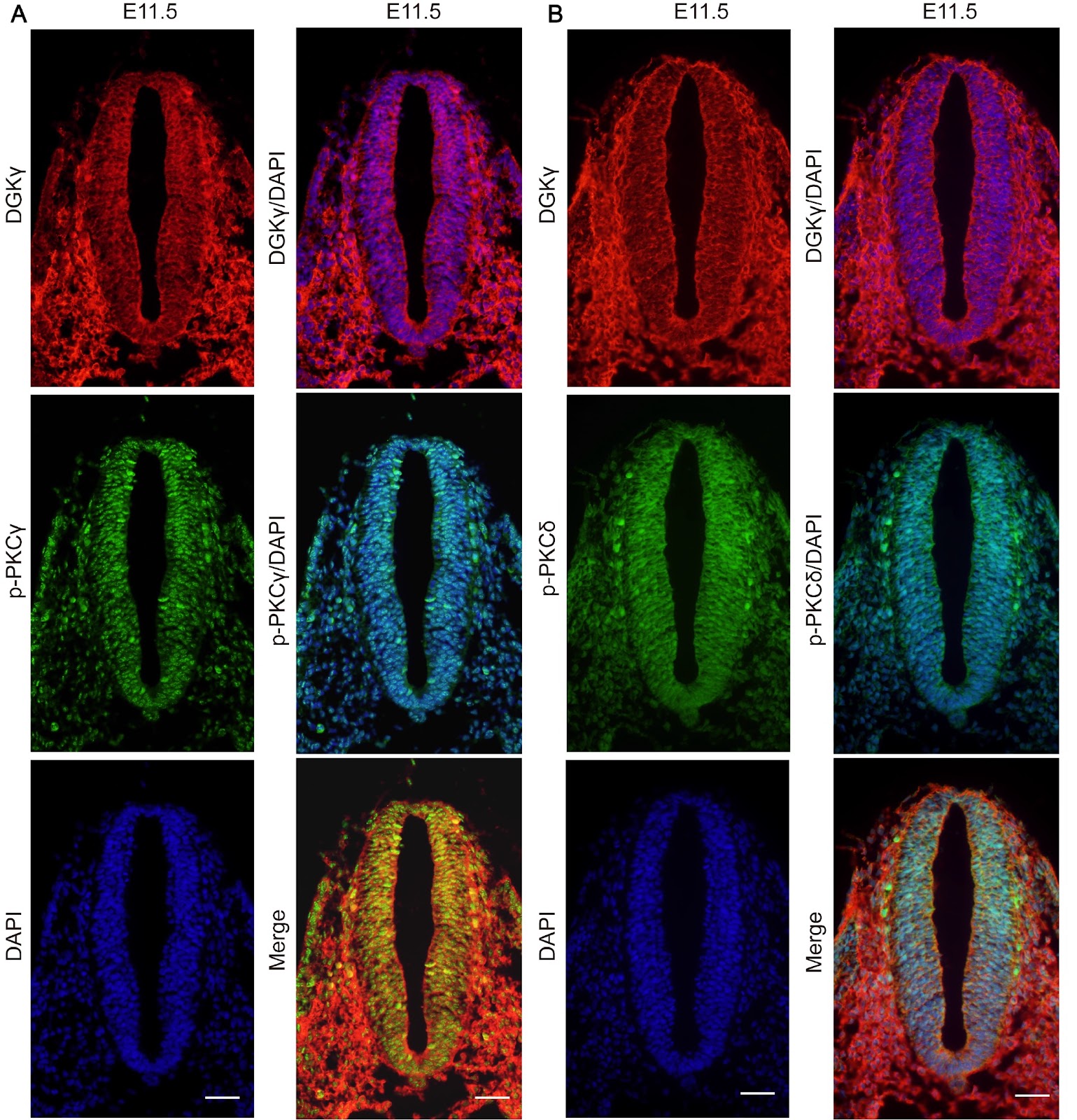
In this study, we aim to investigate diacylglycerol kinase (DGK) γ expression in developing neural tubes (NTs) and its effects on neural stem cell (NSC) proliferation and migration. Whole-mount in situ hybridization (WMISH) and immunohistochemistry are performed to explore DGKγ localization in developing NTs in vivo. NSCs are treated with sh-DGKγ, R59949, or PMA in vitro. Cell counting kit-8 (CCK-8) assay, 5-ethynyl-2′-deoxyuridine (EdU) assay and neurosphere formation assay are utilized to evaluate NSC proliferation. Neurosphere migration assay and a trans-well chamber assay are used to assess NSC migration. The diacylglycerol (DAG) content is detected via enzyme-linked immunosorbent assay (ELISA). The mRNA expression of DGKγ is detected via quantitative real-time polymerase chain reaction (qRT-PCR). The protein expression levels of DGKγ, protein kinase C (PKC) and phosphorylated PKC (p-PKC) are detected via western blot analysis. The results show that DGKγ mRNA is expressed predominantly in developing NTs. The neuroepithelium in developing NTs is positive for NSC markers, including Nestin, glial fibrillary acidic protein (GFAP), and DGKγ. DGKγ is expressed in the cytoplasm and nucleus of the neuroepithelium and is coexpressed with p-PKCγ and p-PKCδ. The proliferation of NSCs, the number of EdU-positive NSCs, and the number of neurospheres are decreased by sh-DGKγ and R59949 but increased by PMA. There is a shorter migration distance of NSCs and fewer migrated NSCs in the sh-DGKγ, R59949 and PMA groups. DAG content and the p-PKCδ/PKCδ ratio are increased by sh-DGKγ, R59949 and PMA, whereas the p-PKCγ/PKCγ ratio is decreased by PMA. Taken together, our findings indicate that DGKγ facilitates NSC proliferation and migration, which is responsible for the participation of DGK in NT development. DGKγ facilitates NSC migration via the DAG/PKCδ pathway.
1. Introduction
Diacylglycerol kinases (DGKs) terminate diacylglycerol (DAG) signaling via the phosphorylation of DAG to produce phosphatidic acid (PA). To date, ten DGK isozymes have been identified (α, β, γ, δ, ε, ζ, η, θ, ι, and κ), most of which are subtype-specifically expressed in the brain and can regulate brain functions [1–3]. DGKγ is highly expressed throughout the postnatal developmental period [1] and is widely expressed in projection neurons and interneurons of the cerebral cortex, hippocampal formation, and cerebellum [4]; moreover, DGKγ regulates cerebellar long-term depression (LTD) and the dendritic development of Purkinje cells [5]. Our previous study demonstrated that DGKγ is strongly expressed in rapidly developing regions of the rat embryonic brain [6], indicating the importance of DGKγ during brain development. Unfortunately, the physiological roles of DGKγ in different time courses of brain development have not been clearly elucidated. Therefore, the study of DGKγ in the development of NTs is highly important and novel.
The central nervous system (CNS) is the derivative of the neural tube (NT), in which the predominant neuroepithelial cells are neural stem cells (NSCs). The development of NTs and the processes of NSC proliferation and migration are strictly organized and precisely regulated [7–9]. Inositol protects against neural tube defects (NTDs) via the activation of PKC; however, inositol deficiency leads to NTDs [10–12]. As one of the metabolites of inositol, the second messenger, DAG, has numerous targets, the most prominent of which belongs to the protein kinase C (PKC) family [13,14]. Accordingly, it is speculated that the DAG/PKC signaling pathway may regulate NT development.
DGKγ, which has kinase-independent and kinase-dependent functions [5], can function in a kinase-dependent manner by terminating the DAG signaling pathway [15]. Moreover, DGKγ can physically interact with PKCγ and PKCδ [16,17]. In this study, we aimed to explore the expression profile of DGKγ and its potential underlying molecular mechanisms in the development of NTs by using NSCs subjected to DGKγ knockdown, R59949 (DGK inhibitor) treatment, or phorbol-12-myristate-13-acetate (PMA, a DAG analog) treatment in vitro.
Loading authentic research manuscript (Pages 1–5)...
Huilin Cui, Jiazheng Du, Jianshan Xie, Jixia Zhang, Yun Tao, Yige Huang, Lei Li, Ximei Cao, Yu Zhang (2026). Diacylglycerol kinase γ facilitates the proliferation and migration of neural stem cells in the developing neural tube. Acta Biochimica et Biophysica Sinica. https://doi.org/10.3724/abbs.2024156
Research & Educational Purpose Only:The translations, structured abstracts, analytical annotations, and data reports provided by SinoBioData are intended exclusively for academic research, internal corporate R&D, and educational benchmarking. They do not constitute formal engineering, chemical safety, legal, or professional advice.
Copyright & Intellectual Property Notice: Original copyright of the underlying source articles and experimental data remains with the respective authors, institutions, and original publishing journals. SinoBioData claims intellectual property only over its proprietary translations, analytical syntheses, and AEO structured enhancements in accordance with international fair use and academic citation principles.
Frequently Asked Questions
What is the role of DGKγ in neural stem cells?
DGKγ facilitates the proliferation and migration of neural stem cells during neural tube development, as demonstrated by reduced proliferation and migration upon DGKγ knockdown or inhibition, and increased proliferation with PMA treatment.
How does DGKγ regulate neural stem cell migration?
DGKγ regulates NSC migration via the DAG/PKCδ pathway. Inhibition of DGKγ increases DAG content and p-PKCδ/PKCδ ratio, leading to impaired migration.
What is the significance of this study for neural tube defects?
The study provides insights into the molecular mechanisms of neural tube development, suggesting that DGKγ could be a potential therapeutic target for preventing or treating neural tube defects.
What experimental methods were used in this study?
The study used whole-mount in situ hybridization, immunohistochemistry, CCK-8 assay, EdU assay, neurosphere formation assay, migration assays, ELISA, qRT-PCR, and western blot analysis to investigate DGKγ expression and function.
What are the key findings regarding PKC isoforms?
DGKγ is coexpressed with p-PKCγ and p-PKCδ. Inhibition of DGKγ increases p-PKCδ/PKCδ ratio, while PMA decreases p-PKCγ/PKCγ ratio, indicating differential regulation of PKC isoforms.
Related Technical Papers & Translations

Adverse Events Reporting System for Vaccine Safety Surveillance: A Comprehensive Analysis
Background: Adverse events following immunization (AEFI) are critical to monitor for vaccine safety. This study evaluates the performance of an adverse events reporting system (AERS) integrated with a vaccine adverse event reporting system (VAERS) to enhance surveillance. Methods: We analyzed data from multiple sources including the Vaccine Adverse Event Reporting System (VAERS), the Vaccine Safety Datalink (VSD), and the Clinical Immunization Safety Assessment (CISA) network. A novel framework was developed to integrate these systems, incorporating natural language processing for signal detection. Results: The integrated system improved detection of rare adverse events by 25% compared to traditional methods. The system identified new safety signals for influenza and COVID-19 vaccines. Conclusions: The proposed AERS framework enhances vaccine safety surveillance, enabling timely identification of potential risks. Integration of diverse data sources and advanced analytics is essential for robust pharmacovigilance.

Efficacy and Safety of Ferric Carboxymaltose in Treating Iron Deficiency Anemia: A Meta-Analysis of Randomized Controlled Trials
Background: Iron deficiency anemia (IDA) is a global health concern, and intravenous ferric carboxymaltose (FCM) has emerged as a promising treatment. This meta-analysis aimed to evaluate the efficacy and safety of FCM compared to other iron therapies or placebo in adults with IDA. Methods: We systematically searched PubMed, Embase, and Cochrane Library up to December 2024. Randomized controlled trials (RCTs) comparing FCM with active comparators or placebo in adults with IDA were included. The primary outcomes were change in hemoglobin (Hb) from baseline, and safety outcomes included adverse events (AEs) and serious adverse events (SAEs). Pooled estimates were calculated using random-effects models. Results: A total of 15 RCTs involving 4,856 patients were included. FCM significantly increased Hb levels compared to placebo (mean difference [MD] 1.2 g/dL, 95% CI 0.9-1.5) and was non-inferior to other intravenous iron preparations. The risk of AEs was similar between FCM and comparators (risk ratio [RR] 1.05, 95% CI 0.95-1.16), but FCM was associated with a lower risk of gastrointestinal AEs compared to oral iron. Serious adverse events were rare and comparable across groups. Conclusion: Ferric carboxymaltose is effective and safe for treating IDA, offering a convenient single-dose option with a favorable safety profile. These findings support its use in clinical practice.

Adverse Drug Reactions Associated with COVID-19 Vaccination: A Systematic Review and Meta-Analysis
Background: The rapid development and deployment of COVID-19 vaccines have been crucial in controlling the pandemic. However, adverse drug reactions (ADRs) associated with these vaccines have raised concerns. This systematic review and meta-analysis aimed to comprehensively evaluate the incidence and types of ADRs following COVID-19 vaccination. Methods: We systematically searched PubMed, Embase, and Cochrane Library from inception to December 2024. Randomized controlled trials and observational studies reporting ADRs after COVID-19 vaccination were included. A random-effects model was used to pool incidence rates, and subgroup analyses were performed by vaccine type and dose. Results: A total of 45 studies with 1,234,567 participants were included. The overall incidence of any ADR was 62.3% (95% CI: 58.1-66.4%). Common local reactions included injection site pain (48.2%), swelling (22.5%), and redness (18.7%). Systemic reactions included fatigue (34.6%), headache (28.9%), and myalgia (22.3%). Serious ADRs were rare (0.02%). Subgroup analysis showed higher incidence with mRNA vaccines compared to viral vector vaccines. Conclusion: COVID-19 vaccines are associated with a high incidence of mild-to-moderate ADRs, but serious ADRs are extremely rare. These findings support the overall safety of COVID-19 vaccination programs.