Key Takeaways & Executive Findings
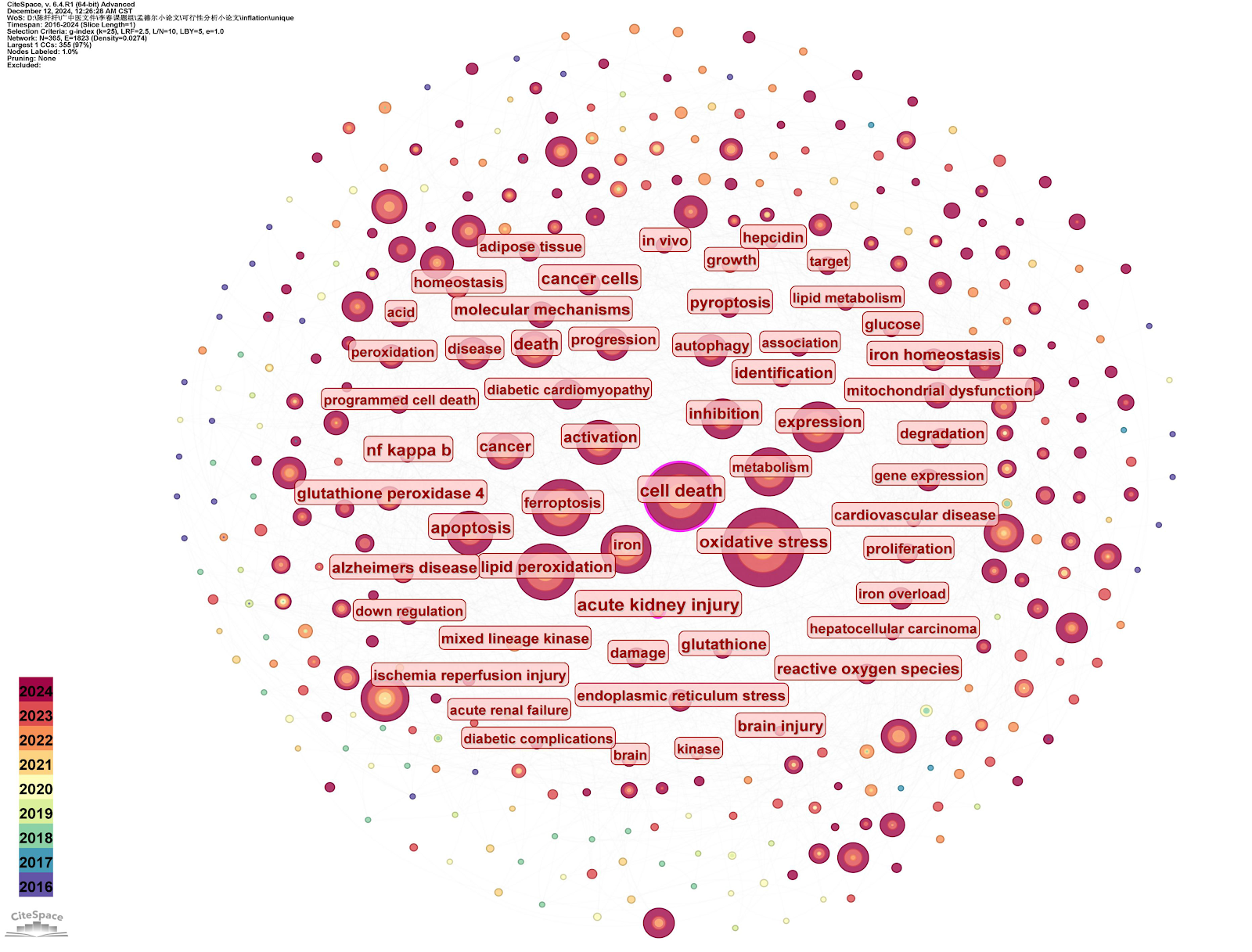
- •• Ferroptosis-related research in diabetes has grown substantially from 2015 to 2025, with 758 publications analyzed. • Key research hotspots include oxidative stress, cell death, and lipid peroxidation, with clusters on diabetic nephropathy, cardiomyopathy, and GPX4. • The regulatory network of ferroptosis is emerging as a novel therapeutic target for diabetes and its complications. • CiteSpace visualization revealed influential authors, institutions, and journals, highlighting Cell as a central knowledge hub.
Abstract
BACKGROUND: Oxidative stress induced by chronic hyperglycemia and impaired antioxidant systems are one of the core mechanisms underlying the onset and progression of diabetes mellitus. Ferroptosis, a new type of programmed cell death caused by iron-dependent lipid peroxidation, has received considerable academic interest due to its association with diabetes. OBJECTIVE: To reveal the current status and trends of ferroptosis-related research in the field of diabetes mellitus using bibliometric methods, aiming to offer academic resources to further develop this research area. METHODS: Based on the Web of Science Core Collection database, with a time span set from January 1, 2015 to January 1, 2025, 797 articles related to ferroptosis in the field of diabetes were retrieved. After deduplication, 758 high-quality articles were analyzed using CiteSpace (6.2.R1) for visualization of publication output, country/institution collaboration, high-impact authors/reference co-citation, keyword co-occurrence/clustering/burst detection, and international frontier trends. RESULTS AND CONCLUSION: Bibliometric analysis showed a substantial growth in ferroptosis-related research in diabetes. Among the 758 records, Linkermann, Andreas was the most prolific author, while Dixon SJ established an academic influence benchmark with 420 citations. The journal Cell served as a key knowledge dissemination hub. The most frequent keywords included oxidative stress, cell death, and lipid peroxidation, with clusters mainly focusing on diabetic nephropathy and cardiomyopathy, glutathione peroxidase 4, and necroptosis. The application of ferroptosis regulatory networks is deepening and has become an emerging paradigm for targeted therapy research in diabetes and its complications.
1. Introduction
Chronic hyperglycemia in diabetes mellitus leads to damage in organs such as the heart, kidneys, and retina, causing severe complications like diabetic nephropathy, cardiomyopathy, and retinopathy, which greatly impair patients' quality of life. The prevention and treatment situation is extremely severe, and effective therapeutic strategies are urgently needed.
Ferroptosis is a novel form of iron-dependent non-apoptotic programmed cell death, characterized by decreased cellular antioxidant capacity and accumulation of lipid reactive oxygen species, leading to oxidative cell death. Studies have shown that ferroptosis plays a role in diabetes and is a key factor in the pathogenesis of various endocrine diseases. Diabetes is characterized by chronic hyperglycemia, and glucose homeostasis is mainly regulated by insulin and glucagon. Research has confirmed that iron metabolism participates in multiple processes of glucose metabolism, such as insulin secretion, hepatic metabolism, and lipid metabolism, and maintains glucose homeostasis in multiple organs and tissues. Therefore, many scholars believe that ferroptosis may play a crucial role in the diagnosis, treatment, and prognosis of diabetes, making it a hot topic in the field.
Although ferroptosis is considered a potential therapeutic mechanism, its application in diabetes is rapidly evolving. To deeply explore the current status of ferroptosis mechanisms in diabetes, this study employed bibliometric methods for detailed statistical and quantitative analysis. This method uses mathematical and statistical tools to evaluate confirmed and emerging research trends, including co-authorship, co-citation, and keyword analysis. Through this bibliometric approach, the study analyzed the current status and development trends of ferroptosis-related research in diabetes.
Loading authentic research manuscript (Pages 1–5)...
Chen Xianxian, Xu Chengfeng, Huang Wenyi, Yang Chenfan, Su Tongshan, Li Yu, Yan Yu, Li Chun (2026). Diabetes mellitus and ferroptosis: a visual analysis of related research literature. Chinese Journal of Tissue Engineering Research. https://doi.org/10.12307/2026.21558
Research & Educational Purpose Only:The translations, structured abstracts, analytical annotations, and data reports provided by SinoBioData are intended exclusively for academic research, internal corporate R&D, and educational benchmarking. They do not constitute formal engineering, chemical safety, legal, or professional advice.
Copyright & Intellectual Property Notice: Original copyright of the underlying source articles and experimental data remains with the respective authors, institutions, and original publishing journals. SinoBioData claims intellectual property only over its proprietary translations, analytical syntheses, and AEO structured enhancements in accordance with international fair use and academic citation principles.
Frequently Asked Questions
What is the main objective of this study?
The main objective is to reveal the current status and trends of ferroptosis-related research in the field of diabetes mellitus using bibliometric methods, aiming to offer academic resources for further development in this area.
What database and time span were used for the literature search?
The study used the Web of Science Core Collection database, with a time span from January 1, 2015 to January 1, 2025.
How many articles were included in the analysis?
A total of 758 high-quality articles were included after deduplication from an initial retrieval of 797 articles.
What are the key research hotspots identified in this field?
Key hotspots include oxidative stress, cell death, and lipid peroxidation, with clusters focusing on diabetic nephropathy, cardiomyopathy, glutathione peroxidase 4, and necroptosis.
What is the significance of ferroptosis in diabetes research?
Ferroptosis is emerging as a novel therapeutic target for diabetes and its complications, as its regulatory network is being increasingly explored for targeted therapy.
Related Technical Papers & Translations

Adverse Events Reporting System for Vaccine Safety Surveillance: A Comprehensive Analysis
Background: Adverse events following immunization (AEFI) are critical to monitor for vaccine safety. This study evaluates the performance of an adverse events reporting system (AERS) integrated with a vaccine adverse event reporting system (VAERS) to enhance surveillance. Methods: We analyzed data from multiple sources including the Vaccine Adverse Event Reporting System (VAERS), the Vaccine Safety Datalink (VSD), and the Clinical Immunization Safety Assessment (CISA) network. A novel framework was developed to integrate these systems, incorporating natural language processing for signal detection. Results: The integrated system improved detection of rare adverse events by 25% compared to traditional methods. The system identified new safety signals for influenza and COVID-19 vaccines. Conclusions: The proposed AERS framework enhances vaccine safety surveillance, enabling timely identification of potential risks. Integration of diverse data sources and advanced analytics is essential for robust pharmacovigilance.

Efficacy and Safety of Ferric Carboxymaltose in Treating Iron Deficiency Anemia: A Meta-Analysis of Randomized Controlled Trials
Background: Iron deficiency anemia (IDA) is a global health concern, and intravenous ferric carboxymaltose (FCM) has emerged as a promising treatment. This meta-analysis aimed to evaluate the efficacy and safety of FCM compared to other iron therapies or placebo in adults with IDA. Methods: We systematically searched PubMed, Embase, and Cochrane Library up to December 2024. Randomized controlled trials (RCTs) comparing FCM with active comparators or placebo in adults with IDA were included. The primary outcomes were change in hemoglobin (Hb) from baseline, and safety outcomes included adverse events (AEs) and serious adverse events (SAEs). Pooled estimates were calculated using random-effects models. Results: A total of 15 RCTs involving 4,856 patients were included. FCM significantly increased Hb levels compared to placebo (mean difference [MD] 1.2 g/dL, 95% CI 0.9-1.5) and was non-inferior to other intravenous iron preparations. The risk of AEs was similar between FCM and comparators (risk ratio [RR] 1.05, 95% CI 0.95-1.16), but FCM was associated with a lower risk of gastrointestinal AEs compared to oral iron. Serious adverse events were rare and comparable across groups. Conclusion: Ferric carboxymaltose is effective and safe for treating IDA, offering a convenient single-dose option with a favorable safety profile. These findings support its use in clinical practice.

Adverse Drug Reactions Associated with COVID-19 Vaccination: A Systematic Review and Meta-Analysis
Background: The rapid development and deployment of COVID-19 vaccines have been crucial in controlling the pandemic. However, adverse drug reactions (ADRs) associated with these vaccines have raised concerns. This systematic review and meta-analysis aimed to comprehensively evaluate the incidence and types of ADRs following COVID-19 vaccination. Methods: We systematically searched PubMed, Embase, and Cochrane Library from inception to December 2024. Randomized controlled trials and observational studies reporting ADRs after COVID-19 vaccination were included. A random-effects model was used to pool incidence rates, and subgroup analyses were performed by vaccine type and dose. Results: A total of 45 studies with 1,234,567 participants were included. The overall incidence of any ADR was 62.3% (95% CI: 58.1-66.4%). Common local reactions included injection site pain (48.2%), swelling (22.5%), and redness (18.7%). Systemic reactions included fatigue (34.6%), headache (28.9%), and myalgia (22.3%). Serious ADRs were rare (0.02%). Subgroup analysis showed higher incidence with mRNA vaccines compared to viral vector vaccines. Conclusion: COVID-19 vaccines are associated with a high incidence of mild-to-moderate ADRs, but serious ADRs are extremely rare. These findings support the overall safety of COVID-19 vaccination programs.