Key Takeaways & Executive Findings
- •• Encapsulated iPSC-derived MSCs in an immunoisolation device provide sustained secretome delivery, significantly improving cardiac function and reducing adverse remodelling over 12 weeks in rat models of chronic ischaemia-reperfusion injury. • The device maintains MSC viability and therapeutic secretome release for at least 12 weeks post-implantation, demonstrating a clinically translatable approach for long-term cardioprotection. • MSC secretome protects human engineered cardiac microtissues from simulated ischaemia-reperfusion injury by restoring contractile function, enhancing cell viability, and reducing oxidative stress. • Proteomic analysis reveals adaptive changes in encapsulated MSCs, with increased secretion of proteins involved in tissue repair and immune regulation, highlighting a dynamic response to ischaemic conditions.
Abstract
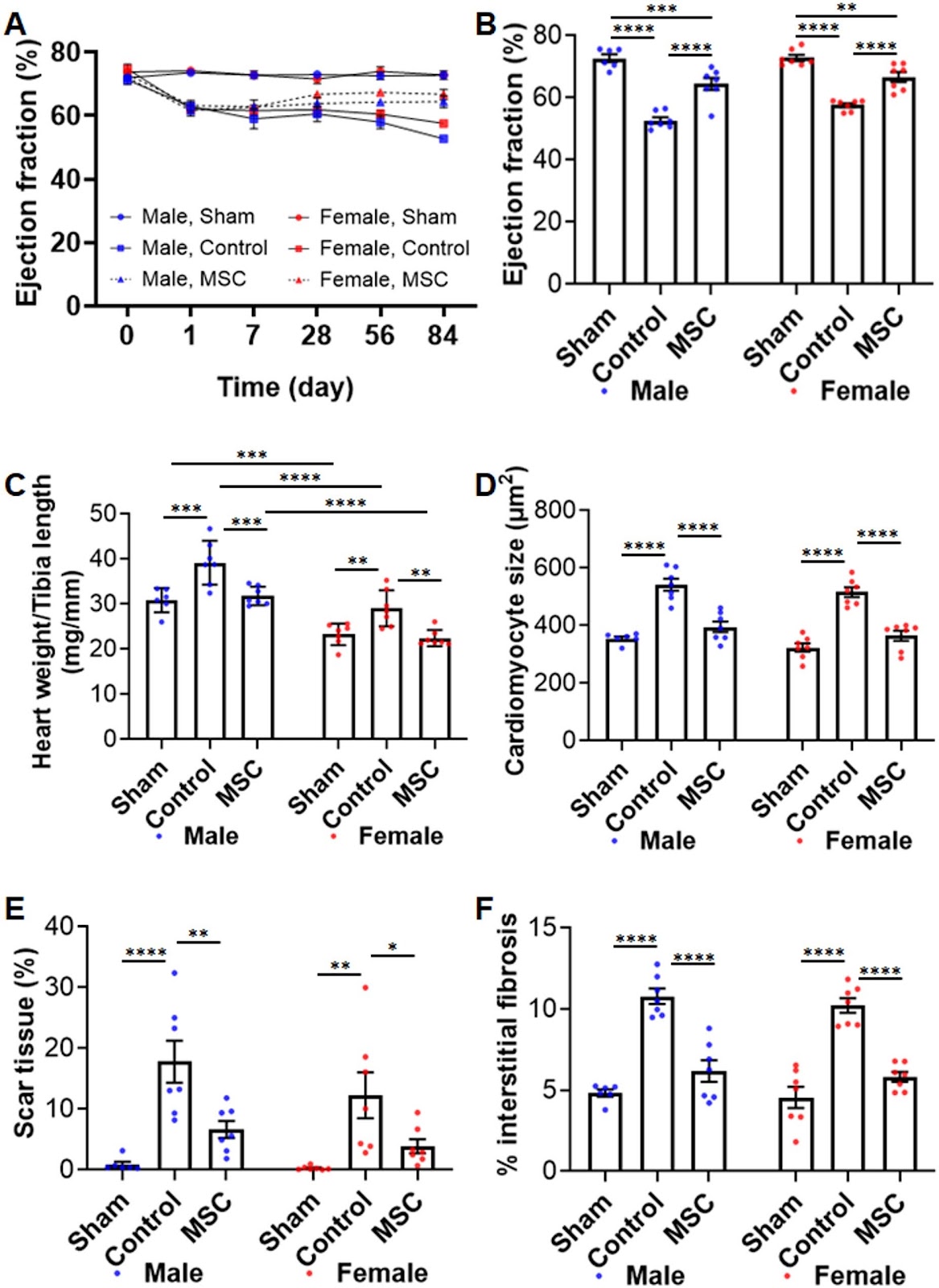
Background: Effective long-term strategies to protect the ischaemic heart remain a significant challenge. Mesenchymal stromal cells (MSCs) offer therapeutic potential primarily through their secretome, a bioactive factor-rich milieu with broad beneficial effects. However, existing delivery methods have not demonstrated sustained cardioprotection. The objective of this study was to evaluate a clinically translatable approach for sustained MSC-secretome delivery to achieve long-term cardioprotection. Methods: Cymerus MSCs, derived from human induced pluripotent stem cells (iPSCs), were encapsulated in a Procyon immunoisolation device and implanted subcutaneously in adult Sprague Dawley rats with chronic myocardial ischaemia-reperfusion injury. A human iPSC-derived engineered cardiac microtissue model was used to simulate ischaemia-reperfusion injury and assess cardioprotective effects in a human context. Proteomic analysis was performed to characterize adaptive changes in MSCs and their secretome post-implantation. Results: The MSC-loaded Procyon device significantly improved cardiac function and reduced adverse left ventricular remodelling over 12 weeks in both young and middle-aged, male and female rats. The encapsulated MSCs remained viable and retained the ability to release therapeutic secretome at 12 weeks post-implantation. In vitro, the MSC secretome protected human engineered cardiac microtissues from simulated ischaemia-reperfusion injury by restoring contractile function, improving cell viability, and reducing oxidative stress. Proteomic profiling of encapsulated MSC identified 179 unique cellular proteins post-implantation, associated with adaptive immune and inflammatory responses as well as wound healing. MSC secretome profiling revealed increased protein diversity associated with tissue repair and immune regulation, suggesting MSCs undergo an adaptive response to ischaemic conditions.
1. Introduction
Ischaemic heart disease remains the leading cause of death globally, with acute myocardial infarction (AMI) as a key clinical manifestation [1]. A major complication following AMI is adverse left ventricular remodelling, which often progresses to heart failure. Although several therapies are available to protect and repair the heart post-AMI, their effectiveness diminishes as the disease advances and the extent of damage increases [2]. Consequently, there is a critical unmet need for more effective long-term cardioprotective interventions. Stem cell therapy presents a promising opportunity to address this critical unmet need.
Mesenchymal stromal cells (MSCs), including those derived from human induced pluripotent stem cells (iPSCs), have shown promising potential to enhance cardiac function and structure, primarily through the paracrine activity of their secretome [3–5]. This secretome significantly improves the myocardial microenvironment by activating endogenous repair mechanisms; these include enhancing cell survival, promoting angiogenesis, resolving inflammation, and mitigating adverse remodelling [6, 7]. These promising preclinical findings on the MSC secretome are further reinforced by the ongoing first-in-human Phase 1 clinical trial, SECRET-HF, which specifically evaluates the cardioprotective effect of an extracellular vesicle-enriched secretome derived from cardiovascular progenitor cells generated from human iPSCs. While the trial is still underway, a case study of a patient with non-ischaemic dilated cardiomyopathy who received three intravenous infusions of secretome at three-week intervals showed promising cardiac improvements with no signs of immunogenicity [8].
Despite these advancements, clinical studies using MSCs from various sources have only demonstrated modest improvements in cardiac function. The limited success of MSC therapies is p
Loading authentic research manuscript (Pages 1–5)...
Andrew R. Kompa, David W. Greening, Jarmon G. Lees, Anne M. Kong, Jonathon Cross, Ashley Nowland, Ren J. Phang, Saba Naghipour, Yali Deng, Jack R. T. Darby, Lina Mariana, Cameron Kos, Tanya Hall, Andrew Newcomb, James J. H. Chong, Rebecca H. Ritchie, Janna L. Morrison, Klearchos K. Papas, Kilian Kelly, Derek J. Hausenloy, Thomas Loudovaris, Shiang Y. Lim (2026). Device encapsulated MSCs for adaptive secretome therapy to effectively target ischaemic heart injury. Stem Cell Research & Therapy. https://doi.org/10.1186/s13287-025-04847-9
Research & Educational Purpose Only:The translations, structured abstracts, analytical annotations, and data reports provided by SinoBioData are intended exclusively for academic research, internal corporate R&D, and educational benchmarking. They do not constitute formal engineering, chemical safety, legal, or professional advice.
Copyright & Intellectual Property Notice: Original copyright of the underlying source articles and experimental data remains with the respective authors, institutions, and original publishing journals. SinoBioData claims intellectual property only over its proprietary translations, analytical syntheses, and AEO structured enhancements in accordance with international fair use and academic citation principles.
Frequently Asked Questions
What is the main objective of this study?
The main objective is to evaluate a clinically translatable approach for sustained delivery of MSC secretome to achieve long-term cardioprotection in ischaemic heart injury.
How were MSCs delivered in this study?
MSCs derived from human induced pluripotent stem cells (iPSCs) were encapsulated in a Procyon immunoisolation device and implanted subcutaneously in rats.
What were the key findings regarding cardiac function?
The MSC-loaded device significantly improved cardiac function and reduced adverse left ventricular remodelling over 12 weeks in both young and middle-aged, male and female rats.
Did the encapsulated MSCs remain viable?
Yes, encapsulated MSCs remained viable and retained the ability to release therapeutic secretome at 12 weeks post-implantation.
What did proteomic analysis reveal?
Proteomic analysis identified 179 unique cellular proteins post-implantation associated with adaptive immune and inflammatory responses and wound healing, and secretome profiling revealed increased protein diversity related to tissue repair and immune regulation.
Related Technical Papers & Translations

Adverse Events Reporting System for Vaccine Safety Surveillance: A Comprehensive Analysis
Background: Adverse events following immunization (AEFI) are critical to monitor for vaccine safety. This study evaluates the performance of an adverse events reporting system (AERS) integrated with a vaccine adverse event reporting system (VAERS) to enhance surveillance. Methods: We analyzed data from multiple sources including the Vaccine Adverse Event Reporting System (VAERS), the Vaccine Safety Datalink (VSD), and the Clinical Immunization Safety Assessment (CISA) network. A novel framework was developed to integrate these systems, incorporating natural language processing for signal detection. Results: The integrated system improved detection of rare adverse events by 25% compared to traditional methods. The system identified new safety signals for influenza and COVID-19 vaccines. Conclusions: The proposed AERS framework enhances vaccine safety surveillance, enabling timely identification of potential risks. Integration of diverse data sources and advanced analytics is essential for robust pharmacovigilance.

Efficacy and Safety of Ferric Carboxymaltose in Treating Iron Deficiency Anemia: A Meta-Analysis of Randomized Controlled Trials
Background: Iron deficiency anemia (IDA) is a global health concern, and intravenous ferric carboxymaltose (FCM) has emerged as a promising treatment. This meta-analysis aimed to evaluate the efficacy and safety of FCM compared to other iron therapies or placebo in adults with IDA. Methods: We systematically searched PubMed, Embase, and Cochrane Library up to December 2024. Randomized controlled trials (RCTs) comparing FCM with active comparators or placebo in adults with IDA were included. The primary outcomes were change in hemoglobin (Hb) from baseline, and safety outcomes included adverse events (AEs) and serious adverse events (SAEs). Pooled estimates were calculated using random-effects models. Results: A total of 15 RCTs involving 4,856 patients were included. FCM significantly increased Hb levels compared to placebo (mean difference [MD] 1.2 g/dL, 95% CI 0.9-1.5) and was non-inferior to other intravenous iron preparations. The risk of AEs was similar between FCM and comparators (risk ratio [RR] 1.05, 95% CI 0.95-1.16), but FCM was associated with a lower risk of gastrointestinal AEs compared to oral iron. Serious adverse events were rare and comparable across groups. Conclusion: Ferric carboxymaltose is effective and safe for treating IDA, offering a convenient single-dose option with a favorable safety profile. These findings support its use in clinical practice.

Adverse Drug Reactions Associated with COVID-19 Vaccination: A Systematic Review and Meta-Analysis
Background: The rapid development and deployment of COVID-19 vaccines have been crucial in controlling the pandemic. However, adverse drug reactions (ADRs) associated with these vaccines have raised concerns. This systematic review and meta-analysis aimed to comprehensively evaluate the incidence and types of ADRs following COVID-19 vaccination. Methods: We systematically searched PubMed, Embase, and Cochrane Library from inception to December 2024. Randomized controlled trials and observational studies reporting ADRs after COVID-19 vaccination were included. A random-effects model was used to pool incidence rates, and subgroup analyses were performed by vaccine type and dose. Results: A total of 45 studies with 1,234,567 participants were included. The overall incidence of any ADR was 62.3% (95% CI: 58.1-66.4%). Common local reactions included injection site pain (48.2%), swelling (22.5%), and redness (18.7%). Systemic reactions included fatigue (34.6%), headache (28.9%), and myalgia (22.3%). Serious ADRs were rare (0.02%). Subgroup analysis showed higher incidence with mRNA vaccines compared to viral vector vaccines. Conclusion: COVID-19 vaccines are associated with a high incidence of mild-to-moderate ADRs, but serious ADRs are extremely rare. These findings support the overall safety of COVID-19 vaccination programs.