Key Takeaways & Executive Findings
- •• Identified GAPDH as a novel immunogenic and species-specific antigen for P. hominis detection using LC-MS/MS. • Developed a colloidal gold immunochromatographic strip based on recombinant GAPDH for rapid on-site detection of P. hominis in dogs. • The strip offers high sensitivity and specificity, overcoming limitations of microscopy and PCR. • Provides a practical tool for veterinary practice and public health surveillance of P. hominis infections.
Abstract
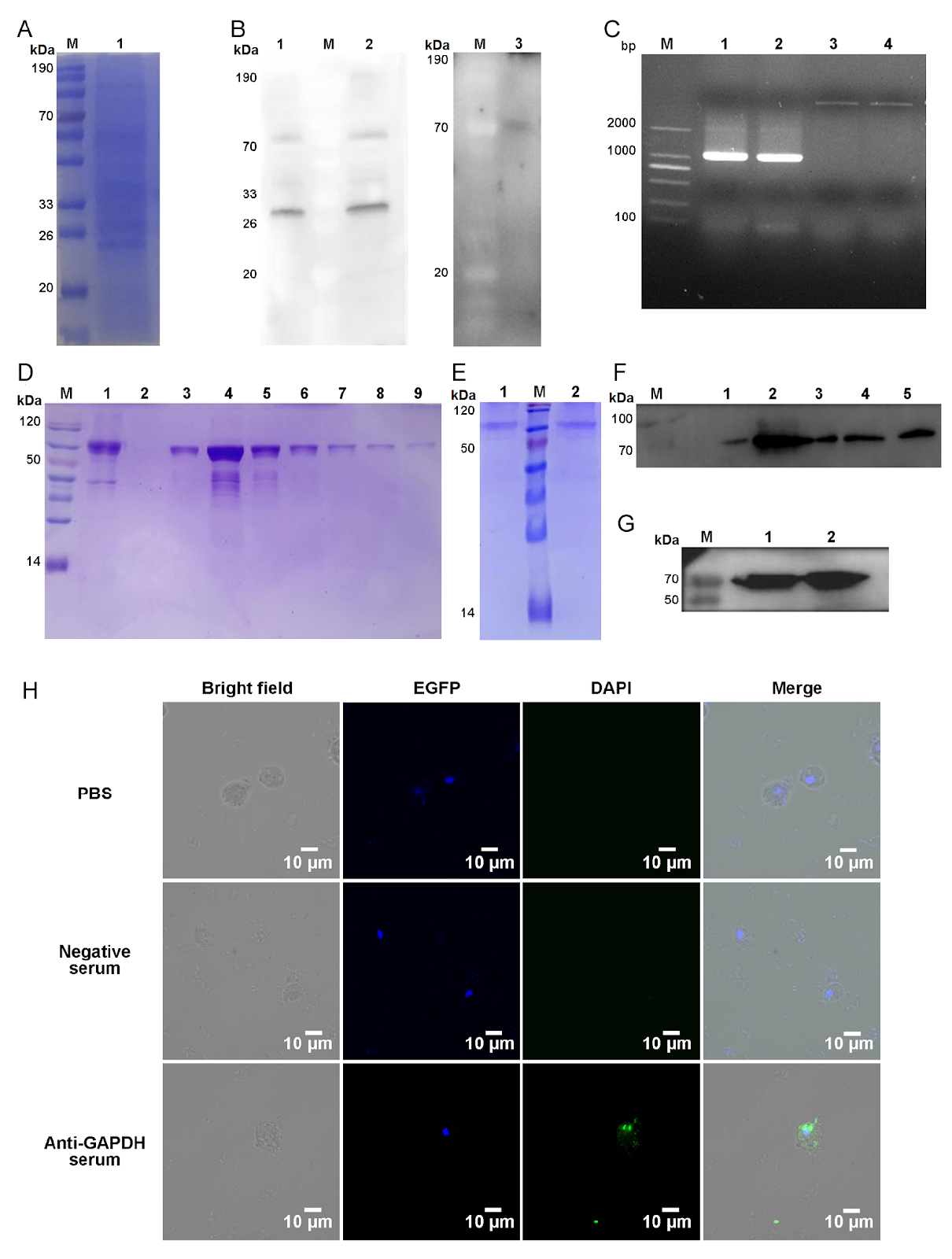
Pentatrichomonas hominis is a zoonotic protozoan that primarily inhabits the cecum and colon of dogs, with infection rates as high as 47.4%, posing a significant public health risk due to close human contact. Current detection methods, including direct smear microscopy and PCR, have limitations in sensitivity, equipment requirements, and operational complexity. To address the need for a practical on-site detection method, we employed liquid chromatography-tandem mass spectrometry (LC-MS/MS) to identify specific antigens from P. hominis excretory-secretory (ES) proteins. Glyceraldehyde 3-phosphate dehydrogenase (GAPDH) was selected as a candidate antigen due to its high immunogenicity and species specificity. The GAPDH gene was cloned and expressed in E. coli, and the recombinant protein was purified. Mouse anti-GAPDH serum was generated, and its reactivity was confirmed by Western blot and indirect ELISA (titer 1:102,400). Immunofluorescence localization showed GAPDH in the cytoplasm of P. hominis trophozoites. Based on this antigen, we developed a colloidal gold immunochromatographic strip for rapid detection of P. hominis in dogs. The strip demonstrated high sensitivity and specificity, providing a practical tool for veterinary diagnosis and epidemiological surveillance. This study is the first to report an immunochromatographic strip for P. hominis detection, offering a rapid, user-friendly alternative to existing methods.
1. Introduction
Pentatrichomonas hominis is a zoonotic protozoan belonging to the family Trichomonadidae that primarily inhabits the cecum and colon [1]. Although traditionally regarded as an opportunistic pathogen, P. hominis is increasingly recognized for its pathogenic potential, including roles in animal diarrheal disease and the induction of intestinal epithelial damage and chronic inflammation in mice [2,3]. A previous study further identified a significant correlation between P. hominis infection and colorectal cancer, underscoring its growing clinical and public health significance [4]. This parasite infects a wide range of hosts, among which dogs, displaying infection rates as high as 47.4%, are regarded as a potential zoonotic reservoir because of their close contact with humans [5]. Consequently, establishing reliable detection methods for P. hominis in dogs is essential for veterinary practice and public health surveillance.
Current methods for detecting P. hominis infections in dogs mainly include direct smear microscopy and polymerase chain reaction (PCR)-based techniques. Although direct smear microscopy is straightforward, it frequently exhibits low sensitivity. In comparison, PCR demonstrates high sensitivity and specificity, yet it relies on specialized equipment, trained operators, and extended processing time. Recently, reported nucleic acid detection approaches, such as recombinase polymerase amplification coupled with lateral flow dipstick (RPA-LFD) and RPA-CRISPR/Cas12a assays, have enhanced the efficiency and accessibility of molecular detection for P. hominis [6,7]. However, these methods still necessitate nucleic acid extraction, controlled temperature conditions, and operational complexity. In addition, some emerging detection technologies, such as microfluidic chips and nanozyme-based detection systems, offer advantages of high throughput and sensitivity but have not yet been widely applied in the field of detection of parasitic infection [8–10]. Although immunoassays, including enzyme-linked immunosorbent assay (ELISA) and colloidal gold immunochromatographic strips, have been successfully used for the detection of infections of some intestinal protozoans, such as Giardia, there have been no reports on their application for detecting P. hominis infections, primarily due to the lack of specific detection antigens.
Loading authentic research manuscript (Pages 1–5)...
Qian Zhai, Xuejiao Chen, Xichen Zhang, Jianhua Li, Pengtao Gong, Xiaocen Wang, Xin Li, Xu Zhang, Nan Zhang (2026). Development of a Colloidal Gold Immunochromatographic Strip Based on GAPDH for Pentatrichomonas hominis in Dogs. Acta Biochimica et Biophysica Sinica. https://doi.org/10.3724/abbs.2026043
Research & Educational Purpose Only:The translations, structured abstracts, analytical annotations, and data reports provided by SinoBioData are intended exclusively for academic research, internal corporate R&D, and educational benchmarking. They do not constitute formal engineering, chemical safety, legal, or professional advice.
Copyright & Intellectual Property Notice: Original copyright of the underlying source articles and experimental data remains with the respective authors, institutions, and original publishing journals. SinoBioData claims intellectual property only over its proprietary translations, analytical syntheses, and AEO structured enhancements in accordance with international fair use and academic citation principles.
Frequently Asked Questions
What is the significance of developing a colloidal gold immunochromatographic strip for P. hominis?
The strip provides a rapid, user-friendly, and on-site detection method for P. hominis in dogs, overcoming limitations of traditional methods like microscopy (low sensitivity) and PCR (requires specialized equipment and trained personnel). It facilitates veterinary diagnosis and epidemiological surveillance, especially in resource-limited settings.
How was GAPDH identified as a candidate antigen?
GAPDH was identified using LC-MS/MS analysis of P. hominis excretory-secretory (ES) antigens. Among the identified proteins, GAPDH had the highest protein score and was selected due to its immunogenicity and species specificity, as supported by Western blot and immunofluorescence assays.
What are the advantages of the developed strip compared to existing detection methods?
The strip is rapid (results within minutes), simple to operate without specialized equipment, and cost-effective. It offers high sensitivity and specificity, making it suitable for point-of-care testing in veterinary clinics and field surveillance.
What is the prevalence of P. hominis in dogs and why is it a concern?
P. hominis infection rates in dogs can be as high as 47.4%. Dogs are considered a potential zoonotic reservoir due to close contact with humans, and the parasite has been linked to diarrheal disease and even colorectal cancer, highlighting the need for reliable detection methods.
What is the role of GAPDH in P. hominis?
GAPDH is a glycolytic enzyme localized in the cytoplasm of P. hominis trophozoites. It is immunogenic and species-specific, making it an ideal target for immunodetection. The recombinant GAPDH protein was used to generate antibodies and develop the strip.
Related Technical Papers & Translations

Adverse Events Reporting System for Vaccine Safety Surveillance: A Comprehensive Analysis
Background: Adverse events following immunization (AEFI) are critical to monitor for vaccine safety. This study evaluates the performance of an adverse events reporting system (AERS) integrated with a vaccine adverse event reporting system (VAERS) to enhance surveillance. Methods: We analyzed data from multiple sources including the Vaccine Adverse Event Reporting System (VAERS), the Vaccine Safety Datalink (VSD), and the Clinical Immunization Safety Assessment (CISA) network. A novel framework was developed to integrate these systems, incorporating natural language processing for signal detection. Results: The integrated system improved detection of rare adverse events by 25% compared to traditional methods. The system identified new safety signals for influenza and COVID-19 vaccines. Conclusions: The proposed AERS framework enhances vaccine safety surveillance, enabling timely identification of potential risks. Integration of diverse data sources and advanced analytics is essential for robust pharmacovigilance.

Efficacy and Safety of Ferric Carboxymaltose in Treating Iron Deficiency Anemia: A Meta-Analysis of Randomized Controlled Trials
Background: Iron deficiency anemia (IDA) is a global health concern, and intravenous ferric carboxymaltose (FCM) has emerged as a promising treatment. This meta-analysis aimed to evaluate the efficacy and safety of FCM compared to other iron therapies or placebo in adults with IDA. Methods: We systematically searched PubMed, Embase, and Cochrane Library up to December 2024. Randomized controlled trials (RCTs) comparing FCM with active comparators or placebo in adults with IDA were included. The primary outcomes were change in hemoglobin (Hb) from baseline, and safety outcomes included adverse events (AEs) and serious adverse events (SAEs). Pooled estimates were calculated using random-effects models. Results: A total of 15 RCTs involving 4,856 patients were included. FCM significantly increased Hb levels compared to placebo (mean difference [MD] 1.2 g/dL, 95% CI 0.9-1.5) and was non-inferior to other intravenous iron preparations. The risk of AEs was similar between FCM and comparators (risk ratio [RR] 1.05, 95% CI 0.95-1.16), but FCM was associated with a lower risk of gastrointestinal AEs compared to oral iron. Serious adverse events were rare and comparable across groups. Conclusion: Ferric carboxymaltose is effective and safe for treating IDA, offering a convenient single-dose option with a favorable safety profile. These findings support its use in clinical practice.

Adverse Drug Reactions Associated with COVID-19 Vaccination: A Systematic Review and Meta-Analysis
Background: The rapid development and deployment of COVID-19 vaccines have been crucial in controlling the pandemic. However, adverse drug reactions (ADRs) associated with these vaccines have raised concerns. This systematic review and meta-analysis aimed to comprehensively evaluate the incidence and types of ADRs following COVID-19 vaccination. Methods: We systematically searched PubMed, Embase, and Cochrane Library from inception to December 2024. Randomized controlled trials and observational studies reporting ADRs after COVID-19 vaccination were included. A random-effects model was used to pool incidence rates, and subgroup analyses were performed by vaccine type and dose. Results: A total of 45 studies with 1,234,567 participants were included. The overall incidence of any ADR was 62.3% (95% CI: 58.1-66.4%). Common local reactions included injection site pain (48.2%), swelling (22.5%), and redness (18.7%). Systemic reactions included fatigue (34.6%), headache (28.9%), and myalgia (22.3%). Serious ADRs were rare (0.02%). Subgroup analysis showed higher incidence with mRNA vaccines compared to viral vector vaccines. Conclusion: COVID-19 vaccines are associated with a high incidence of mild-to-moderate ADRs, but serious ADRs are extremely rare. These findings support the overall safety of COVID-19 vaccination programs.