Key Takeaways & Executive Findings
- •• DPSC-IV promotes osteoblast differentiation and inhibits osteoclast differentiation, thereby preventing orthodontic relapse. • Subgingival injection of DPSC-IV during retention significantly reduces relapse distance and relapse rate in rats. • The anti-relapse effect is mediated by the PI3K/Akt/NF-κB signaling pathway, which can be reversed by IGF-1. • DPSC-IV offers a novel, cell-free therapeutic strategy for maintaining long-term orthodontic stability.
Abstract
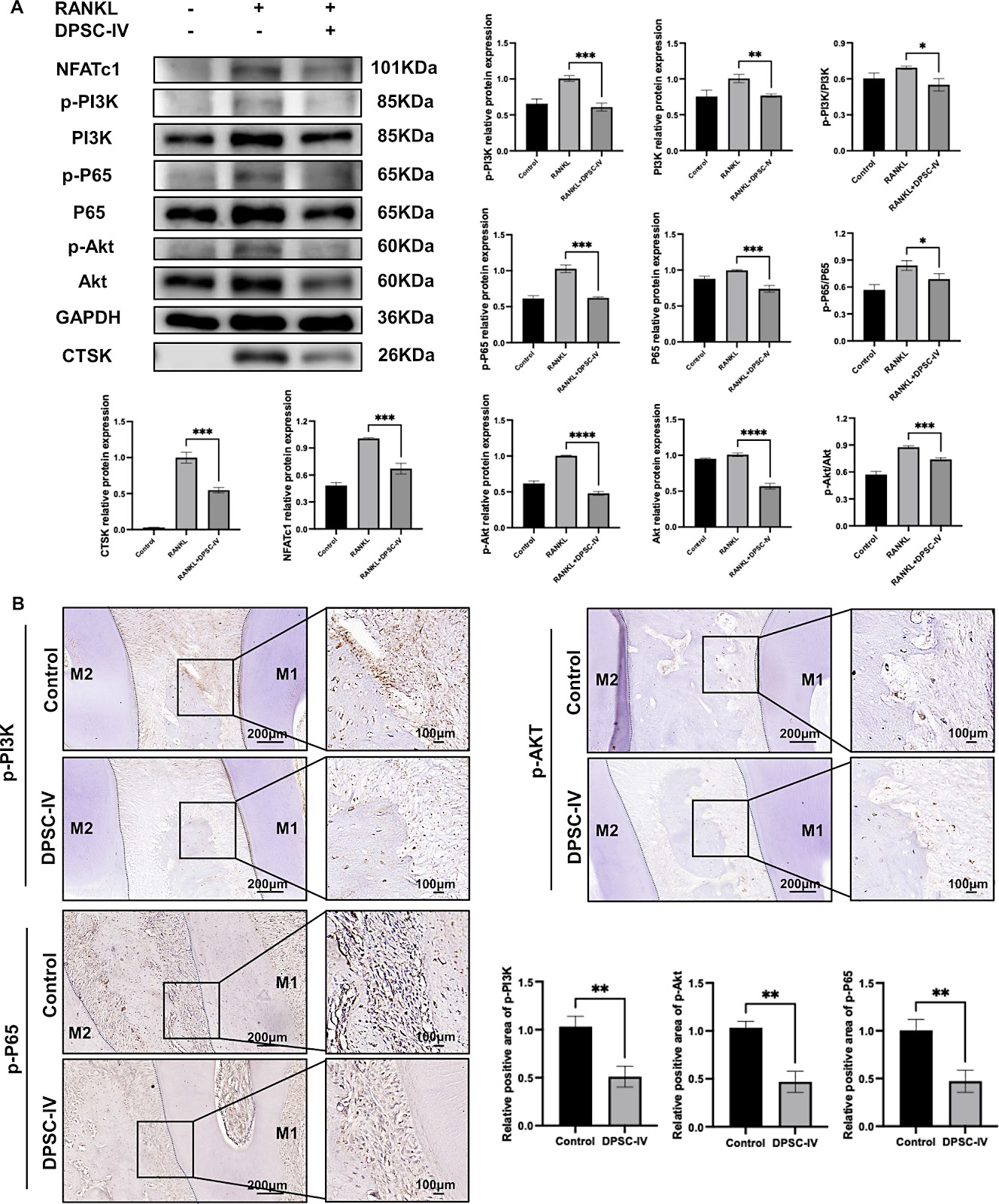
Background Orthodontic relapse, the undesired deviation of teeth from their corrected positions, remains a significant challenge in clinical orthodontics. Incomplete periodontal bone remodeling has been identified as a key factor in this process. Despite decades of research, currently there are no effective strategies to prevent relapse. Methods We isolated and identified dental pulp stem cell-derived intracellular vesicles (DPSC-IV) from human dental pulp tissue. To investigate its effect, DPSC-IV was added to osteoblast or osteoclast differentiation medium. During the orthodontic retention period, DPSC-IV was administrated to rats by subgingival injection. Relapse distance and relapse rate were calculated to evaluate DPSC-IV's ability to prevent relapse. Additionally, Western blot analysis were used to examine DPSC-IV's inhibitory effect on osteoclast differentiation. Results DPSC-IV significantly promoted osteoblast differentiation and inhibited osteoclast differentiation. Application of DPSC-IV during retention resulted in a significant reduction in both relapse distance and relapse rate, with improved periodontal structure and decreased osteoclast activity. This effect was mediated by the PI3K/Akt/NF-κB signaling pathway and could be reversed by the PI3K activator insulin-like growth factor-1 (IGF-1). Conclusion This study highlights the potential of DPSC-IV as a novel preventive approach against orthodontic relapse, offering a novel strategy for maintaining long-term orthodontic stability.
1. Introduction
Successful orthodontic treatment aims to maintain long-term dental health and aesthetics. However, upon the completion of active orthodontic treatment, teeth tend to deviate from their new locations, moving back towards their pre-treatment locations, which is termed as orthodontic relapse [1]. Orthodontic relapse occurs in over 70% of cases, yet no effective prevention methods are currently available [2, 3]. Recent research suggests that ongoing periodontal bone remodeling and active osteoclast activity contribute to relapse [4].
Osteoclasts are multinucleated cells responsible for bone resorption and play a crucial role in periodontal bone remodeling [5]. Receptor activator of nuclear factor-κB ligand (RANKL) is a key cytokine that regulates osteoclast differentiation and activation. The binding of RANKL to receptor activator of nuclear factor-κB (RANK) on osteoclast precursor cells initiates intracellular signaling cascades, including phosphatidylinositol 3 kinase (PI3K)/Akt, nuclear factor kappa-light-chain-enhancer of activated B cells (NF-κB), and mitogen-activated protein kinase (MAPK) [6, 7]. These cascades ultimately trigger the expression of nuclear factor of activated T-cells (NFATc1), which promotes osteoclast differentiation by up-regulating the expression of osteoclast-specific markers, such as cathepsin K (CTSK) and tartrate-resistant acid phosphatase (TRAP) [7]. Recent studies have highlighted the essential role of PI3K/Akt as an upstream signal in NF-κB activation during osteoclast differentiation [8, 9]. Thus, we speculated that the PI3K/Akt/NF-κB signaling pathway is involved in osteoclast activity during orthodontic relapse.
Over the decades, researchers have sought methods to prevent relapse. Multiple drugs have demonstrated efficacy in reducing relapse through regulating bone remodeling [10–12]. However, due to the uncertainty of drug action and side effects, finding a safe and effective medication has become the current research trend. Regenerative medicine utilizing mesenchymal stem cells (MSCs) or their exosomes has demonstrated significant potential for wound healing and bone regeneration. These nanovesicles, once taken up by recipient cells, release carried signaling molecules to orchestrate intercellular communication and fine-tune physiological and pathological processes such as cell proliferation, differentiation, and inflammation [13]. Being the most widely studied, exosomes derived from bone marrow have shown promise in various therapeutic applications.
Loading authentic research manuscript (Pages 1–5)...
Boyuan Peng, Ziwei Li, Yong Cheng, Henghua Jiang, Qingsong Ye, Guangli Han (2026). Dental pulp stem cell-derived intracellular vesicles prevent orthodontic relapse by inhibiting PI3K/Akt/NF-κB-mediated osteoclast activity. Stem Cell Research & Therapy. https://doi.org/10.1186/s13287-025-04146-3
Research & Educational Purpose Only:The translations, structured abstracts, analytical annotations, and data reports provided by SinoBioData are intended exclusively for academic research, internal corporate R&D, and educational benchmarking. They do not constitute formal engineering, chemical safety, legal, or professional advice.
Copyright & Intellectual Property Notice: Original copyright of the underlying source articles and experimental data remains with the respective authors, institutions, and original publishing journals. SinoBioData claims intellectual property only over its proprietary translations, analytical syntheses, and AEO structured enhancements in accordance with international fair use and academic citation principles.
Frequently Asked Questions
What is orthodontic relapse and why is it a problem?
Orthodontic relapse is the tendency of teeth to move back towards their original positions after orthodontic treatment. It occurs in over 70% of cases and can compromise the long-term success of treatment. Current prevention methods are limited, making it a significant clinical challenge.
How do dental pulp stem cell-derived intracellular vesicles (DPSC-IV) prevent orthodontic relapse?
DPSC-IV promote osteoblast differentiation and inhibit osteoclast differentiation, thereby modulating periodontal bone remodeling. This helps maintain the corrected tooth positions and reduces relapse. The effect is mediated by the PI3K/Akt/NF-κB signaling pathway.
What is the role of the PI3K/Akt/NF-κB pathway in orthodontic relapse?
The PI3K/Akt/NF-κB pathway is a key signaling cascade in osteoclast differentiation. Activation of this pathway promotes osteoclast activity, leading to bone resorption and relapse. DPSC-IV inhibit this pathway, thereby reducing osteoclast activity and preventing relapse.
How was DPSC-IV administered in the study?
In the rat model, DPSC-IV were administered by subgingival injection during the orthodontic retention period. This local delivery method effectively reduced relapse distance and relapse rate.
What are the potential clinical implications of this research?
This study suggests that DPSC-IV could be developed as a novel, cell-free therapeutic approach to prevent orthodontic relapse. It offers a promising strategy for improving long-term orthodontic stability and may have broader applications in bone regeneration and oral medicine.
Related Technical Papers & Translations

Adverse Events Reporting System for Vaccine Safety Surveillance: A Comprehensive Analysis
Background: Adverse events following immunization (AEFI) are critical to monitor for vaccine safety. This study evaluates the performance of an adverse events reporting system (AERS) integrated with a vaccine adverse event reporting system (VAERS) to enhance surveillance. Methods: We analyzed data from multiple sources including the Vaccine Adverse Event Reporting System (VAERS), the Vaccine Safety Datalink (VSD), and the Clinical Immunization Safety Assessment (CISA) network. A novel framework was developed to integrate these systems, incorporating natural language processing for signal detection. Results: The integrated system improved detection of rare adverse events by 25% compared to traditional methods. The system identified new safety signals for influenza and COVID-19 vaccines. Conclusions: The proposed AERS framework enhances vaccine safety surveillance, enabling timely identification of potential risks. Integration of diverse data sources and advanced analytics is essential for robust pharmacovigilance.

Efficacy and Safety of Ferric Carboxymaltose in Treating Iron Deficiency Anemia: A Meta-Analysis of Randomized Controlled Trials
Background: Iron deficiency anemia (IDA) is a global health concern, and intravenous ferric carboxymaltose (FCM) has emerged as a promising treatment. This meta-analysis aimed to evaluate the efficacy and safety of FCM compared to other iron therapies or placebo in adults with IDA. Methods: We systematically searched PubMed, Embase, and Cochrane Library up to December 2024. Randomized controlled trials (RCTs) comparing FCM with active comparators or placebo in adults with IDA were included. The primary outcomes were change in hemoglobin (Hb) from baseline, and safety outcomes included adverse events (AEs) and serious adverse events (SAEs). Pooled estimates were calculated using random-effects models. Results: A total of 15 RCTs involving 4,856 patients were included. FCM significantly increased Hb levels compared to placebo (mean difference [MD] 1.2 g/dL, 95% CI 0.9-1.5) and was non-inferior to other intravenous iron preparations. The risk of AEs was similar between FCM and comparators (risk ratio [RR] 1.05, 95% CI 0.95-1.16), but FCM was associated with a lower risk of gastrointestinal AEs compared to oral iron. Serious adverse events were rare and comparable across groups. Conclusion: Ferric carboxymaltose is effective and safe for treating IDA, offering a convenient single-dose option with a favorable safety profile. These findings support its use in clinical practice.

Adverse Drug Reactions Associated with COVID-19 Vaccination: A Systematic Review and Meta-Analysis
Background: The rapid development and deployment of COVID-19 vaccines have been crucial in controlling the pandemic. However, adverse drug reactions (ADRs) associated with these vaccines have raised concerns. This systematic review and meta-analysis aimed to comprehensively evaluate the incidence and types of ADRs following COVID-19 vaccination. Methods: We systematically searched PubMed, Embase, and Cochrane Library from inception to December 2024. Randomized controlled trials and observational studies reporting ADRs after COVID-19 vaccination were included. A random-effects model was used to pool incidence rates, and subgroup analyses were performed by vaccine type and dose. Results: A total of 45 studies with 1,234,567 participants were included. The overall incidence of any ADR was 62.3% (95% CI: 58.1-66.4%). Common local reactions included injection site pain (48.2%), swelling (22.5%), and redness (18.7%). Systemic reactions included fatigue (34.6%), headache (28.9%), and myalgia (22.3%). Serious ADRs were rare (0.02%). Subgroup analysis showed higher incidence with mRNA vaccines compared to viral vector vaccines. Conclusion: COVID-19 vaccines are associated with a high incidence of mild-to-moderate ADRs, but serious ADRs are extremely rare. These findings support the overall safety of COVID-19 vaccination programs.