Key Takeaways & Executive Findings
- •• Mendelian randomization reveals causal links between burn injury and reduced levels of interleukin-9 and testosterone. • No heterogeneity or horizontal pleiotropy was detected, confirming the robustness of the findings. • Elevating interleukin-9 and testosterone levels may facilitate tissue repair and mitigate protein catabolism post-burn. • The study integrates multi-omic data from large biobanks to overcome limitations of observational studies.
Abstract
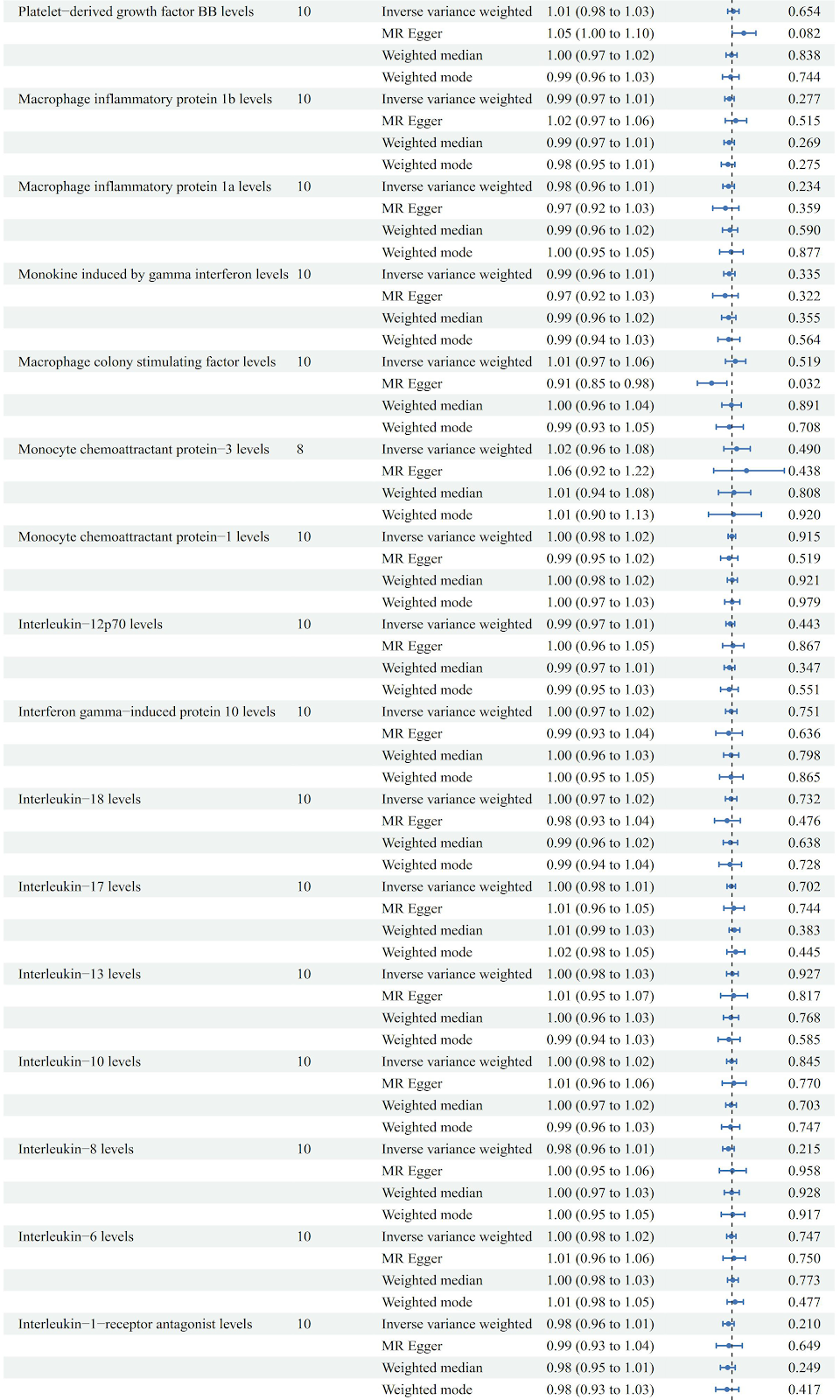
BACKGROUND: Conventional observational studies are inadequate to reveal the potential causal relationship of biomarkers in burns patients. Mendelian randomization, leveraging genetic variation as an instrumental variable to mimic the advantages of randomized controlled trials, has emerged as a crucial tool for dissecting causal associations in complex diseases. OBJECTIVE: To explore the relationship of burn injury with 41 inflammatory cytokines and 35 blood and urinary biomarkers using Mendelian Randomization. METHODS: (1) Burn-related data of genome-wide association studies were obtained from the IEU open GWAS project database, constructed by The University of Bristol, UK, including 218 131 samples and 16 380 465 single nucleotide polymorphisms were included in the study. (2) Data for 41 types of inflammatory cytokines were derived from a study involving 8 293 participants in the Finnish Young Cardiovascular Risk Study database, which is constructed by the Research Centre for Applied and Preventive Cardiovascular Medicine, University of Turku. (3) Data for 35 types of blood and urinary biomarkers were derived from a study involving 363 228 participants from the UK Biobank, which is a large biomedical database project jointly initiated by the UK government, the Wellcome Trust, and the Medical Research Council of the UK. Single nucleotide polymorphisms were employed as instrumental variables, and analyses were conducted using inverse variance weighting, MR Egger, weighted median, and weighted mode methods. Cochrane's Q test was used to identify heterogeneity, and MR Egger intercept test, MR-PRESSO test, and leave-one-out analysis were used to assess the reliability of exposure-outcome associations. RESULTS AND CONCLUSION: Burn injury reduced levels of interleukin-9 (OR=0.97; 95%CI, 0.949 to 0.997; P=0.030) and testosterone (OR=0.997; 95%CI, 0.995 to 0.999; P=0.025), with no heterogeneity or horizontal pleiotropy, demonstrating robustness. The Mendelian randomization analysis indicates that burn injury leads to decreased levels of interleukin-9 and testosterone, suggesting that increasing these levels may aid in tissue repair and improve protein breakdown rate after burn.
1. Introduction
Burn injury poses a serious threat to patients' life and health [1]. According to the World Health Organization, over 11 million people suffer burns annually worldwide, with a high mortality rate, estimated at over 250,000 deaths per year [2]. As a complex systemic trauma, the pathophysiological process of burns is characterized by excessive inflammatory response, metabolic disturbances, and multiple organ dysfunction, accompanied by systemic changes such as immunosuppression, endocrine axis (e.g., hypothalamic-pituitary-gonadal axis, HPG axis) imbalance, and oxidative stress damage [3-4]. These pathological changes not only directly cause tissue damage but may also exacerbate complications, including infection, multiple organ failure, and chronic non-healing wounds, through dysregulation of inflammatory cytokine networks and metabolic reprogramming (e.g., accelerated protein breakdown and increased energy expenditure under hypermetabolic states) [5]. Even after discharge, burn survivors continue to struggle with physical and psychological issues, such as skin problems, anxiety, depression, and post-traumatic stress disorder [6].
However, traditional observational studies are difficult to clarify the causal relationship between burns and biomarkers, as they are susceptible to confounding factors (e.g., age, underlying diseases) and reverse causation bias (e.g., biomarker changes may be a consequence rather than a cause of burns).
Loading authentic research manuscript (Pages 1–5)...
Gao Minyi, Liu Pinghong, Lin Haixiong (2026). Burn and multi-omic biomarkers: causal relationships with 41 inflammatory factors and 35 blood and urine markers. Chinese Journal of Tissue Engineering Research. https://doi.org/10.12307/2026.21270
Research & Educational Purpose Only:The translations, structured abstracts, analytical annotations, and data reports provided by SinoBioData are intended exclusively for academic research, internal corporate R&D, and educational benchmarking. They do not constitute formal engineering, chemical safety, legal, or professional advice.
Copyright & Intellectual Property Notice: Original copyright of the underlying source articles and experimental data remains with the respective authors, institutions, and original publishing journals. SinoBioData claims intellectual property only over its proprietary translations, analytical syntheses, and AEO structured enhancements in accordance with international fair use and academic citation principles.
Frequently Asked Questions
What is the main finding of this study?
The study found that burn injury causally reduces levels of interleukin-9 and testosterone, suggesting that increasing these levels may help in tissue repair and improve protein breakdown rate after burn.
How was the causal relationship established?
The study used Mendelian randomization, which employs genetic variants as instrumental variables to mimic randomized controlled trials, thereby reducing confounding and reverse causation.
What data sources were used?
Burn data from IEU Open GWAS (218,131 samples), inflammatory cytokines from the Finnish Young Cardiovascular Risk Study (8,293 participants), and blood/urine biomarkers from the UK Biobank (363,228 participants).
What methods were used for analysis?
Inverse variance weighting, MR Egger, weighted median, and weighted mode methods, along with sensitivity analyses including Cochrane's Q test, MR Egger intercept, MR-PRESSO, and leave-one-out analysis.
What are the clinical implications?
The findings suggest that therapeutic strategies to elevate interleukin-9 and testosterone levels might be beneficial for burn patients to enhance tissue repair and reduce protein catabolism.
Related Technical Papers & Translations

Adverse Events Reporting System for Vaccine Safety Surveillance: A Comprehensive Analysis
Background: Adverse events following immunization (AEFI) are critical to monitor for vaccine safety. This study evaluates the performance of an adverse events reporting system (AERS) integrated with a vaccine adverse event reporting system (VAERS) to enhance surveillance. Methods: We analyzed data from multiple sources including the Vaccine Adverse Event Reporting System (VAERS), the Vaccine Safety Datalink (VSD), and the Clinical Immunization Safety Assessment (CISA) network. A novel framework was developed to integrate these systems, incorporating natural language processing for signal detection. Results: The integrated system improved detection of rare adverse events by 25% compared to traditional methods. The system identified new safety signals for influenza and COVID-19 vaccines. Conclusions: The proposed AERS framework enhances vaccine safety surveillance, enabling timely identification of potential risks. Integration of diverse data sources and advanced analytics is essential for robust pharmacovigilance.

Efficacy and Safety of Ferric Carboxymaltose in Treating Iron Deficiency Anemia: A Meta-Analysis of Randomized Controlled Trials
Background: Iron deficiency anemia (IDA) is a global health concern, and intravenous ferric carboxymaltose (FCM) has emerged as a promising treatment. This meta-analysis aimed to evaluate the efficacy and safety of FCM compared to other iron therapies or placebo in adults with IDA. Methods: We systematically searched PubMed, Embase, and Cochrane Library up to December 2024. Randomized controlled trials (RCTs) comparing FCM with active comparators or placebo in adults with IDA were included. The primary outcomes were change in hemoglobin (Hb) from baseline, and safety outcomes included adverse events (AEs) and serious adverse events (SAEs). Pooled estimates were calculated using random-effects models. Results: A total of 15 RCTs involving 4,856 patients were included. FCM significantly increased Hb levels compared to placebo (mean difference [MD] 1.2 g/dL, 95% CI 0.9-1.5) and was non-inferior to other intravenous iron preparations. The risk of AEs was similar between FCM and comparators (risk ratio [RR] 1.05, 95% CI 0.95-1.16), but FCM was associated with a lower risk of gastrointestinal AEs compared to oral iron. Serious adverse events were rare and comparable across groups. Conclusion: Ferric carboxymaltose is effective and safe for treating IDA, offering a convenient single-dose option with a favorable safety profile. These findings support its use in clinical practice.

Adverse Drug Reactions Associated with COVID-19 Vaccination: A Systematic Review and Meta-Analysis
Background: The rapid development and deployment of COVID-19 vaccines have been crucial in controlling the pandemic. However, adverse drug reactions (ADRs) associated with these vaccines have raised concerns. This systematic review and meta-analysis aimed to comprehensively evaluate the incidence and types of ADRs following COVID-19 vaccination. Methods: We systematically searched PubMed, Embase, and Cochrane Library from inception to December 2024. Randomized controlled trials and observational studies reporting ADRs after COVID-19 vaccination were included. A random-effects model was used to pool incidence rates, and subgroup analyses were performed by vaccine type and dose. Results: A total of 45 studies with 1,234,567 participants were included. The overall incidence of any ADR was 62.3% (95% CI: 58.1-66.4%). Common local reactions included injection site pain (48.2%), swelling (22.5%), and redness (18.7%). Systemic reactions included fatigue (34.6%), headache (28.9%), and myalgia (22.3%). Serious ADRs were rare (0.02%). Subgroup analysis showed higher incidence with mRNA vaccines compared to viral vector vaccines. Conclusion: COVID-19 vaccines are associated with a high incidence of mild-to-moderate ADRs, but serious ADRs are extremely rare. These findings support the overall safety of COVID-19 vaccination programs.