Key Takeaways & Executive Findings
- •• Astilbin pretreatment enhances the therapeutic efficacy of mesenchymal stem cells in AKI-CKD mice by promoting M2 macrophage polarization via the PTGS2-mediated pathway. • AST binds to KLF4, upregulating PTGS2 expression and increasing PGE2 secretion, which drives macrophage polarization toward the M2 phenotype. • Knockdown of PTGS2 reverses the beneficial effects of AST-pretreated MSCs, confirming the pathway's critical role. • This study provides a novel strategy to improve MSC-based therapies for AKI-CKD and highlights the potential of the natural compound Astilbin in regenerative medicine.
Abstract
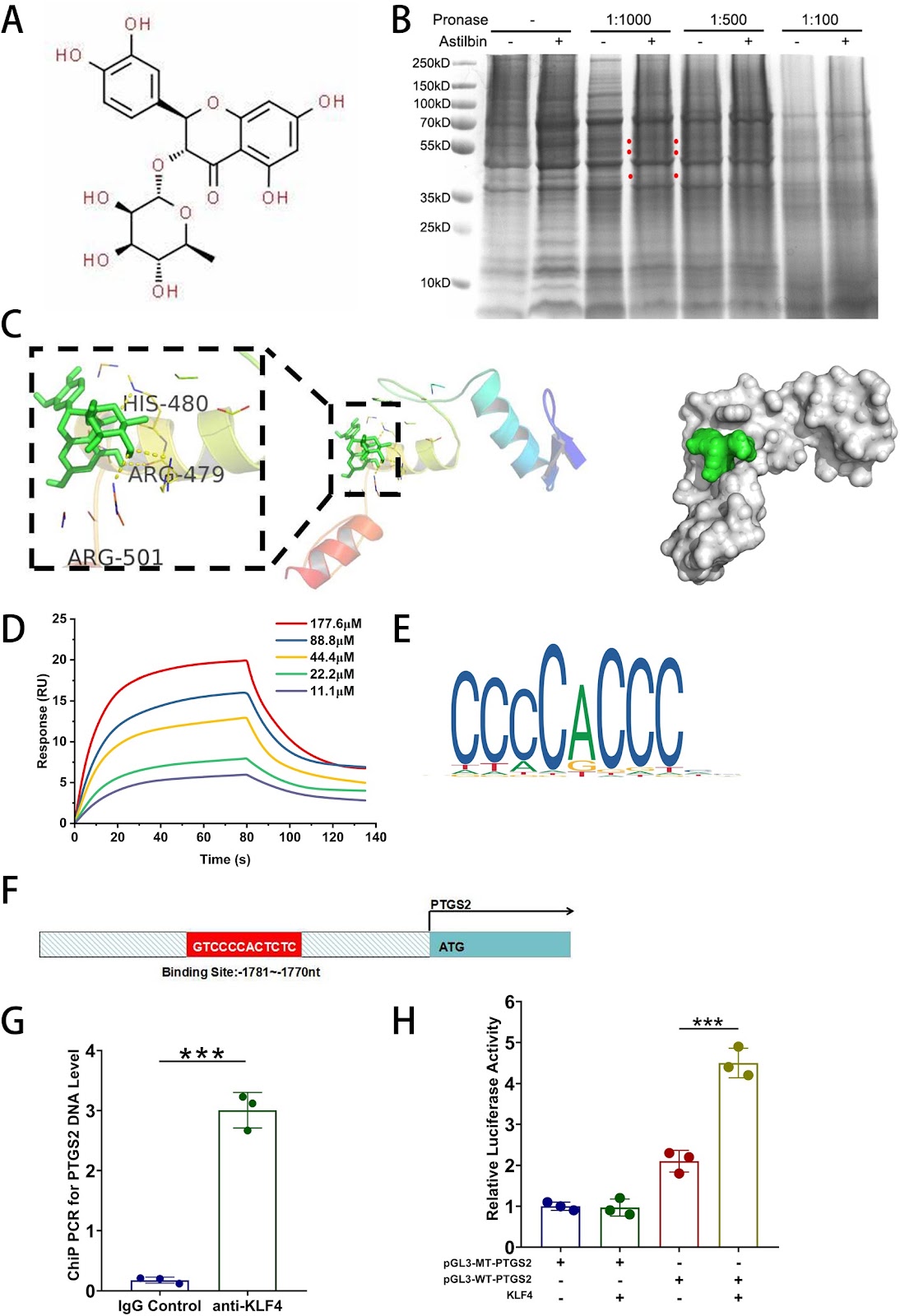
Background Although mesenchymal stem cells (MSCs) have been proven to be appropriate candidates for the treatment of AKI-CKD, their efficacy is limited and variable. Astilbin (AST) had a protective effect on MSCs from oxidative stress via ROS-scavenging, however, whether it can improve MSCs’ renoprotection and the underlying mechanism need to be elucidated. Methods AST-pretreated MSCs were administered intravenously into the ischemia–reperfusion injury mice models and the renal function, pathological changes and inflammation. Were evaluated. In addition, DARTS, molecular docking, surface plasma resonance(SPR), dual-luciferase reporter gene assay and the ChIP-PCR were utilized to explore the potential signaling pathways through which AST exert renal protective effects on MSCs. Results AST-pretreated MSCs markedly improved kidney function, reduced kidney pathological injury and inflammation in AKI and AKI-CKD mice. RNA-seq results showed that PTGS2 related pathway was significantly up-regulated in MSCs after AST pretreatment. DARTS assay, molecular docking and SPR assay revealed that AST could bind with the transcriptional factor of Kruppel-Like Factor 4(KLF4) protein. The promoter of PTGS2 had the binding and transcriptional activation by KLF4. Furthermore, AST pretreatment promoted the secretion of PGE2 in MSCs. And then the westren blot results showed that the protein levels of CD163 and CD206 were upregulated after coculture in AST-pretreated MSCs, indicating that the polarization of RAW264.7 cells towards M2-like macrophages was induced. Knockdown of PTGS2 reversed the ability of AST-pretreated MSCs in converting macrophages to M2 phenotype and reducing their therapeutic effects on AKI-CKD mice. Conclusion AST pretreatment enhances the efficacy of MSCs on AKI and AKI-CKD mice by inducing of M2-like phenotype polarization in macrophages through the PTGS2-mediated pathway. This approach not only provides a novel strategy to strengthen the capability of MSCs but also helps elucidate the beneficial effects of the Chinese herbal medicine AST.
1. Introduction
Previous clinical studies have shown that acute kidney injury (AKI) predisposes to the development and progression of chronic kidney disease (CKD) [1, 2]. Identifying effective therapeutic interventions to treat AKI and prevent its progression to CKD is an urgent matter. Mesenchymal stem cells (MSCs)-based therapies have been demonstrated to be a promising strategy for AKI treatment [3, 4]. MSCs could improve the structural and functional recovery of AKI and these effects were thought to be attributed to their immunomodulatory and anti-inflammatory capabilities [5]. However, the efficacy of MSCs-based treatments are limited and variable [6]. To address this problem, several priming strategies including the use of cytokines and natural/chemical compounds, such as IFN-γ, TNF-α, melatonin, Darbepoetin-α(DPO) and IL-17A have been developed for some specific disease indications [7–9]. Pretreatments with these cytokines and compounds have been shown to enhance the immunomodulatory functions of MSCs and thereby facilitating their potential therapeutic efficacy [10–12]. Moreover, compounds are easier to synthesize and obtain compared to cytokines.
Astilbin (AST) is a type of flavonoid having multiple pharmacological properties including immunomodulatory, anti-inflammatory and antioxidant effects [13]. AST can be extracted from various plants such as Rhizoma Smilacis Glabrae and Sarcandra glabra. Numerous experiments on immunological diseases including systemic lupus erythematosus, arthritis, and psoriasis, have verified the immune-regulatory properties of AST [14]. Of note, AST has also been suggested to have the ability to protect MSCs from oxidative stress-induced apoptosis and help them exert antioxidant action by directly or indirectly scavenging reactive oxygen species (ROS) [15]. Therefore, we investigated the effects and mechanism of AST pretreated MSCs on the treatment of AKI-CKD. Our results indicated that AST enhanced...
Loading authentic research manuscript (Pages 1–5)...
Xiaodong Geng, Zhangning Fu, Guangrui Geng, Kun Chi, Chao Liu, Haijuan Hong, Guangyan Cai, Xiangmei Chen, Quan Hong (2026). Astilbin improves the therapeutic effects of mesenchymal stem cells in AKI-CKD mice by regulating macrophage polarization through PTGS2-mediated pathway. Stem Cell Research & Therapy. https://doi.org/10.1186/s13287-024-04025-3
Research & Educational Purpose Only:The translations, structured abstracts, analytical annotations, and data reports provided by SinoBioData are intended exclusively for academic research, internal corporate R&D, and educational benchmarking. They do not constitute formal engineering, chemical safety, legal, or professional advice.
Copyright & Intellectual Property Notice: Original copyright of the underlying source articles and experimental data remains with the respective authors, institutions, and original publishing journals. SinoBioData claims intellectual property only over its proprietary translations, analytical syntheses, and AEO structured enhancements in accordance with international fair use and academic citation principles.
Frequently Asked Questions
What is the role of Astilbin in enhancing MSC therapy for AKI-CKD?
Astilbin pretreatment enhances the therapeutic efficacy of mesenchymal stem cells (MSCs) in AKI-CKD mice by promoting M2 macrophage polarization through the PTGS2-mediated pathway, leading to improved kidney function and reduced inflammation.
How does Astilbin affect macrophage polarization?
Astilbin binds to KLF4, upregulating PTGS2 expression and increasing PGE2 secretion, which induces macrophage polarization toward the M2-like phenotype, characterized by upregulation of CD163 and CD206.
What is the significance of PTGS2 in this study?
PTGS2 is a key mediator in the pathway; knockdown of PTGS2 reverses the beneficial effects of AST-pretreated MSCs, confirming its critical role in macrophage polarization and therapeutic efficacy.
What are the potential clinical implications of this research?
This study provides a novel strategy to improve MSC-based therapies for AKI-CKD by using Astilbin as a priming agent, potentially enhancing the effectiveness and consistency of MSC treatments in clinical settings.
What methods were used to explore the mechanism?
The researchers used RNA-seq, DARTS assay, molecular docking, surface plasmon resonance (SPR), dual-luciferase reporter gene assay, and ChIP-PCR to identify the binding of AST to KLF4 and the regulation of PTGS2.
Related Technical Papers & Translations

Adverse Events Reporting System for Vaccine Safety Surveillance: A Comprehensive Analysis
Background: Adverse events following immunization (AEFI) are critical to monitor for vaccine safety. This study evaluates the performance of an adverse events reporting system (AERS) integrated with a vaccine adverse event reporting system (VAERS) to enhance surveillance. Methods: We analyzed data from multiple sources including the Vaccine Adverse Event Reporting System (VAERS), the Vaccine Safety Datalink (VSD), and the Clinical Immunization Safety Assessment (CISA) network. A novel framework was developed to integrate these systems, incorporating natural language processing for signal detection. Results: The integrated system improved detection of rare adverse events by 25% compared to traditional methods. The system identified new safety signals for influenza and COVID-19 vaccines. Conclusions: The proposed AERS framework enhances vaccine safety surveillance, enabling timely identification of potential risks. Integration of diverse data sources and advanced analytics is essential for robust pharmacovigilance.

Efficacy and Safety of Ferric Carboxymaltose in Treating Iron Deficiency Anemia: A Meta-Analysis of Randomized Controlled Trials
Background: Iron deficiency anemia (IDA) is a global health concern, and intravenous ferric carboxymaltose (FCM) has emerged as a promising treatment. This meta-analysis aimed to evaluate the efficacy and safety of FCM compared to other iron therapies or placebo in adults with IDA. Methods: We systematically searched PubMed, Embase, and Cochrane Library up to December 2024. Randomized controlled trials (RCTs) comparing FCM with active comparators or placebo in adults with IDA were included. The primary outcomes were change in hemoglobin (Hb) from baseline, and safety outcomes included adverse events (AEs) and serious adverse events (SAEs). Pooled estimates were calculated using random-effects models. Results: A total of 15 RCTs involving 4,856 patients were included. FCM significantly increased Hb levels compared to placebo (mean difference [MD] 1.2 g/dL, 95% CI 0.9-1.5) and was non-inferior to other intravenous iron preparations. The risk of AEs was similar between FCM and comparators (risk ratio [RR] 1.05, 95% CI 0.95-1.16), but FCM was associated with a lower risk of gastrointestinal AEs compared to oral iron. Serious adverse events were rare and comparable across groups. Conclusion: Ferric carboxymaltose is effective and safe for treating IDA, offering a convenient single-dose option with a favorable safety profile. These findings support its use in clinical practice.

Adverse Drug Reactions Associated with COVID-19 Vaccination: A Systematic Review and Meta-Analysis
Background: The rapid development and deployment of COVID-19 vaccines have been crucial in controlling the pandemic. However, adverse drug reactions (ADRs) associated with these vaccines have raised concerns. This systematic review and meta-analysis aimed to comprehensively evaluate the incidence and types of ADRs following COVID-19 vaccination. Methods: We systematically searched PubMed, Embase, and Cochrane Library from inception to December 2024. Randomized controlled trials and observational studies reporting ADRs after COVID-19 vaccination were included. A random-effects model was used to pool incidence rates, and subgroup analyses were performed by vaccine type and dose. Results: A total of 45 studies with 1,234,567 participants were included. The overall incidence of any ADR was 62.3% (95% CI: 58.1-66.4%). Common local reactions included injection site pain (48.2%), swelling (22.5%), and redness (18.7%). Systemic reactions included fatigue (34.6%), headache (28.9%), and myalgia (22.3%). Serious ADRs were rare (0.02%). Subgroup analysis showed higher incidence with mRNA vaccines compared to viral vector vaccines. Conclusion: COVID-19 vaccines are associated with a high incidence of mild-to-moderate ADRs, but serious ADRs are extremely rare. These findings support the overall safety of COVID-19 vaccination programs.