Key Takeaways & Executive Findings
- •• Apremilast rescues loss of cardiomyocyte cohesion in human iPSC-derived cardiomyocytes from an ACM patient with a DSP mutation. • Apremilast enhances cardiomyocyte cohesion via plakoglobin phosphorylation at Serine 665 and ERK1/2 activation. • Apremilast reduces arrhythmic events in ex vivo and in vitro models of ACM, including ventricular slices and Langendorff-perfused hearts. • This study provides preclinical evidence for apremilast as a potential targeted therapy for arrhythmogenic cardiomyopathy.
Abstract
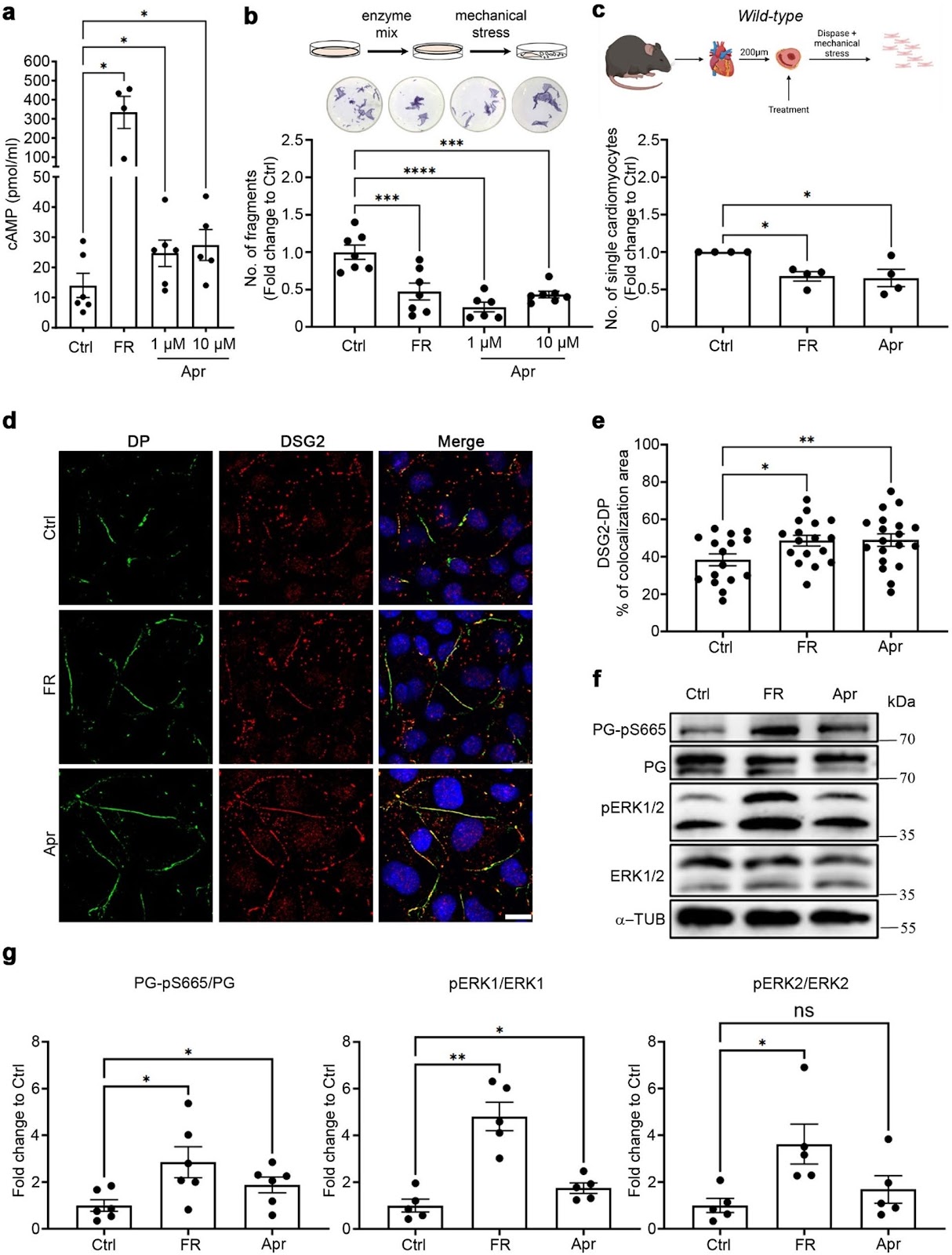
Background Arrhythmogenic cardiomyopathy (ACM) is a genetically inherited desmosome heart disease leading to life-threatening arrhythmias and sudden cardiac death. Currently, ACM treatment paradigms are merely symptom targeting. Recently, apremilast was shown to stabilize keratinocyte adhesion in the desmosomal disease pemphigus vulgaris. Therefore, this study investigated whether apremilast can be a therapeutic option for ACM. Methods Human induced pluripotent stem cells from a healthy control (hiPSC) and an ACM index patient (ACM-hiPSC) carrying a heterozygous desmoplakin (DSP) gene mutation (c.2854G > T, p.Glu952Ter), confirmed by whole exome sequencing (WES), were established. Cyclic-AMP ELISA, dissociation assay, immunostaining, and Western blotting analyses were performed in human iPSC-derived cardiomyocytes (hiPSC-CMs), murine HL-1 cardiomyocytes, and cardiac slices derived from wild-type (WT) mice, plakoglobin (PG, Jup) knockout (Jup−/−) (murine ACM model) or PG Serine 665 phosphodeficient (JUP-S665A) mice. Microelectrode array (MEA) analyses in ventricular cardiac slices and Langendorff heart perfusion were performed to analyze heart rate variability and arrhythmia. Results ACM-hiPSC derived cardiomyocytes (ACM-hiPSC-CMs) revealed a significant loss of cohesion, which was rescued by apremilast. Further, treatment with apremilast strengthened basal cardiomyocyte cohesion in HL-1 cells and WT murine cardiac slices, paralleled by phosphorylation of PG at Serine 665 in human and murine models. In HL-1 cells, apremilast in addition activated ERK1/2, inhibition of which abolished apremilast-enhanced cardiomyocyte cohesion. Further, dissociation assays in slice cultures from JUP-S665A and Jup−/− mice revealed that PG is crucial for apremilast's effects. Additionally, apremilast reduced arrhythmic events in ventricular cardiac slices and Langendorff-perfused hearts. Conclusion Apremilast improves cardiomyocyte cohesion and reduces arrhythmia in different models of ACM, suggesting a novel therapeutic strategy for this disease.
1. Introduction
Arrhythmogenic cardiomyopathy (ACM) is an uncommon hereditary heart condition that can lead to sudden cardiac death (SCD), particularly among young athletes (Corrado, Basso et al. [9], Corrado, Link et al. [10]. The estimated prevalence of this condition ranges from 1 in 1000 to 1 in 5000 individuals (Peters, Trummel et al. [37], Groeneweg, Bhonsale et al. [4]). Notably, SCD can even occur in the initial concealed phase without observable structural changes in the ventricles, and it may be the first manifestation of the disease in approximately 5–10% of cases (Peters, Trummel et al. [37], Bhonsale, Groeneweg et al. [4], Groeneweg, Bhonsale et al. [4]). Approximately 60% of ACM patients carry pathogenic variants in genes encoding desmosomal proteins encompassing both plaque proteins like plakophilin 2 (PKP2), desmoplakin (DSP), and plakoglobin (JUP), as well as cadherin-type adhesion molecules such as desmoglein 2 (DSG2) and desmocollin 2 (DSC2) [14], Marcus, McKenna et al. [30], Vimalanathan, Ehler et al. [55], Costa, Cerrone et al. [12], Gasperetti, Carrick et al. [19]. Hence, ACM is recognized primarily as a desmosomal disease.
Current therapeutic options for ACM include lifestyle changes, anti-arrhythmic drugs, catheter ablation, implantable cardioverter-defibrillators, and ultimately heart transplantation for refractory cases. However, these approaches are symptomatic and do not address the underlying molecular defects. Recent advancements suggest that enhancing intracellular cAMP could be beneficial in treating desmosomal diseases, offering a potential targeted therapy. In this context, apremilast, a phosphodiesterase-4 inhibitor, has been shown to stabilize keratinocyte adhesion in pemphigus vulgaris, another desmosomal disease. This study investigates whether apremilast can similarly improve cardiomyocyte cohesion and reduce arrhythmia in models of ACM, potentially providing a novel treatment strategy.
Loading authentic research manuscript (Pages 1–5)...
Konstanze Stangner, Orsela Dervishi, Janina Kuhnert, Carl Wendt, Soumyata Pathak, Maria Shoykhet, Silvana Olivares-Florez, Sina Moztarzadeh, Jens Opsteen, Ni Luh Cathrin Suniasih Wohlfarth, Ruth Biller, Elisabeth Graf, Dominik S. Westphal, Tatjana Williams, Brenda Gerull, Tomo Šarić, Sunil Yeruva, Jens Waschke (2026). Apremilast improves cardiomyocyte cohesion and arrhythmia in different models for arrhythmogenic cardiomyopathy. Stem Cell Research & Therapy. https://doi.org/10.1186/s13287-025-04755-y
Research & Educational Purpose Only:The translations, structured abstracts, analytical annotations, and data reports provided by SinoBioData are intended exclusively for academic research, internal corporate R&D, and educational benchmarking. They do not constitute formal engineering, chemical safety, legal, or professional advice.
Copyright & Intellectual Property Notice: Original copyright of the underlying source articles and experimental data remains with the respective authors, institutions, and original publishing journals. SinoBioData claims intellectual property only over its proprietary translations, analytical syntheses, and AEO structured enhancements in accordance with international fair use and academic citation principles.
Frequently Asked Questions
What is arrhythmogenic cardiomyopathy (ACM)?
Arrhythmogenic cardiomyopathy (ACM) is a genetic heart disease characterized by desmosomal dysfunction, leading to life-threatening arrhythmias and sudden cardiac death, especially in young athletes. It is often caused by mutations in desmosomal genes such as DSP, PKP2, and JUP.
How does apremilast work in ACM?
Apremilast, a PDE4 inhibitor, enhances cardiomyocyte cohesion by promoting plakoglobin phosphorylation at Serine 665 and activating ERK1/2 signaling. This stabilizes desmosomes and reduces arrhythmic events in experimental models of ACM.
What models were used in this study?
The study used human induced pluripotent stem cell-derived cardiomyocytes (hiPSC-CMs) from an ACM patient with a DSP mutation, murine HL-1 cardiomyocytes, and cardiac slices from wild-type, plakoglobin knockout (Jup−/−), and phosphodeficient (JUP-S665A) mice. Additionally, Langendorff-perfused hearts were used for arrhythmia analysis.
What are the key findings of the study?
Apremilast rescued loss of cardiomyocyte cohesion in ACM-hiPSC-CMs, strengthened basal cohesion in HL-1 cells and WT slices, and reduced arrhythmic events in ex vivo models. The effects were dependent on plakoglobin phosphorylation and ERK1/2 activation.
What is the clinical significance of this research?
This study provides preclinical evidence that apremilast could be repurposed as a targeted therapy for ACM, potentially offering a disease-modifying treatment that addresses the underlying desmosomal defect, rather than just managing symptoms.
Related Technical Papers & Translations

Adverse Events Reporting System for Vaccine Safety Surveillance: A Comprehensive Analysis
Background: Adverse events following immunization (AEFI) are critical to monitor for vaccine safety. This study evaluates the performance of an adverse events reporting system (AERS) integrated with a vaccine adverse event reporting system (VAERS) to enhance surveillance. Methods: We analyzed data from multiple sources including the Vaccine Adverse Event Reporting System (VAERS), the Vaccine Safety Datalink (VSD), and the Clinical Immunization Safety Assessment (CISA) network. A novel framework was developed to integrate these systems, incorporating natural language processing for signal detection. Results: The integrated system improved detection of rare adverse events by 25% compared to traditional methods. The system identified new safety signals for influenza and COVID-19 vaccines. Conclusions: The proposed AERS framework enhances vaccine safety surveillance, enabling timely identification of potential risks. Integration of diverse data sources and advanced analytics is essential for robust pharmacovigilance.

Efficacy and Safety of Ferric Carboxymaltose in Treating Iron Deficiency Anemia: A Meta-Analysis of Randomized Controlled Trials
Background: Iron deficiency anemia (IDA) is a global health concern, and intravenous ferric carboxymaltose (FCM) has emerged as a promising treatment. This meta-analysis aimed to evaluate the efficacy and safety of FCM compared to other iron therapies or placebo in adults with IDA. Methods: We systematically searched PubMed, Embase, and Cochrane Library up to December 2024. Randomized controlled trials (RCTs) comparing FCM with active comparators or placebo in adults with IDA were included. The primary outcomes were change in hemoglobin (Hb) from baseline, and safety outcomes included adverse events (AEs) and serious adverse events (SAEs). Pooled estimates were calculated using random-effects models. Results: A total of 15 RCTs involving 4,856 patients were included. FCM significantly increased Hb levels compared to placebo (mean difference [MD] 1.2 g/dL, 95% CI 0.9-1.5) and was non-inferior to other intravenous iron preparations. The risk of AEs was similar between FCM and comparators (risk ratio [RR] 1.05, 95% CI 0.95-1.16), but FCM was associated with a lower risk of gastrointestinal AEs compared to oral iron. Serious adverse events were rare and comparable across groups. Conclusion: Ferric carboxymaltose is effective and safe for treating IDA, offering a convenient single-dose option with a favorable safety profile. These findings support its use in clinical practice.

Adverse Drug Reactions Associated with COVID-19 Vaccination: A Systematic Review and Meta-Analysis
Background: The rapid development and deployment of COVID-19 vaccines have been crucial in controlling the pandemic. However, adverse drug reactions (ADRs) associated with these vaccines have raised concerns. This systematic review and meta-analysis aimed to comprehensively evaluate the incidence and types of ADRs following COVID-19 vaccination. Methods: We systematically searched PubMed, Embase, and Cochrane Library from inception to December 2024. Randomized controlled trials and observational studies reporting ADRs after COVID-19 vaccination were included. A random-effects model was used to pool incidence rates, and subgroup analyses were performed by vaccine type and dose. Results: A total of 45 studies with 1,234,567 participants were included. The overall incidence of any ADR was 62.3% (95% CI: 58.1-66.4%). Common local reactions included injection site pain (48.2%), swelling (22.5%), and redness (18.7%). Systemic reactions included fatigue (34.6%), headache (28.9%), and myalgia (22.3%). Serious ADRs were rare (0.02%). Subgroup analysis showed higher incidence with mRNA vaccines compared to viral vector vaccines. Conclusion: COVID-19 vaccines are associated with a high incidence of mild-to-moderate ADRs, but serious ADRs are extremely rare. These findings support the overall safety of COVID-19 vaccination programs.