Key Takeaways & Executive Findings
- •• Single intravenous injection of human umbilical cord-derived MSCs ameliorates diabetic nephropathy in mice at both early and later disease stages, without affecting hyperglycemia. • Reno-protective effects are associated with reduced circulating TGF-β1 and restoration of intra-renal autophagy. • Early MSC treatment reduces serum IL-6 and TNF-α, while later treatment does not, suggesting differential anti-inflammatory effects. • MSCs persist in kidneys, lungs, and liver for at least 14 days post-injection, supporting their potential for targeted therapy.
Abstract
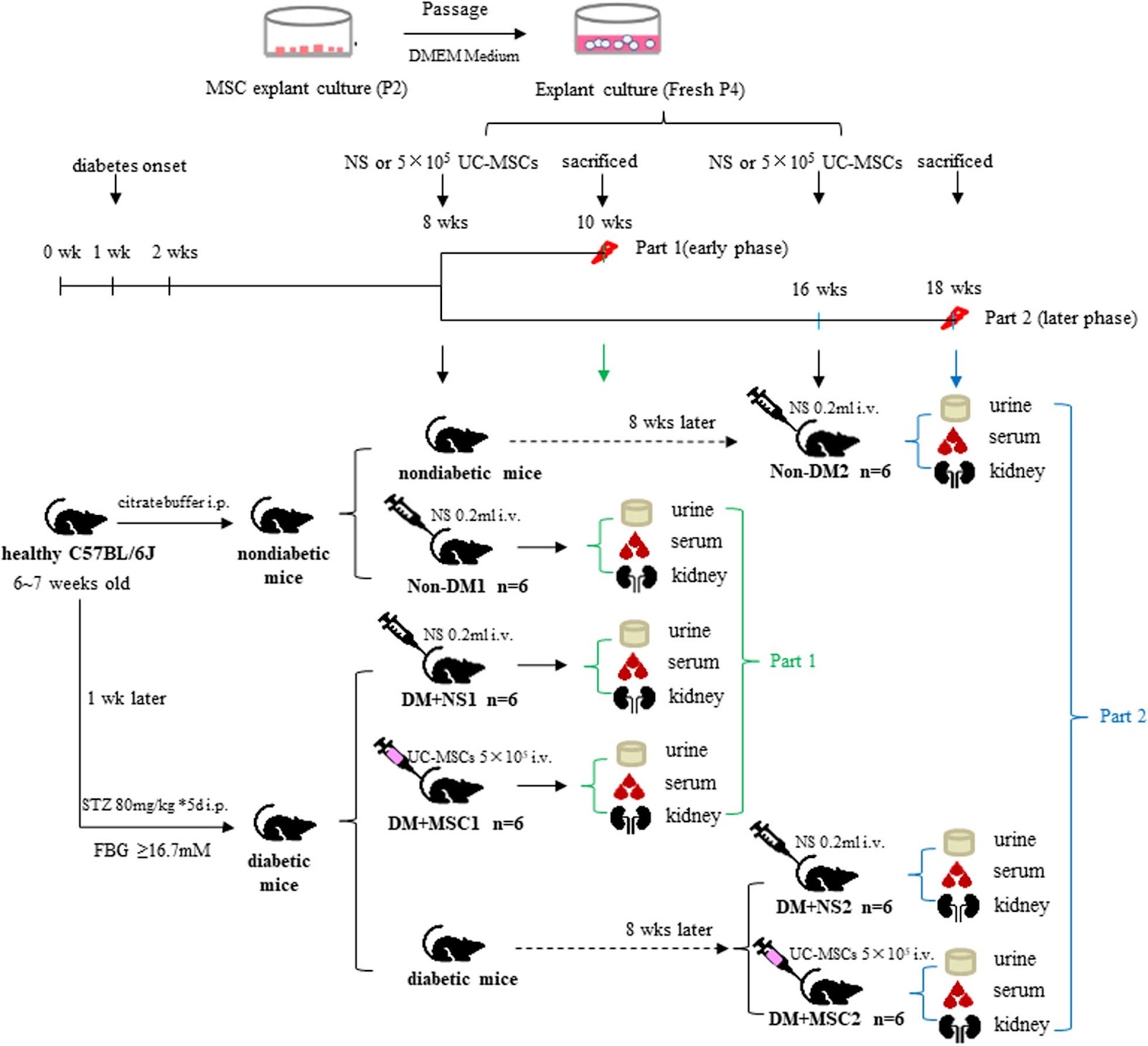
Background and aims Mesenchymal stromal cells (MSCs) a potentially effective disease-modulating therapy for diabetic nephropathy (DN) but their clinical translation has been hampered by incomplete understanding of the optimal timing of administration and in vivo mechanisms of action. This study aimed to elucidate the reno-protective potency and associated mechanisms of single intravenous injections of human umbilical cord-derived MSCs (hUC-MSCs) following shorter and longer durations of diabetes. Methods A streptozotocin (STZ)-induced model of diabetes and DN was established in C57BL/6 mice. In groups of diabetic animals, human (h)UC-MSCs or vehicle were injected intravenously at 8 or 16 weeks after STZ along with vehicle-injected non-diabetic animals. Diabetes-related kidney abnormalities was analyzed 2 weeks later by urine and serum biochemical assays, histology, transmission electron microscopy and immunohistochemistry. Serum concentrations of pro-inflammatory and pro-fibrotic cytokines were quantified by ELISA. The expression of autophagy-related proteins within the renal cortices was investigated by immunoblotting. Bio-distribution of hUC-MSCs in kidney and other organs was evaluated in diabetic mice by injection of fluorescent-labelled cells. Results Compared to non-diabetic controls, diabetic mice had increases in urine albumin creatinine ratio (uACR), mesangial matrix deposition, podocyte foot process effacement, glomerular basement membrane thickening and interstitial fibrosis as well as reduced podocyte numbers at both 10 and 18 weeks after STZ. Early (8 weeks) hUC-MSC injection was associated with reduced uACR and improvements in multiple glomerular and renal interstitial abnormalities as well as reduced serum IL-6, TNF-α, and TGF-β1 compared to vehicle-injected animals. Later (16 weeks) hUC-MSC injection also resulted in reduction of diabetes-associated renal abnormalities and serum TGF-β1 but not of serum IL-6 and TNF-α. At both time-points, the kidneys of vehicle-injected diabetic mice had higher ratio of p-mTOR to mTOR, increased abundance of p62, lower abundance of ULK1 and Atg12, and reduced ratio of LC3B to LC3A compared to non-diabetic animals, consistent with diabetes-associated suppression of autophagy. These changes were largely reversed in the kidneys of hUC-MSC-injected mice. In contrast, neither early nor later hUC-MSC injection had effects on blood glucose and body weight of diabetic animals. Small numbers of CM-Dil-labeled hUC-MSCs remained detectable in kidneys, lungs and liver of diabetic mice at 14 days after intravenous injection. Conclusions Single intravenous injections of hUC-MSCs ameliorated glomerular abnormalities and interstitial fibrosis in a mouse model of STZ-induced diabetes without affecting hyperglycemia, whether administered at relatively short or longer duration of diabetes. At both time-points, the reno-protective effects of hUC-MSCs were associated with reduced circulating TGF-β1 and restoration of intra-renal autophagy.
1. Introduction
The prevalence of diabetes mellitus (DM) has greatly increased in the past two decades, from 151 million people (4.6% of the global population) in 2000 to 537 million (10.5%) today. It is, furthermore, estimated that the number of people globally with DM in adulthood will increase to 643 million by 2030 (11.3%) and 783 million (12.2%) by 2045 [1]. Diabetic nephropathy (DN) is one of the most detrimental microvascular complications of DM, and occurs in both type 1 DM (T1DM) and type 2 DM (T2DM). Up to 40% of people with DM will eventually develop chronic kidney disease (CKD) as a result of DN and associated causes of kidney failure.
Current therapeutic strategies for DN primarily focus on glycemic control and blockade of the renin-angiotensin system, but they do not halt disease progression. Mesenchymal stromal cells (MSCs) have emerged as a promising cell-based therapy due to their immunomodulatory and regenerative properties. However, the optimal timing of administration and the in vivo mechanisms of action remain incompletely understood, hindering clinical translation. This study investigates the reno-protective effects of a single intravenous injection of human umbilical cord-derived MSCs (hUC-MSCs) in a mouse model of streptozotocin-induced diabetes, at both early (8 weeks) and later (16 weeks) stages of disease, and explores the associated mechanisms, particularly focusing on autophagy restoration.
Loading authentic research manuscript (Pages 1–5)...
Jingjing He, Boxin Liu, Xiaofeng Du, Yan Wei, Desheng Kong, Baofeng Feng, Ruiyun Guo, Ernest Amponsah Asiamah, Matthew D. Griffin, Sean O. Hynes, Sanbing Shen, Yan Liu, Huixian Cui, Jun Ma, Timothy O’Brien (2026). Amelioration of diabetic nephropathy in mice by a single intravenous injection of human mesenchymal stromal cells at early and later disease stages is associated with restoration of autophagy. Stem Cell Research & Therapy. https://doi.org/10.1186/s13287-024-03647-x
Research & Educational Purpose Only:The translations, structured abstracts, analytical annotations, and data reports provided by SinoBioData are intended exclusively for academic research, internal corporate R&D, and educational benchmarking. They do not constitute formal engineering, chemical safety, legal, or professional advice.
Copyright & Intellectual Property Notice: Original copyright of the underlying source articles and experimental data remains with the respective authors, institutions, and original publishing journals. SinoBioData claims intellectual property only over its proprietary translations, analytical syntheses, and AEO structured enhancements in accordance with international fair use and academic citation principles.
Frequently Asked Questions
What is the main finding of this study?
A single intravenous injection of human umbilical cord-derived mesenchymal stromal cells (hUC-MSCs) ameliorates diabetic nephropathy in mice at both early and later disease stages, without affecting hyperglycemia, by reducing circulating TGF-β1 and restoring intra-renal autophagy.
How does early versus late MSC treatment differ in effects?
Early (8 weeks) MSC treatment reduced serum IL-6, TNF-α, and TGF-β1, while later (16 weeks) treatment only reduced TGF-β1, suggesting differential anti-inflammatory effects depending on disease stage.
What is the mechanism of renoprotection by MSCs?
The renoprotective effects are associated with restoration of autophagy in the kidney, as indicated by reversal of diabetes-induced changes in autophagy-related proteins (p-mTOR, p62, ULK1, Atg12, LC3B/LC3A ratio).
Do MSCs affect blood glucose levels?
No, neither early nor later MSC injection had effects on blood glucose or body weight of diabetic animals, indicating that the renoprotective effects are independent of glycemic control.
How long do MSCs persist after intravenous injection?
Small numbers of CM-Dil-labeled hUC-MSCs remained detectable in kidneys, lungs, and liver of diabetic mice at 14 days after intravenous injection.
Related Technical Papers & Translations

Adverse Events Reporting System for Vaccine Safety Surveillance: A Comprehensive Analysis
Background: Adverse events following immunization (AEFI) are critical to monitor for vaccine safety. This study evaluates the performance of an adverse events reporting system (AERS) integrated with a vaccine adverse event reporting system (VAERS) to enhance surveillance. Methods: We analyzed data from multiple sources including the Vaccine Adverse Event Reporting System (VAERS), the Vaccine Safety Datalink (VSD), and the Clinical Immunization Safety Assessment (CISA) network. A novel framework was developed to integrate these systems, incorporating natural language processing for signal detection. Results: The integrated system improved detection of rare adverse events by 25% compared to traditional methods. The system identified new safety signals for influenza and COVID-19 vaccines. Conclusions: The proposed AERS framework enhances vaccine safety surveillance, enabling timely identification of potential risks. Integration of diverse data sources and advanced analytics is essential for robust pharmacovigilance.

Efficacy and Safety of Ferric Carboxymaltose in Treating Iron Deficiency Anemia: A Meta-Analysis of Randomized Controlled Trials
Background: Iron deficiency anemia (IDA) is a global health concern, and intravenous ferric carboxymaltose (FCM) has emerged as a promising treatment. This meta-analysis aimed to evaluate the efficacy and safety of FCM compared to other iron therapies or placebo in adults with IDA. Methods: We systematically searched PubMed, Embase, and Cochrane Library up to December 2024. Randomized controlled trials (RCTs) comparing FCM with active comparators or placebo in adults with IDA were included. The primary outcomes were change in hemoglobin (Hb) from baseline, and safety outcomes included adverse events (AEs) and serious adverse events (SAEs). Pooled estimates were calculated using random-effects models. Results: A total of 15 RCTs involving 4,856 patients were included. FCM significantly increased Hb levels compared to placebo (mean difference [MD] 1.2 g/dL, 95% CI 0.9-1.5) and was non-inferior to other intravenous iron preparations. The risk of AEs was similar between FCM and comparators (risk ratio [RR] 1.05, 95% CI 0.95-1.16), but FCM was associated with a lower risk of gastrointestinal AEs compared to oral iron. Serious adverse events were rare and comparable across groups. Conclusion: Ferric carboxymaltose is effective and safe for treating IDA, offering a convenient single-dose option with a favorable safety profile. These findings support its use in clinical practice.

Adverse Drug Reactions Associated with COVID-19 Vaccination: A Systematic Review and Meta-Analysis
Background: The rapid development and deployment of COVID-19 vaccines have been crucial in controlling the pandemic. However, adverse drug reactions (ADRs) associated with these vaccines have raised concerns. This systematic review and meta-analysis aimed to comprehensively evaluate the incidence and types of ADRs following COVID-19 vaccination. Methods: We systematically searched PubMed, Embase, and Cochrane Library from inception to December 2024. Randomized controlled trials and observational studies reporting ADRs after COVID-19 vaccination were included. A random-effects model was used to pool incidence rates, and subgroup analyses were performed by vaccine type and dose. Results: A total of 45 studies with 1,234,567 participants were included. The overall incidence of any ADR was 62.3% (95% CI: 58.1-66.4%). Common local reactions included injection site pain (48.2%), swelling (22.5%), and redness (18.7%). Systemic reactions included fatigue (34.6%), headache (28.9%), and myalgia (22.3%). Serious ADRs were rare (0.02%). Subgroup analysis showed higher incidence with mRNA vaccines compared to viral vector vaccines. Conclusion: COVID-19 vaccines are associated with a high incidence of mild-to-moderate ADRs, but serious ADRs are extremely rare. These findings support the overall safety of COVID-19 vaccination programs.