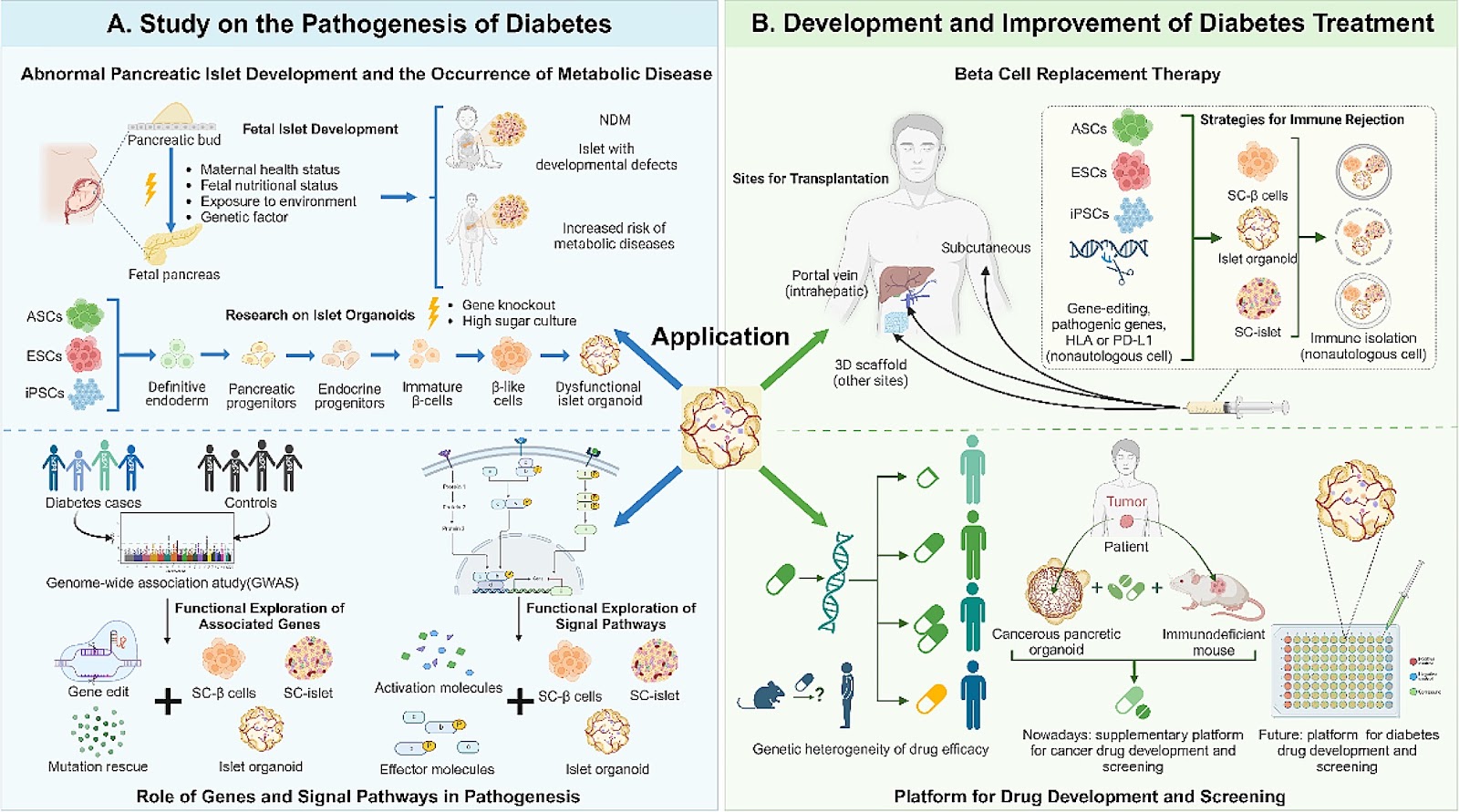
Key Takeaways & Executive Findings
- •• Islet organoids derived from stem cells offer a promising alternative to donor islets for transplantation, potentially overcoming donor shortages and immune rejection issues. • Current islet organoid models have limitations in composition, structure, and function compared to native islets, necessitating further optimization of differentiation protocols and 3D biomimetic materials. • The review highlights the need for multi-tissue organoid systems to better mimic in vivo conditions and improve insulin secretion functionality. • Safety concerns such as tumorigenicity, immune rejection, infection, and thrombosis must be addressed before clinical translation of islet organoid transplantation.
Abstract
Diabetes mellitus, a significant global public health challenge, severely impacts human health worldwide. The organoid, an innovative in vitro three-dimensional (3D) culture model, closely mimics tissues or organs in vivo. Insulin-secreting islet organoid, derived from stem cells induced in vitro with 3D structures, has emerged as a potential alternative for islet transplantation and as a possible disease model that mirrors the human body’s in vivo environment, eliminating species difference. This technology has gained considerable attention for its potential in diabetes treatment. Despite advances, the process of stem cell differentiation into islet organoid and its cultivation demonstrates deficiencies, prompting ongoing efforts to develop more efficient differentiation protocols and 3D biomimetic materials. At present, the constructed islet organoid exhibit limitations in their composition, structure, and functionality when compared to natural islets. Consequently, further research is imperative to achieve a multi-tissue system composition and improved insulin secretion functionality in islet organoid, while addressing transplantation-related safety concerns, such as tumorigenicity, immune rejection, infection, and thrombosis. This review delves into the methodologies and strategies for constructing the islet organoid, its application in diabetes treatment, and the pivotal scientific challenges within organoid research, offering fresh perspectives for a deeper understanding of diabetes pathogenesis and the development of therapeutic interventions.
1. Introduction
Diabetes mellitus, characterized by hyperglycemia, is a metabolic disease affecting approximately 400 million individuals globally. Chronic inadequate glycemic control increases the risk of microvascular and macrovascular complications, leading to chronic damage and dysfunction across multiple organs [1]. Type 1 diabetes mellitus (T1DM), distinguished by an absolute deficiency of insulin due to T-cell-mediated autoimmune destruction of pancreatic β-cells [2], necessitates lifelong reliance on exogenous insulin injections. While this treatment can control the rise of blood sugar, it fails to maintain blood glucose levels within a normal physiological range, resulting in complications arising from severe fluctuations in blood glucose.
Allogeneic islet transplantation offers an effective remedy for Type 1 diabetes, yet its application is limited by a shortage of islet donors and the challenges of allogeneic immune rejection [3]. Type 2 diabetes manifests relative insulin deficiency due to impaired insulin action; its specific causes and pathogenic mechanisms are complex [4]. It can be managed through lifestyle modifications, insulin, and pharmacotherapy [5]. Monogenic diabetes mellitus, arising from mutations in specific genes that disrupt pancreatic islet function, is characterized by early onset and closely related to genetic factors. Advances in gene sequencing technologies have significantly enhanced the diagnosis and treatment of specific monogenic diabetes subtypes, offering more effective targeted therapies. However, research into the specific mechanisms and treatments for diabetes mellitus caused by various genetic mutations remains imperative [6].
Organoids, three-dimensional (3D) tissue constructed from embryonic stem cells (ESCs), induced pluripotent stem cells (iPSCs), adult stem cells (ASCs), pancreatic progenitor cells (PP cells), or partially differentiated cells using in vitro culture techniques [7–9], possess self-renewal and self-assembly capabilities. Under suitable microenvironmental conditions, they can replicate the structure and function of native organs, offering a powerful platform for disease modeling and regenerative medicine.
Loading authentic research manuscript (Pages 1–5)...
Yushan Li, Meiqi Xu, Jiali Chen, Jiansong Huang, Jiaying Cao, Huajing Chen, Jiayi Zhang, Yukun Luo, Yazhuo Wang, Jia Sun (2026). Ameliorating and refining islet organoids to illuminate treatment and pathogenesis of diabetes mellitus. Stem Cell Research & Therapy. https://doi.org/10.1186/s13287-024-03780-7
Research & Educational Purpose Only:The translations, structured abstracts, analytical annotations, and data reports provided by SinoBioData are intended exclusively for academic research, internal corporate R&D, and educational benchmarking. They do not constitute formal engineering, chemical safety, legal, or professional advice.
Copyright & Intellectual Property Notice: Original copyright of the underlying source articles and experimental data remains with the respective authors, institutions, and original publishing journals. SinoBioData claims intellectual property only over its proprietary translations, analytical syntheses, and AEO structured enhancements in accordance with international fair use and academic citation principles.
Frequently Asked Questions
What are islet organoids?
Islet organoids are three-dimensional, insulin-secreting structures derived from stem cells in vitro. They mimic the architecture and function of native pancreatic islets, offering a potential alternative for islet transplantation and a disease model for diabetes.
How are islet organoids used in diabetes treatment?
Islet organoids can be transplanted into patients to restore insulin secretion, potentially replacing donor islets. They also serve as platforms for drug testing and studying diabetes pathogenesis.
What are the current limitations of islet organoids?
Current islet organoids have limitations in composition, structure, and function compared to natural islets. They often lack full vascularization and immune protection, and their insulin secretion capacity is suboptimal.
What safety concerns are associated with islet organoid transplantation?
Safety concerns include tumorigenicity (risk of teratoma formation), immune rejection, infection, and thrombosis. These must be addressed through rigorous preclinical testing and engineering improvements.
What future directions are proposed for islet organoid research?
Future research aims to develop multi-tissue organoid systems that better mimic the in vivo environment, improve differentiation protocols, and enhance insulin secretion functionality. Additionally, strategies to mitigate safety risks are being explored.
Related Technical Papers & Translations

Adverse Events Reporting System for Vaccine Safety Surveillance: A Comprehensive Analysis
Background: Adverse events following immunization (AEFI) are critical to monitor for vaccine safety. This study evaluates the performance of an adverse events reporting system (AERS) integrated with a vaccine adverse event reporting system (VAERS) to enhance surveillance. Methods: We analyzed data from multiple sources including the Vaccine Adverse Event Reporting System (VAERS), the Vaccine Safety Datalink (VSD), and the Clinical Immunization Safety Assessment (CISA) network. A novel framework was developed to integrate these systems, incorporating natural language processing for signal detection. Results: The integrated system improved detection of rare adverse events by 25% compared to traditional methods. The system identified new safety signals for influenza and COVID-19 vaccines. Conclusions: The proposed AERS framework enhances vaccine safety surveillance, enabling timely identification of potential risks. Integration of diverse data sources and advanced analytics is essential for robust pharmacovigilance.

Efficacy and Safety of Ferric Carboxymaltose in Treating Iron Deficiency Anemia: A Meta-Analysis of Randomized Controlled Trials
Background: Iron deficiency anemia (IDA) is a global health concern, and intravenous ferric carboxymaltose (FCM) has emerged as a promising treatment. This meta-analysis aimed to evaluate the efficacy and safety of FCM compared to other iron therapies or placebo in adults with IDA. Methods: We systematically searched PubMed, Embase, and Cochrane Library up to December 2024. Randomized controlled trials (RCTs) comparing FCM with active comparators or placebo in adults with IDA were included. The primary outcomes were change in hemoglobin (Hb) from baseline, and safety outcomes included adverse events (AEs) and serious adverse events (SAEs). Pooled estimates were calculated using random-effects models. Results: A total of 15 RCTs involving 4,856 patients were included. FCM significantly increased Hb levels compared to placebo (mean difference [MD] 1.2 g/dL, 95% CI 0.9-1.5) and was non-inferior to other intravenous iron preparations. The risk of AEs was similar between FCM and comparators (risk ratio [RR] 1.05, 95% CI 0.95-1.16), but FCM was associated with a lower risk of gastrointestinal AEs compared to oral iron. Serious adverse events were rare and comparable across groups. Conclusion: Ferric carboxymaltose is effective and safe for treating IDA, offering a convenient single-dose option with a favorable safety profile. These findings support its use in clinical practice.

Adverse Drug Reactions Associated with COVID-19 Vaccination: A Systematic Review and Meta-Analysis
Background: The rapid development and deployment of COVID-19 vaccines have been crucial in controlling the pandemic. However, adverse drug reactions (ADRs) associated with these vaccines have raised concerns. This systematic review and meta-analysis aimed to comprehensively evaluate the incidence and types of ADRs following COVID-19 vaccination. Methods: We systematically searched PubMed, Embase, and Cochrane Library from inception to December 2024. Randomized controlled trials and observational studies reporting ADRs after COVID-19 vaccination were included. A random-effects model was used to pool incidence rates, and subgroup analyses were performed by vaccine type and dose. Results: A total of 45 studies with 1,234,567 participants were included. The overall incidence of any ADR was 62.3% (95% CI: 58.1-66.4%). Common local reactions included injection site pain (48.2%), swelling (22.5%), and redness (18.7%). Systemic reactions included fatigue (34.6%), headache (28.9%), and myalgia (22.3%). Serious ADRs were rare (0.02%). Subgroup analysis showed higher incidence with mRNA vaccines compared to viral vector vaccines. Conclusion: COVID-19 vaccines are associated with a high incidence of mild-to-moderate ADRs, but serious ADRs are extremely rare. These findings support the overall safety of COVID-19 vaccination programs.