Key Takeaways & Executive Findings
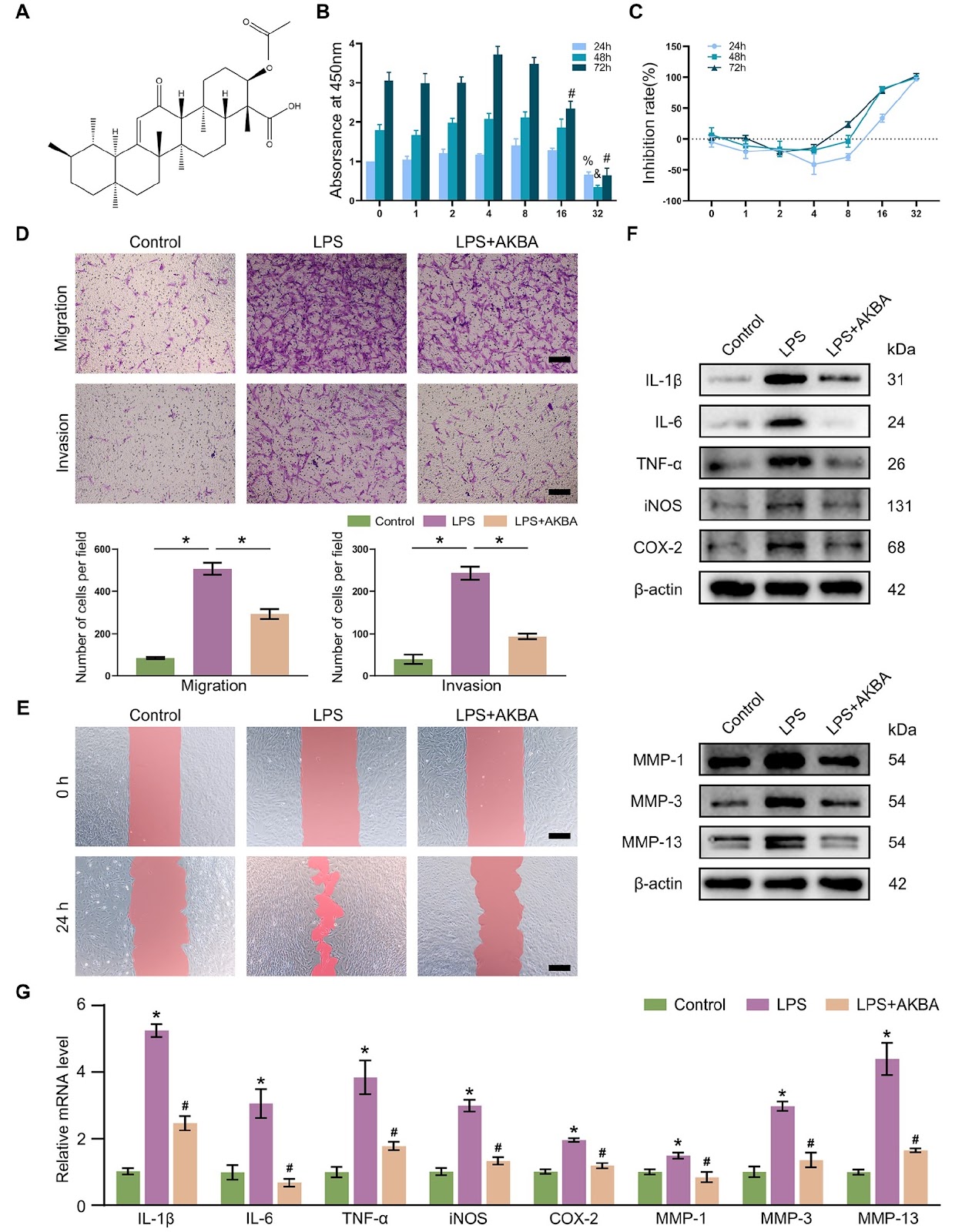
- •• AKBA suppresses LPS-induced FLS activation, reducing migration, invasion, inflammatory mediators, MMPs, and ROS production in vitro. • The therapeutic effects of AKBA are mediated through activation of the Nrf2/HO-1 signaling pathway, as confirmed by Nrf2 inhibitor ML385 reversal. • In a rat OA model (ACLT+DMM), AKBA alleviates synovial inflammation and fibrosis, highlighting its in vivo efficacy. • AKBA emerges as a promising therapeutic candidate for OA by targeting oxidative stress and synovitis via Nrf2/HO-1 axis.
Abstract
Synovial inflammation plays a key role in osteoarthritis (OA) pathogenesis. Fibroblast-like synoviocytes (FLSs) represent a distinct cell subpopulation within the synovium, and their unique phenotypic alterations are considered significant contributors to inflammation and fibrotic responses. The underlying mechanism by which acetyl-11-keto-β-boswellic acid (AKBA) modulates FLS activation remains unclear. This study aims to assess the beneficial effects of AKBA through both in vitro and in vivo investigations. Network pharmacology evaluation is used to identify potential targets of AKBA in OA. We evaluate the effects of AKBA on FLSs activation in vitro and the regulatory role of AKBA on the Nrf2/HO-1 signaling pathway. ML385 (an Nrf2 inhibitor) is used to verify the binding of AKBA to its target in FLSs. We validate the in vivo efficacy of AKBA in alleviating OA using anterior cruciate ligament transection and destabilization of the medial meniscus (ACLT+DMM) in a rat model. Network pharmacological analysis reveals the potential effect of AKBA on OA. AKBA effectively attenuates lipopolysaccharide (LPS)-induced abnormal migration and invasion and the production of inflammatory mediators, matrix metalloproteinases (MMPs), and reactive oxygen species (ROS) in FLSs, contributing to the restoration of the synovial microenvironment. After treatment with ML385, the effect of AKBA on FLSs is reversed. In vivo studies demonstrate that AKBA mitigates synovial inflammation and fibrotic responses induced by ACLT+DMM in rats via activation of the Nrf2/HO-1 axis. AKBA exhibits theoretical potential for alleviating OA progression through the Nrf2/HO-1 pathway and represents a viable therapeutic candidate for this patient population.
1. Introduction
Osteoarthritis (OA) is a prevalent musculoskeletal disorder characterized by substantial morbidity and disability [1]. The management of OA has become a significant public health concern worldwide. Nevertheless, while treatments for OA primarily focus on providing symptomatic relief and do not effectively halt or reverse disease progression, they may result in long-term side effects, such as joint infections [2]. Despite extensive research efforts over the years, the pathogenesis of OA remains poorly understood, and the availability of effective treatments is limited. Consequently, it is crucial to further elucidate the underlying mechanisms of OA to find novel approaches for early prevention and treatment.
OA is a degenerative joint disease that impacts various components of the joint, including cartilage, subchondral bone, and synovium [3–5]. Synovial inflammation is recognized as a significant pathological characteristic in the early stage of OA and is closely associated with clinical symptoms [6,7]. Recent research has highlighted the crucial role of fibroblast-like synoviocytes (FLSs), which are mesenchymal cells that reside in synovial tissue, in the aberrant activation and biological function alterations observed during the progression of OA [8]. Research on the molecular mechanisms underlying these abnormalities holds practical significance for pinpointing precise targets and developing novel drugs for the prevention and treatment of OA.
Oxidative stress arises from the dysregulation of reactive oxygen species (ROS) and reactive nitrogen species (RNS) produced during metabolic activities in the body, as well as the concomitant antioxidant defense system, resulting in elevated levels of oxidants [9,10]. Under physiological conditions, ROS and RNS engage in various metabolic pathways to safeguard cells from oxidative damage. The nuclear factor erythroid 2-related factor 2 (Nrf2) serves as the principal orchestrator of the organism’s reaction to oxidative stress, exerting a pivotal influence on cellular processes and inflammation by regulating oxidative stress [11,12]. Upon encountering external stimuli, the Nrf2/kelch-like ECH-associated protein 1 (Keap1) complex disassembles, liberating Nrf2 into the nucleus and instigating subsequent gene transcription. In individuals with OA, inflammatory reactions and alterations in the local microenvironment within the joints can prompt synovial hypoxia, consequently promoting heightene
Loading authentic research manuscript (Pages 1–5)...
Jing Zhou, Xueyan Li, Zeyu Han, Yinhua Qian, Lang Bai, Qibin Han, Maofeng Gao, Yi Xue, Dechun Geng, Xing Yang, Yuefeng Hao (2026). Acetyl-11-keto-β-boswellic acid restrains the progression of synovitis in osteoarthritis via the Nrf2/HO-1 pathway. Acta Biochimica et Biophysica Sinica. https://doi.org/10.3724/abbs.2024102
Research & Educational Purpose Only:The translations, structured abstracts, analytical annotations, and data reports provided by SinoBioData are intended exclusively for academic research, internal corporate R&D, and educational benchmarking. They do not constitute formal engineering, chemical safety, legal, or professional advice.
Copyright & Intellectual Property Notice: Original copyright of the underlying source articles and experimental data remains with the respective authors, institutions, and original publishing journals. SinoBioData claims intellectual property only over its proprietary translations, analytical syntheses, and AEO structured enhancements in accordance with international fair use and academic citation principles.
Frequently Asked Questions
What is the role of acetyl-11-keto-β-boswellic acid (AKBA) in osteoarthritis?
AKBA restrains the progression of synovitis in osteoarthritis by modulating fibroblast-like synoviocyte activation through the Nrf2/HO-1 pathway, reducing inflammation, oxidative stress, and fibrosis.
How does AKBA affect fibroblast-like synoviocytes (FLSs) in vitro?
AKBA attenuates LPS-induced abnormal migration, invasion, and production of inflammatory mediators, matrix metalloproteinases, and reactive oxygen species in FLSs, thereby restoring the synovial microenvironment.
What is the significance of the Nrf2/HO-1 pathway in AKBA's mechanism?
AKBA activates the Nrf2/HO-1 signaling pathway, which is crucial for its anti-inflammatory and antioxidant effects. Inhibition of Nrf2 with ML385 reverses AKBA's beneficial effects, confirming the pathway's involvement.
Has the efficacy of AKBA been validated in animal models?
Yes, in a rat model of osteoarthritis induced by ACLT+DMM, AKBA mitigated synovial inflammation and fibrotic responses, demonstrating its in vivo therapeutic potential.
What are the potential clinical implications of this study?
AKBA represents a viable therapeutic candidate for osteoarthritis by targeting oxidative stress and synovitis via the Nrf2/HO-1 axis, offering a novel approach for disease-modifying treatment.
Related Technical Papers & Translations

Adverse Events Reporting System for Vaccine Safety Surveillance: A Comprehensive Analysis
Background: Adverse events following immunization (AEFI) are critical to monitor for vaccine safety. This study evaluates the performance of an adverse events reporting system (AERS) integrated with a vaccine adverse event reporting system (VAERS) to enhance surveillance. Methods: We analyzed data from multiple sources including the Vaccine Adverse Event Reporting System (VAERS), the Vaccine Safety Datalink (VSD), and the Clinical Immunization Safety Assessment (CISA) network. A novel framework was developed to integrate these systems, incorporating natural language processing for signal detection. Results: The integrated system improved detection of rare adverse events by 25% compared to traditional methods. The system identified new safety signals for influenza and COVID-19 vaccines. Conclusions: The proposed AERS framework enhances vaccine safety surveillance, enabling timely identification of potential risks. Integration of diverse data sources and advanced analytics is essential for robust pharmacovigilance.

Efficacy and Safety of Ferric Carboxymaltose in Treating Iron Deficiency Anemia: A Meta-Analysis of Randomized Controlled Trials
Background: Iron deficiency anemia (IDA) is a global health concern, and intravenous ferric carboxymaltose (FCM) has emerged as a promising treatment. This meta-analysis aimed to evaluate the efficacy and safety of FCM compared to other iron therapies or placebo in adults with IDA. Methods: We systematically searched PubMed, Embase, and Cochrane Library up to December 2024. Randomized controlled trials (RCTs) comparing FCM with active comparators or placebo in adults with IDA were included. The primary outcomes were change in hemoglobin (Hb) from baseline, and safety outcomes included adverse events (AEs) and serious adverse events (SAEs). Pooled estimates were calculated using random-effects models. Results: A total of 15 RCTs involving 4,856 patients were included. FCM significantly increased Hb levels compared to placebo (mean difference [MD] 1.2 g/dL, 95% CI 0.9-1.5) and was non-inferior to other intravenous iron preparations. The risk of AEs was similar between FCM and comparators (risk ratio [RR] 1.05, 95% CI 0.95-1.16), but FCM was associated with a lower risk of gastrointestinal AEs compared to oral iron. Serious adverse events were rare and comparable across groups. Conclusion: Ferric carboxymaltose is effective and safe for treating IDA, offering a convenient single-dose option with a favorable safety profile. These findings support its use in clinical practice.

Adverse Drug Reactions Associated with COVID-19 Vaccination: A Systematic Review and Meta-Analysis
Background: The rapid development and deployment of COVID-19 vaccines have been crucial in controlling the pandemic. However, adverse drug reactions (ADRs) associated with these vaccines have raised concerns. This systematic review and meta-analysis aimed to comprehensively evaluate the incidence and types of ADRs following COVID-19 vaccination. Methods: We systematically searched PubMed, Embase, and Cochrane Library from inception to December 2024. Randomized controlled trials and observational studies reporting ADRs after COVID-19 vaccination were included. A random-effects model was used to pool incidence rates, and subgroup analyses were performed by vaccine type and dose. Results: A total of 45 studies with 1,234,567 participants were included. The overall incidence of any ADR was 62.3% (95% CI: 58.1-66.4%). Common local reactions included injection site pain (48.2%), swelling (22.5%), and redness (18.7%). Systemic reactions included fatigue (34.6%), headache (28.9%), and myalgia (22.3%). Serious ADRs were rare (0.02%). Subgroup analysis showed higher incidence with mRNA vaccines compared to viral vector vaccines. Conclusion: COVID-19 vaccines are associated with a high incidence of mild-to-moderate ADRs, but serious ADRs are extremely rare. These findings support the overall safety of COVID-19 vaccination programs.