Key Takeaways & Executive Findings
- •• Transcriptomic analysis of transplanted hUC-MSCs in the spinal cord microenvironment identified NLGN3 as a key neuronal cell adhesion molecule promoting SCI repair. • Neuron-specific restoration of Nlgn3 alone in injured spinal cords is sufficient to achieve therapeutic effects comparable to MSC transplantation. • NLGN3 forms a noncanonical complex with synaptic vesicle proteins Sar1a and Hspa8 to modulate synaptic strength and promote neural circuit reconstruction. • Combinatorial restoration of Nlgn3 with Sar1a or Hspa8 synergistically enhances functional recovery after SCI, suggesting a novel therapeutic strategy.
Abstract
Background: While human umbilical cord-derived mesenchymal stem cells (hUC-MSCs) hold great potential for spinal cord injury (SCI) treatment, their intrinsic mechanisms are not fully understood. Given their multipotency, especially their neuronal transdifferentiation potential, we hypothesized that investigating the in situ transcriptional reprogramming of transplanted hUC-MSCs within the spinal cord microenvironment (SCE) could shed light on crucial genes for SCI repair. Methods: DiD-labeled hUC-MSCs were intrathecally transplanted in rats with or without sub-acute spinal cord bilateral hemisection injury and subsequently retrieved for RNA-seq. Comparative analysis of the transcriptomes of hUC-MSCs and functional screenings in vitro and in vivo, including heterologous synapse formation assay, transplantation of MSCs with gene overexpression or knockdown, AAV-mediated neuron-specific gene expression in SCI rats, behavioral tests, and motor evoked potentials (MEPs) were performed to identify the novel target gene Neuroligin 3 (Nlgn3). Immunoprecipitation followed by mass spectrometry (IP-Mass spec), cell aggregation assay, and immuno-electron microscopy were used to reveal the functional interacting partners of Nlgn3. Moreover, RT-qPCR, western blotting, immunofluorescence staining, and co-IP were used to elucidate the underlying mechanism. Results: Using RNA-seq and functional screening, we identified NLGN3 as a neuronal cell adhesion molecule (CAM) activated by the SCE in transplanted hUC-MSCs to promote therapeutic efficacy. Critically, the neuron-specific restoration of Nlgn3 in the injured spinal cord alone was sufficient to achieve a comparable therapeutic effect. Mechanistically, Nlgn3 recruits the synaptic vesicle proteins Sar1a and Hspa8 to modulate synaptic strength. The combinatorial restoration of Nlgn3 with either Sar1a or Hspa8 synergistically enhanced SCI repair, highlighting the functional importance of this noncanonical Nlgn3-Sar1a-Hspa8 axis. Conclusions: This work unveils a novel therapeutic role for Nlgn3 in SCI treatment, demonstrating its ability to both enhance MSC transplantation efficacy and directly promote neural circuit reconstruction. We also propose a combinatorial strategy of targeting the noncanonical Nlgn3-centered complex for SCI repair.
1. Introduction
Spinal cord injury (SCI) typically results in permanent damage to sensorimotor function due to the very limited regeneration potential of neuronal networks in adult mammals. The functional recovery of SCI primarily relies on the appropriate reconstruction of synaptic communications between cortical projection and propriospinal neurons. A synapse is an intercellular complex consisting of apposed pre- and postsynaptic terminals, with a synaptic cleft between them, mediating the transmission of information between two neurons or between a neuron and its target cell. Synaptic cell adhesion molecules (CAMs) play pivotal roles in neuronal communication. They not only bridge adjacent pre- and postsynaptic specializations through homophilic or heterophilic interactions but also mediate trans-synaptic signaling across the synaptic cleft. Despite the extensive description of various trans-synaptic CAMs during development, the key players that facilitate the reestablishment of neuronal circuits after injury are not comprehensively understood.
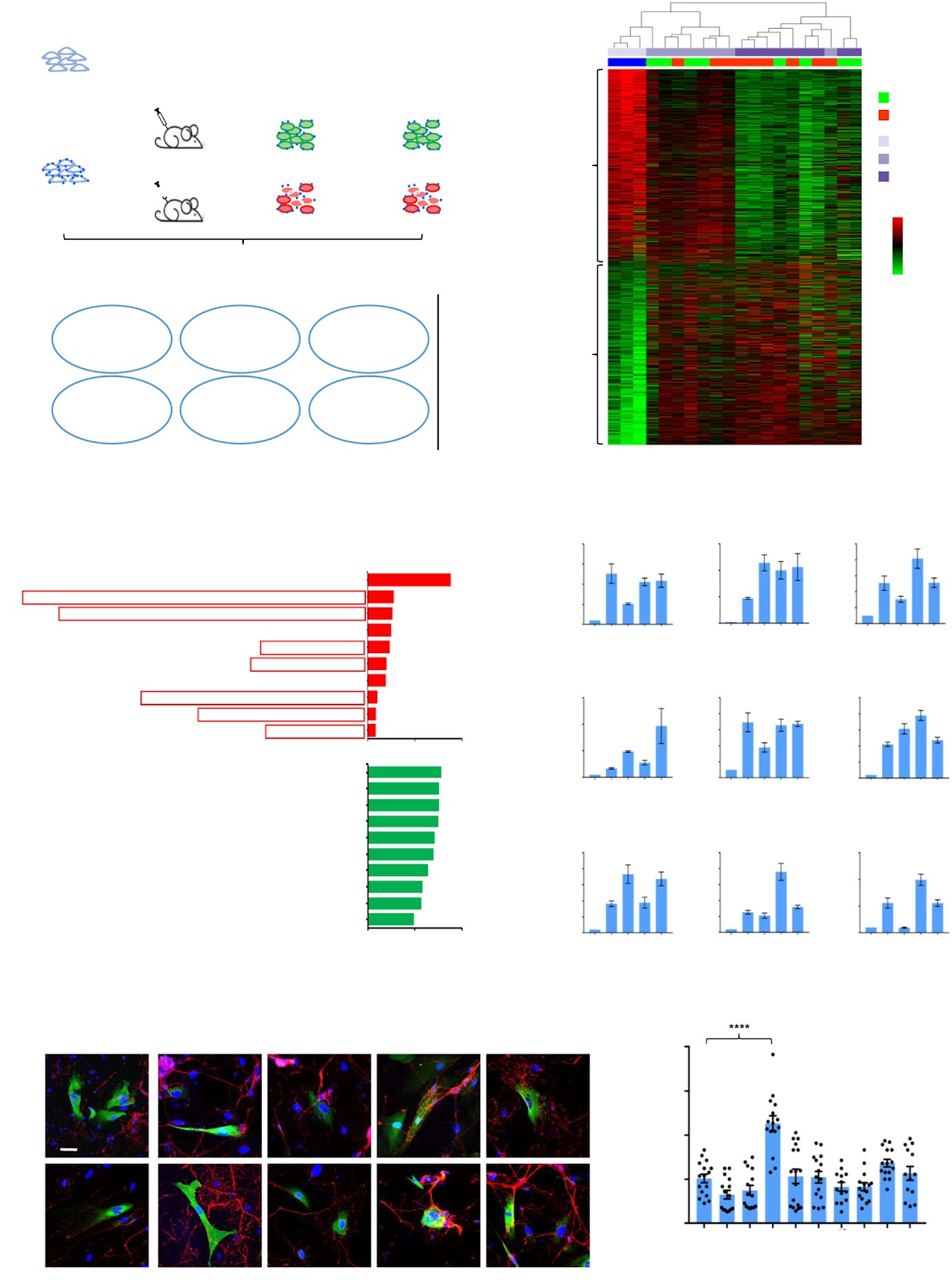
Over the last few decades, a substantial body of evidence has highlighted the considerable potential of stem cell-based regenerative medicine in treating injuries and disorders of the central nervous system (CNS). Human umbilical cord-derived mesenchymal stem cells (hUC-MSCs) are particularly promising for SCI treatment due to their easy accessibility, rapid self-renewal, low immunogenicity, and reduced tumorigenesis risk. The current understanding of MSCs' therapeutic effects underscores their immunomodulatory and paracrine activities, which contribute to neuroprotection, neurogenesis, and angiogenesis. While in vitro studies confirm MSCs' potential for neuronal transdifferentiation under specific conditions, its occurrence within the in vivo spinal cord microenvironment (SCE) and its contribution to functional recovery remain debated. This leads us to critical questions: Can the SCE induce neuronal reprogramming of transplanted MSCs? If so, do these activated neuron-associated genes possess neurorestorative functions? And can even expressing these key genes in injured neurons also promote neural circuit reconstruction? To answer these questions, we performed RNA-seq on hUC-MSCs pre- and post-transplantation in a rat model with or without sub-acute SCI. By doing so, we aimed to identify novel target genes that can promote the remodeling of damaged spinal cord neural connections.
Loading authentic research manuscript (Pages 1–5)...
ZOU Weiwei, CHEN Musheng, CHEN Nan, CHEN Huan, LIANG Hanlin, LU Xiaoyun, XU Sisi, LIU Peilin, WANG Yuan, HU Le, LIU Bin, RONG Limin, LI Mangmang (2026). A Noncanonical Neuroligin 3-Centered Complex Promotes Functional Recovery of Spinal Cord Injury. Stem Cell Research & Therapy. https://doi.org/10.1186/s13287-026-05100-7
Research & Educational Purpose Only:The translations, structured abstracts, analytical annotations, and data reports provided by SinoBioData are intended exclusively for academic research, internal corporate R&D, and educational benchmarking. They do not constitute formal engineering, chemical safety, legal, or professional advice.
Copyright & Intellectual Property Notice: Original copyright of the underlying source articles and experimental data remains with the respective authors, institutions, and original publishing journals. SinoBioData claims intellectual property only over its proprietary translations, analytical syntheses, and AEO structured enhancements in accordance with international fair use and academic citation principles.
Frequently Asked Questions
What is the main finding of this study?
The study identifies NLGN3 as a key neuronal cell adhesion molecule activated in transplanted hUC-MSCs by the spinal cord microenvironment, which promotes functional recovery after SCI. Importantly, neuron-specific restoration of Nlgn3 alone is sufficient to achieve therapeutic effects, and it acts through a noncanonical complex with Sar1a and Hspa8 to modulate synaptic strength.
How was NLGN3 identified?
NLGN3 was identified through RNA-seq analysis of hUC-MSCs retrieved from the spinal cord of rats with or without SCI, followed by functional screenings in vitro and in vivo, including heterologous synapse formation assays and transplantation of MSCs with gene overexpression or knockdown.
What is the mechanism of NLGN3 action?
NLGN3 recruits the synaptic vesicle proteins Sar1a and Hspa8 to modulate synaptic strength, thereby promoting neural circuit reconstruction. This noncanonical Nlgn3-Sar1a-Hspa8 axis is functionally important for SCI repair.
What are the therapeutic implications?
The study suggests that targeting the noncanonical Nlgn3-centered complex could be a novel therapeutic strategy for SCI. Combinatorial restoration of Nlgn3 with either Sar1a or Hspa8 synergistically enhances SCI repair, offering a potential approach to improve outcomes.
What is the significance of this research?
This research provides new insights into the mechanisms of MSC-based therapy for SCI and identifies a novel target (NLGN3) that can be used to directly promote neural circuit reconstruction, potentially leading to more effective treatments for spinal cord injuries.
Related Technical Papers & Translations

Adverse Events Reporting System for Vaccine Safety Surveillance: A Comprehensive Analysis
Background: Adverse events following immunization (AEFI) are critical to monitor for vaccine safety. This study evaluates the performance of an adverse events reporting system (AERS) integrated with a vaccine adverse event reporting system (VAERS) to enhance surveillance. Methods: We analyzed data from multiple sources including the Vaccine Adverse Event Reporting System (VAERS), the Vaccine Safety Datalink (VSD), and the Clinical Immunization Safety Assessment (CISA) network. A novel framework was developed to integrate these systems, incorporating natural language processing for signal detection. Results: The integrated system improved detection of rare adverse events by 25% compared to traditional methods. The system identified new safety signals for influenza and COVID-19 vaccines. Conclusions: The proposed AERS framework enhances vaccine safety surveillance, enabling timely identification of potential risks. Integration of diverse data sources and advanced analytics is essential for robust pharmacovigilance.

Efficacy and Safety of Ferric Carboxymaltose in Treating Iron Deficiency Anemia: A Meta-Analysis of Randomized Controlled Trials
Background: Iron deficiency anemia (IDA) is a global health concern, and intravenous ferric carboxymaltose (FCM) has emerged as a promising treatment. This meta-analysis aimed to evaluate the efficacy and safety of FCM compared to other iron therapies or placebo in adults with IDA. Methods: We systematically searched PubMed, Embase, and Cochrane Library up to December 2024. Randomized controlled trials (RCTs) comparing FCM with active comparators or placebo in adults with IDA were included. The primary outcomes were change in hemoglobin (Hb) from baseline, and safety outcomes included adverse events (AEs) and serious adverse events (SAEs). Pooled estimates were calculated using random-effects models. Results: A total of 15 RCTs involving 4,856 patients were included. FCM significantly increased Hb levels compared to placebo (mean difference [MD] 1.2 g/dL, 95% CI 0.9-1.5) and was non-inferior to other intravenous iron preparations. The risk of AEs was similar between FCM and comparators (risk ratio [RR] 1.05, 95% CI 0.95-1.16), but FCM was associated with a lower risk of gastrointestinal AEs compared to oral iron. Serious adverse events were rare and comparable across groups. Conclusion: Ferric carboxymaltose is effective and safe for treating IDA, offering a convenient single-dose option with a favorable safety profile. These findings support its use in clinical practice.

Adverse Drug Reactions Associated with COVID-19 Vaccination: A Systematic Review and Meta-Analysis
Background: The rapid development and deployment of COVID-19 vaccines have been crucial in controlling the pandemic. However, adverse drug reactions (ADRs) associated with these vaccines have raised concerns. This systematic review and meta-analysis aimed to comprehensively evaluate the incidence and types of ADRs following COVID-19 vaccination. Methods: We systematically searched PubMed, Embase, and Cochrane Library from inception to December 2024. Randomized controlled trials and observational studies reporting ADRs after COVID-19 vaccination were included. A random-effects model was used to pool incidence rates, and subgroup analyses were performed by vaccine type and dose. Results: A total of 45 studies with 1,234,567 participants were included. The overall incidence of any ADR was 62.3% (95% CI: 58.1-66.4%). Common local reactions included injection site pain (48.2%), swelling (22.5%), and redness (18.7%). Systemic reactions included fatigue (34.6%), headache (28.9%), and myalgia (22.3%). Serious ADRs were rare (0.02%). Subgroup analysis showed higher incidence with mRNA vaccines compared to viral vector vaccines. Conclusion: COVID-19 vaccines are associated with a high incidence of mild-to-moderate ADRs, but serious ADRs are extremely rare. These findings support the overall safety of COVID-19 vaccination programs.