Key Takeaways & Executive Findings
- •• MSCs demonstrate significant potential for treating diabetes mellitus, with high safety and efficacy. • Autologous MSCs offer better clinical outcomes than allogenic sources, and BMMSCs are more effective than other MSC types. • MSCs show superior therapeutic benefits compared to monocytes, with notable improvements in glycemic control and complications. • The meta-analysis highlights the importance of MSC source and delivery route in optimizing diabetes treatment outcomes.
Abstract
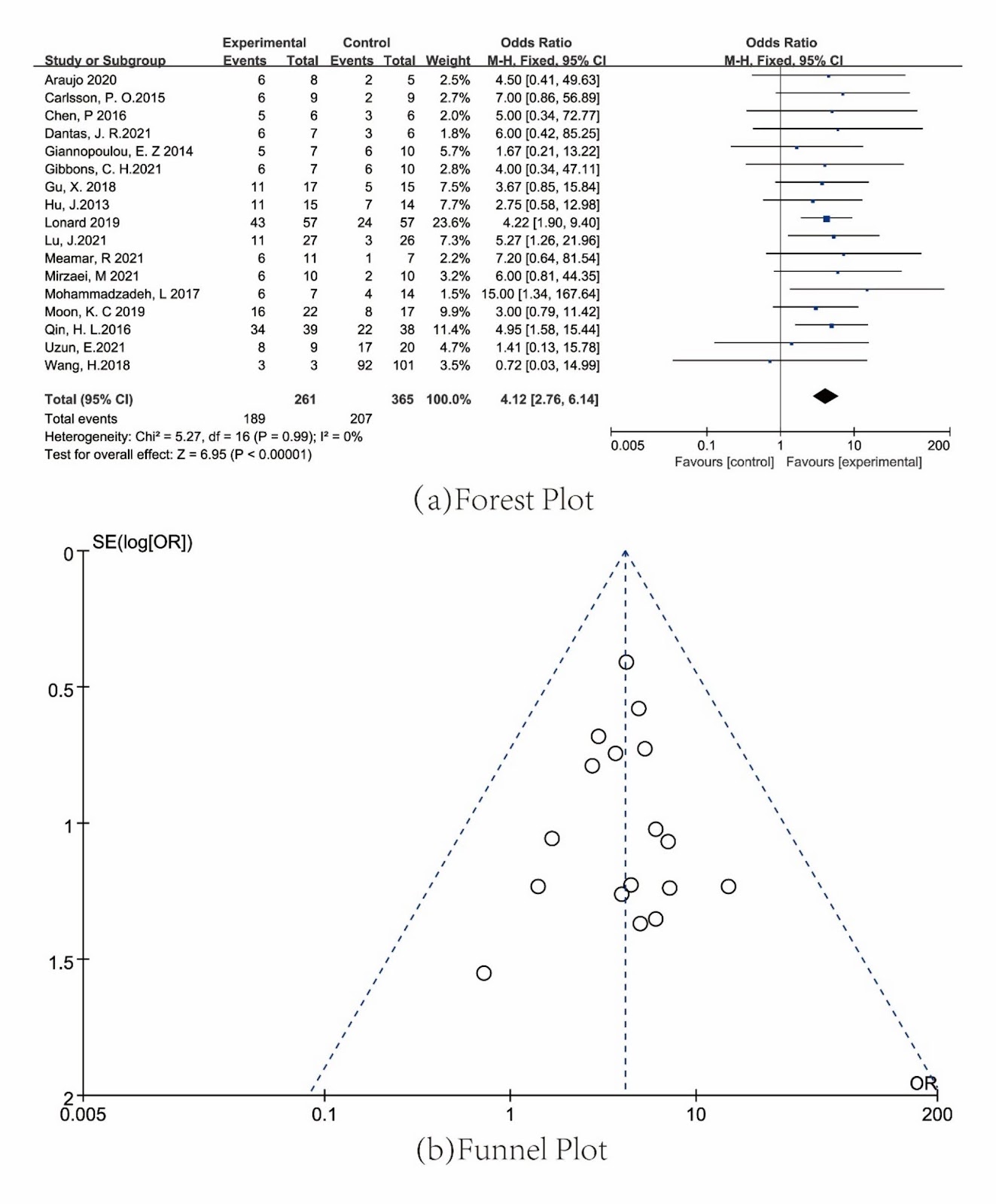
Objective Diabetes mellitus (DM) is a grave autoimmune disorder because of no insulin self-generation. Currently, mainly clinical methods exist, serious adverse effects leading to stem cell therapy are considered. The mesenchymal stem cells (MSCs), require high differentiation capacity and are judged as crucial in DM treatment. The meta-analysis aimed to systemically analyze the particular types of MSCs which play a more important role in DM and which DM is treated more effectively. Method A systematic review was conducted on the published literature, clinical trials and observational studies, utilizing databases such as PubMed, Embase, Cochrane and clinicaltrial.gov. RevMan software was adopted to draw Forest Plot and Funnel Plot, and subgroup analysis were employed to evaluate heterogeneity between different groups. Results We identified the meta-analyses of 34 unique random controlled trials and divided our own systematic reviews into 8 groups. The MSCs were associated with placebo (OR=2.79, 95% CI [1.63, 4.75]), Standard Clinical Treatment (SCT) (OR=4.12, 95% CI [2.76, 6.14]), and monocyte (OR=6.52, 95% CI [3.56, 9.48]). The comparison between Autologous MSCs and Allogenic MSCs (OR=4.64, 95% CI [3.42, 6.31]), Autologous BMMSCs and other MSCs (OR=5.28, 95% CI [3.64, 7.66]), Allogenic ASCs and UCMSCs (OR=3.54, 95% CI [1.83, 6.86]), Type I DM and Type II DM (OR=3.10, 95% CI [1.79, 5.38]), intravenous injection and other injections (OR=4.81, 95% CI [3.34, 6.94]), diabetic foot ulcers and diabetic neurological disease (OR=3.88,,95% CI [2.53,5.95]). Conclusion Current evidence suggests that MSCs hold significant potential for treating DM, demonstrating considerably high safety and efficacy. MSCs exhibit higher therapeutic benefits compared to monocytes, with autologous MSCs offering better clinical outcomes than allogenic sources. MSCs (BMMSCs) proved more effective than other types of MSCs. However, no significant differences were observed between adipose-derived MSCs (ASCs)
1. Introduction
Diabetes mellitus (DM) is a rapidly increasing chronic immunometabolism disorder and tends to occur in all ages [1]. It is classified into Type I DM and Type II DM, both of which share similar symptoms such as thirst, blurred retina, and increased urine [2], resulting from serious complications such as hyperglycemia, polyuria, diabetic wounds and retinal damage [3], which significantly impact public health. In 2021, over 540 million people worldwide are suffering from DM, with the predicted number of patients over 640 million by 2031 [4].
The underlying mechanisms of Type I and Type II DM are different. Type I DM is an autoimmune disease characterized that β cells are attacked by the immune system, leading to insufficient insulin production and hyperglycemia and emaciation [5]. In contrast, Type II DM is due to insulin resistance, which impairs glucose transportation into cells in the presence of high level of insulin [6]. This condition is the most prevalent form of diabetes, detrimentally affecting adolescents and individuals with obesity in a significant portion of the population [7]. It is considered the disorder of glucose regulation and the cause of significant damage to multiple organs and systems [8].
While the pathogenesis of DM is complex and multifactorial, several common mechanisms have been identified. Firstly, hyperglycemia damages pancreatic function by preventing it from producing insulin to counteract the elevated blood glucose levels [9]. Secondly, hyperglycemia can induce DNA damage in pancreatic cells, thereby increasing the risk of pancreatic cancer. Furthermore, inflammatory factors such as interferon-gamma (IFN-γ) and tumor necrosis factor-alpha (TNF-α) are identified to activate mitochondria that trigger autophagy, leading to an increase in reactive oxygen species (ROS) and elevated blood glucose [10]. It’s evident that there is a well-established correlation between adipocyte function and inflammatory factors, which oxidative stress and mitochondrial dysfunction are key contributors to inflammation [11].
Loading authentic research manuscript (Pages 1–5)...
Hanluo Li, Cheng Chen, Yuansheng Wang, Wei Yi, Peipei Guo, Chenguang Yao, Jinbiao Liu, Yanhong Wei, Kanghong Hu, Xiaoke Shang, Sini Kang (2026). A meta-analysis on application and prospect of cell therapy in the treatment of diabetes mellitus. Stem Cell Research & Therapy. https://doi.org/10.1186/s13287-025-04377-4
Research & Educational Purpose Only:The translations, structured abstracts, analytical annotations, and data reports provided by SinoBioData are intended exclusively for academic research, internal corporate R&D, and educational benchmarking. They do not constitute formal engineering, chemical safety, legal, or professional advice.
Copyright & Intellectual Property Notice: Original copyright of the underlying source articles and experimental data remains with the respective authors, institutions, and original publishing journals. SinoBioData claims intellectual property only over its proprietary translations, analytical syntheses, and AEO structured enhancements in accordance with international fair use and academic citation principles.
Frequently Asked Questions
What is the main objective of this meta-analysis?
The main objective is to systematically analyze the particular types of mesenchymal stem cells (MSCs) that play a more important role in treating diabetes mellitus and to determine which type of diabetes is treated more effectively.
What are the key findings regarding MSC sources?
The meta-analysis found that autologous MSCs offer better clinical outcomes than allogenic sources, and bone marrow-derived MSCs (BMMSCs) proved more effective than other types of MSCs.
How does MSC therapy compare to standard treatments?
MSC therapy showed significantly higher odds ratios compared to placebo, standard clinical treatment, and monocytes, indicating superior therapeutic benefits in managing diabetes.
What is the significance of the route of administration?
The study found that intravenous injection was associated with better outcomes compared to other injection routes, with an odds ratio of 4.81 (95% CI [3.34, 6.94]).
Are there any limitations or differences between Type I and Type II diabetes?
The meta-analysis reported a significant difference in treatment outcomes between Type I and Type II DM (OR=3.10, 95% CI [1.79, 5.38]), suggesting that MSC therapy may be more effective for one type, but further research is needed to clarify the underlying reasons.
Related Technical Papers & Translations

Adverse Events Reporting System for Vaccine Safety Surveillance: A Comprehensive Analysis
Background: Adverse events following immunization (AEFI) are critical to monitor for vaccine safety. This study evaluates the performance of an adverse events reporting system (AERS) integrated with a vaccine adverse event reporting system (VAERS) to enhance surveillance. Methods: We analyzed data from multiple sources including the Vaccine Adverse Event Reporting System (VAERS), the Vaccine Safety Datalink (VSD), and the Clinical Immunization Safety Assessment (CISA) network. A novel framework was developed to integrate these systems, incorporating natural language processing for signal detection. Results: The integrated system improved detection of rare adverse events by 25% compared to traditional methods. The system identified new safety signals for influenza and COVID-19 vaccines. Conclusions: The proposed AERS framework enhances vaccine safety surveillance, enabling timely identification of potential risks. Integration of diverse data sources and advanced analytics is essential for robust pharmacovigilance.

Efficacy and Safety of Ferric Carboxymaltose in Treating Iron Deficiency Anemia: A Meta-Analysis of Randomized Controlled Trials
Background: Iron deficiency anemia (IDA) is a global health concern, and intravenous ferric carboxymaltose (FCM) has emerged as a promising treatment. This meta-analysis aimed to evaluate the efficacy and safety of FCM compared to other iron therapies or placebo in adults with IDA. Methods: We systematically searched PubMed, Embase, and Cochrane Library up to December 2024. Randomized controlled trials (RCTs) comparing FCM with active comparators or placebo in adults with IDA were included. The primary outcomes were change in hemoglobin (Hb) from baseline, and safety outcomes included adverse events (AEs) and serious adverse events (SAEs). Pooled estimates were calculated using random-effects models. Results: A total of 15 RCTs involving 4,856 patients were included. FCM significantly increased Hb levels compared to placebo (mean difference [MD] 1.2 g/dL, 95% CI 0.9-1.5) and was non-inferior to other intravenous iron preparations. The risk of AEs was similar between FCM and comparators (risk ratio [RR] 1.05, 95% CI 0.95-1.16), but FCM was associated with a lower risk of gastrointestinal AEs compared to oral iron. Serious adverse events were rare and comparable across groups. Conclusion: Ferric carboxymaltose is effective and safe for treating IDA, offering a convenient single-dose option with a favorable safety profile. These findings support its use in clinical practice.

Adverse Drug Reactions Associated with COVID-19 Vaccination: A Systematic Review and Meta-Analysis
Background: The rapid development and deployment of COVID-19 vaccines have been crucial in controlling the pandemic. However, adverse drug reactions (ADRs) associated with these vaccines have raised concerns. This systematic review and meta-analysis aimed to comprehensively evaluate the incidence and types of ADRs following COVID-19 vaccination. Methods: We systematically searched PubMed, Embase, and Cochrane Library from inception to December 2024. Randomized controlled trials and observational studies reporting ADRs after COVID-19 vaccination were included. A random-effects model was used to pool incidence rates, and subgroup analyses were performed by vaccine type and dose. Results: A total of 45 studies with 1,234,567 participants were included. The overall incidence of any ADR was 62.3% (95% CI: 58.1-66.4%). Common local reactions included injection site pain (48.2%), swelling (22.5%), and redness (18.7%). Systemic reactions included fatigue (34.6%), headache (28.9%), and myalgia (22.3%). Serious ADRs were rare (0.02%). Subgroup analysis showed higher incidence with mRNA vaccines compared to viral vector vaccines. Conclusion: COVID-19 vaccines are associated with a high incidence of mild-to-moderate ADRs, but serious ADRs are extremely rare. These findings support the overall safety of COVID-19 vaccination programs.