Emerging roles of the long non-coding RNAs MALAT1 and TUG1 during differentiation of adipose tissue-derived mesenchymal stem cells towards insulin-producing cells
Authors: Eman F. Sanad, Alaa Ahmed Saad, Joy Rafeek, Rana Mokbel, Mayar Abdallah, Nadeen Emad, Hagar Adel Mohamed, Yasmin Alaa, Yumna Medhat Mahmoud, Dina H. Kassem
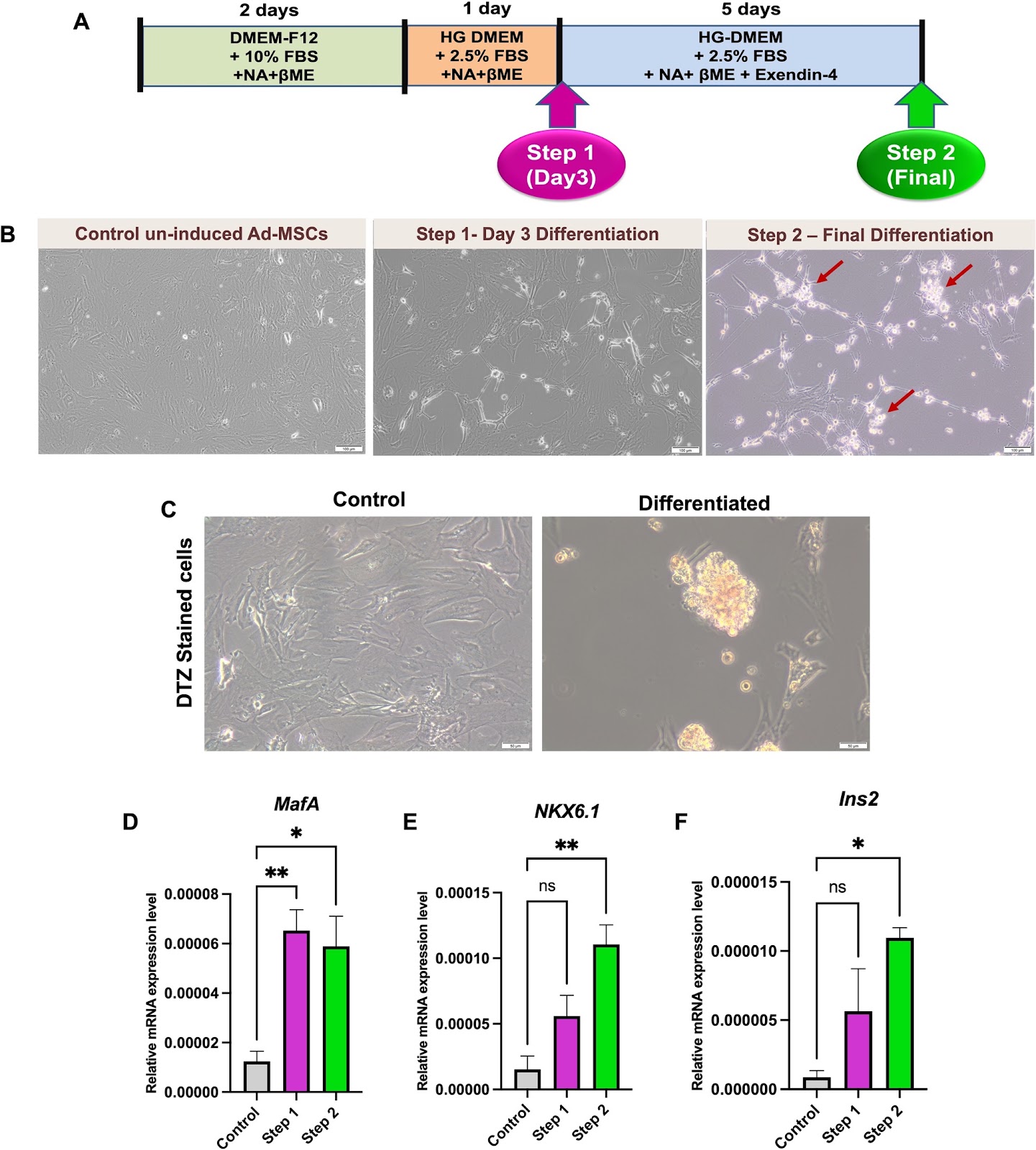
Background: Generation of insulin-producing cells (IPCs) from stem cells provides great hope for patients with diabetes mellitus (DM). Long non-coding RNAs (lncRNAs) ignited much interest regarding their role in determining the fate of stem cells. The lncRNAs MALAT1 and TUG1 have been reported to be interrelated with β-cell dysfunction and/or DM. However, their role during generation of IPCs from stem cells has not been adequately studied. Thus, the current study aimed to investigate the role of MALAT1 and TUG1 during differentiation of adipose tissue-derived mesenchymal stem cells (Ad-MSCs) towards IPCs. Methods: Ad-MSCs were isolated from rat epididymal fat pads, characterized and induced to differentiate towards IPCs. Assessment of differentiation was done by measuring expression levels of various β-cell-related markers using RT-qPCR, as well as morphological changes, and dithizone staining. Expression levels of MALAT1 and TUG1 were also measured by RT-qPCR. Several in-silico analyses were done using RNA–protein Association and Interaction Networks (RAIN) database. Results: MALAT1 and TUG1 expression levels were significantly increased during differentiation of Ad-MSCs into IPCs as compared to control uninduced cells. Furthermore, generated networks from RAIN database revealed an interplay between MALAT1 and TUG1, and between each of them with several common targets like GAS5, HOTAIR and TP53COR1. Conclusions: The current study portrays MALAT1 and TUG1 as novel interrelated molecular mediators and important regulatory nodes enhancing differentiation of Ad-MSCs towards IPCs. Their upregulation during differentiation can be interrelated with competitive endogenous RNA (ceRNA) networks, mediating various epigenetic modifications, orchestrating signaling pathways and overcoming cellular stress during reprogramming/differentiation.