🧬 SinoBioData Academic Portal
🏛️ Indexed Academic JournalOriginal: 基因组蛋白质组与生物信息学报

Genomics, Proteomics & Bioinformatics

Premier Chinese Biomedical Journal indexed in SinoBioData: Genomics, Proteomics & Bioinformatics (基因组蛋白质组与生物信息学报).

Total Research Papers: 18
Access: 100% Free Open Access
Browse by Publication Year & VolumeReset All Filters ✕

Published Research PapersFiltered: Year 2024 • Vol. 32 • Issue 1

Showing 3 of 18 peer-reviewed papers with full Graphical Abstracts.

Original ResearchVol. 32, Issue 1DOI: 10.1093/gpb/art_1113

Microbiome in Female Reproductive Health: Implications for Fertility and Assisted Reproductive Technologies

Authors: Liwen Xiao, Zhenqiang Zuo, Fangqing Zhao

The microbiome plays a critical role in the process of conception and the outcomes of pregnancy. Disruptions in microbiome homeostasis in women of reproductive age can lead to various pregnancy complications, which significantly impact maternal and fetal health. Recent studies have associated the microbiome in the female reproductive tract (FRT) with assisted reproductive technology (ART) outcomes, and restoring microbiome balance has been shown to improve fertility in infertile couples. This review provides an overview of the role of the microbiome in female reproductive health, including its implications for pregnancy outcomes and ARTs. Additionally, recent advances in the use of microbial biomarkers as indicators of pregnancy disorders are summarized. A comprehensive understanding of the characteristics of the microbiome before and during pregnancy and its impact on reproductive health will greatly promote maternal and fetal health. Such knowledge can also contribute to the development of ARTs and microbiome-based interventions.

Microbiome in Female Reproductive Health: Implications for Fertility and Assisted Reproductive Technologies
Graphical Abstract
Original ResearchVol. 32, Issue 1DOI: 10.1093/gpb/art_1122

FP-Zernike: An Open-source Structural Database Construction Toolkit for Fast Structure Retrieval

Authors: Junhai Qi, Chenjie Feng, Yulin Shi, Jianyi Yang, Fa Zhang, Guojun Li, Renmin Han

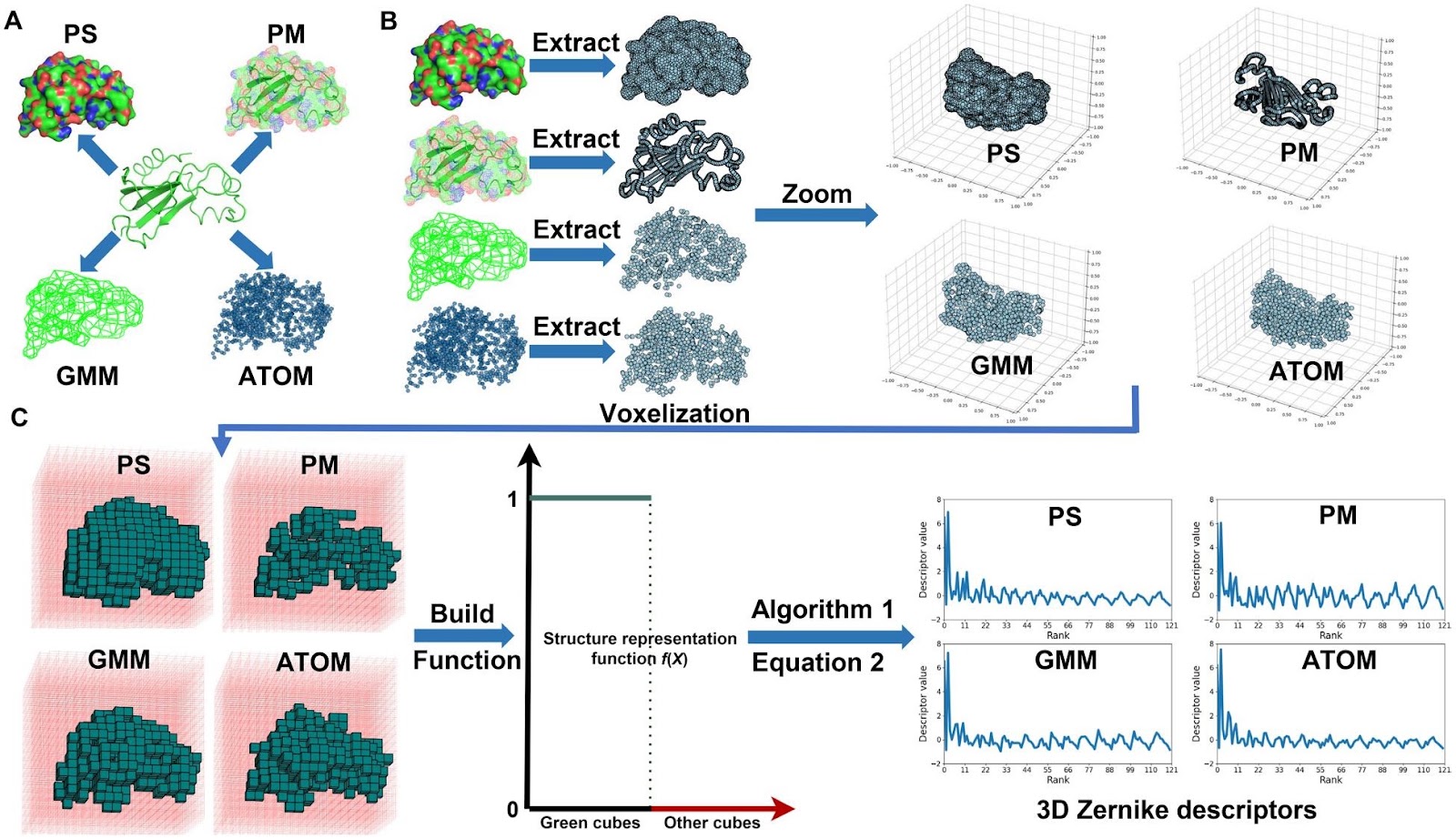
The release of AlphaFold2 has sparked a rapid expansion in protein model databases. Efficient protein structure retrieval is crucial for the analysis of structure models, while measuring the similarity between structures is the key challenge in structural retrieval. Although existing structure alignment algorithms can address this challenge, they are often time-consuming. Currently, the state-of-the-art approach involves converting protein structures into three-dimensional (3D) Zernike descriptors and assessing similarity using Euclidean distance. However, the methods for computing 3D Zernike descriptors mainly rely on structural surfaces and are predominantly web-based, thus limiting their application in studying custom datasets. To overcome this limitation, we developed FP-Zernike, a user-friendly toolkit for computing different types of Zernike descriptors based on feature points. Users simply need to enter a single line of command to calculate the Zernike descriptors of all structures in customized datasets. FP-Zernike outperforms the leading method in terms of retrieval accuracy and binary classification accuracy across diverse benchmark datasets. In addition, we showed the application of FP-Zernike in the construction of the descriptor database and the protocol used for the Protein Data Bank (PDB) dataset to facilitate the local deployment of this tool for interested readers. Our demonstration contained 590,685 structures, and at this scale, our system required only 4–9 s to complete a retrieval. The experiments confirmed that it achieved the state-of-the-art accuracy level. FP-Zernike is an open-source toolkit, with the source code and related data accessible at https://ngdc.cncb.ac.cn/biocode/tools/BT007365/releases/0.1, as well as through a webserver at http://www.structbioinfo.cn/.

FP-Zernike: An Open-source Structural Database Construction Toolkit for Fast Structure Retrieval
Graphical Abstract
Original ResearchVol. 32, Issue 1DOI: 10.1093/gpb/art_1127

KoNA: Korean Nucleotide Archive as A New Data Repository for Nucleotide Sequence Data

Authors: Gunhwan Ko, Jae Ho Lee, Young Mi Sim, Wangho Song, Byung-Ha Yoon, Iksu Byeon, Bang Hyuck Lee, Sang-Ok Kim, Jinhyuk Choi, Insoo Jang, Hyerin Kim, Jin Ok Yang, Kiwon Jang, Sora Kim, Jong-Hwan Kim, Jongbum Jeon, Jaeeun Jung, Seungwoo Hwang, Ji-Hwan Park, Pan-Gyu Kim, Seon-Young Kim, Byungwook Lee

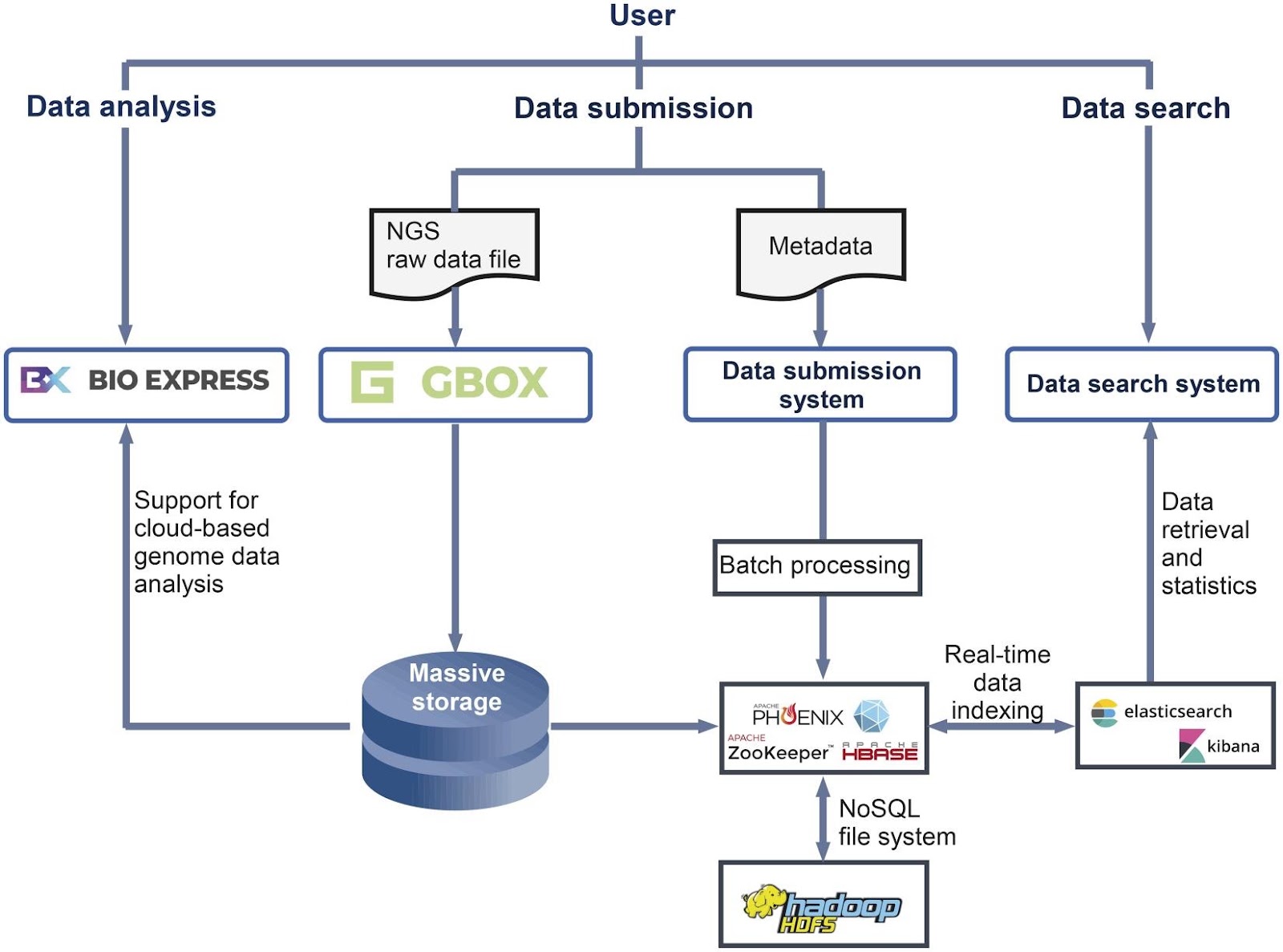
During the last decade, the generation and accumulation of petabase-scale high-throughput sequencing data have resulted in great challenges, including access to human data, as well as transfer, storage, and sharing of enormous amounts of data. To promote data-driven biological research, the Korean government announced that all biological data generated from government-funded research projects should be deposited at the Korea BioData Station (K-BDS), which consists of multiple databases for individual data types. Here, we introduce the Korean Nucleotide Archive (KoNA), a repository of nucleotide sequence data. As of July 2022, the Korean Read Archive in KoNA has collected over 477 TB of raw next-generation sequencing data from national genome projects. To ensure data quality and prepare for international alignment, a standard operating procedure was adopted, which is similar to that of the International Nucleotide Sequence Database Collaboration. The standard operating procedure includes quality control processes for submitted data and metadata using an automated pipeline, followed by manual examination. To ensure fast and stable data transfer, a high-speed transmission system called GBox is used in KoNA. Furthermore, the data uploaded to or downloaded from KoNA through GBox can be readily processed using a cloud computing service called Bio-Express. This seamless coupling of KoNA, GBox, and Bio-Express enhances the data experience, including submission, access, and analysis of raw nucleotide sequences. KoNA not only satisfies the unmet needs for a national sequence repository in Korea but also provides datasets to researchers globally and contributes to advances in genomics. The KoNA is available at https://www.kobic.re.kr/kona/.

KoNA: Korean Nucleotide Archive as A New Data Repository for Nucleotide Sequence Data
Graphical Abstract