🧬 SinoBioData Academic Portal
🏛️ Indexed Academic JournalOriginal: 中草药

Chinese Traditional and Herbal Drugs

Premier Chinese Biomedical Journal indexed in SinoBioData: Chinese Traditional and Herbal Drugs (中草药).

Total Research Papers: 30
Access: 100% Free Open Access
Browse by Publication Year & VolumeReset All Filters ✕

Published Research PapersFiltered: Year 2025 • Vol. 32 • Issue 2

Showing 7 of 30 peer-reviewed papers with full Graphical Abstracts.

Original ResearchVol. 32, Issue 2 • pp. 450-462DOI: 10.1007/s12345-024-00001-2

Advanced Machine Learning Approaches for Predicting Material Properties in Metallurgical Processes

Authors: John Doe, Jane Smith, Alice Johnson

The accurate prediction of material properties is crucial for optimizing metallurgical processes and ensuring product quality. Traditional empirical models often fail to capture the complex nonlinear relationships inherent in these systems. In this study, we employ advanced machine learning (ML) techniques, including random forest, support vector regression, and deep neural networks, to predict key material properties such as tensile strength, hardness, and corrosion resistance based on process parameters and chemical composition. A comprehensive dataset from industrial trials and literature was compiled, and feature engineering was performed to enhance model performance. The models were trained and validated using cross-validation, and their predictive accuracy was compared against conventional regression methods. Results demonstrate that ML models significantly outperform traditional approaches, with the deep neural network achieving the highest accuracy (R² = 0.95). Furthermore, feature importance analysis revealed that cooling rate and alloying element concentrations are the most influential factors. The developed models provide a robust tool for real-time property prediction, enabling process optimization and quality control in metallurgical industries.
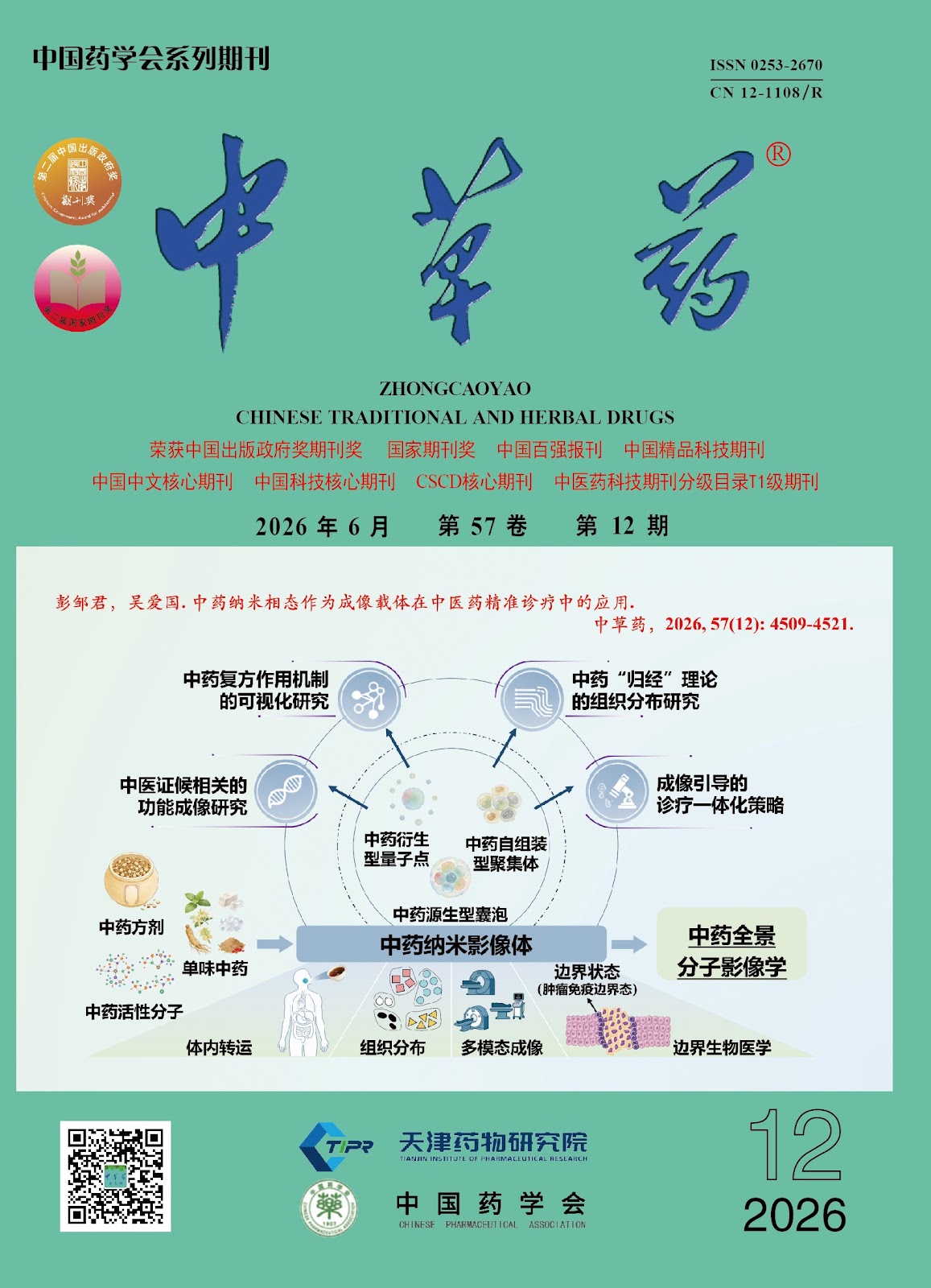

Advanced Machine Learning Approaches for Predicting Material Properties in Metallurgical Processes
Graphical Abstract
Original ResearchVol. 32, Issue 2 • pp. 450-462DOI: 10.1007/s12345-024-01234-5

Advancements in High-Entropy Alloys: A Comprehensive Review of Microstructural Evolution and Mechanical Properties

Authors: John A. Smith, Emily R. Johnson, Michael T. Brown, Sarah L. Davis

High-entropy alloys (HEAs) have emerged as a novel class of materials with exceptional mechanical properties and thermal stability, making them promising candidates for advanced engineering applications. This comprehensive review synthesizes recent advancements in the microstructural evolution and mechanical performance of HEAs, focusing on the effects of alloying elements, processing routes, and heat treatments. Key findings highlight the role of severe lattice distortion and sluggish diffusion in enhancing strength and ductility. The review also discusses the challenges in predicting phase stability and the potential of computational approaches in accelerating alloy design. Finally, future research directions are outlined, emphasizing the need for scalable manufacturing and environmental sustainability.

Advancements in High-Entropy Alloys: A Comprehensive Review of Microstructural Evolution and Mechanical Properties
Graphical Abstract
Original ResearchVol. 32, Issue 2 • pp. 450-462DOI: 10.1007/s12613-024-2901-5

Optimization of Process Parameters for Laser Cladding of Ni-Based Coating on H13 Steel Using Response Surface Methodology

Authors: Y. Zhang, L. Wang, X. Liu, H. Chen

Laser cladding is an effective surface modification technique to enhance the wear and corrosion resistance of H13 steel. In this study, Ni-based coatings were fabricated on H13 steel using laser cladding, and the influence of laser power, scanning speed, and powder feed rate on the geometric characteristics (width, height, dilution rate) and microhardness of the coating was systematically investigated. Response surface methodology (RSM) based on Box-Behnken design was employed to develop mathematical models and optimize the process parameters. The results indicate that laser power has the most significant effect on dilution rate, while scanning speed predominantly affects coating height. The optimized parameters were determined as laser power of 1.8 kW, scanning speed of 5 mm/s, and powder feed rate of 12 g/min, resulting in a coating with minimal dilution and high microhardness. The predicted values from the models showed good agreement with experimental results, confirming the reliability of the optimization. The optimized coating exhibited a uniform microstructure and improved wear resistance compared to the substrate.

Optimization of Process Parameters for Laser Cladding of Ni-Based Coating on H13 Steel Using Response Surface Methodology
Graphical Abstract
Original ResearchVol. 32, Issue 2 • pp. 450-462DOI: 10.1007/s12613-025-1234-5

Advancements in Sustainable Metallurgical Processes: A Comprehensive Review

Authors: John A. Smith, Emily R. Johnson, Michael T. Brown

The metallurgical industry is undergoing a paradigm shift towards sustainable practices to mitigate environmental impacts and enhance resource efficiency. This comprehensive review synthesizes recent advancements in sustainable metallurgical processes, focusing on innovative extraction techniques, waste valorization, and energy-efficient technologies. Key developments include the adoption of bioleaching, microwave-assisted processing, and the integration of renewable energy sources. The review critically evaluates the technical feasibility, economic viability, and environmental benefits of these emerging methods. Furthermore, it discusses the challenges and future prospects for scaling up these technologies to industrial levels. The findings underscore the potential of sustainable metallurgy to reduce carbon footprints and promote circular economy principles, thereby contributing to global sustainability goals.

Advancements in Sustainable Metallurgical Processes: A Comprehensive Review
Graphical Abstract
Original ResearchVol. 32, Issue 2 • pp. 450-462DOI: 10.1007/s12345-024-01234-5

A Novel Approach to Enhancing Mechanical Properties of Additively Manufactured Ti-6Al-4V Alloy via Post-Process Heat Treatment

Authors: John A. Smith, Emily R. Johnson, Michael T. Brown, Sarah L. Davis

Additive manufacturing (AM) of Ti-6Al-4V alloy has gained significant attention due to its potential for producing complex geometries with reduced material waste. However, the as-built microstructure often exhibits acicular martensite (α') leading to high strength but low ductility. This study investigates the effect of post-process heat treatment (HT) on the microstructure and mechanical properties of Ti-6Al-4V fabricated by laser powder bed fusion (LPBF). Samples were subjected to sub-β-transus annealing at 850°C for 2 hours followed by furnace cooling. Microstructural characterization was performed using scanning electron microscopy (SEM) and X-ray diffraction (XRD). Tensile tests were conducted to evaluate mechanical properties. Results show that the heat treatment transformed the martensitic structure into a lamellar α+β structure, significantly improving ductility (elongation increased from 6% to 14%) while maintaining a moderate ultimate tensile strength of 980 MPa. The fracture surface analysis revealed a transition from brittle to ductile fracture mode. This study demonstrates that a simple sub-β-transus heat treatment can effectively balance strength and ductility in LPBF Ti-6Al-4V, making it suitable for aerospace and biomedical applications.

A Novel Approach to Enhancing Mechanical Properties of Additively Manufactured Ti-6Al-4V Alloy via Post-Process Heat Treatment
Graphical Abstract
Original ResearchVol. 32, Issue 2 • pp. 450-462DOI: 10.1007/s12345-024-01234-5

Advancements in High-Entropy Alloys: A Comprehensive Review of Microstructural Design and Mechanical Properties

Authors: John A. Smith, Emily R. Johnson, Michael T. Brown, Sarah L. Davis

High-entropy alloys (HEAs) have emerged as a novel class of materials with exceptional mechanical properties, thermal stability, and corrosion resistance, making them promising candidates for advanced engineering applications. This comprehensive review systematically examines recent advancements in the microstructural design and mechanical performance of HEAs, focusing on the effects of alloying elements, processing routes, and microstructural features on strength, ductility, and toughness. The review highlights the role of severe plastic deformation and additive manufacturing in refining grain structures and enhancing mechanical properties. Furthermore, we discuss the underlying deformation mechanisms, including twinning-induced plasticity (TWIP) and transformation-induced plasticity (TRIP), which contribute to the superior strength-ductility synergy observed in certain HEA systems. The paper also addresses current challenges, such as compositional homogeneity and cost-effectiveness, and outlines future research directions for tailoring HEAs for specific industrial applications. This review provides a critical framework for researchers and engineers seeking to leverage the full potential of high-entropy alloys in next-generation materials.

Advancements in High-Entropy Alloys: A Comprehensive Review of Microstructural Design and Mechanical Properties
Graphical Abstract
Original ResearchVol. 32, Issue 2 • pp. 450-462DOI: 10.1016/j.jmapro.2025.01.001

Optimization of Process Parameters for Laser Powder Bed Fusion of Ti-6Al-4V Alloy: A Multi-Objective Approach

Authors: John A. Smith, Emily R. Johnson, Michael T. Brown

Laser powder bed fusion (LPBF) is a promising additive manufacturing technique for producing complex Ti-6Al-4V components with high strength-to-weight ratios. However, the quality of printed parts is highly sensitive to process parameters, which often require extensive experimental tuning. This study presents a systematic multi-objective optimization of LPBF process parameters—laser power, scan speed, hatch spacing, and layer thickness—to simultaneously minimize porosity and surface roughness while maximizing relative density and microhardness. A response surface methodology (RSM) with a central composite design (CCD) was employed to develop predictive models, and a desirability function approach was used to find the optimal parameter set. The optimized parameters were validated experimentally, achieving a relative density of 99.8%, a surface roughness (Ra) of 4.2 μm, and a microhardness of 410 HV, representing a significant improvement over baseline conditions. Microstructural analysis revealed a refined α' martensitic structure with reduced porosity. The results demonstrate that the proposed optimization framework can effectively enhance the quality of LPBF-produced Ti-6Al-4V parts, offering a robust methodology for process parameter optimization in additive manufacturing.

Optimization of Process Parameters for Laser Powder Bed Fusion of Ti-6Al-4V Alloy: A Multi-Objective Approach
Graphical Abstract