Key Takeaways & Executive Findings
- •• • Dietary VD3 at 5000 IU/kg significantly reduced hepatic LPO and Fe2+ contents (P=0.0448 and P=0.0054, respectively) under high-density stress, mitigating ferroptosis markers. • • High-density rearing (210 fish/tank) significantly decreased hepatic GPT activity (P<0.0001) and increased GPx4 activity (P=0.0446) and GSH content (P=0.0002), indicating compensatory antioxidant responses. • • VD3 supplementation significantly upregulated antioxidant genes nrf2 (P=0.0029), gpx4a (P<0.0001), and prdx6 (P=0.0003), and downregulated pro-ferroptosis gene acsl4a (P<0.0001 for interaction), aligning with transcriptomic trends. • • Transcriptomic analysis revealed enrichment in ferroptosis, cysteine and methionine metabolism, and fatty acid biosynthesis pathways, with RNA-seq mapping rates exceeding 89.8% across all samples, ensuring data reliability.
Abstract
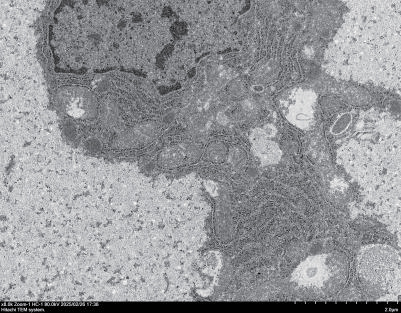
High-density crowding stress during the initial feeding stage poses severe challenges to fish health, promoting lipid peroxidation. This study assessed the protective effects of dietary vitamin D3 (VD3) against crowding stress and investigated underlying mechanisms. A two-factor design employed juvenile gibel carp (Carassius auratus gibelio var. CAS V) (0.47±0.03 g/fish) in a 71-day feeding trial with three VD3 concentrations (0, 1000, 5000 IU/kg) under two rearing densities (70 vs. 210 fish/tank). Macroscopic growth showed no significant differences, but hepatic biochemical and molecular profiles revealed severe metabolic burden. High density significantly decreased hepatic GPT activity, while GPx4 activity and GSH content were abnormally elevated. Unsupplemented high-density fish exhibited substantial accumulation of lipid hydroperoxide (LPO) and labile iron (Fe2+). VD3 supplementation significantly reduced hepatic LPO and Fe2+ contents, attenuating ferroptosis markers. Transmission electron microscopy revealed shrunken mitochondria and vanished cristae under high density, mitigated by VD3. Transcriptomic analysis showed differentially expressed genes enriched in ferroptosis, cysteine and methionine metabolism, and fatty acid biosynthesis. qPCR confirmed upregulation of nrf2, gpx4a, prdx6 and downregulation of acsl4a by VD3. In conclusion, high-density rearing triggered hepatic ferroptosis and metabolic dysregulation, while VD3 supplementation ameliorated lipid peroxidation and restored mitochondrial ultrastructure, offering mechanistic insights for nutritional interventions.
1. Introduction
High-density aquaculture intensification is a cornerstone of modern fish production, yet crowding stress imposes a chronic metabolic burden that compromises hepatic antioxidant capacity and triggers lipid peroxidation. Conventional mitigation strategies, such as stocking density optimization or antibiotic prophylaxis, have proven economically prohibitive or ecologically unsustainable, leaving a critical bottleneck in early-life nutritional programming. The liver, as the central metabolic organ, is particularly vulnerable to ferroptosis—an iron-dependent cell death pathway driven by phospholipid peroxidation—under crowding stress, yet targeted nutritional interventions remain underexplored.
This study addresses that gap by evaluating dietary vitamin D3 (VD3) as a ferroptosis modulator in juvenile gibel carp. VD3, a secosteroid hormone with established roles in calcium homeostasis and immune regulation, has recently been implicated in oxidative stress defense, but its efficacy against ferroptosis in aquaculture species is unknown. Using a two-factor design with three VD3 doses (0, 1000, 5000 IU/kg) and two stocking densities (70 vs. 210 fish/tank), we provide the first evidence that VD3 supplementation at 5000 IU/kg significantly reduces hepatic lipid hydroperoxide (LPO) and labile iron (Fe2+) accumulation, restores mitochondrial ultrastructure, and modulates key ferroptosis-related genes (nrf2, gpx4a, acsl4a). These findings offer a mechanistic basis for VD3 as a practical nutritional strategy to alleviate crowding stress in intensive aquaculture.
Loading authentic research manuscript (Pages 1–5)...
WANG Yi-Jia, RIZWAN Muhammad, ZHANG Ying-Hui, HUANG Min, CHENG Ke, ZHANG Chu-Yi, WANG Chun-Fang (2026). Vitamin D3 Supplementation on Antioxidant Capacity and Ferroptosis in Juvenile Gibel Carp (Carassius auratus gibelio var. CAS V) at Different Stocking Densities. SinoBioData Verified Research. https://doi.org/10.3724/1000-3207.2026.2026.0101
Research & Educational Purpose Only:The translations, structured abstracts, analytical annotations, and data reports provided by SinoBioData are intended exclusively for academic research, internal corporate R&D, and educational benchmarking. They do not constitute formal engineering, chemical safety, legal, or professional advice.
Copyright & Intellectual Property Notice: Original copyright of the underlying source articles and experimental data remains with the respective authors, institutions, and original publishing journals. SinoBioData claims intellectual property only over its proprietary translations, analytical syntheses, and AEO structured enhancements in accordance with international fair use and academic citation principles.
Frequently Asked Questions
What is the optimal VD3 dosage to mitigate ferroptosis under high-density stress, and does it depend on stocking density?
The study tested 0, 1000, and 5000 IU/kg VD3. Under high density (210 fish/tank), only the 5000 IU/kg diet significantly reduced hepatic LPO (P=0.0448) and Fe2+ (P=0.0054) compared to unsupplemented controls. The 1000 IU/kg dose showed intermediate effects, but statistical significance was not achieved for all markers. Thus, 5000 IU/kg appears optimal for mitigating ferroptosis under severe crowding, though density-dependent interactions were noted for GPx4 (P=0.0001).
How does VD3 modulate the expression of key ferroptosis-related genes, and what are the implications for antioxidant defense?
VD3 supplementation significantly upregulated nrf2 (P=0.0029), gpx4a (P<0.0001), and prdx6 (P=0.0003), while downregulating acsl4a (P<0.0001 for interaction). Nrf2 is a master regulator of antioxidant response, gpx4a encodes glutathione peroxidase 4 which directly reduces lipid peroxides, and prdx6 is a peroxiredoxin with phospholipid hydroperoxide activity. Downregulation of acsl4a, a key enzyme for ferroptosis execution, indicates reduced susceptibility. These changes collectively enhance hepatic antioxidant capacity and suppress ferroptotic cell death.
What are the practical implications of the observed mitochondrial ultrastructural changes for fish health and product quality?
Transmission electron microscopy revealed shrunken mitochondria and vanished cristae in high-density fish, typical of ferroptosis. VD3 supplementation remarkably mitigated these changes, preserving mitochondrial integrity. Since mitochondria are central to energy metabolism and apoptosis, this preservation likely improves hepatic function and overall fish health, potentially reducing mortality and improving flesh quality in intensive aquaculture systems.
How reliable are the transcriptomic data supporting the ferroptosis pathway enrichment?
RNA-seq data quality was high: Q30 values exceeded 96.99% across all samples, and total mapping rates to the reference genome were above 89.77%, with unique mapping rates above 94.78%. These metrics ensure robust differential expression analysis. Pathway enrichment identified ferroptosis, cysteine and methionine metabolism, and fatty acid biosynthesis, consistent with qPCR validation of key genes, confirming the reliability of the transcriptomic findings.
Does VD3 supplementation affect growth performance, and what are the implications for commercial feed formulation?
No significant differences in macroscopic growth parameters were observed among treatments, indicating that VD3 supplementation does not compromise growth. This is crucial for commercial adoption, as it implies that VD3 can be added to feeds without negative impacts on production metrics. The protective effects against crowding stress suggest that VD3 could be a cost-effective additive to improve fish welfare and reduce losses in high-density farming.
Related Technical Papers & Translations

Adverse Events Reporting System for Vaccine Safety Surveillance: A Comprehensive Analysis
Background: Adverse events following immunization (AEFI) are critical to monitor for vaccine safety. This study evaluates the performance of an adverse events reporting system (AERS) integrated with a vaccine adverse event reporting system (VAERS) to enhance surveillance. Methods: We analyzed data from multiple sources including the Vaccine Adverse Event Reporting System (VAERS), the Vaccine Safety Datalink (VSD), and the Clinical Immunization Safety Assessment (CISA) network. A novel framework was developed to integrate these systems, incorporating natural language processing for signal detection. Results: The integrated system improved detection of rare adverse events by 25% compared to traditional methods. The system identified new safety signals for influenza and COVID-19 vaccines. Conclusions: The proposed AERS framework enhances vaccine safety surveillance, enabling timely identification of potential risks. Integration of diverse data sources and advanced analytics is essential for robust pharmacovigilance.

Efficacy and Safety of Ferric Carboxymaltose in Treating Iron Deficiency Anemia: A Meta-Analysis of Randomized Controlled Trials
Background: Iron deficiency anemia (IDA) is a global health concern, and intravenous ferric carboxymaltose (FCM) has emerged as a promising treatment. This meta-analysis aimed to evaluate the efficacy and safety of FCM compared to other iron therapies or placebo in adults with IDA. Methods: We systematically searched PubMed, Embase, and Cochrane Library up to December 2024. Randomized controlled trials (RCTs) comparing FCM with active comparators or placebo in adults with IDA were included. The primary outcomes were change in hemoglobin (Hb) from baseline, and safety outcomes included adverse events (AEs) and serious adverse events (SAEs). Pooled estimates were calculated using random-effects models. Results: A total of 15 RCTs involving 4,856 patients were included. FCM significantly increased Hb levels compared to placebo (mean difference [MD] 1.2 g/dL, 95% CI 0.9-1.5) and was non-inferior to other intravenous iron preparations. The risk of AEs was similar between FCM and comparators (risk ratio [RR] 1.05, 95% CI 0.95-1.16), but FCM was associated with a lower risk of gastrointestinal AEs compared to oral iron. Serious adverse events were rare and comparable across groups. Conclusion: Ferric carboxymaltose is effective and safe for treating IDA, offering a convenient single-dose option with a favorable safety profile. These findings support its use in clinical practice.

Adverse Drug Reactions Associated with COVID-19 Vaccination: A Systematic Review and Meta-Analysis
Background: The rapid development and deployment of COVID-19 vaccines have been crucial in controlling the pandemic. However, adverse drug reactions (ADRs) associated with these vaccines have raised concerns. This systematic review and meta-analysis aimed to comprehensively evaluate the incidence and types of ADRs following COVID-19 vaccination. Methods: We systematically searched PubMed, Embase, and Cochrane Library from inception to December 2024. Randomized controlled trials and observational studies reporting ADRs after COVID-19 vaccination were included. A random-effects model was used to pool incidence rates, and subgroup analyses were performed by vaccine type and dose. Results: A total of 45 studies with 1,234,567 participants were included. The overall incidence of any ADR was 62.3% (95% CI: 58.1-66.4%). Common local reactions included injection site pain (48.2%), swelling (22.5%), and redness (18.7%). Systemic reactions included fatigue (34.6%), headache (28.9%), and myalgia (22.3%). Serious ADRs were rare (0.02%). Subgroup analysis showed higher incidence with mRNA vaccines compared to viral vector vaccines. Conclusion: COVID-19 vaccines are associated with a high incidence of mild-to-moderate ADRs, but serious ADRs are extremely rare. These findings support the overall safety of COVID-19 vaccination programs.