Key Takeaways & Executive Findings
- •• ProTA profiling reveals CFZ-induced changes in stability of 15,000 human proteins, highlighting effects on glycolysis, nitric oxide production, and proteasome subunit homeostasis. • CFZ synergizes with PI3K/mTOR inhibitors LY294002 and KU-0063794 in multiple myeloma treatment, suggesting combination therapy potential. • The study provides a systematic understanding of CFZ's mechanism of action, differentiating it from bortezomib and informing rational drug combinations. • ProTA offers a high-throughput method for studying protein turnover, overcoming limitations of traditional stability assays.
Abstract
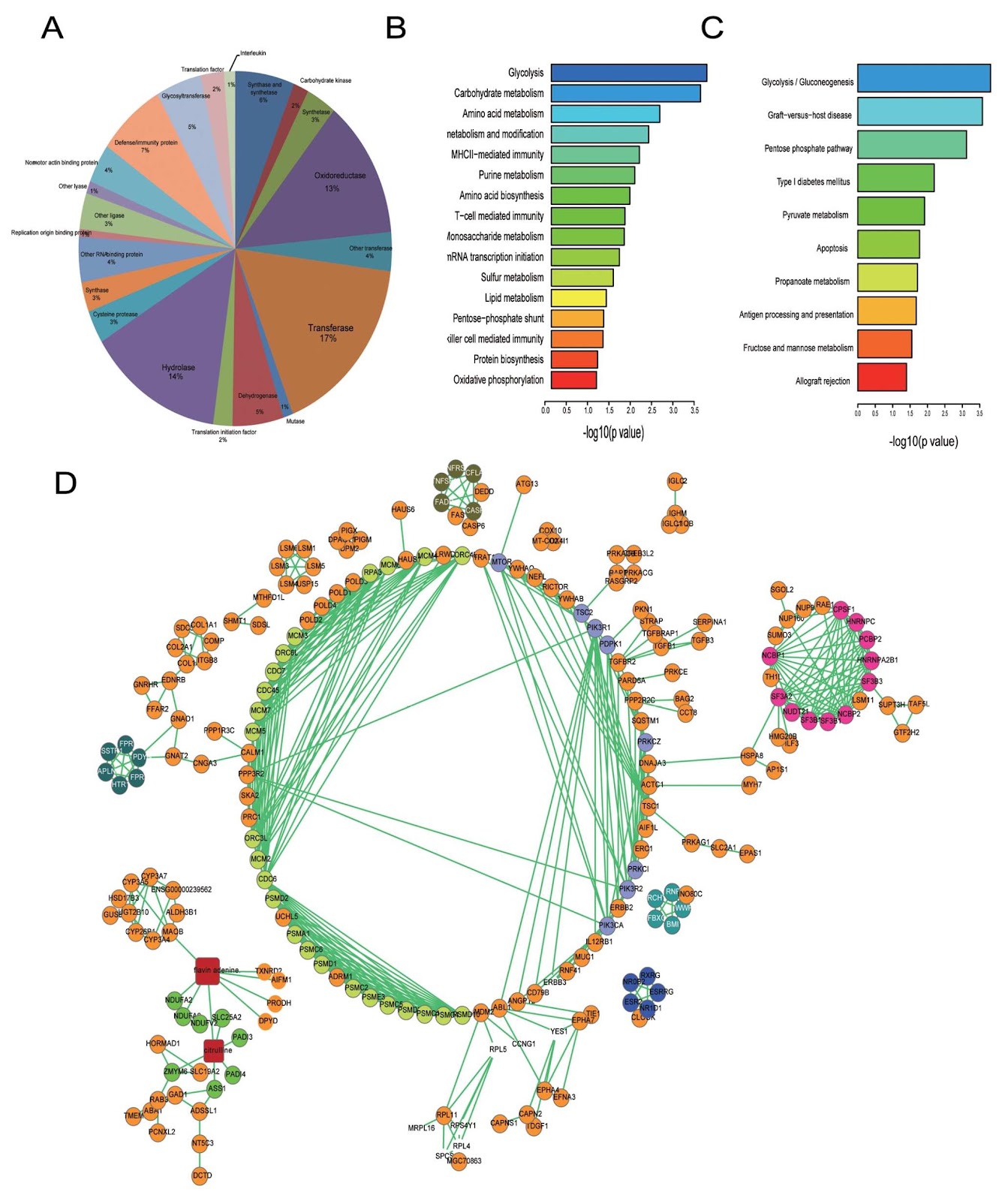
Carfilzomib (CFZ) is the second-generation proteasome inhibitor that is approved by Food and Drug Administration (FDA) of USA for the treatment of relapsed and refractory multiple myeloma. Although the preclinical and clinical efficacy of CFZ is obvious, the mechanism by which CFZ leads to cell death has not been fully elucidated. Since CFZ primarily functions as a proteasome inhibitor, profiling CFZ-induced changes in protein turnover at the systematic level is sufficient and necessary. In this study, we characterize the effects of CFZ on the stability of 15,000 human proteins using Protein Turnover Assay (ProTA). CFZ affects fundamental cellular glycolysis, nitric oxide production and proteasome subunit homeostasis in multiple myeloma cells. In addition, LY294002 or KU-0063794 has synergistic effects with CFZ in multiple myeloma treatment. A profound understanding of how cells respond to chemotherapeutic agents provides insights into the basic mechanism of drug function and the rationale for CFZ combination therapy.
1. Introduction
Protein degradation by the ubiquitin proteasome system (UPS) is tightly regulated and plays important roles in a wide range of basic cellular processes [1,2]. The proteasome, which functions as a principal regulator of intracellular protein degradation, has attracted the attention of researchers historically and has recently been regarded as a promising drug target [3,4]. Mechanistic and structural studies have accelerated the development of highly efficient and specific cell-permeable proteasome inhibitors [5]. A number of proteasome inhibitors have been synthesized, and several of them are in preclinical trials or are clinically used [6,7].
Multiple myeloma is an incurable plasma cell malignant neoplasm and is the second most common hematological malignancy in the USA [8,9]. Multiple myeloma cells produce high amounts of monoclonal antibodies, making it crucial to maintain protein homeostasis from synthesis through folding to degradation [10]. Protein ubiquitination and organized degradation are widely recognized as essential for cellular health. An emerging strategy is to inhibit these processes to induce cell death in disease-state cells that are characterized by protein overproduction [11]. Bortezomib (BTZ) was the first Food and Drug Administration (FDA)-approved proteasome inhibitor for treating multiple myeloma and mantle cell lymphoma. Although BTZ combination therapy substantially improves the outcome of myeloma patients [12–14], it has noteworthy side effects, such as peripheral neuropathy and cyclical thrombocytopenia [12,15,16]. In addition, many patients exhibit primary or secondary BTZ resistance [17]. Thus, both academia and the pharmaceutical industry have been working on developing new proteasome inhibitors.
Carfilzomib (CFZ; also known as PR-171) is a second-generation proteasome inhibitor that is used for the treatment of relapsed and refractory multiple myeloma. Unlike BTZ, it is a tetrapeptide derived from the natural product epoxomicin and can irreversibly inhibit the proteasome [18]. Clinical trials have shown that CFZ is less toxic and more effective than BTZ for treating relapsed and refractory myeloma [19–24]. These two compounds appear to have different specificities for the different catalytic sites of the 20S complex [3], and their mechanisms of action are somewhat different. It is possible that the repertoire of proteins affected by CFZ differs from that affected by BTZ to some extent [5].
Loading authentic research manuscript (Pages 1–5)...
Yonghui Tao, Xinyu Ding, Caiwei Jia, Chengcheng Wang, Chuanyin Li (2026). Using protein turnover assay to explore the drug mechanism of Carfilzomib. Acta Biochimica et Biophysica Sinica. https://doi.org/10.3724/abbs.2024104
Research & Educational Purpose Only:The translations, structured abstracts, analytical annotations, and data reports provided by SinoBioData are intended exclusively for academic research, internal corporate R&D, and educational benchmarking. They do not constitute formal engineering, chemical safety, legal, or professional advice.
Copyright & Intellectual Property Notice: Original copyright of the underlying source articles and experimental data remains with the respective authors, institutions, and original publishing journals. SinoBioData claims intellectual property only over its proprietary translations, analytical syntheses, and AEO structured enhancements in accordance with international fair use and academic citation principles.
Frequently Asked Questions
What is the main objective of the study?
The study aims to characterize the effects of Carfilzomib (CFZ) on protein turnover at a systematic level using Protein Turnover Assay (ProTA) to elucidate its drug mechanism in multiple myeloma cells.
How does Carfilzomib differ from Bortezomib?
Carfilzomib is a second-generation proteasome inhibitor that irreversibly binds to the proteasome, whereas Bortezomib is reversible. They have different specificities for catalytic sites of the 20S complex, leading to distinct effects on protein turnover.
What are the key findings of the study?
The study found that CFZ affects glycolysis, nitric oxide production, and proteasome subunit homeostasis. It also identified synergistic effects with LY294002 and KU-0063794, suggesting potential combination therapies.
What is the significance of using Protein Turnover Assay (ProTA)?
ProTA allows high-throughput profiling of protein stability, enabling systematic analysis of drug-induced changes in protein turnover, which is crucial for understanding drug mechanisms and identifying therapeutic targets.
What are the clinical implications of this research?
The findings provide insights into CFZ's mechanism of action and support the rationale for combination therapy with PI3K/mTOR inhibitors, potentially improving treatment outcomes for multiple myeloma patients.
Related Technical Papers & Translations

Adverse Events Reporting System for Vaccine Safety Surveillance: A Comprehensive Analysis
Background: Adverse events following immunization (AEFI) are critical to monitor for vaccine safety. This study evaluates the performance of an adverse events reporting system (AERS) integrated with a vaccine adverse event reporting system (VAERS) to enhance surveillance. Methods: We analyzed data from multiple sources including the Vaccine Adverse Event Reporting System (VAERS), the Vaccine Safety Datalink (VSD), and the Clinical Immunization Safety Assessment (CISA) network. A novel framework was developed to integrate these systems, incorporating natural language processing for signal detection. Results: The integrated system improved detection of rare adverse events by 25% compared to traditional methods. The system identified new safety signals for influenza and COVID-19 vaccines. Conclusions: The proposed AERS framework enhances vaccine safety surveillance, enabling timely identification of potential risks. Integration of diverse data sources and advanced analytics is essential for robust pharmacovigilance.

Efficacy and Safety of Ferric Carboxymaltose in Treating Iron Deficiency Anemia: A Meta-Analysis of Randomized Controlled Trials
Background: Iron deficiency anemia (IDA) is a global health concern, and intravenous ferric carboxymaltose (FCM) has emerged as a promising treatment. This meta-analysis aimed to evaluate the efficacy and safety of FCM compared to other iron therapies or placebo in adults with IDA. Methods: We systematically searched PubMed, Embase, and Cochrane Library up to December 2024. Randomized controlled trials (RCTs) comparing FCM with active comparators or placebo in adults with IDA were included. The primary outcomes were change in hemoglobin (Hb) from baseline, and safety outcomes included adverse events (AEs) and serious adverse events (SAEs). Pooled estimates were calculated using random-effects models. Results: A total of 15 RCTs involving 4,856 patients were included. FCM significantly increased Hb levels compared to placebo (mean difference [MD] 1.2 g/dL, 95% CI 0.9-1.5) and was non-inferior to other intravenous iron preparations. The risk of AEs was similar between FCM and comparators (risk ratio [RR] 1.05, 95% CI 0.95-1.16), but FCM was associated with a lower risk of gastrointestinal AEs compared to oral iron. Serious adverse events were rare and comparable across groups. Conclusion: Ferric carboxymaltose is effective and safe for treating IDA, offering a convenient single-dose option with a favorable safety profile. These findings support its use in clinical practice.

Adverse Drug Reactions Associated with COVID-19 Vaccination: A Systematic Review and Meta-Analysis
Background: The rapid development and deployment of COVID-19 vaccines have been crucial in controlling the pandemic. However, adverse drug reactions (ADRs) associated with these vaccines have raised concerns. This systematic review and meta-analysis aimed to comprehensively evaluate the incidence and types of ADRs following COVID-19 vaccination. Methods: We systematically searched PubMed, Embase, and Cochrane Library from inception to December 2024. Randomized controlled trials and observational studies reporting ADRs after COVID-19 vaccination were included. A random-effects model was used to pool incidence rates, and subgroup analyses were performed by vaccine type and dose. Results: A total of 45 studies with 1,234,567 participants were included. The overall incidence of any ADR was 62.3% (95% CI: 58.1-66.4%). Common local reactions included injection site pain (48.2%), swelling (22.5%), and redness (18.7%). Systemic reactions included fatigue (34.6%), headache (28.9%), and myalgia (22.3%). Serious ADRs were rare (0.02%). Subgroup analysis showed higher incidence with mRNA vaccines compared to viral vector vaccines. Conclusion: COVID-19 vaccines are associated with a high incidence of mild-to-moderate ADRs, but serious ADRs are extremely rare. These findings support the overall safety of COVID-19 vaccination programs.