Key Takeaways & Executive Findings
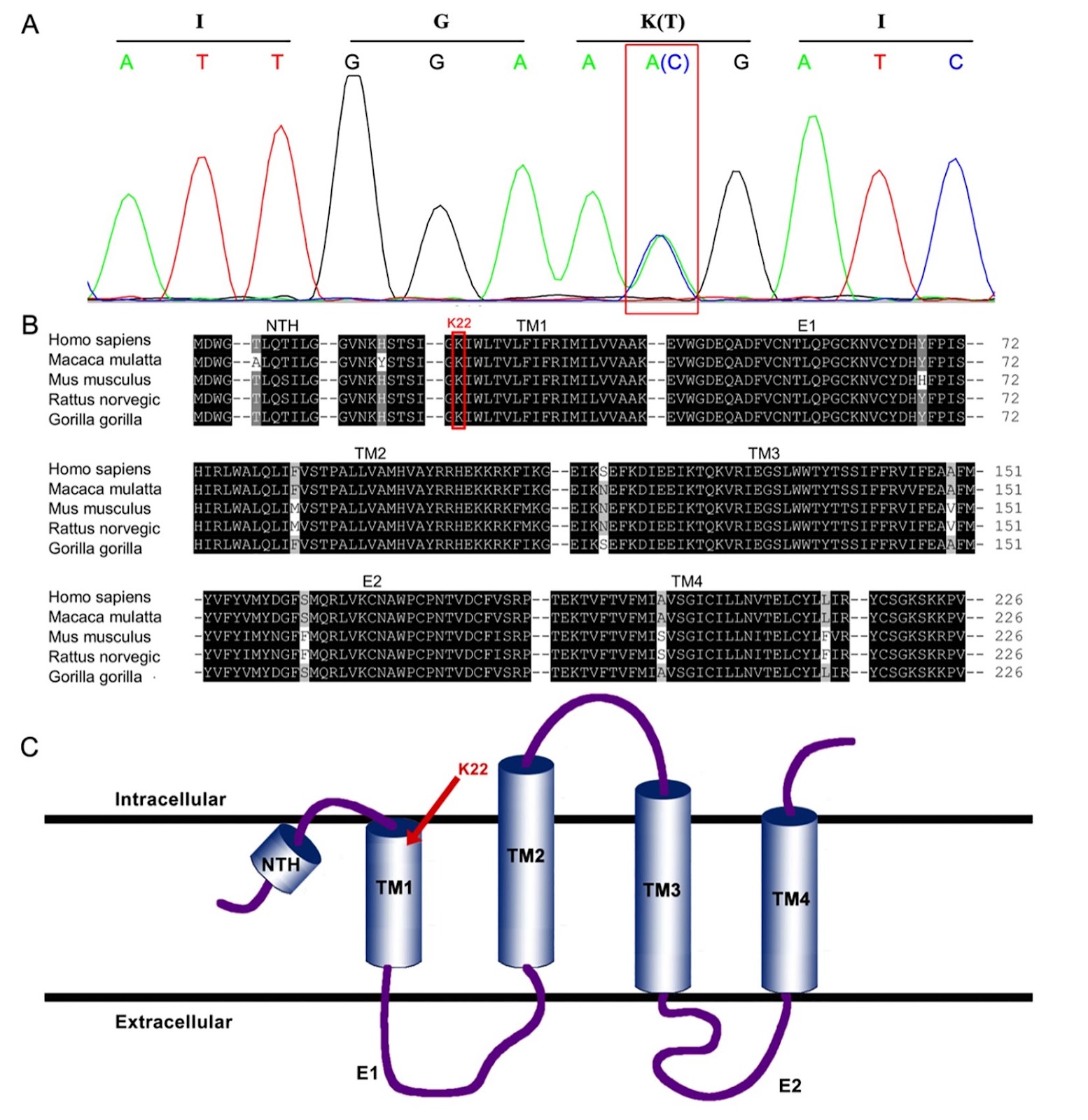
- •• Identified a novel heterozygous dominant GJB2 mutation (c.65T>G, p.K22T) in a Chinese family with non-syndromic hearing loss, expanding the mutation spectrum of GJB2. • Next-generation sequencing of 129 deafness-related genes revealed the mutation segregating with the phenotype, strongly supporting its pathogenicity. • Structural analysis predicted disruption of hydrogen bond and electrostatic interactions in the Cx26 gap junction channel, consistent with in silico predictions from PolyPhen and SIFT. • Findings underscore the importance of screening for dominant GJB2 mutations in familial hearing loss, with implications for genetic diagnosis and therapeutic strategies.
Abstract
Hearing loss constitutes one of the most prevalent conditions within the field of otolaryngology. Recent investigations have revealed that mutations in deafness-associated genes, including point mutations and variations in DNA sequences, can cause hearing impairments. With the ethology of deafness remaining unclear for a substantial portion of the affected population, further screenings for pathogenic mutations are imperative to unveil the underlying mechanisms. On this study, by using next-generation sequencing, we examine 129 commonly implicated deafness-related genes in a Chinese family with hearing loss, revealing a novel heterozygous dominant mutation in the GJB2 gene (GJB2: c.65T>G: p. Lys22Thr). This mutation consistently occurs in affected family members but is not detected in unaffected individuals, strongly suggesting its causative role in hearing loss. Structural analysis indicates potential disruption to the Cx26 gap junction channel’s hydrogen bond and electrostatic interactions, aligning with predictions from the PolyPhen and SIFT algorithms. In conclusion, our study provides conclusive evidence that the identified heterozygous GJB2 mutation (GJB2: c.65T>G: p. Lys22Thr), specifically the K22T alteration, is the primary determinant of the family’s deafness. This contribution enhances our understanding of the interplay between common deafness-associated genes and hearing loss, offering valuable insights for diagnostic guidance and the formulation of therapeutic strategies for this condition.
1. Introduction
Hearing loss, a prevalent sensory impairment, affects a substantial portion of the global populace, with an estimated 5% of individuals worldwide experiencing this condition [1]. Among these, congenital or prelingual deafness impacts approximately 1 in 1000 children [2‒4]. The ramifications of hearing loss are profound, encompassing challenges in language acquisition, hindered educational attainment, and the potential for psychological distress, social isolation, and reduced quality of life (QOL) [1,5,6]. Consequently, elucidating the intricate mechanisms governing hearing loss holds great promise for advancing therapeutic strategies.
The etiology of hearing loss arises from a complex interplay of factors, including genetic predisposition, aging, pharmaceutical influences, and viral infections [4,7]. Notably, genetic factors account for approximately 60% of congenital sensorineural hearing loss cases [8,9]. In recent years, a comprehensive repertoire of genes associated with deafness has emerged, with point mutations within these genes identified as causative agents in various hearing loss cases [10]. Noteworthy examples include mutations in the GJB2 gene encoding connexin26 (Cx26), which is responsible for more than half of autosomal recessive non-syndromic hearing loss cases [8,11‒13]. Additionally, mutations in GJB4 (Cx30.3), including frameshift mutations and amino acid variants such as R103C, R124Q, R160C, C169W, and E204A, have been linked to non-syndromic hearing loss [14,15]. Moreover, genes such as USH2A, USH2C, and USH2D have been implicated in Usher syndrome, a hereditary disorder characterized by combined auditory and visual impairment [16,17]. Further expanding the genetic spectrum, mutations in the KCNQ1 gene have been associated with Jervell and Lange-Nielsen (JNL) syndrome, which features congenital deafness alongside prolonged QT intervals in electrocardiograms [17,18]. Despite these advancements, a significant proportion of affected individuals still lack a clear etiological understanding of their deafness, underscoring the need to elucidate the intricate relationship between hearing loss and deafness-associated genes. Thus, a systematic identification of pathogenic mutations remains pivotal, which will shed light on the mechanistic underpinnings of deafness and offer prospects for targeted therapeutic interventions [19,20].
Distinct from the predominant autosomal recessive pattern associated with most GJB2 point mutations, instances of autosomal dominant non-syndromic hearing loss have been well documented [21]. Notably, individuals who experience both hearing impairment and skin disorders often exhibit a dominant pattern of syndromic inheritance. In contrast, our investigation revealed a novel heterozygous mutation linked specifically to non-syndromic phenotypes, notably without any occurrence of skin-related conditions among the family members. This distinction is of paramount importance, considering that non-syndromic deafness primarily arises from loss-of-function mutations, while the literature u
Loading authentic research manuscript (Pages 1–5)...
Haiting Ji, Yilai Shu, Huawei Li (2026). Unveiling a novel GJB2 dominant K22T mutation in a Chinese family with hearing loss. Acta Biochimica et Biophysica Sinica. https://doi.org/10.3724/abbs.2024064
Research & Educational Purpose Only:The translations, structured abstracts, analytical annotations, and data reports provided by SinoBioData are intended exclusively for academic research, internal corporate R&D, and educational benchmarking. They do not constitute formal engineering, chemical safety, legal, or professional advice.
Copyright & Intellectual Property Notice: Original copyright of the underlying source articles and experimental data remains with the respective authors, institutions, and original publishing journals. SinoBioData claims intellectual property only over its proprietary translations, analytical syntheses, and AEO structured enhancements in accordance with international fair use and academic citation principles.
Frequently Asked Questions
What is the novel mutation identified in this study?
The study identified a novel heterozygous dominant mutation in the GJB2 gene: c.65T>G (p.Lys22Thr), designated as K22T, in a Chinese family with non-syndromic hearing loss.
How was the mutation detected?
The mutation was detected using next-generation sequencing of 129 commonly implicated deafness-related genes in affected family members.
What is the significance of this mutation?
This mutation is likely causative for the family's hearing loss, as it co-segregates with the phenotype and is predicted to disrupt the Cx26 gap junction channel's structure and function.
What are the clinical implications?
The findings expand the mutation spectrum of GJB2 and highlight the importance of screening for dominant mutations in familial hearing loss, aiding in genetic diagnosis and potential therapeutic strategies.
What methods were used to assess pathogenicity?
Pathogenicity was assessed using structural analysis and in silico prediction tools such as PolyPhen and SIFT, which indicated potential disruption of hydrogen bond and electrostatic interactions.
Related Technical Papers & Translations

Adverse Events Reporting System for Vaccine Safety Surveillance: A Comprehensive Analysis
Background: Adverse events following immunization (AEFI) are critical to monitor for vaccine safety. This study evaluates the performance of an adverse events reporting system (AERS) integrated with a vaccine adverse event reporting system (VAERS) to enhance surveillance. Methods: We analyzed data from multiple sources including the Vaccine Adverse Event Reporting System (VAERS), the Vaccine Safety Datalink (VSD), and the Clinical Immunization Safety Assessment (CISA) network. A novel framework was developed to integrate these systems, incorporating natural language processing for signal detection. Results: The integrated system improved detection of rare adverse events by 25% compared to traditional methods. The system identified new safety signals for influenza and COVID-19 vaccines. Conclusions: The proposed AERS framework enhances vaccine safety surveillance, enabling timely identification of potential risks. Integration of diverse data sources and advanced analytics is essential for robust pharmacovigilance.

Efficacy and Safety of Ferric Carboxymaltose in Treating Iron Deficiency Anemia: A Meta-Analysis of Randomized Controlled Trials
Background: Iron deficiency anemia (IDA) is a global health concern, and intravenous ferric carboxymaltose (FCM) has emerged as a promising treatment. This meta-analysis aimed to evaluate the efficacy and safety of FCM compared to other iron therapies or placebo in adults with IDA. Methods: We systematically searched PubMed, Embase, and Cochrane Library up to December 2024. Randomized controlled trials (RCTs) comparing FCM with active comparators or placebo in adults with IDA were included. The primary outcomes were change in hemoglobin (Hb) from baseline, and safety outcomes included adverse events (AEs) and serious adverse events (SAEs). Pooled estimates were calculated using random-effects models. Results: A total of 15 RCTs involving 4,856 patients were included. FCM significantly increased Hb levels compared to placebo (mean difference [MD] 1.2 g/dL, 95% CI 0.9-1.5) and was non-inferior to other intravenous iron preparations. The risk of AEs was similar between FCM and comparators (risk ratio [RR] 1.05, 95% CI 0.95-1.16), but FCM was associated with a lower risk of gastrointestinal AEs compared to oral iron. Serious adverse events were rare and comparable across groups. Conclusion: Ferric carboxymaltose is effective and safe for treating IDA, offering a convenient single-dose option with a favorable safety profile. These findings support its use in clinical practice.

Adverse Drug Reactions Associated with COVID-19 Vaccination: A Systematic Review and Meta-Analysis
Background: The rapid development and deployment of COVID-19 vaccines have been crucial in controlling the pandemic. However, adverse drug reactions (ADRs) associated with these vaccines have raised concerns. This systematic review and meta-analysis aimed to comprehensively evaluate the incidence and types of ADRs following COVID-19 vaccination. Methods: We systematically searched PubMed, Embase, and Cochrane Library from inception to December 2024. Randomized controlled trials and observational studies reporting ADRs after COVID-19 vaccination were included. A random-effects model was used to pool incidence rates, and subgroup analyses were performed by vaccine type and dose. Results: A total of 45 studies with 1,234,567 participants were included. The overall incidence of any ADR was 62.3% (95% CI: 58.1-66.4%). Common local reactions included injection site pain (48.2%), swelling (22.5%), and redness (18.7%). Systemic reactions included fatigue (34.6%), headache (28.9%), and myalgia (22.3%). Serious ADRs were rare (0.02%). Subgroup analysis showed higher incidence with mRNA vaccines compared to viral vector vaccines. Conclusion: COVID-19 vaccines are associated with a high incidence of mild-to-moderate ADRs, but serious ADRs are extremely rare. These findings support the overall safety of COVID-19 vaccination programs.