Key Takeaways & Executive Findings
- •• Single-cell-derived subclones from the U87-MG glioblastoma cell line exhibit distinct functional phenotypes, with CF5 showing enhanced proliferation and chemoresistance while G11 displays greater motility and invasion. • Transcriptomic analysis reveals significant gene expression differences among subclones, with downregulated genes enriched in extracellular matrix-related pathways, highlighting the role of integrins in tumor heterogeneity. • ITGA11 and ITGA6 are identified as key regulators of functional phenotypes and chemosensitivity in specific subclones, and their combined knockdown in parental U87 cells inhibits tumor growth and enhances chemotherapy sensitivity. • The study underscores the persistence of tumor heterogeneity even under uniform growth conditions, emphasizing the need for personalized therapeutic strategies targeting specific genetic backgrounds.
Abstract
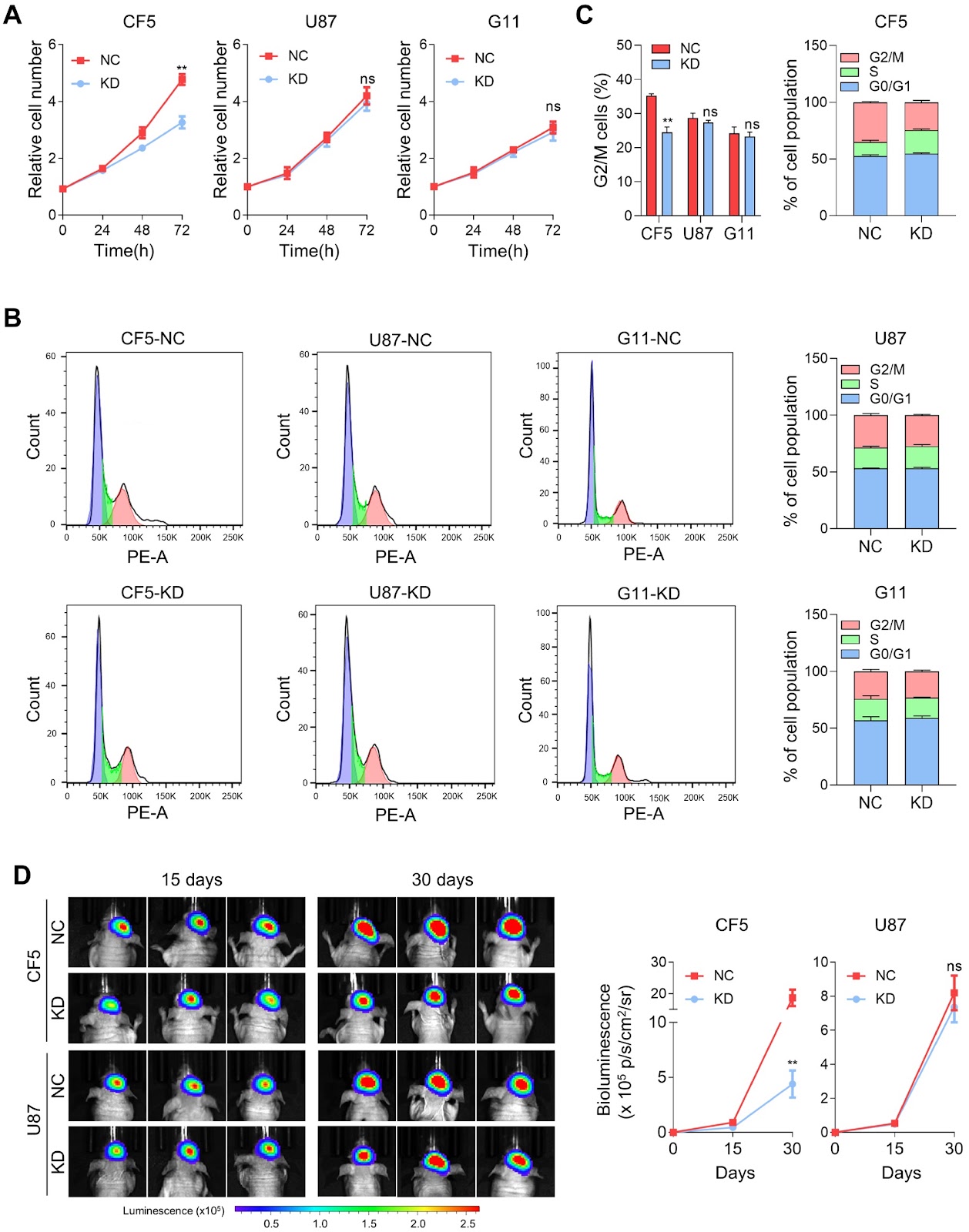
One of the characteristics of malignant tumors is heterogeneity, which refers to the molecular or genetic differences among progeny cells during tumor growth. This heterogeneity contributes to variations in the tumor growth rate, invasive ability, drug sensitivity, and prognosis. To gain a deeper understanding of the molecular background underlying tumor heterogeneity, we construct monoclonal cell lines derived from the glioblastoma (GBM) cell line U87-MG by limiting dilution assays. The selected CF5 and G11 subclones exhibit completely different cell morphologies and, more importantly, distinct functional phenotypes. CF5 exhibits stronger proliferative properties and chemoresistance, whereas G11 shows greater motility and invasion. Transcriptomic sequencing reveals great differences in gene expression among the CF5, G11, and U87 cell lines, and downregulated genes in individual clones are significantly enriched in gene sets related to extracellular matrix function. ITGA11 and ITGA6, as research subjects, are demonstrated to exclusively regulate functional phenotypes and chemotherapy sensitivity in CF5 or G11 cells. In U87 cells, combined knockdown of these two genes significantly inhibits tumor growth and increases chemotherapy sensitivity, but knockdown of either gene alone does not. In summary, these data reveal that even under uniform growth conditions, the heterogeneity of tumor cells and their diverse genetic backgrounds remain significant and persistent. This finding is crucial for accurately identifying tumor-related genes and their functional phenotypes, and a thorough understanding of the genetic and molecular background underlying tumor heterogeneity is essential for comprehensive cancer treatment.
1. Introduction
Glioblastoma multiforme (GBM) is one of the most prevalent malignant brain tumors known for its profound tumoral heterogeneity and dismal therapeutic outlook [1,2]. Current treatment protocols involving surgical resection, radiotherapy, and pharmacological intervention with agents such as temozolomide (TMZ) have improved short-term survival rates in patients [3,4]. However, heterogeneity among GBM cells within a given tumor increases the risk of tumor recurrence, which ultimately leads to treatment failure [5–8]. Thus, a comprehensive understanding of GBM tumor heterogeneity is imperative for formulating efficient novel treatment modalities aimed at suppressing tumor progression and improving patient survival rates.
Tumor heterogeneity, which encompasses genetic, epigenetic, phenotypic, and functional variability, has emerged as a primary determinant of unfavorable prognoses and outcomes [9,10]. Numerous studies on GBM have revealed clear genetic diversity among single GBM cells, with individual tumors harboring distinct subgroups of corresponding cells [11,12]. These single-cell-derived clones from glioma cells exhibit unique morphological, genetic, and differentiation features. While numerous innovative techniques have been devised to assess single-cell heterogeneity at the gene and protein levels, most methodologies are predominantly geared toward genomics without effective integration of genomics and phenotypic studies.
The differences in integrin expression among different cell subtypes are closely linked to their genetic and functional heterogeneity, which influences crucial tumor processes such as adhesion, invasion, and vascular growth [13–15]. Integrins, notably integrin α6, are potential biomarkers for GBM and are closely related to tumor heterogeneity [16–18]. Although targeting these specifically expressed integrins has shown promise in improving GBM treatment outcomes, the intricate interplay between integrins and tumor cells poses challenges and limits their study [19,20]. Therefore, understanding integrin expression in diverse clones is imperative for patient stratification and the optimization of novel therapies.
Loading authentic research manuscript (Pages 1–5)...
Daxing Xu, Yingdi Jiang, Jie Li, Lingli Gong, Zhenkun Yang, Bo Zhang, Koukou Li, Jian Zou (2026). Unique gene patterns lead to distinct functional phenotypes and chemosensitivity profiles among subclones obtained from a single glioblastoma cell line. Acta Biochimica et Biophysica Sinica. https://doi.org/10.3724/abbs.2025091
Research & Educational Purpose Only:The translations, structured abstracts, analytical annotations, and data reports provided by SinoBioData are intended exclusively for academic research, internal corporate R&D, and educational benchmarking. They do not constitute formal engineering, chemical safety, legal, or professional advice.
Copyright & Intellectual Property Notice: Original copyright of the underlying source articles and experimental data remains with the respective authors, institutions, and original publishing journals. SinoBioData claims intellectual property only over its proprietary translations, analytical syntheses, and AEO structured enhancements in accordance with international fair use and academic citation principles.
Frequently Asked Questions
What is the main finding of this study?
The study demonstrates that single-cell-derived subclones from a glioblastoma cell line exhibit distinct functional phenotypes and chemosensitivity profiles, driven by unique gene expression patterns, particularly involving integrins ITGA11 and ITGA6.
How were the subclones generated?
Subclones CF5 and G11 were generated from the parental U87-MG glioblastoma cell line using limiting dilution assays, which allow isolation of monoclonal cell populations.
What are the functional differences between CF5 and G11?
CF5 exhibits stronger proliferative properties and chemoresistance, while G11 shows greater motility and invasion capabilities.
What is the significance of ITGA11 and ITGA6?
ITGA11 and ITGA6 are integrin genes that exclusively regulate functional phenotypes and chemotherapy sensitivity in the subclones. Combined knockdown of these genes in parental U87 cells inhibits tumor growth and increases chemotherapy sensitivity.
Why is this research important for cancer treatment?
The findings highlight the persistence of tumor heterogeneity even under uniform conditions, emphasizing the need for personalized therapeutic strategies that account for the genetic and molecular diversity within tumors.
Related Technical Papers & Translations

Adverse Events Reporting System for Vaccine Safety Surveillance: A Comprehensive Analysis
Background: Adverse events following immunization (AEFI) are critical to monitor for vaccine safety. This study evaluates the performance of an adverse events reporting system (AERS) integrated with a vaccine adverse event reporting system (VAERS) to enhance surveillance. Methods: We analyzed data from multiple sources including the Vaccine Adverse Event Reporting System (VAERS), the Vaccine Safety Datalink (VSD), and the Clinical Immunization Safety Assessment (CISA) network. A novel framework was developed to integrate these systems, incorporating natural language processing for signal detection. Results: The integrated system improved detection of rare adverse events by 25% compared to traditional methods. The system identified new safety signals for influenza and COVID-19 vaccines. Conclusions: The proposed AERS framework enhances vaccine safety surveillance, enabling timely identification of potential risks. Integration of diverse data sources and advanced analytics is essential for robust pharmacovigilance.

Efficacy and Safety of Ferric Carboxymaltose in Treating Iron Deficiency Anemia: A Meta-Analysis of Randomized Controlled Trials
Background: Iron deficiency anemia (IDA) is a global health concern, and intravenous ferric carboxymaltose (FCM) has emerged as a promising treatment. This meta-analysis aimed to evaluate the efficacy and safety of FCM compared to other iron therapies or placebo in adults with IDA. Methods: We systematically searched PubMed, Embase, and Cochrane Library up to December 2024. Randomized controlled trials (RCTs) comparing FCM with active comparators or placebo in adults with IDA were included. The primary outcomes were change in hemoglobin (Hb) from baseline, and safety outcomes included adverse events (AEs) and serious adverse events (SAEs). Pooled estimates were calculated using random-effects models. Results: A total of 15 RCTs involving 4,856 patients were included. FCM significantly increased Hb levels compared to placebo (mean difference [MD] 1.2 g/dL, 95% CI 0.9-1.5) and was non-inferior to other intravenous iron preparations. The risk of AEs was similar between FCM and comparators (risk ratio [RR] 1.05, 95% CI 0.95-1.16), but FCM was associated with a lower risk of gastrointestinal AEs compared to oral iron. Serious adverse events were rare and comparable across groups. Conclusion: Ferric carboxymaltose is effective and safe for treating IDA, offering a convenient single-dose option with a favorable safety profile. These findings support its use in clinical practice.

Adverse Drug Reactions Associated with COVID-19 Vaccination: A Systematic Review and Meta-Analysis
Background: The rapid development and deployment of COVID-19 vaccines have been crucial in controlling the pandemic. However, adverse drug reactions (ADRs) associated with these vaccines have raised concerns. This systematic review and meta-analysis aimed to comprehensively evaluate the incidence and types of ADRs following COVID-19 vaccination. Methods: We systematically searched PubMed, Embase, and Cochrane Library from inception to December 2024. Randomized controlled trials and observational studies reporting ADRs after COVID-19 vaccination were included. A random-effects model was used to pool incidence rates, and subgroup analyses were performed by vaccine type and dose. Results: A total of 45 studies with 1,234,567 participants were included. The overall incidence of any ADR was 62.3% (95% CI: 58.1-66.4%). Common local reactions included injection site pain (48.2%), swelling (22.5%), and redness (18.7%). Systemic reactions included fatigue (34.6%), headache (28.9%), and myalgia (22.3%). Serious ADRs were rare (0.02%). Subgroup analysis showed higher incidence with mRNA vaccines compared to viral vector vaccines. Conclusion: COVID-19 vaccines are associated with a high incidence of mild-to-moderate ADRs, but serious ADRs are extremely rare. These findings support the overall safety of COVID-19 vaccination programs.