Key Takeaways & Executive Findings
- •• UPE reduces OVA-specific immunoglobulin levels and improves early allergic symptoms in a mouse model of CARAS. • UPE suppresses Th2 cytokine expression and inflammatory cell accumulation in nasal and bronchoalveolar lavage fluid. • UPE protects airway epithelial barrier integrity by enhancing E-cadherin, ZO-1, and occludin expression and reducing IL-33. • UPE exerts antioxidant effects and inhibits NF-κB/MAPK signaling, suggesting a therapeutic potential for CARAS.
Abstract
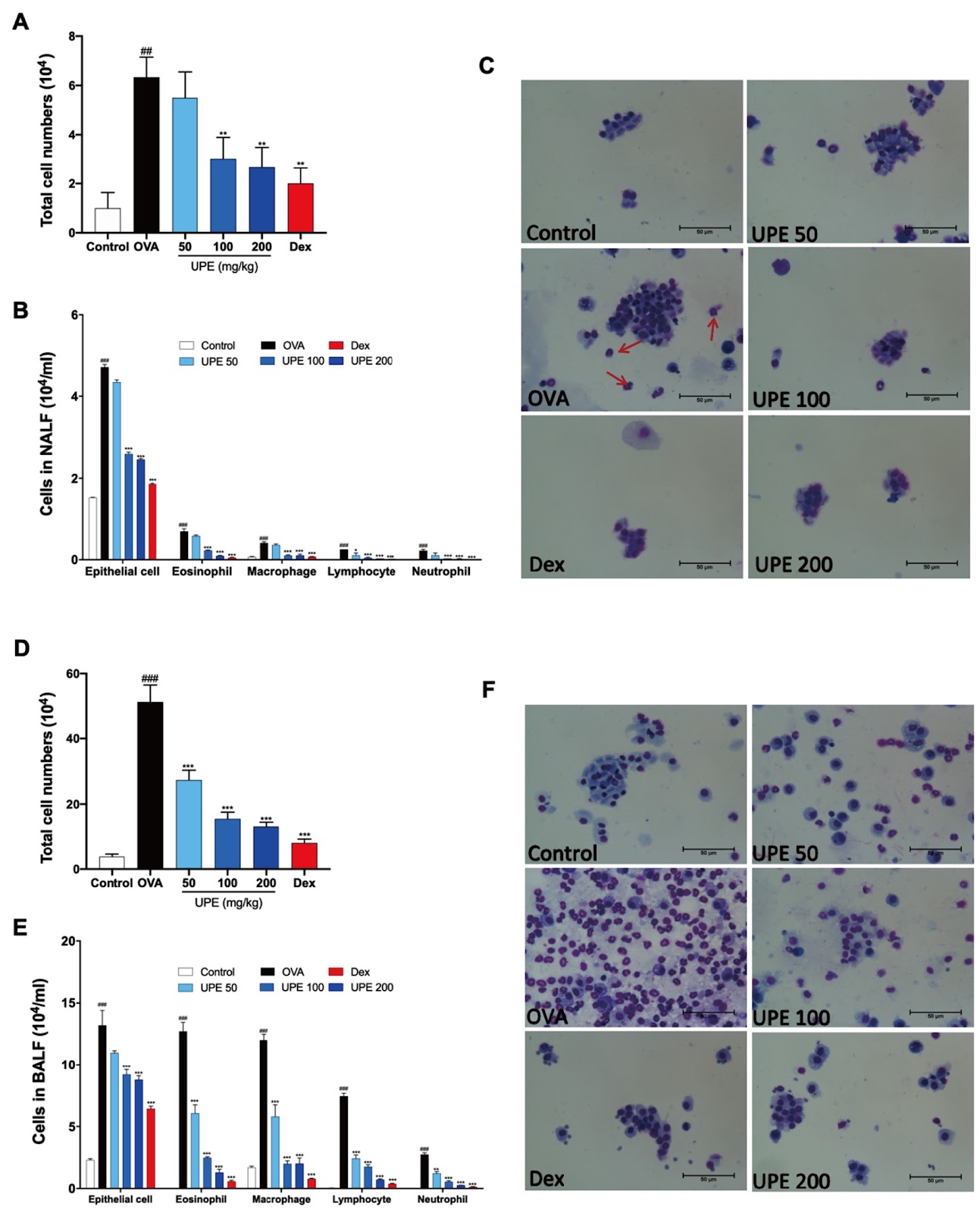
Undaria pinnatifida (U. pinnatifida) has long been a part of the human diet and medicine. Although U. pinnatifida has been reported to have immunomodulatory, anti-inflammatory, anti-diabetic and antibacterial activities, its specific effect on patients with combined allergic rhinitis and asthma syndrome (CARAS) has not been clarified. In this study, the anti-allergic and anti-inflammatory effects of U. pinnatifida extract (UPE) are investigated in a mouse model of ovalbumin (OVA)-induced CARAS. The oral administration of UPE inhibits allergic responses by reducing OVA-specific immunoglobulin levels. As a result, the symptoms of early reactions are also improved. UPE inhibits the accumulation of inflammatory cells and attenuates the expression of Th2 cytokines in both nasal and bronchoalveolar lavage fluid. Furthermore, UPE treatment inhibits the NF-κB/MAPK signaling pathway in lung homogenates. Additionally, UPE prevents shedding of the nasal mucosal epithelium, protects the integrity of the epithelium, enhances the expression of E-cadherin at the junction of epithelial cells, and inhibits the degradation of ZO-1 and occludin in the airway epithelium. In addition, UPE ameliorates dysfunction of the nasal epithelial barrier by enhancing antioxidant properties and downregulating the expression of the inflammatory factor IL-33. These results suggest that UPE may treat CARAS by modulating epithelial cell dysfunction and oxidative stress.
1. Introduction
Combined allergic rhinitis and asthma syndrome (CARAS) is a new form of uniform airway inflammation composed of upper respiratory tract inflammation, "allergic rhinitis", and lower respiratory tract inflammation, asthma" [1]. The majority of patients typically have both allergic asthma and rhinitis. According to epidemiological data, up to 40% of people with asthma also have allergic rhinitis, and up to 80% of people with asthma have nasal symptoms [2]. This finding indicates a close relationship between the two symptoms. Therefore, the term CARAS has been used to characterize these two diseases as one disease because their origin, etiology, pathophysiology and shared treatment are closely related [1,3].
Both allergic rhinitis and asthma involve a type 2 immune response (Th2 spectrum) and are inflammatory diseases characterized by the infiltration of eosinophils, T cells, and mast cells; the release of multiple mediators, chemokines, and cytokines; and the synthesis of systemic IgE [4]. The main transcription factor, nuclear factor-kappa B (NF-κB), is responsible for triggering the inflammatory response in CARAS [5]. In addition, mitogen-activated protein kinases (MAPKs) regulate Th2 cytokine expression and influence the differentiation of inflammatory cells, including eosinophils and Th2 cells [6].
Previous reports have shown that reactive oxygen species (ROS) is also involved in the pathogenesis of asthma, mediating changes in protein and lipid oxidation that lead to pathological changes in respiratory epithelial cells, increased vascular permeability, barrier dysfunction, smooth muscle contraction, mucus overproduction, or airway hyper-responsiveness [7]. The barrier function of the airway epithelium depends on tight and adherent junctions formed by intercellular interactions of proteins such as zonula occludens-1 (ZO-1), epithelial cadherin, and occludin [8]. The function of these proteins is to protect the underlying tissue from harmful and allergenic stimuli [9]. Damage to tight junctions is an important cause of epithelial barrier breakdown during lung or nasal inflammation [10]. Interleukin 33 (IL-33) is defined as an endogenous "danger" signal or "alarm" released by epithelial cells after cell and tissue damage during trauma or inflammation to alert the immune system. The nuclear cytokine IL-33 is derived from tissues and belongs to the IL-1 family, which is abundantly expressed in epithelial cells and fibroblast-like cells [11]. IL-33 and suppression of tumorigenicity 2 (ST2)/IL1RL1 (IL-33 receptor) play a role in allergen-induced eosinophil inflammation, mucus epithelial chemotaxis, and airway hyperresponsiveness and
Loading authentic research manuscript (Pages 1–5)...
Zhen Nan Yu, Yan Jing Fan, Thi Van Nguyen, Chun Hua Piao, Byung-Hoo Lee, So-Young Lee, Hee Soon Shin, Tae-Geum Kim, Chang Ho Song, Ok Hee Chai (2026). Undaria pinnatifida extract attenuates combined allergic rhinitis and asthma syndrome by the modulation of epithelial cell dysfunction and oxidative stress. Acta Biochimica et Biophysica Sinica. https://doi.org/10.3724/abbs.2024190
Research & Educational Purpose Only:The translations, structured abstracts, analytical annotations, and data reports provided by SinoBioData are intended exclusively for academic research, internal corporate R&D, and educational benchmarking. They do not constitute formal engineering, chemical safety, legal, or professional advice.
Copyright & Intellectual Property Notice: Original copyright of the underlying source articles and experimental data remains with the respective authors, institutions, and original publishing journals. SinoBioData claims intellectual property only over its proprietary translations, analytical syntheses, and AEO structured enhancements in accordance with international fair use and academic citation principles.
Frequently Asked Questions
What is combined allergic rhinitis and asthma syndrome (CARAS)?
CARAS is a condition that combines allergic rhinitis and asthma, characterized by a shared type 2 immune response and inflammation in both upper and lower airways.
How does Undaria pinnatifida extract (UPE) affect CARAS?
UPE attenuates CARAS by reducing allergic responses, inhibiting Th2 cytokines, protecting epithelial barrier integrity, and reducing oxidative stress in a mouse model.
What are the key mechanisms of UPE in treating CARAS?
UPE modulates epithelial cell dysfunction and oxidative stress by enhancing antioxidant properties, downregulating IL-33, and inhibiting NF-κB/MAPK signaling.
What is the significance of epithelial barrier dysfunction in CARAS?
Epithelial barrier dysfunction is a critical factor in CARAS pathogenesis, as damage to tight junctions allows allergens to penetrate and trigger inflammation.
What are the potential clinical implications of this study?
The findings suggest that UPE could be a therapeutic candidate for managing CARAS, offering a natural approach to alleviate symptoms and improve airway health.
Related Technical Papers & Translations

Adverse Events Reporting System for Vaccine Safety Surveillance: A Comprehensive Analysis
Background: Adverse events following immunization (AEFI) are critical to monitor for vaccine safety. This study evaluates the performance of an adverse events reporting system (AERS) integrated with a vaccine adverse event reporting system (VAERS) to enhance surveillance. Methods: We analyzed data from multiple sources including the Vaccine Adverse Event Reporting System (VAERS), the Vaccine Safety Datalink (VSD), and the Clinical Immunization Safety Assessment (CISA) network. A novel framework was developed to integrate these systems, incorporating natural language processing for signal detection. Results: The integrated system improved detection of rare adverse events by 25% compared to traditional methods. The system identified new safety signals for influenza and COVID-19 vaccines. Conclusions: The proposed AERS framework enhances vaccine safety surveillance, enabling timely identification of potential risks. Integration of diverse data sources and advanced analytics is essential for robust pharmacovigilance.

Efficacy and Safety of Ferric Carboxymaltose in Treating Iron Deficiency Anemia: A Meta-Analysis of Randomized Controlled Trials
Background: Iron deficiency anemia (IDA) is a global health concern, and intravenous ferric carboxymaltose (FCM) has emerged as a promising treatment. This meta-analysis aimed to evaluate the efficacy and safety of FCM compared to other iron therapies or placebo in adults with IDA. Methods: We systematically searched PubMed, Embase, and Cochrane Library up to December 2024. Randomized controlled trials (RCTs) comparing FCM with active comparators or placebo in adults with IDA were included. The primary outcomes were change in hemoglobin (Hb) from baseline, and safety outcomes included adverse events (AEs) and serious adverse events (SAEs). Pooled estimates were calculated using random-effects models. Results: A total of 15 RCTs involving 4,856 patients were included. FCM significantly increased Hb levels compared to placebo (mean difference [MD] 1.2 g/dL, 95% CI 0.9-1.5) and was non-inferior to other intravenous iron preparations. The risk of AEs was similar between FCM and comparators (risk ratio [RR] 1.05, 95% CI 0.95-1.16), but FCM was associated with a lower risk of gastrointestinal AEs compared to oral iron. Serious adverse events were rare and comparable across groups. Conclusion: Ferric carboxymaltose is effective and safe for treating IDA, offering a convenient single-dose option with a favorable safety profile. These findings support its use in clinical practice.

Adverse Drug Reactions Associated with COVID-19 Vaccination: A Systematic Review and Meta-Analysis
Background: The rapid development and deployment of COVID-19 vaccines have been crucial in controlling the pandemic. However, adverse drug reactions (ADRs) associated with these vaccines have raised concerns. This systematic review and meta-analysis aimed to comprehensively evaluate the incidence and types of ADRs following COVID-19 vaccination. Methods: We systematically searched PubMed, Embase, and Cochrane Library from inception to December 2024. Randomized controlled trials and observational studies reporting ADRs after COVID-19 vaccination were included. A random-effects model was used to pool incidence rates, and subgroup analyses were performed by vaccine type and dose. Results: A total of 45 studies with 1,234,567 participants were included. The overall incidence of any ADR was 62.3% (95% CI: 58.1-66.4%). Common local reactions included injection site pain (48.2%), swelling (22.5%), and redness (18.7%). Systemic reactions included fatigue (34.6%), headache (28.9%), and myalgia (22.3%). Serious ADRs were rare (0.02%). Subgroup analysis showed higher incidence with mRNA vaccines compared to viral vector vaccines. Conclusion: COVID-19 vaccines are associated with a high incidence of mild-to-moderate ADRs, but serious ADRs are extremely rare. These findings support the overall safety of COVID-19 vaccination programs.