Key Takeaways & Executive Findings
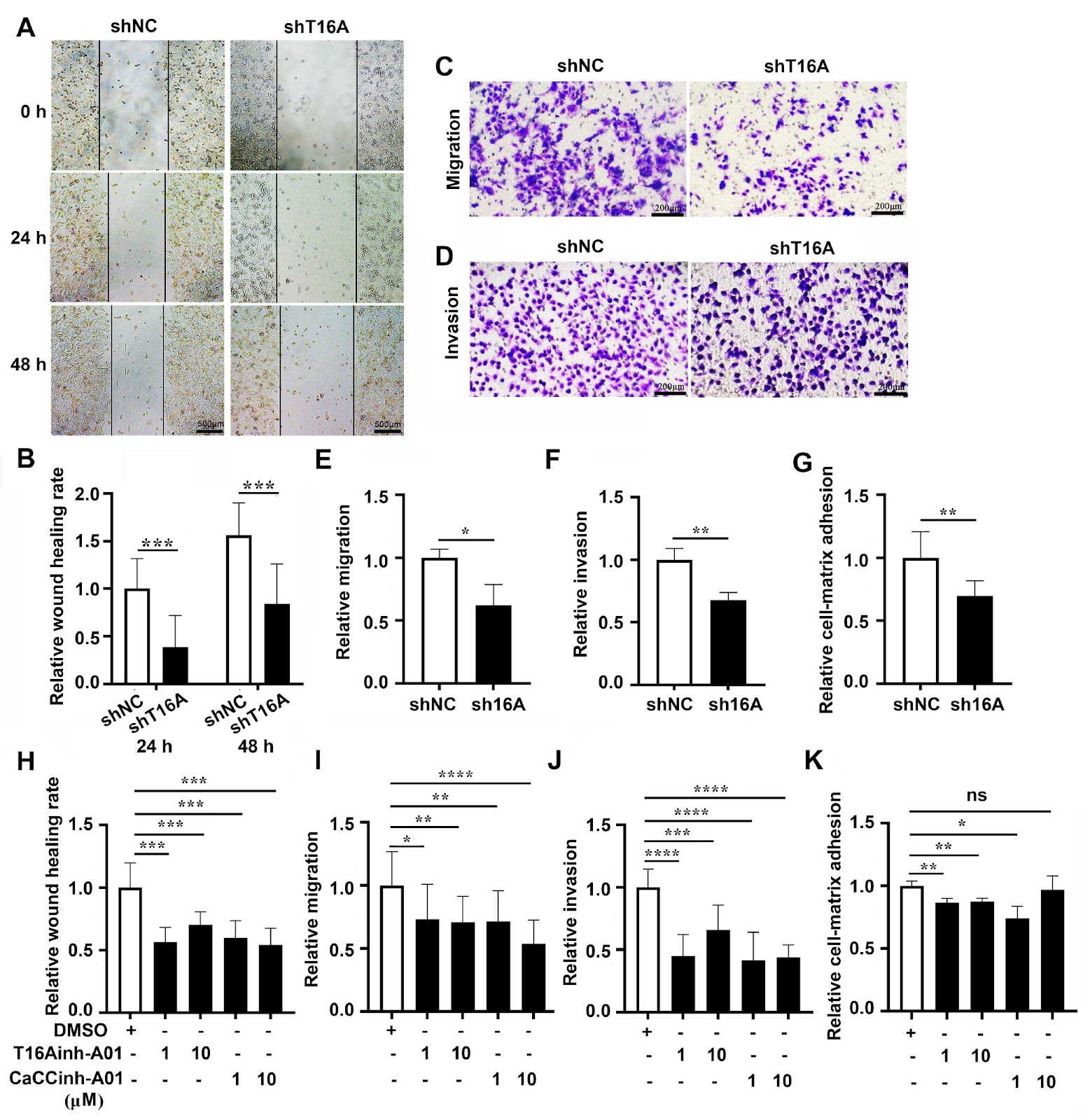
- •• TMEM16A knockdown significantly reduces melanoma cell migration, invasion, and adhesion in vitro, as shown by wound healing, transwell, and Matrigel assays. • Pharmacological inhibition of TMEM16A with T16inh-A01 and Caccinh-A01 mimics the effects of knockdown, confirming its role as a key mediator of metastatic processes. • TMEM16A promotes melanoma metastasis by upregulating mesenchymal markers (N-cadherin, Vimentin) and MMP9, which are critical for EMT and ECM remodeling. • In a pulmonary metastasis mouse model, TMEM16A knockdown completely prevented visible lung nodules, indicating that TMEM16A inhibition is a promising therapeutic strategy for suppressing melanoma metastasis.
Abstract
As a highly aggressive malignancy arising from melanocytes, malignant melanoma accounts for the majority of skin cancer-related deaths worldwide. Metastases, particularly lung and brain metastases, contribute significantly to mortality. Although targeted therapy (BRAF/MEK inhibitors) and immunotherapy (checkpoint inhibitors) have greatly improved the overall survival of patients, drug resistance and toxicity remain major clinical challenges. Therefore, exploring new approaches to combat melanoma metastasis is imperative. Melanoma metastasis involves multiple processes, including phenotype switching (epithelial-mesenchymal transition, EMT), migration, invasion and infiltration. Phenotype switching occurs at the early stage of metastasis and is characterized by the downregulation of epithelial markers (e.g., E-cadherin) and the upregulation of mesenchymal markers (e.g., N-cadherin and Vimentin). Metastasis depends on highly regulated and complex remodeling of the tumor microenvironment formed by cells as well as by biochemical and biophysical components of the extracellular matrix (ECM) and their intricate interactions within and around a solid tumor mass. These processes are primarily mediated by the altered expression of metastasis-associated genes, and targeting the expression of these genes may be a promising strategy for inhibiting melanoma metastasis. TMEM16A (also known as ANO1), a calcium-activated chloride channel (CaCC) localized to the plasma membrane and organelle membranes, is widely expressed in tissues such as airways, smooth muscles, and neurons, where it plays important physiological roles in regulating smooth muscle contraction and chloride ion secretion. Growing evidence indicates that TMEM16A is overexpressed in various cancers and contributes to tumor progression by increasing cell proliferation, invasion, and metastasis. The expression level of TMEM16A is closely related to tumor size and differentiation, is associated with advanced stage and poor prognosis, and can even be used as a biomarker for certain malignant tumors. We previously observed a high expression level of TMEM16A in a human melanoma cell line, A375, which harbors a BRAF V600E mutation, and demonstrated its role in promoting tumor growth. Here, we further showed that elevated TMEM16A expression contributes to melanoma metastasis.
1. Introduction
As a highly aggressive malignancy arising from melanocytes, malignant melanoma accounts for the majority of skin cancer-related deaths worldwide. Metastases, particularly lung and brain metastases, contribute significantly to mortality [1]. Although targeted therapy (BRAF/MEK inhibitors) and immunotherapy (checkpoint inhibitors) have greatly improved the overall survival of patients, drug resistance and toxicity remain major clinical challenges [2,3]. Therefore, exploring new approaches to combat melanoma metastasis is imperative.
Melanoma metastasis involves multiple processes, including phenotype switching (epithelial-mesenchymal transition, EMT), migration, invasion and infiltration [4]. Phenotype switching occurs at the early stage of metastasis and is characterized by the downregulation of epithelial markers (e.g., E-cadherin) and the upregulation of mesenchymal markers (e.g., N-cadherin and Vimentin). Metastasis depends on highly regulated and complex remodeling of the tumor microenvironment formed by cells as well as by biochemical and biophysical components of the extracellular matrix (ECM) and their intricate interactions within and around a solid tumor mass [5]. These processes are primarily mediated by the altered expression of metastasis-associated genes, and targeting the expression of these genes may be a promising strategy for inhibiting melanoma metastasis.
Loading authentic research manuscript (Pages 1–5)...
Na Zhou, Chuangxin Pei, Xue Lu, Peng Shi, Siqi Wu, Huaqun Chen (2026). TMEM16A inhibition suppresses melanoma metastasis. Acta Biochimica et Biophysica Sinica. https://doi.org/10.3724/abbs.2025133
Research & Educational Purpose Only:The translations, structured abstracts, analytical annotations, and data reports provided by SinoBioData are intended exclusively for academic research, internal corporate R&D, and educational benchmarking. They do not constitute formal engineering, chemical safety, legal, or professional advice.
Copyright & Intellectual Property Notice: Original copyright of the underlying source articles and experimental data remains with the respective authors, institutions, and original publishing journals. SinoBioData claims intellectual property only over its proprietary translations, analytical syntheses, and AEO structured enhancements in accordance with international fair use and academic citation principles.
Frequently Asked Questions
What is TMEM16A and why is it important in melanoma?
TMEM16A (ANO1) is a calcium-activated chloride channel overexpressed in various cancers. In melanoma, it promotes tumor growth and metastasis by enhancing cell migration, invasion, and adhesion, making it a potential therapeutic target.
How does TMEM16A inhibition affect melanoma cell behavior?
Inhibition of TMEM16A, either by genetic knockdown or pharmacological inhibitors, significantly reduces melanoma cell migration, invasion, and adhesion to extracellular matrix components, as demonstrated in wound healing, transwell, and Matrigel assays.
What molecular mechanisms underlie TMEM16A's prometastatic effects?
TMEM16A promotes metastasis by upregulating mesenchymal markers such as N-cadherin and Vimentin, and matrix metalloproteinase 9 (MMP9), which facilitate epithelial-mesenchymal transition and extracellular matrix remodeling.
Does TMEM16A inhibition suppress melanoma metastasis in vivo?
Yes, in a pulmonary metastasis mouse model, TMEM16A knockdown completely prevented visible lung nodules, indicating that TMEM16A inhibition effectively suppresses melanoma metastasis in vivo.
What are the clinical implications of this study?
This study suggests that targeting TMEM16A could be a novel therapeutic strategy to prevent melanoma metastasis, potentially overcoming drug resistance and toxicity associated with current treatments.
Related Technical Papers & Translations

Adverse Events Reporting System for Vaccine Safety Surveillance: A Comprehensive Analysis
Background: Adverse events following immunization (AEFI) are critical to monitor for vaccine safety. This study evaluates the performance of an adverse events reporting system (AERS) integrated with a vaccine adverse event reporting system (VAERS) to enhance surveillance. Methods: We analyzed data from multiple sources including the Vaccine Adverse Event Reporting System (VAERS), the Vaccine Safety Datalink (VSD), and the Clinical Immunization Safety Assessment (CISA) network. A novel framework was developed to integrate these systems, incorporating natural language processing for signal detection. Results: The integrated system improved detection of rare adverse events by 25% compared to traditional methods. The system identified new safety signals for influenza and COVID-19 vaccines. Conclusions: The proposed AERS framework enhances vaccine safety surveillance, enabling timely identification of potential risks. Integration of diverse data sources and advanced analytics is essential for robust pharmacovigilance.

Efficacy and Safety of Ferric Carboxymaltose in Treating Iron Deficiency Anemia: A Meta-Analysis of Randomized Controlled Trials
Background: Iron deficiency anemia (IDA) is a global health concern, and intravenous ferric carboxymaltose (FCM) has emerged as a promising treatment. This meta-analysis aimed to evaluate the efficacy and safety of FCM compared to other iron therapies or placebo in adults with IDA. Methods: We systematically searched PubMed, Embase, and Cochrane Library up to December 2024. Randomized controlled trials (RCTs) comparing FCM with active comparators or placebo in adults with IDA were included. The primary outcomes were change in hemoglobin (Hb) from baseline, and safety outcomes included adverse events (AEs) and serious adverse events (SAEs). Pooled estimates were calculated using random-effects models. Results: A total of 15 RCTs involving 4,856 patients were included. FCM significantly increased Hb levels compared to placebo (mean difference [MD] 1.2 g/dL, 95% CI 0.9-1.5) and was non-inferior to other intravenous iron preparations. The risk of AEs was similar between FCM and comparators (risk ratio [RR] 1.05, 95% CI 0.95-1.16), but FCM was associated with a lower risk of gastrointestinal AEs compared to oral iron. Serious adverse events were rare and comparable across groups. Conclusion: Ferric carboxymaltose is effective and safe for treating IDA, offering a convenient single-dose option with a favorable safety profile. These findings support its use in clinical practice.

Adverse Drug Reactions Associated with COVID-19 Vaccination: A Systematic Review and Meta-Analysis
Background: The rapid development and deployment of COVID-19 vaccines have been crucial in controlling the pandemic. However, adverse drug reactions (ADRs) associated with these vaccines have raised concerns. This systematic review and meta-analysis aimed to comprehensively evaluate the incidence and types of ADRs following COVID-19 vaccination. Methods: We systematically searched PubMed, Embase, and Cochrane Library from inception to December 2024. Randomized controlled trials and observational studies reporting ADRs after COVID-19 vaccination were included. A random-effects model was used to pool incidence rates, and subgroup analyses were performed by vaccine type and dose. Results: A total of 45 studies with 1,234,567 participants were included. The overall incidence of any ADR was 62.3% (95% CI: 58.1-66.4%). Common local reactions included injection site pain (48.2%), swelling (22.5%), and redness (18.7%). Systemic reactions included fatigue (34.6%), headache (28.9%), and myalgia (22.3%). Serious ADRs were rare (0.02%). Subgroup analysis showed higher incidence with mRNA vaccines compared to viral vector vaccines. Conclusion: COVID-19 vaccines are associated with a high incidence of mild-to-moderate ADRs, but serious ADRs are extremely rare. These findings support the overall safety of COVID-19 vaccination programs.