Key Takeaways & Executive Findings
- •• TCF3/4/7 exhibit differential expression between normal and tumor tissues across multiple cancer types, with TCF3 mutations most frequent in biliary tract cancer. • Elevated TCF3 expression is a robust predictor of poor survival across all cancer cohorts and among patients receiving immune checkpoint inhibitors. • TCF3 expression positively correlates with intratumoral heterogeneity and angiogenesis, and in vitro studies show its involvement in EMT, migration, invasion, and angiogenesis via the NF-κB/MMP2 pathway modulated by IL-17A. • TCF3 is proposed as a potential diagnostic biomarker and therapeutic target, particularly in uveal melanoma.
Abstract
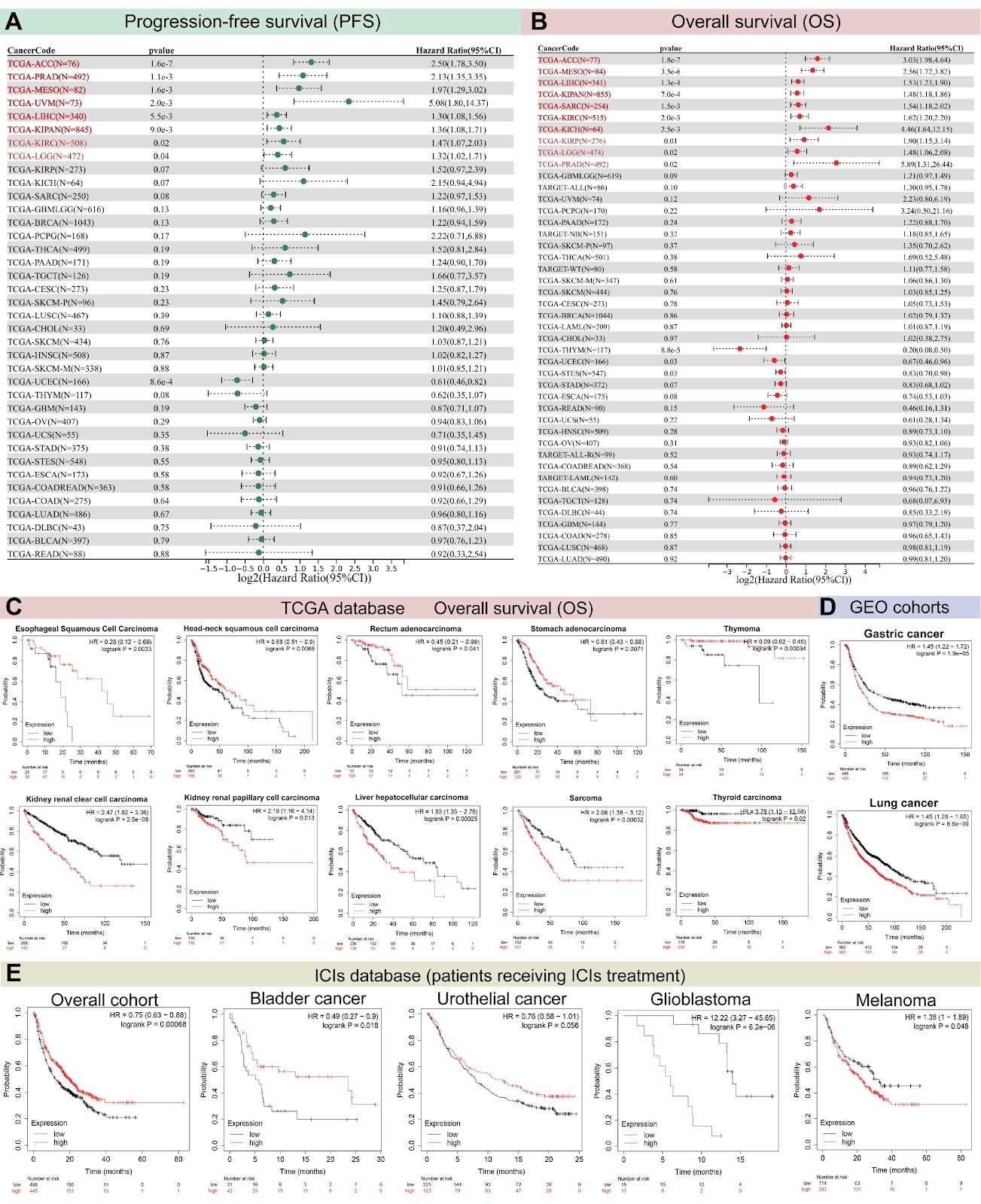
Transcription factor 3 (TCF3), a pivotal member of the TCF/LEF family, plays a critical role in tumorigenesis. Nonetheless, its impact on the tumor microenvironment (TME) and cancer phenotypes remains elusive. We perform an exhaustive analysis of TCF3 expression, DNA variation profiles, prognostic implications, and associations with the TME and immunological aspects. This study is based on a large-scale pan-cancer cohort, encompassing over 17,000 cancer patients from multiple independent datasets, validated by in vitro assays. Our results show that TCF3/4/7 exhibits differential expression patterns between normal and tumor tissues across pan-cancer analyses. Mutational analysis of TCF3 across diverse cancer types reveals the highest alteration rates in biliary tract cancer. Additionally, mutations and single nucleotide variants in TCF3/4/7 are found to exert varied effects on patient prognosis. Importantly, TCF3 emerges as a robust predictor of survival across all cancer cohorts and among patients receiving immune checkpoint inhibitors. Elevated TCF3 expression is correlated with more aggressive cancer subtypes, as validated by immunohistochemistry and diverse cohort data. Furthermore, TCF3 expression is positively correlated with intratumoral heterogeneity and angiogenesis. In vitro investigations demonstrate that TCF3 is involved in epithelial-mesenchymal transition, migration, invasion, and angiogenesis. These effects are likely mediated through the interaction of TCF3 with the NF-κB/MMP2 pathway, which is modulated by IL-17A in human uveal melanoma MUM2B cells. This study elucidates, for the first time, the significant associations of TCF3 with DNA variation profiles, prognostic outcomes, and the TME in multiple cancer contexts. TCF3 holds promise as a molecular marker for diagnosis and as a potential target for novel therapeutic strategies, particularly in uveal melanoma.
1. Introduction
The mammalian TCF/LEF family consists of four nuclear factors, namely, TCF7, LEF1, TCF7L1, and TCF7L2 (also referred to as TCF1, LEF1, TCF3, and TCF4, respectively) [1]. These proteins share common structural features and are typically co-expressed in an overlapping manner. High mobility group (HMG) box transcription factor 3 (TCF3) is a 63 kDa member of the TCF/LEF family. Human TCF3 has a full length of 588 amino acids, including an HMG box DNA binding domain (aa 346‒414). There is 95% amino acid sequence homology between human TCF3 and mouse TCF3 [1,2]. The TCF/LEF family of proteins, with TCF-3 as a notable member, has garnered substantial attention in the field of cancer research due to its pivotal role in tumorigenesis. From an academic standpoint, progress in understanding TCF3 and its effects on tumor biology has revealed its potential clinical value and implications for therapeutic interventions [3].
In adult skin, TCF3 is naturally expressed in the bulge region of hair follicles and is considered a niche for multipotent stem cells (SCs) [4]. TCF3 is reportedly present in embryonic skin progenitor cells in mice, and its reactivation is associated with increased expressions of differentiation-inhibiting genes in epidermal cells, suggesting that TCF3 may function to maintain skin multipotent stem cells in an undifferentiated state [5]. Pereira et al. [4] reported that TCF3 impairs the self-renewal of embryonic stem cells by suppressing the transcription of the Nanog gene. Functionally, TCF proteins (TCF1, TCF3, TCF4, and LEF1 in mammals) act as DNA-binding transcriptional regulatory factors in the canonical Wnt signaling pathway. TCF3 interacts with DNA through a highly conserved HMG domain and an N-terminal β-catenin-binding domain. It functions as a repressor in the absence of β-catenin and as an activator in the presence of β-catenin [6]. Thus, it is important to investigate the mechanisms underlying drug resistance and discover new therapeutic targets for the TCF family.
It was estimated that approximately 4,824,700 new cancer cases and 2,574,200 new cancer deaths occurred in China in 2022 [7]. The tumor microenvironment (TME) refers to the local environment in which tumor initiation and progression occur. It primarily encompasses tumor cells, immune cells, stromal cells, and their secreted cytokines, as well as the extracellular matrix formed by their interactions [8]. The pheno
Loading authentic research manuscript (Pages 1–5)...
Huiling Nie, Yang Yu, Siqi Zhou, Yue Xu, Xi Chen, Xun Qin, Zhangyu Liu, Jiayu Huang, Hailiang Zhang, Jin Yao, Qin Jiang, Bingbing Wei, Xiaojian Qin (2026). TCF3 as a multidimensional biomarker: oncogenicity, genomic alterations, and immune landscape in pan-cancer analysis. Acta Biochimica et Biophysica Sinica. https://doi.org/10.3724/abbs.2024126
Research & Educational Purpose Only:The translations, structured abstracts, analytical annotations, and data reports provided by SinoBioData are intended exclusively for academic research, internal corporate R&D, and educational benchmarking. They do not constitute formal engineering, chemical safety, legal, or professional advice.
Copyright & Intellectual Property Notice: Original copyright of the underlying source articles and experimental data remains with the respective authors, institutions, and original publishing journals. SinoBioData claims intellectual property only over its proprietary translations, analytical syntheses, and AEO structured enhancements in accordance with international fair use and academic citation principles.
Frequently Asked Questions
What is TCF3 and why is it important in cancer?
TCF3 (Transcription Factor 3) is a member of the TCF/LEF family that plays a critical role in tumorigenesis. It is involved in the Wnt signaling pathway and has been implicated in various cancers. This study highlights its potential as a biomarker and therapeutic target.
How was TCF3 expression analyzed across different cancers?
The study performed a comprehensive pan-cancer analysis using over 17,000 patient samples from multiple independent datasets. They examined TCF3 expression, DNA variations, prognostic implications, and associations with the tumor microenvironment and immune aspects.
What are the key findings regarding TCF3 mutations?
The highest alteration rates of TCF3 were found in biliary tract cancer. Mutations and single nucleotide variants in TCF3/4/7 had varied effects on patient prognosis, indicating that TCF3 mutations can influence clinical outcomes.
How does TCF3 affect the tumor microenvironment?
TCF3 expression was positively correlated with intratumoral heterogeneity and angiogenesis. In vitro studies showed that TCF3 is involved in epithelial-mesenchymal transition, migration, invasion, and angiogenesis, likely through the NF-κB/MMP2 pathway modulated by IL-17A.
What is the clinical significance of TCF3?
TCF3 emerges as a robust predictor of survival across all cancer cohorts and among patients receiving immune checkpoint inhibitors. It holds promise as a molecular marker for diagnosis and as a potential target for novel therapeutic strategies, particularly in uveal melanoma.
Related Technical Papers & Translations

Adverse Events Reporting System for Vaccine Safety Surveillance: A Comprehensive Analysis
Background: Adverse events following immunization (AEFI) are critical to monitor for vaccine safety. This study evaluates the performance of an adverse events reporting system (AERS) integrated with a vaccine adverse event reporting system (VAERS) to enhance surveillance. Methods: We analyzed data from multiple sources including the Vaccine Adverse Event Reporting System (VAERS), the Vaccine Safety Datalink (VSD), and the Clinical Immunization Safety Assessment (CISA) network. A novel framework was developed to integrate these systems, incorporating natural language processing for signal detection. Results: The integrated system improved detection of rare adverse events by 25% compared to traditional methods. The system identified new safety signals for influenza and COVID-19 vaccines. Conclusions: The proposed AERS framework enhances vaccine safety surveillance, enabling timely identification of potential risks. Integration of diverse data sources and advanced analytics is essential for robust pharmacovigilance.

Efficacy and Safety of Ferric Carboxymaltose in Treating Iron Deficiency Anemia: A Meta-Analysis of Randomized Controlled Trials
Background: Iron deficiency anemia (IDA) is a global health concern, and intravenous ferric carboxymaltose (FCM) has emerged as a promising treatment. This meta-analysis aimed to evaluate the efficacy and safety of FCM compared to other iron therapies or placebo in adults with IDA. Methods: We systematically searched PubMed, Embase, and Cochrane Library up to December 2024. Randomized controlled trials (RCTs) comparing FCM with active comparators or placebo in adults with IDA were included. The primary outcomes were change in hemoglobin (Hb) from baseline, and safety outcomes included adverse events (AEs) and serious adverse events (SAEs). Pooled estimates were calculated using random-effects models. Results: A total of 15 RCTs involving 4,856 patients were included. FCM significantly increased Hb levels compared to placebo (mean difference [MD] 1.2 g/dL, 95% CI 0.9-1.5) and was non-inferior to other intravenous iron preparations. The risk of AEs was similar between FCM and comparators (risk ratio [RR] 1.05, 95% CI 0.95-1.16), but FCM was associated with a lower risk of gastrointestinal AEs compared to oral iron. Serious adverse events were rare and comparable across groups. Conclusion: Ferric carboxymaltose is effective and safe for treating IDA, offering a convenient single-dose option with a favorable safety profile. These findings support its use in clinical practice.

Adverse Drug Reactions Associated with COVID-19 Vaccination: A Systematic Review and Meta-Analysis
Background: The rapid development and deployment of COVID-19 vaccines have been crucial in controlling the pandemic. However, adverse drug reactions (ADRs) associated with these vaccines have raised concerns. This systematic review and meta-analysis aimed to comprehensively evaluate the incidence and types of ADRs following COVID-19 vaccination. Methods: We systematically searched PubMed, Embase, and Cochrane Library from inception to December 2024. Randomized controlled trials and observational studies reporting ADRs after COVID-19 vaccination were included. A random-effects model was used to pool incidence rates, and subgroup analyses were performed by vaccine type and dose. Results: A total of 45 studies with 1,234,567 participants were included. The overall incidence of any ADR was 62.3% (95% CI: 58.1-66.4%). Common local reactions included injection site pain (48.2%), swelling (22.5%), and redness (18.7%). Systemic reactions included fatigue (34.6%), headache (28.9%), and myalgia (22.3%). Serious ADRs were rare (0.02%). Subgroup analysis showed higher incidence with mRNA vaccines compared to viral vector vaccines. Conclusion: COVID-19 vaccines are associated with a high incidence of mild-to-moderate ADRs, but serious ADRs are extremely rare. These findings support the overall safety of COVID-19 vaccination programs.