Key Takeaways & Executive Findings
- •• Tanshinones from Salvia miltiorrhiza alleviate DSS-induced ulcerative colitis by reducing inflammation and restoring intestinal barrier integrity. • Integrated multi-omics reveals that tanshinones reprogram the gut microbiota-metabolite axis, reversing dysbiosis and correcting metabolic disturbances. • Key microbial modules link beneficial bacteria like Akkermansia to anti-inflammatory lipid mediators, while pathobionts like Desulfovibrio are associated with disrupted bile acid metabolism. • Supplementation with Akkermansia muciniphila synergizes with tanshinone IIA to enhance barrier restoration and metabolic normalization, highlighting microbiome-targeting therapeutic potential.
Abstract
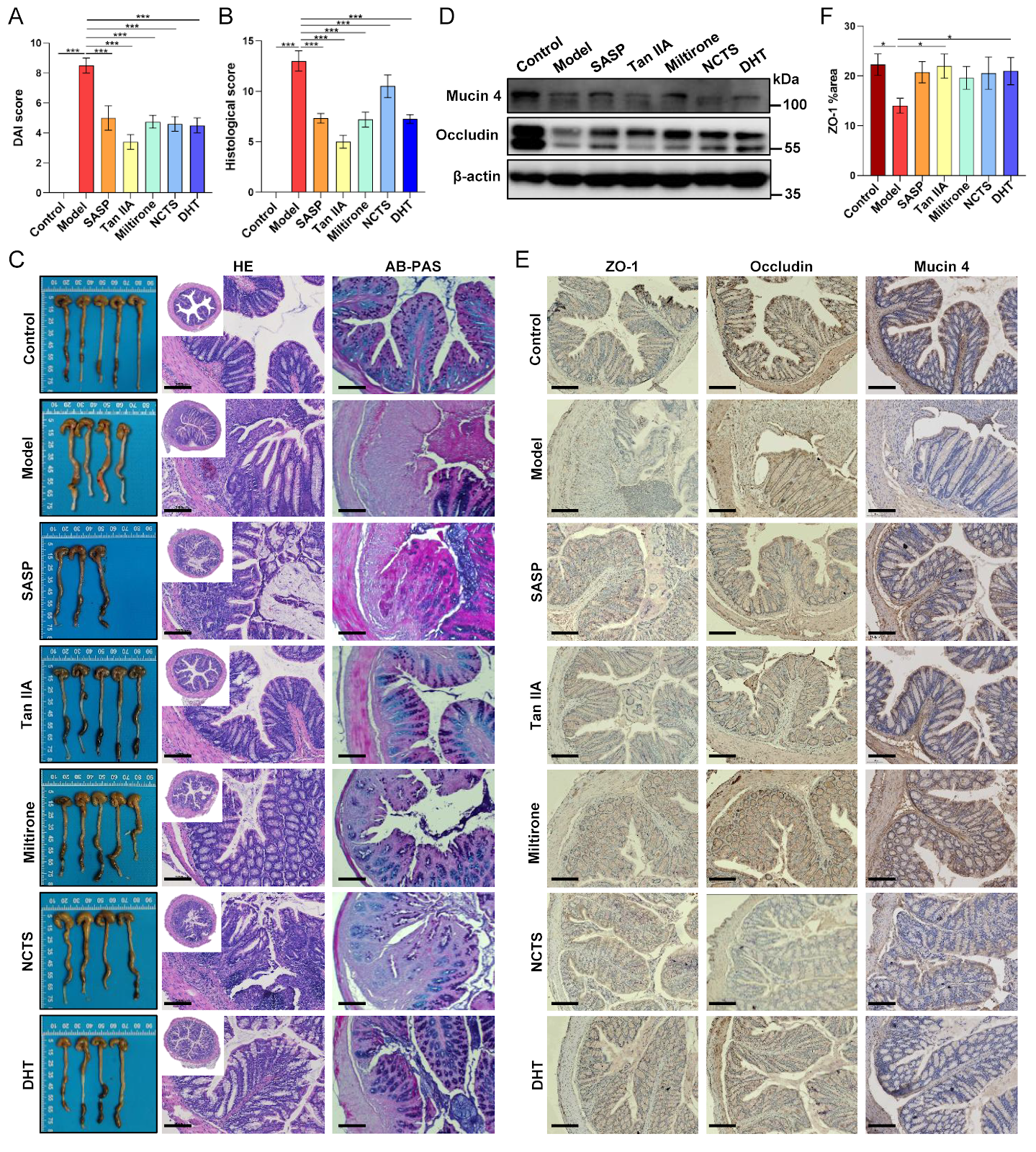
The anti-inflammatory properties of the traditional herb Salvia miltiorrhiza Bunge are well-established, yet its precise mechanism of action in ulcerative colitis (UC) remains unclear. Herein, we evaluate the therapeutic potential of four major tanshinones–tanshinone IIA (Tan IIA), miltirone, neocryptotanshinone, and dihydrotanshinone I–in a murine dextran sulfate sodium (DSS)-induced colitis model. Our results show that tanshinones effectively alleviate disease severity, suppress systemic and local inflammation, and restore intestinal barrier integrity. Integrated multi-omics analysis reveals that the therapeutic efficacy originates from a comprehensive reprogramming of the gut microbiota-metabolite axis. Specifically, tanshinones reverse colitis-associated dysbiosis and rectify metabolic disturbances in linoleic acid metabolism, bile acid biosynthesis, and amino acid utilization. Correlation network analysis identifies key functional modules linking beneficial microbes (e.g., Akkermansia) to anti-inflammatory lipid mediators and associating pathobionts (e.g., Desulfovibrio) with disrupted bile acid metabolism. Notably, supplementation with Akkermansia muciniphila synergizes with Tan IIA to amplify barrier restoration and metabolic normalization. Our findings establish that tanshinones ameliorate UC through microbiota-driven metabolic reprogramming, wherein the restructured microbial community actively shapes a therapeutic metabolic output. This work elucidates a metabolite-mediated mechanism of action and positions tanshinones as promising microbiome-targeting therapeutics for inflammatory bowel disease.
1. Introduction
Ulcerative colitis (UC) is a chronic and relapsing inflammatory bowel disease (IBD) characterized by abdominal pain, bloody diarrhea, and weight loss [1,2]. While biological therapies targeting pro-inflammatory cytokines have revolutionized treatment, their variable efficacy and secondary failure highlight an urgent need for novel therapeutic strategies [3,4].
The pathogenesis of UC involves a complex interplay of genetic susceptibility, immune dysregulation, and environmental factors [5–7]. Among these, dysbiosis of the gut microbiota is recognized as a pivotal contributor [7,8]. Patients with UC exhibit a distinct loss of microbial diversity, an expansion of pro-inflammatory pathobionts (e.g., Proteobacteria and Enterobacteriaceae), and a reduction in beneficial commensals (e.g., Adlercreutzia) [9–12]. Importantly, gut dysbiosis in UC leads to a profound reprogramming of the gut metabolome, characterized by disrupted production of key metabolites such as short-chain fatty acids (SCFAs), bile acids (BAs), and tryptophan derivatives [8,12–14]. These metabolic alterations are not merely bystanders but active drivers of intestinal inflammation, barrier dysfunction, and immune imbalance [15]. Consequently, therapeutic strategies capable of restoring microbial ecological balance and metabolic homeostasis represent a promising avenue for UC intervention.
Loading authentic research manuscript (Pages 1–5)...
Zhe Liu, Chan Hui, Guochao Zhang, Haicheng Yang, Yi Wang, Yaqian Shi, Chao Wang, Yanfei Liu, Xia Gao, Yuting Wen (2026). Tanshinones from Salvia miltiorrhiza alleviate ulcerative colitis via reprogramming the gut microbiota-metabolite axis. Acta Biochimica et Biophysica Sinica. https://doi.org/10.3724/abbs.2026054
Research & Educational Purpose Only:The translations, structured abstracts, analytical annotations, and data reports provided by SinoBioData are intended exclusively for academic research, internal corporate R&D, and educational benchmarking. They do not constitute formal engineering, chemical safety, legal, or professional advice.
Copyright & Intellectual Property Notice: Original copyright of the underlying source articles and experimental data remains with the respective authors, institutions, and original publishing journals. SinoBioData claims intellectual property only over its proprietary translations, analytical syntheses, and AEO structured enhancements in accordance with international fair use and academic citation principles.
Frequently Asked Questions
What are the main findings of this study on tanshinones and ulcerative colitis?
The study demonstrates that four major tanshinones from Salvia miltiorrhiza alleviate DSS-induced ulcerative colitis in mice by reducing inflammation, restoring intestinal barrier integrity, and reprogramming the gut microbiota-metabolite axis. Specifically, they reverse dysbiosis and correct metabolic disturbances in linoleic acid, bile acid, and amino acid metabolism, with key microbial modules linking beneficial bacteria like Akkermansia to anti-inflammatory lipid mediators.
How do tanshinones exert their therapeutic effects in ulcerative colitis?
Tanshinones exert their effects through microbiota-driven metabolic reprogramming. They reshape the gut microbial community, promoting beneficial microbes such as Akkermansia and suppressing pathobionts like Desulfovibrio, which in turn leads to the production of anti-inflammatory metabolites and restoration of metabolic homeostasis, thereby ameliorating colitis.
What is the significance of Akkermansia muciniphila in this study?
Akkermansia muciniphila was identified as a key beneficial microbe associated with anti-inflammatory lipid mediators. Supplementation with A. muciniphila synergized with tanshinone IIA to amplify barrier restoration and metabolic normalization, suggesting that targeting this microbe could enhance the therapeutic efficacy of tanshinones.
What experimental model was used to evaluate the effects of tanshinones?
The study used a murine dextran sulfate sodium (DSS)-induced colitis model, a widely accepted experimental model for ulcerative colitis. Mice were treated with tanshinones or sulfasalazine (positive control), and disease severity, inflammation, barrier integrity, and multi-omics profiles were assessed.
What are the potential clinical implications of this research?
The findings position tanshinones as promising microbiome-targeting therapeutics for inflammatory bowel disease. By elucidating the metabolite-mediated mechanism of action, this research supports the development of tanshinone-based therapies that could modulate the gut microbiota and metabolic pathways to treat UC, potentially offering an alternative or adjunct to current biological therapies.
Related Technical Papers & Translations

Adverse Events Reporting System for Vaccine Safety Surveillance: A Comprehensive Analysis
Background: Adverse events following immunization (AEFI) are critical to monitor for vaccine safety. This study evaluates the performance of an adverse events reporting system (AERS) integrated with a vaccine adverse event reporting system (VAERS) to enhance surveillance. Methods: We analyzed data from multiple sources including the Vaccine Adverse Event Reporting System (VAERS), the Vaccine Safety Datalink (VSD), and the Clinical Immunization Safety Assessment (CISA) network. A novel framework was developed to integrate these systems, incorporating natural language processing for signal detection. Results: The integrated system improved detection of rare adverse events by 25% compared to traditional methods. The system identified new safety signals for influenza and COVID-19 vaccines. Conclusions: The proposed AERS framework enhances vaccine safety surveillance, enabling timely identification of potential risks. Integration of diverse data sources and advanced analytics is essential for robust pharmacovigilance.

Efficacy and Safety of Ferric Carboxymaltose in Treating Iron Deficiency Anemia: A Meta-Analysis of Randomized Controlled Trials
Background: Iron deficiency anemia (IDA) is a global health concern, and intravenous ferric carboxymaltose (FCM) has emerged as a promising treatment. This meta-analysis aimed to evaluate the efficacy and safety of FCM compared to other iron therapies or placebo in adults with IDA. Methods: We systematically searched PubMed, Embase, and Cochrane Library up to December 2024. Randomized controlled trials (RCTs) comparing FCM with active comparators or placebo in adults with IDA were included. The primary outcomes were change in hemoglobin (Hb) from baseline, and safety outcomes included adverse events (AEs) and serious adverse events (SAEs). Pooled estimates were calculated using random-effects models. Results: A total of 15 RCTs involving 4,856 patients were included. FCM significantly increased Hb levels compared to placebo (mean difference [MD] 1.2 g/dL, 95% CI 0.9-1.5) and was non-inferior to other intravenous iron preparations. The risk of AEs was similar between FCM and comparators (risk ratio [RR] 1.05, 95% CI 0.95-1.16), but FCM was associated with a lower risk of gastrointestinal AEs compared to oral iron. Serious adverse events were rare and comparable across groups. Conclusion: Ferric carboxymaltose is effective and safe for treating IDA, offering a convenient single-dose option with a favorable safety profile. These findings support its use in clinical practice.

Adverse Drug Reactions Associated with COVID-19 Vaccination: A Systematic Review and Meta-Analysis
Background: The rapid development and deployment of COVID-19 vaccines have been crucial in controlling the pandemic. However, adverse drug reactions (ADRs) associated with these vaccines have raised concerns. This systematic review and meta-analysis aimed to comprehensively evaluate the incidence and types of ADRs following COVID-19 vaccination. Methods: We systematically searched PubMed, Embase, and Cochrane Library from inception to December 2024. Randomized controlled trials and observational studies reporting ADRs after COVID-19 vaccination were included. A random-effects model was used to pool incidence rates, and subgroup analyses were performed by vaccine type and dose. Results: A total of 45 studies with 1,234,567 participants were included. The overall incidence of any ADR was 62.3% (95% CI: 58.1-66.4%). Common local reactions included injection site pain (48.2%), swelling (22.5%), and redness (18.7%). Systemic reactions included fatigue (34.6%), headache (28.9%), and myalgia (22.3%). Serious ADRs were rare (0.02%). Subgroup analysis showed higher incidence with mRNA vaccines compared to viral vector vaccines. Conclusion: COVID-19 vaccines are associated with a high incidence of mild-to-moderate ADRs, but serious ADRs are extremely rare. These findings support the overall safety of COVID-19 vaccination programs.