Key Takeaways & Executive Findings
- •• Succinate accumulation is elevated in CHD patients and DEBM-treated HUVECs, correlating with increased inflammatory cytokines IL-6 and IL-18. • Succinate accumulation induces pyroptosis and mitochondrial damage in HUVECs, evidenced by upregulation of pyroptosis-related proteins and impaired mitochondrial structure/function. • ATP5F1D is identified as a key downstream target of succinate accumulation; its downregulation promotes pyroptosis and mitochondrial injury, while restoration mitigates these effects. • The study provides a novel mechanism linking metabolic dysregulation (succinate) to endothelial pyroptosis via ATP5F1D, offering potential therapeutic targets for atherosclerosis.
Abstract
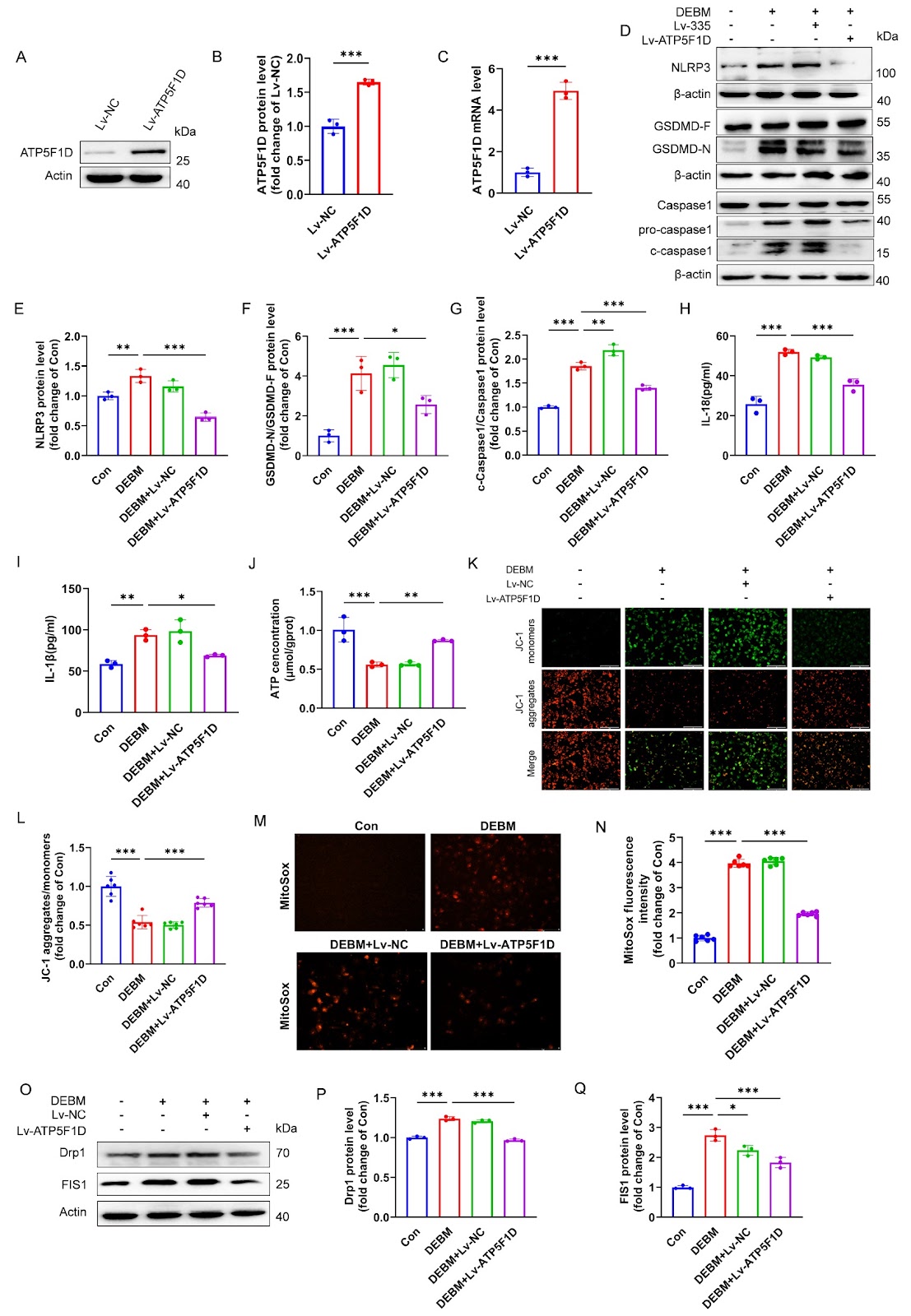
Atherosclerosis, a chronic inflammatory disorder, is pathophysiologically linked to endothelial cell (EC) pyroptosis. This study aims to elucidate the mechanisms by which succinate exacerbates EC pyroptosis through mitochondrial damage. Serum samples are collected from patients with coronary heart disease (CHD) and healthy controls (HCs), and the levels of succinate, interleukin (IL)-6, and IL-18 are quantified. To establish a succinate accumulation model, human umbilical vein endothelial cells (HUVECs) are treated with diethyl butyl malonate (DEBM), followed by analysis of inflammatory cytokines. The expression of pyroptosis-related proteins is assessed via western blot analysis. Morphological changes in pyroptotic vesicles and membrane pores are examined by scanning electron microscopy (SEM) and transmission electron microscopy (TEM). The mitochondrial membrane potential and reactive oxygen species (ROS) levels are evaluated via a JC-1 kit and MitoSOX, respectively. RNA sequencing (RNA-seq) is performed to identify potential target genes and regulatory pathways. To investigate the functional role of ATP5F1D, small interfering RNAs (siRNAs) are used to knockdown ATP5F1D, while lentiviral vectors are used to overexpress ATP5F1D in HUVECs. The results reveal significantly elevated levels of succinate, IL-6, and IL-18 in both CHD patients and DEBM-treated HUVECs. Succinate accumulation induced by DEBM triggers pyroptosis and mitochondrial damage in HUVECs, as evidenced by the upregulation of pyroptosis-related proteins and the impairment of mitochondrial structure and function. RNA sequencing analysis identifies ATP5F1D as a key downstream target of succinate accumulation. Downregulation of ATP5F1D promotes pyroptosis and mitochondrial injury in HUVECs, whereas restoration of ATP5F1D expression effectively mitigates these detrimental effects. Succinate-induced downregulation of ATP5F1D drives mitochondrial dysfunction and pyroptosis in HUVECs.
1. Introduction
Endothelial cells (ECs), which constitute a tightly packed monolayer lining the inner surface of blood vessels, serve as a vital barrier within the vascular system. It plays a central role in regulating vascular tone, blood flow, capillary exchange, and inflammatory responses [1]. EC dysfunction is a major driver of vascular endothelial remodeling and the progression of atherosclerotic plaque formation in patients [2]. Given their physiological relevance and experimental accessibility, human umbilical vein endothelial cells (HUVECs) are widely recognized as a robust and reliable model for studying endothelial physiology and pathophysiology [3].
Succinate, a main metabolic intermediate of the tricarboxylic acid (TCA) cycle, modulates diverse biological processes, including inflammation and posttranslational modifications. In addition to its role in energy metabolism and the mitochondrial electron transport chain, succinate serves as a central hub that integrates multiple metabolic pathways within the cell [4]. Additionally, succinate has recently been identified as a key regulator of EC function [5]. Notably, as a convergence point in metabolic pathways and a signaling molecule, succinate plays a pivotal role in regulating mitochondrial reactive oxygen species (ROS) production and calcium ion homeostasis [6,7]. The intricate interplay between metabolic dysregulation and inflammation, which is mediated by molecules such as succinate, has garnered significant attention, particularly in the context of vascular EC health and disease.
Pyroptosis, a recently identified form of proinflammatory programmed cell death distinct from apoptosis, has been recognized as a key contributor to
Loading authentic research manuscript (Pages 1–5)...
Hong Huang, Jian Cui, Dan Tang, Xing Xiang, Jie Mao, Zhe He, Hengjing Hu, Zhangxiu He, Lu He, Huifang Tang (2026). Succinate accumulation induces pyroptosis and mitochondrial damage via the inhibition of ATP5F1D in HUVECs. Acta Biochimica et Biophysica Sinica. https://doi.org/10.3724/abbs.2025116
Research & Educational Purpose Only:The translations, structured abstracts, analytical annotations, and data reports provided by SinoBioData are intended exclusively for academic research, internal corporate R&D, and educational benchmarking. They do not constitute formal engineering, chemical safety, legal, or professional advice.
Copyright & Intellectual Property Notice: Original copyright of the underlying source articles and experimental data remains with the respective authors, institutions, and original publishing journals. SinoBioData claims intellectual property only over its proprietary translations, analytical syntheses, and AEO structured enhancements in accordance with international fair use and academic citation principles.
Frequently Asked Questions
What is the role of succinate in endothelial cell pyroptosis?
Succinate accumulation triggers pyroptosis in endothelial cells by downregulating ATP5F1D, leading to mitochondrial dysfunction and inflammatory cell death.
How does ATP5F1D affect mitochondrial function in HUVECs?
ATP5F1D is a key downstream target of succinate; its downregulation promotes mitochondrial damage and pyroptosis, while its overexpression mitigates these effects.
What are the clinical implications of this study?
The findings suggest that targeting succinate accumulation or ATP5F1D could provide novel therapeutic strategies for atherosclerosis and other cardiovascular diseases.
What methods were used to assess pyroptosis and mitochondrial damage?
The study used western blot for pyroptosis-related proteins, SEM/TEM for morphological changes, JC-1 and MitoSOX for mitochondrial membrane potential and ROS, and RNA-seq for gene expression.
How was succinate accumulation modeled in vitro?
Human umbilical vein endothelial cells (HUVECs) were treated with diethyl butyl malonate (DEBM) to induce succinate accumulation.
Related Technical Papers & Translations

Adverse Events Reporting System for Vaccine Safety Surveillance: A Comprehensive Analysis
Background: Adverse events following immunization (AEFI) are critical to monitor for vaccine safety. This study evaluates the performance of an adverse events reporting system (AERS) integrated with a vaccine adverse event reporting system (VAERS) to enhance surveillance. Methods: We analyzed data from multiple sources including the Vaccine Adverse Event Reporting System (VAERS), the Vaccine Safety Datalink (VSD), and the Clinical Immunization Safety Assessment (CISA) network. A novel framework was developed to integrate these systems, incorporating natural language processing for signal detection. Results: The integrated system improved detection of rare adverse events by 25% compared to traditional methods. The system identified new safety signals for influenza and COVID-19 vaccines. Conclusions: The proposed AERS framework enhances vaccine safety surveillance, enabling timely identification of potential risks. Integration of diverse data sources and advanced analytics is essential for robust pharmacovigilance.

Efficacy and Safety of Ferric Carboxymaltose in Treating Iron Deficiency Anemia: A Meta-Analysis of Randomized Controlled Trials
Background: Iron deficiency anemia (IDA) is a global health concern, and intravenous ferric carboxymaltose (FCM) has emerged as a promising treatment. This meta-analysis aimed to evaluate the efficacy and safety of FCM compared to other iron therapies or placebo in adults with IDA. Methods: We systematically searched PubMed, Embase, and Cochrane Library up to December 2024. Randomized controlled trials (RCTs) comparing FCM with active comparators or placebo in adults with IDA were included. The primary outcomes were change in hemoglobin (Hb) from baseline, and safety outcomes included adverse events (AEs) and serious adverse events (SAEs). Pooled estimates were calculated using random-effects models. Results: A total of 15 RCTs involving 4,856 patients were included. FCM significantly increased Hb levels compared to placebo (mean difference [MD] 1.2 g/dL, 95% CI 0.9-1.5) and was non-inferior to other intravenous iron preparations. The risk of AEs was similar between FCM and comparators (risk ratio [RR] 1.05, 95% CI 0.95-1.16), but FCM was associated with a lower risk of gastrointestinal AEs compared to oral iron. Serious adverse events were rare and comparable across groups. Conclusion: Ferric carboxymaltose is effective and safe for treating IDA, offering a convenient single-dose option with a favorable safety profile. These findings support its use in clinical practice.

Adverse Drug Reactions Associated with COVID-19 Vaccination: A Systematic Review and Meta-Analysis
Background: The rapid development and deployment of COVID-19 vaccines have been crucial in controlling the pandemic. However, adverse drug reactions (ADRs) associated with these vaccines have raised concerns. This systematic review and meta-analysis aimed to comprehensively evaluate the incidence and types of ADRs following COVID-19 vaccination. Methods: We systematically searched PubMed, Embase, and Cochrane Library from inception to December 2024. Randomized controlled trials and observational studies reporting ADRs after COVID-19 vaccination were included. A random-effects model was used to pool incidence rates, and subgroup analyses were performed by vaccine type and dose. Results: A total of 45 studies with 1,234,567 participants were included. The overall incidence of any ADR was 62.3% (95% CI: 58.1-66.4%). Common local reactions included injection site pain (48.2%), swelling (22.5%), and redness (18.7%). Systemic reactions included fatigue (34.6%), headache (28.9%), and myalgia (22.3%). Serious ADRs were rare (0.02%). Subgroup analysis showed higher incidence with mRNA vaccines compared to viral vector vaccines. Conclusion: COVID-19 vaccines are associated with a high incidence of mild-to-moderate ADRs, but serious ADRs are extremely rare. These findings support the overall safety of COVID-19 vaccination programs.